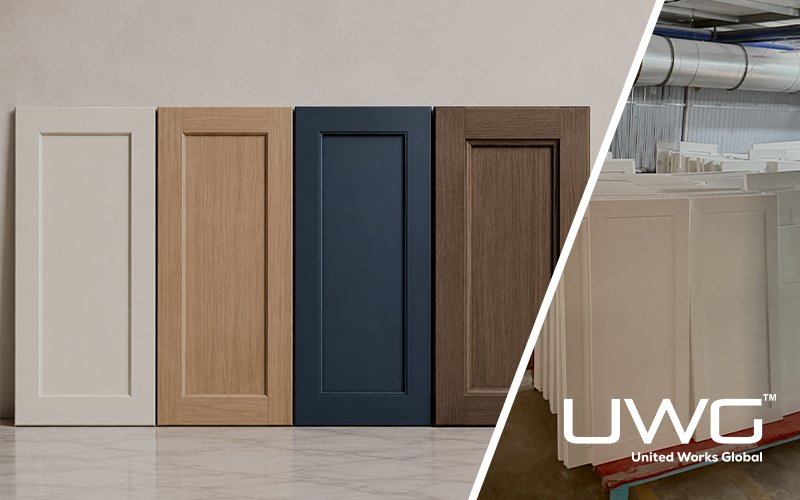
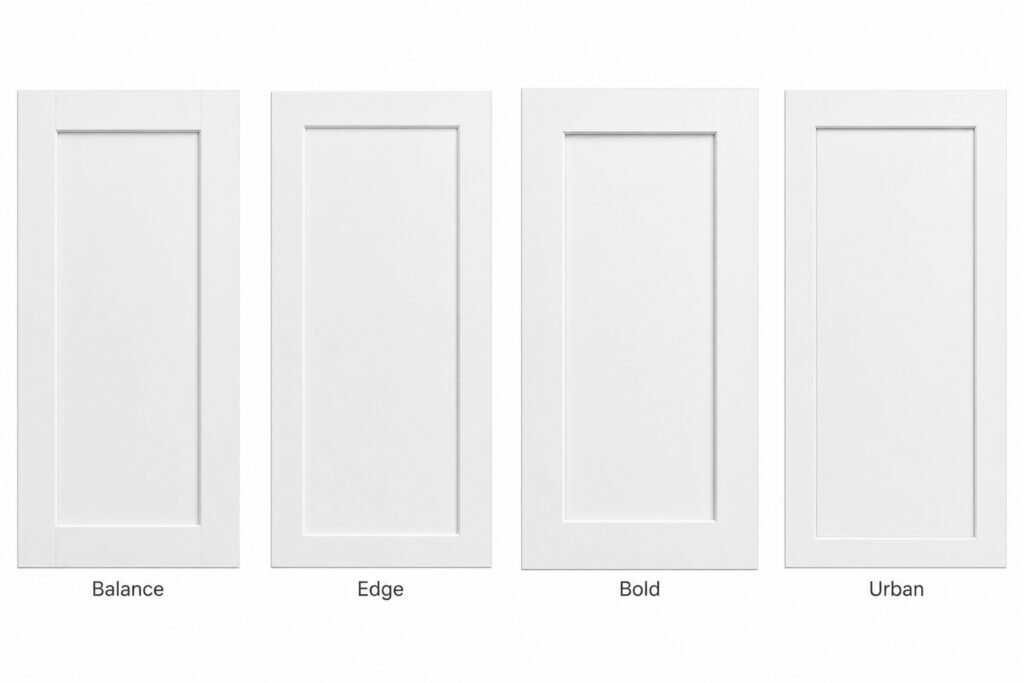
Shaker cabinet doors have long been one of the most popular choices in residential construction due to their clean lines, timeless appearance, and versatility. However, modern Shaker cabinetry has evolved beyond the traditional five-piece design. Today, builders and designers can choose from several contemporary Shaker profiles, including Balance, Edge, Bold, and Urban styles, each offering a distinct visual effect and design character.
Understanding the differences between these Shaker door styles can help builders select the right option for their project, whether the goal is cost efficiency, modern aesthetics, or premium market appeal.
What Are Shaker Cabinet Doors?
Shaker cabinet doors originated from the furniture-making principles of the Shaker religious community in the 18th century.
Traditional Shaker doors are characterized by:
- Five-piece construction
- Flat center panel
- Clean lines
- Minimal ornamentation
- Functional design
Over time, Shaker cabinets have become one of the most specified cabinet styles in North America because they complement a wide variety of architectural designs, from traditional homes to modern residential developments.
Today, manufacturers have introduced updated Shaker profiles that maintain the simplicity of the original design while creating different visual effects for contemporary projects.
Why Shaker Door Style Selection Matters
Many builders focus on cabinet color, finish, and hardware selection. However, the door profile itself significantly impacts the final appearance of a kitchen.
The door style influences:
- Perceived cabinet quality
- Architectural consistency
- Homebuyer appeal
- Design flexibility
- Long-term marketability
In our experience supplying cabinets for residential projects, changing the door profile often has a greater visual impact than changing the paint color alone.
Understanding the Four Popular Shaker Styles
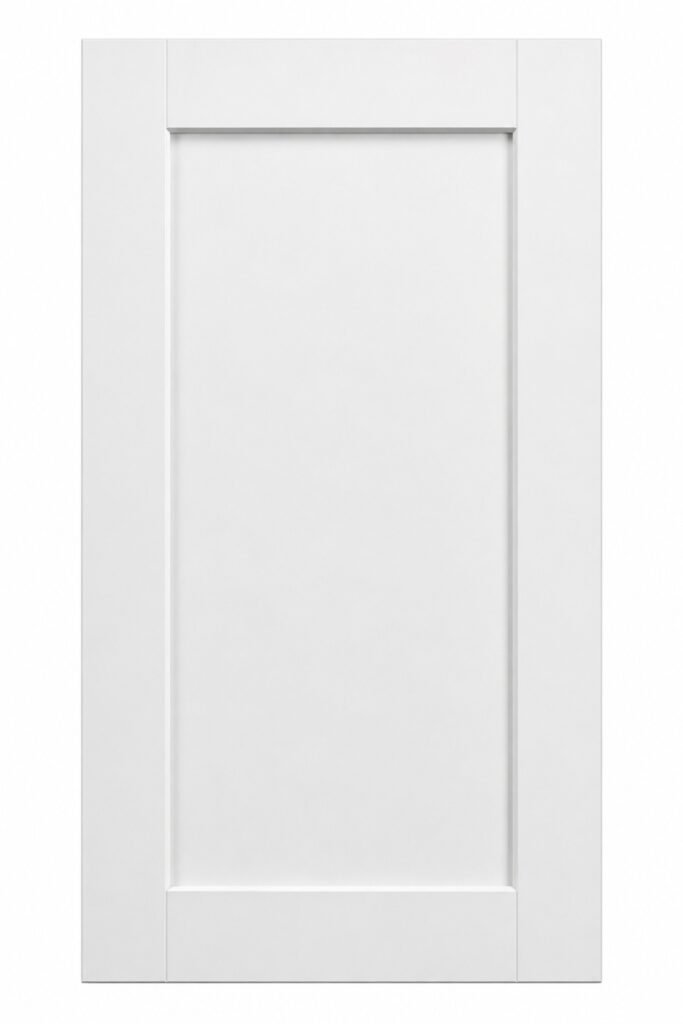
1. Balance Shaker
Balance Shaker is often considered the most versatile interpretation of the classic Shaker design.
Key Characteristics
- Symmetrical rail and stile proportions
- Medium frame width
- Traditional recessed center panel
- Clean and balanced appearance
Visual Style
Balance Shaker maintains the familiar look that homeowners expect from traditional Shaker cabinetry while incorporating subtle refinements that make it suitable for newer homes.
Advantages
- Broad market appeal
- Works with almost any cabinet color
- Compatible with traditional and transitional homes
- Timeless appearance
Potential Limitations
- May appear too conservative for highly modern projects
Best Applications
- Production housing
- Single-family homes
- Townhouse developments
- Transitional kitchen designs
For builders seeking the safest design choice across multiple projects, Balance Shaker is often the most universally accepted option.
2. Edge Shaker
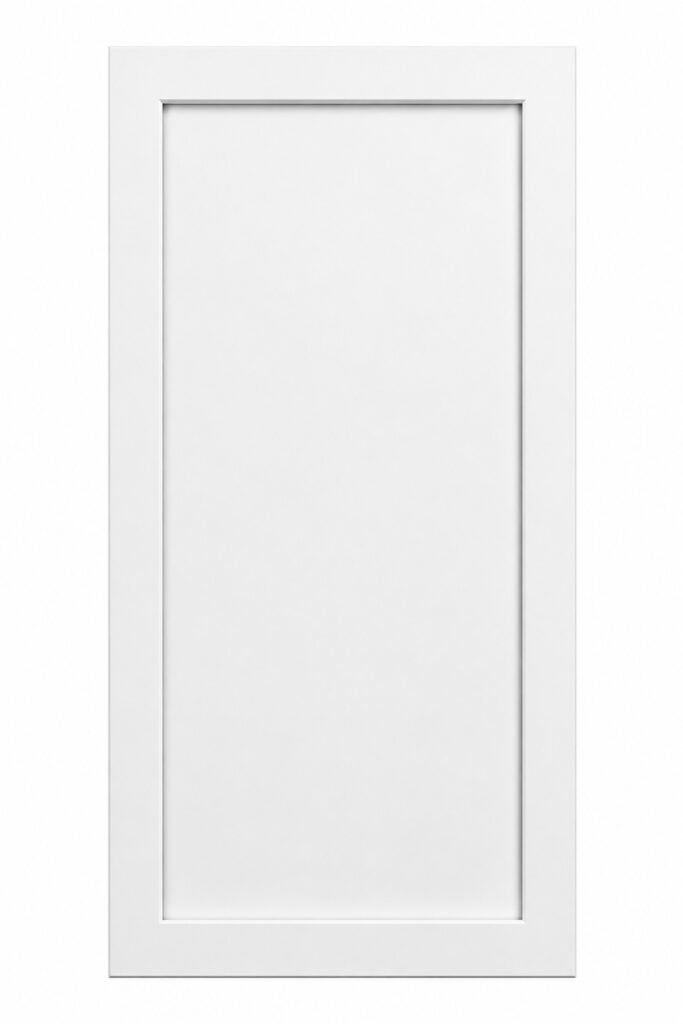
Edge Shaker introduces a more contemporary interpretation of the traditional Shaker profile.
Key Characteristics
- Narrower frame design
- Sharper profile transitions
- Cleaner visual lines
- Reduced visual weight
Visual Style
The slimmer frame creates a lighter, more modern appearance while still maintaining recognizable Shaker characteristics.
Advantages
- Contemporary aesthetic
- Cleaner overall appearance
- Ideal for painted finishes
- Works well in smaller kitchens
Potential Limitations
- Less traditional appearance
- May not fit certain historic home styles
Best Applications
- Modern residential developments
- Contemporary townhomes
- Multifamily projects
- White and light-gray painted kitchens
Many builders select Edge Shaker when targeting younger homebuyers who prefer modern yet approachable design.
3. Bold Shaker
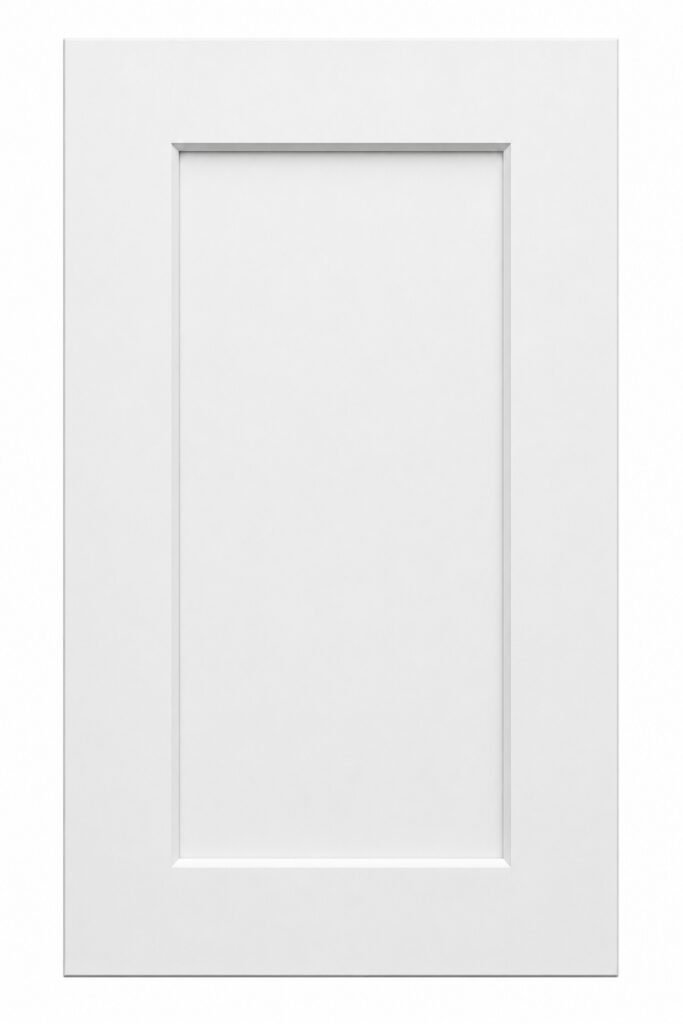
Bold Shaker takes the opposite approach by emphasizing stronger proportions and a more substantial appearance.
Key Characteristics
- Wider rails and stiles
- Larger frame presence
- Enhanced visual depth
- Strong architectural character
Visual Style
Bold Shaker creates a premium and commanding look, making cabinetry a more prominent design feature within the kitchen.
Advantages
- High-end appearance
- Strong visual impact
- Excellent for large kitchens
- Supports luxury home positioning
Potential Limitations
- Can overwhelm smaller spaces
- Typically carries a higher manufacturing cost
Best Applications
- Luxury residences
- Custom homes
- Large kitchen layouts
- High-end painted cabinetry
In several upscale residential projects, wider Shaker frames have helped create a more substantial and custom-built appearance without significantly increasing cabinet complexity.
4. Urban Shaker
Urban Shaker is one of the most modern interpretations of Shaker cabinetry.
Key Characteristics
- Minimalist detailing
- Narrow profile lines
- Sleek appearance
- Contemporary proportions
Visual Style
Urban Shaker focuses on simplicity and clean geometry, making it highly compatible with modern architecture.
Advantages
- Strong contemporary appeal
- Excellent for minimalist interiors
- Pairs well with matte finishes
- Supports modern design trends
Potential Limitations
- May not suit traditional home styles
- Design trends can evolve over time
Best Applications
- Contemporary homes
- Urban residential developments
- Modern multifamily projects
- Minimalist kitchen designs
Urban Shaker has become increasingly popular as modern and Scandinavian-inspired interior design trends continue to influence residential construction.
Shaker Door Style Comparison
| Style | Appearance | Frame Width | Design Style | Best For |
|---|---|---|---|---|
| Balance | Classic & Versatile | Medium | Traditional / Transitional | Production Housing |
| Edge | Clean & Modern | Narrow | Contemporary | Modern Residential Projects |
| Bold | Strong & Premium | Wide | Luxury / Custom | High-End Homes |
| Urban | Minimalist & Sleek | Narrow | Modern / Contemporary | Urban Developments |
Technical Considerations Beyond Style
While aesthetics are important, builders should also consider practical factors when selecting cabinet door profiles.
Paint Performance
Shaker doors with simpler profiles often produce more consistent painted finishes.
In painted kitchens, MDF center panels or engineered door constructions are frequently used to reduce the risk of paint-line cracking.
Manufacturing Consistency
Profiles with fewer intricate details typically offer:
- Better consistency
- Faster production
- Lower defect rates
This becomes especially important for large-volume housing projects.
Maintenance
Simpler profiles generally:
- Collect less dust
- Are easier to clean
- Require less maintenance
Urban and Edge styles often perform particularly well in this area.
Current Market Trends
According to the National Association of Home Builders (NAHB), homebuyers continue to prioritize kitchens that feature clean lines, functional layouts, and timeless design elements. At the same time, painted cabinetry and transitional aesthetics remain among the most requested kitchen features in new residential construction.
Several trends are influencing cabinet selections:
- Growing demand for painted cabinetry
- Preference for transitional designs
- Increased popularity of minimalist kitchens
- Expansion of modern farmhouse aesthetics
These trends have contributed to the growing popularity of Edge and Urban Shaker profiles, while Balance Shaker remains a reliable choice for broad market appeal. Bold Shaker styles are also gaining traction in custom homes and luxury residential projects where cabinetry serves as a major design focal point.Choosing the Right Shaker Style for Your Project
Frequently Asked Questions About Modern Shaker Cabinet Styles
Q: What is the primary difference between the four modern Shaker cabinet door styles?
A: The main distinction lies in their frame widths and proportions, which alter the design aesthetic. Balance Shaker features a traditional, symmetrical medium frame width. Edge Shaker delivers a cleaner, narrow frame with sharp profile transitions. Bold Shaker utilizes wide rails and stiles for a substantial, luxury presence. Urban Shaker focuses on ultimate contemporary minimalism with sleek, narrow profile lines.
Q: Which Shaker door profile is best suited for high-volume production housing?
A: The Balance Shaker is highly recommended for production housing, single-family homes, and townhouse developments. Because it maintains a classic, balanced appearance with medium frame proportions, it offers the broadest market appeal and provides excellent long-term design flexibility across diverse buyer demographics.
Q: Why should developers consider wider Shaker frames, such as the Bold style, for premium projects?
A: Bold Shaker profiles feature wider frames that create enhanced visual depth and a commanding architectural presence. This high-end configuration gives kitchens a custom-built, premium aesthetic that supports luxury home positioning without adding unnecessary complexity to the underlying cabinet box construction.
Q: How do Shaker door profiles affect finishing quality and maintenance in large-scale residential projects?
A: Cabinet doors with simpler, cleaner profiles (such as Edge and Urban styles) collect less dust, are easier to clean, and achieve greater manufacturing consistency with faster production speeds and lower defect rates. Additionally, pairing these simplified profiles with engineered door constructions or MDF center panels significantly reduces the risk of paint-line cracking in painted kitchens.
Conclusion
Balance, Edge, Bold, and Urban Shaker cabinet doors all originate from the same timeless Shaker design philosophy, but each delivers a unique visual impact. Balance offers the broadest appeal, Edge introduces modern refinement, Bold creates a premium statement, and Urban embraces contemporary minimalism.
For builders, the ideal choice depends on the project’s architectural style, target buyer profile, cabinet finish, and overall design goals. By understanding the strengths of each Shaker profile, builders can make more informed cabinet selections that enhance both project value and homeowner satisfaction.
Articles that you may be interested in:
Types of Kitchen Cabinets: Shaker, Slab, and Frame Cabinets Explained
Single vs Double Sink Cabinets: Which Is Best for Your Kitchen?