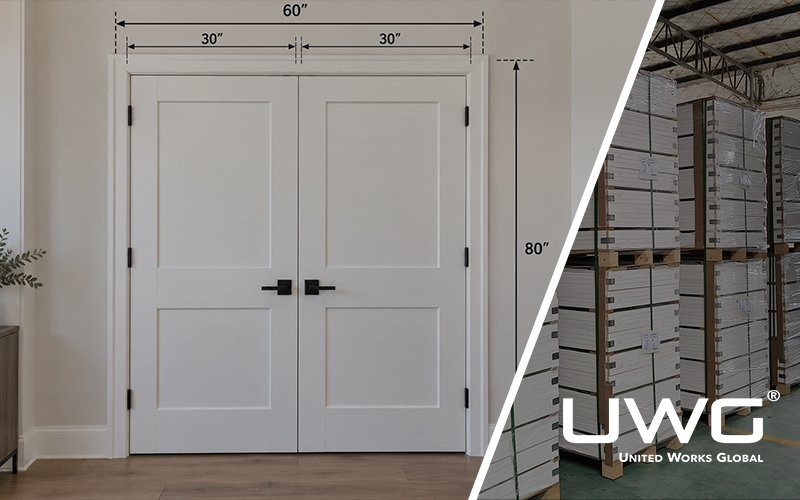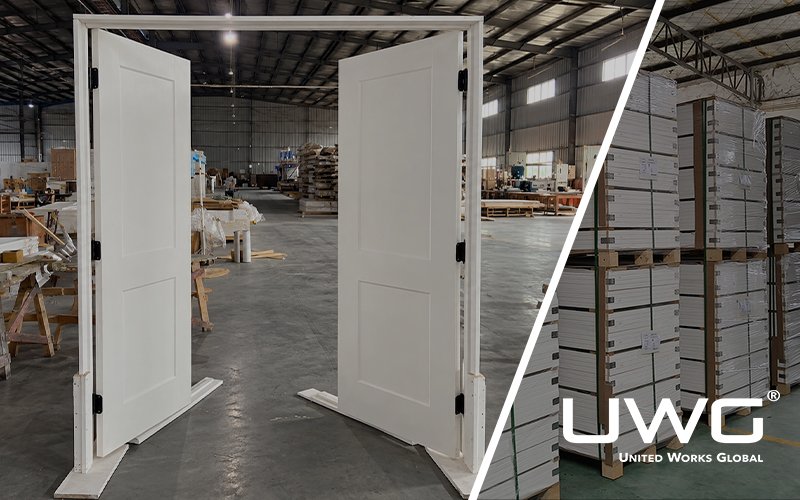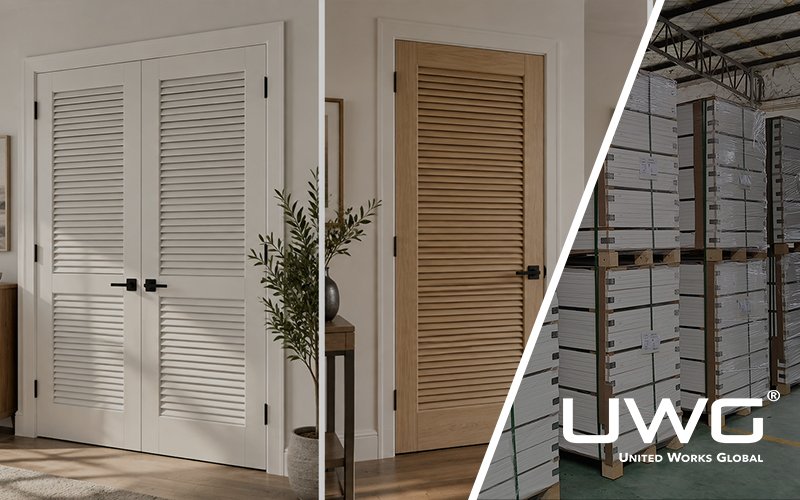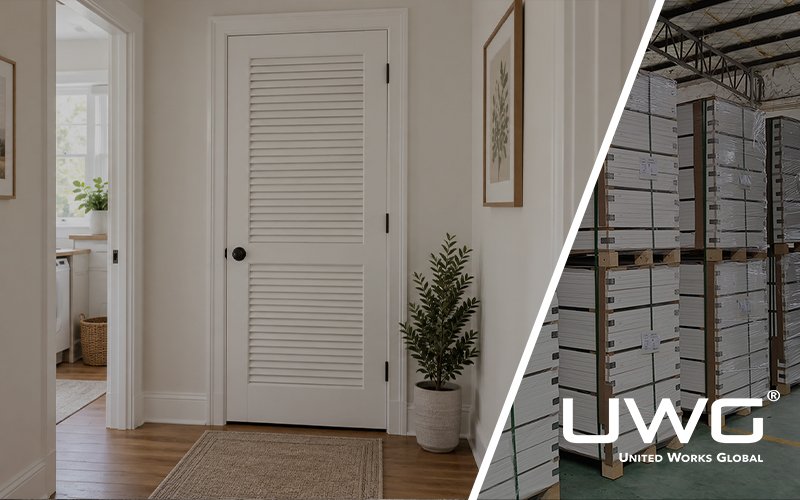
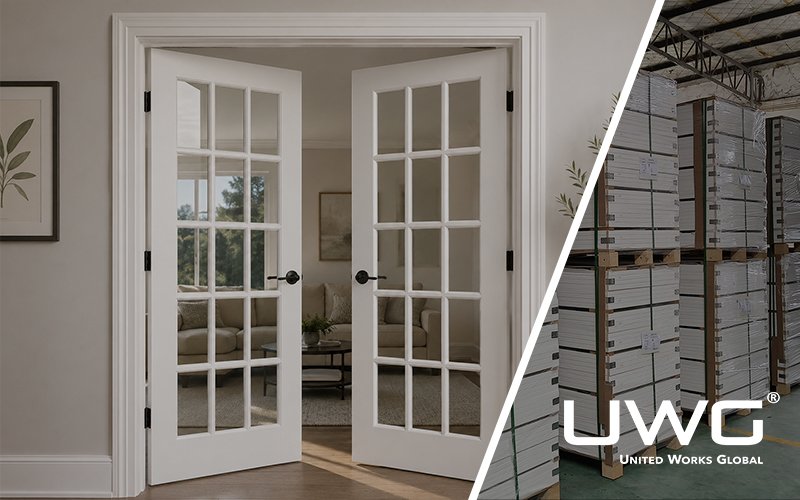
Interior French doors have become one of the most popular interior door choices in modern residential and commercial projects. Unlike traditional solid doors, French doors create an open, bright atmosphere while still providing separation between spaces. Their timeless appearance makes them suitable for contemporary, farmhouse, transitional, and traditional homes alike.
For builders, developers, distributors, and homeowners, selecting the right interior French door involves much more than choosing a beautiful design. Door material, glass type, frame construction, installation location, and long-term maintenance all influence project performance and customer satisfaction.
This guide explains the benefits, common materials, popular design ideas, and best applications for interior French doors to help you choose the right solution for your project.
What Are Interior French Doors?
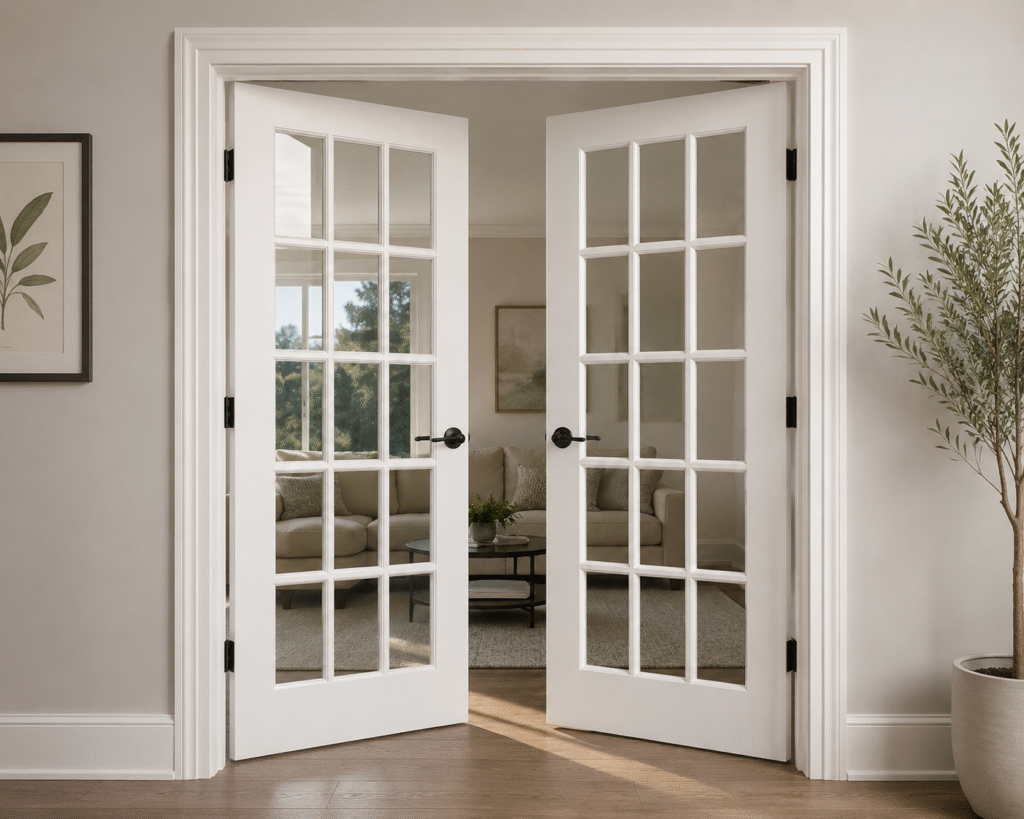
Interior French doors are doors featuring multiple glass panels framed by wood or engineered materials. Traditionally installed in pairs, they swing open from the center, although single French door configurations have become increasingly common in modern homes.
Unlike exterior French doors, interior models usually prioritize aesthetics and light transmission over weather resistance and security.
Typical features include:
- Multiple glass lites
- Wood or engineered frame
- Hinged operation
- Optional clear, frosted, tempered, or decorative glass
- Available as slab or prehung doors
Their primary purpose is to visually connect spaces while maintaining functional separation.
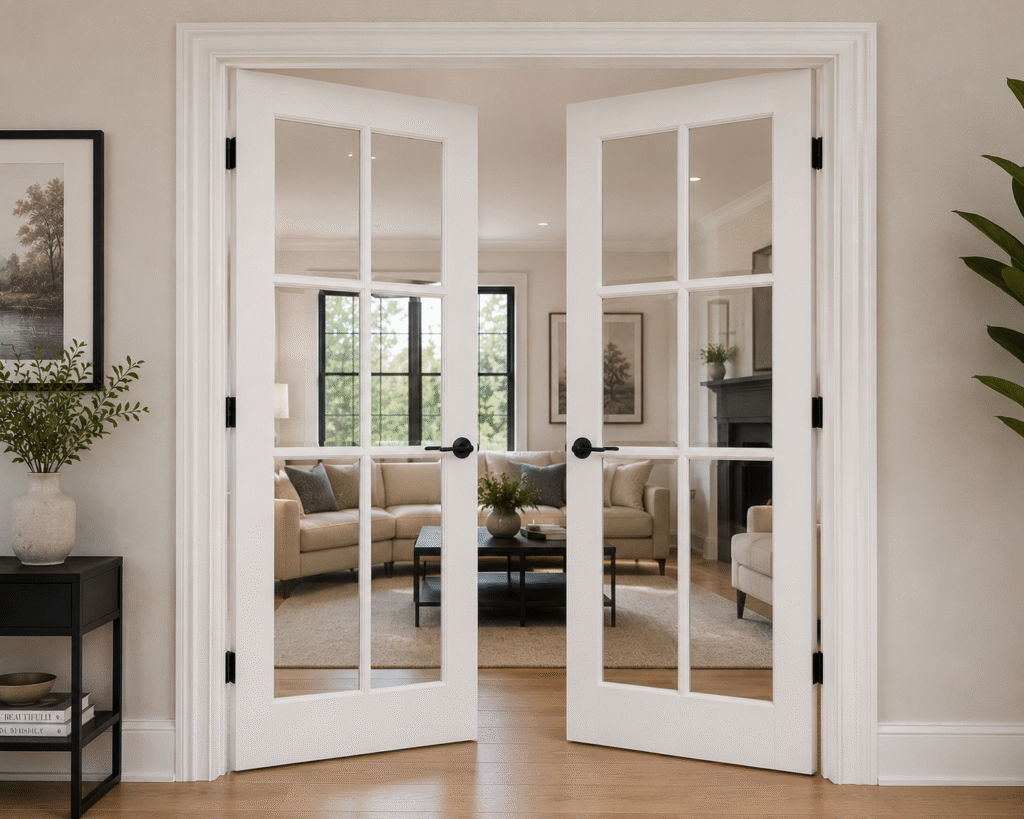
Benefits of Interior French Doors
Interior French doors provide advantages beyond appearance.
Increase Natural Light
Glass panels allow sunlight to flow throughout the home, reducing dark hallways and creating brighter living spaces. This is especially valuable in homes with limited window exposure.
Create an Open Feeling
Even when closed, French doors maintain visual continuity between rooms, making interiors appear larger and more inviting.
Improve Interior Design
French doors work with nearly every design style, including:
- Modern
- Contemporary
- Farmhouse
- Colonial
- Traditional
- Scandinavian
They can also become an architectural focal point inside the home.
Flexible Privacy
Depending on the glass selected, French doors can balance openness and privacy.
Examples include:
- Clear glass for visibility
- Frosted glass for offices
- Reeded glass for bathrooms
- Decorative glass for luxury interiors
Increase Property Value
French doors are often considered an upgrade compared to standard flush or molded interior doors, adding perceived value during resale.
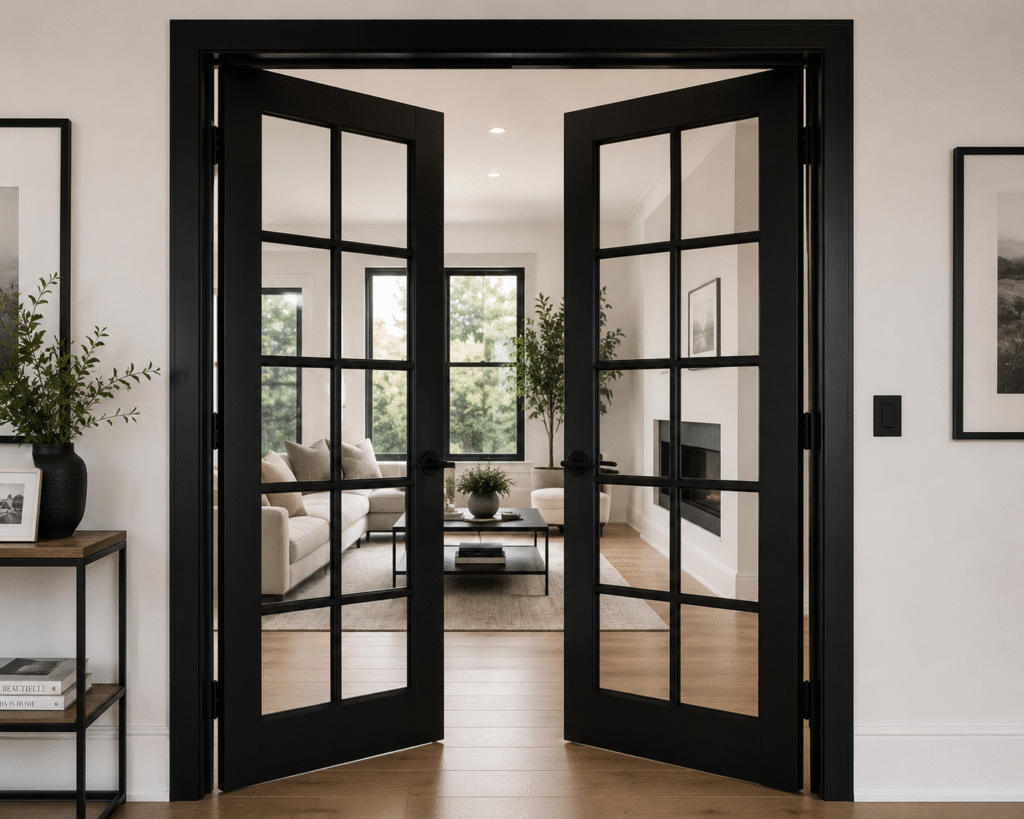
Common Materials for Interior French Doors
Material selection affects durability, appearance, maintenance, and project cost.
| Material | Advantages | Limitations | Best Applications |
|---|---|---|---|
| Solid Wood | Premium appearance, long lifespan, repairable | Higher cost, may expand or shrink | Luxury homes |
| MDF | Smooth painted finish, affordable, stable | Not suitable for excessive moisture | Bedrooms, living rooms |
| HDF Molded | Cost-effective, consistent quality | Limited custom designs | Volume residential projects |
| Glass with Wood Frame | Elegant appearance, excellent light transmission | Requires regular cleaning | Dining rooms, offices |
| Steel Frame | Modern industrial style, durable | Higher weight and cost | Contemporary commercial interiors |
| Composite/WPC | Moisture resistant, low maintenance | Fewer premium finish options | Laundry rooms, humid environments |
For large residential developments, MDF and HDF French doors are often the preferred choice because they offer an excellent balance of cost, consistency, and appearance.
Popular Interior French Door Design Ideas
Living Room to Dining Room
Double French doors create an elegant transition while allowing both spaces to remain visually connected.
Home Office
Frosted glass French doors provide privacy without making the workspace feel enclosed.
Master Bedroom
French doors leading to a sitting room or walk-in closet create a luxury hotel-inspired appearance.
Kitchen Entrance
Glass French doors help reduce cooking noise while preserving natural light.
Library or Study
Traditional divided-lite French doors complement classic wood cabinetry and bookshelves.
Home Gym
Clear glass doors maintain openness while separating workout equipment from living spaces.
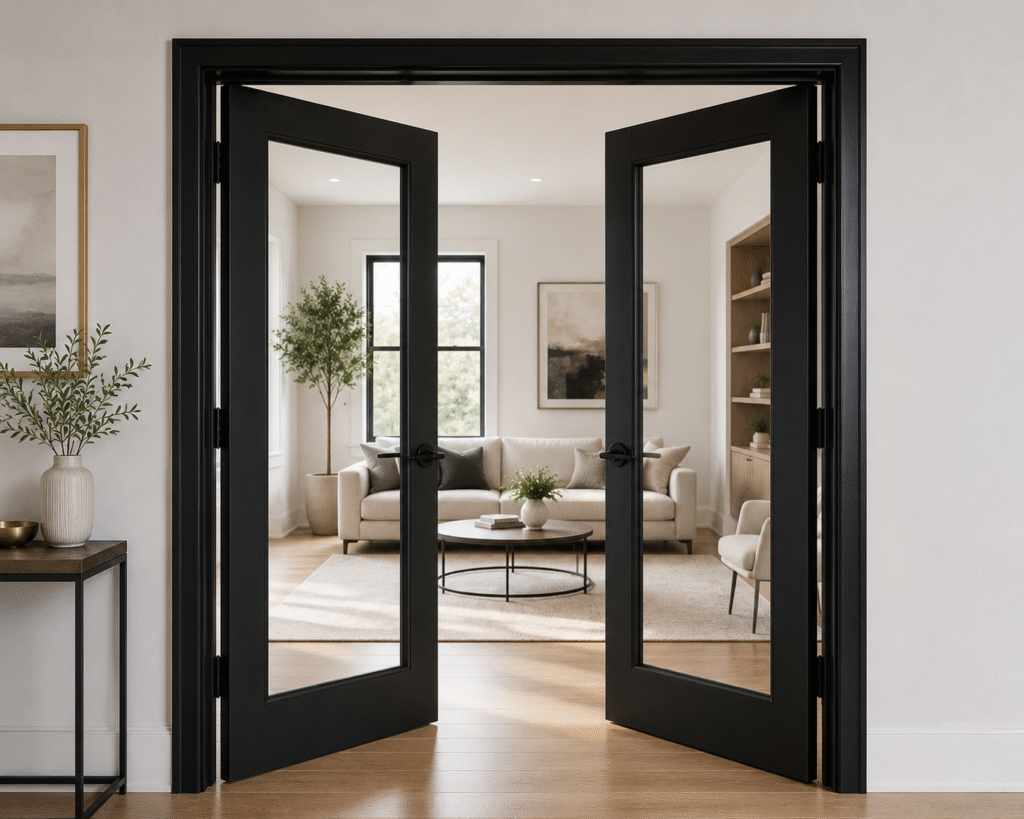
Choosing the Right Glass
The glass type significantly affects functionality.
| Glass Type | Privacy | Light Transmission | Typical Applications |
|---|---|---|---|
| Clear Glass | Low | Excellent | Living rooms |
| Frosted Glass | High | Good | Home offices |
| Tempered Glass | Medium | Excellent | Family homes |
| Reeded Glass | Medium-High | Good | Bathrooms |
| Decorative Glass | Medium | Moderate | Luxury interiors |
Tempered safety glass is recommended for most residential projects due to improved impact resistance and compliance with modern building codes.
Where Are Interior French Doors Commonly Used?
Interior French doors are suitable for numerous residential and commercial spaces.
Common applications include:
- Living room
- Dining room
- Home office
- Study room
- Library
- Kitchen entrance
- Master suite
- Walk-in closet
- Conference room
- Reception area
Builders increasingly specify French doors in open-concept floor plans where homeowners want both flexibility and natural light.
Expert Buying Tips
Based on our experience supplying interior doors for builders and distributors across North America, the following recommendations can help improve long-term project value:
- Choose tempered glass for better safety and code compliance.
- For painted finishes, MDF French doors provide a smooth, consistent surface with excellent cost performance.
- In moisture-prone areas such as laundry rooms, select composite or WPC frames to reduce maintenance.
- Match the door style with other interior doors throughout the home to create a cohesive appearance.
- For production housing, prehung French door systems reduce installation time and improve job-site efficiency.
Selecting the appropriate frame, hinges, and glass option during the planning stage can also minimize future adjustments and service calls.
Frequently Asked Questions About Interior French Doors
Q: What are the primary benefits of installing interior French doors in residential layouts?
A: Interior French doors drastically increase natural light flow across dark corridors and create an open, spacious feeling by preserving visual continuity even when closed. They also serve as an elegant interior design focal point across multiple architectural styles and add significant perceived property value over standard flush or molded interior doors during resale.
Q: Which frame materials are recommended for volume production housing versus moisture-prone areas?
A: For large-scale production housing and volume residential developments, MDF and HDF molded French doors are highly preferred because they provide an excellent balance of cost, aesthetic consistency, and a smooth surface for painted finishes. In high-moisture or humid environments like laundry rooms, composite or WPC (Wood Plastic Composite) frames are recommended to maximize moisture resistance and minimize long-term maintenance.
Q: How do clear, frosted, and reeded glass configurations compare regarding privacy and light transmission?
A: Clear glass offers excellent light transmission but low privacy, making it perfect for connecting living and dining areas. Frosted glass delivers good light transmission combined with high privacy, which is ideal for home offices. Reeded glass provides good light transmission with medium-high privacy, making it a popular specification for bathrooms.
Q: Why should production homebuilders prioritize prehung French door systems over slab doors?
A: For large-scale production housing, prehung French door systems are strongly recommended because they drastically reduce installation time and maximize on-site labor efficiency. Additionally, builders should ensure all specified units utilize tempered safety glass to guarantee high impact resistance and maintain strict compliance with modern building codes.
Conclusion
Interior French doors combine elegance, functionality, and flexibility in a way that few interior door styles can match. By increasing natural light, improving room connectivity, and complementing a wide range of architectural styles, they remain one of the most popular choices for modern residential and commercial interiors.
Whether you’re building custom homes, developing multifamily projects, or sourcing products for distribution, understanding the differences in materials, glass options, and applications will help you choose the right French door for every project. A carefully selected interior French door not only enhances aesthetics but also delivers lasting value, making it a worthwhile investment for both builders and homeowners.
Articles that you may be interested in:
Where French Doors Work Best in Modern Floor Plans
French Door Glass Options Explained: Clear vs Frosted vs Decorative Grids