Open shelving and closed cabinets are two of the most widely used storage systems in modern kitchen design. While they serve the same functional purpose, they differ significantly in aesthetics, storage efficiency, and long-term maintenance. For builders, choosing the right solution—or combination of both—can directly influence project cost, buyer preference, and overall kitchen performance.
Open shelving and closed cabinets serve different roles depending on design goals, budget, and user expectations. Open shelving offers a modern, lightweight look and lower material cost, making it suitable for small or display-focused kitchens, but it requires higher maintenance and organization discipline. Closed cabinets provide maximum storage capacity, cleaner visual appearance, and better long-term practicality, making them the dominant choice in residential construction. In terms of cost, open shelving is generally more affordable, while closed cabinetry increases project cost but improves usability and resale value. For builders, the most effective solution is often a hybrid approach combining closed base cabinets with selective open shelving to balance cost, function, and visual appeal.
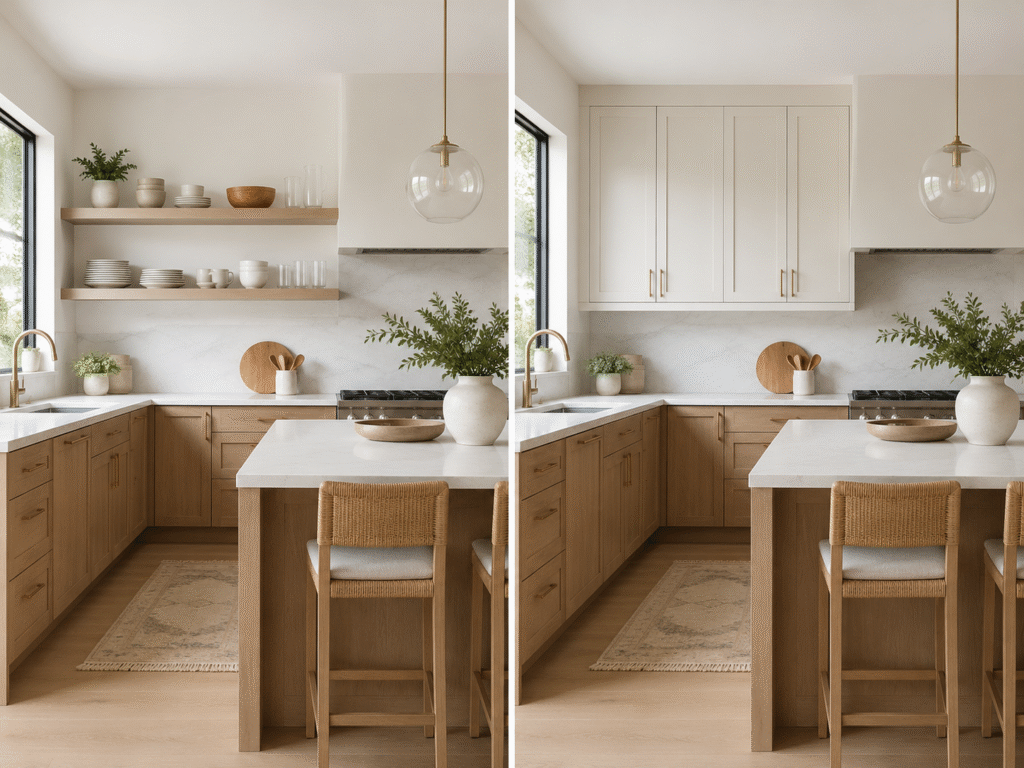
What Is Open Shelving?
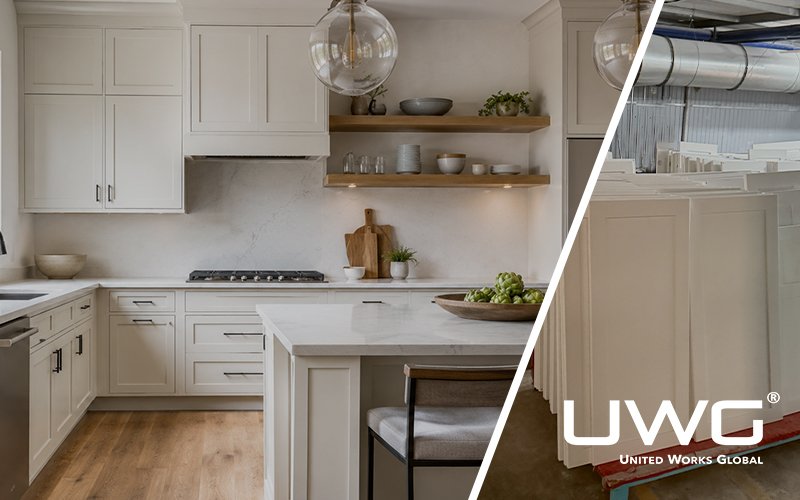
Open shelving refers to kitchen storage systems without cabinet doors, typically used for displaying dishes, glassware, or decorative items.
Key Characteristics:
- No cabinet doors
- Fully visible storage
- Lightweight visual appearance
- Easy access to frequently used items
Open shelving has become increasingly popular in modern and Scandinavian-style kitchens due to its minimal and open aesthetic.
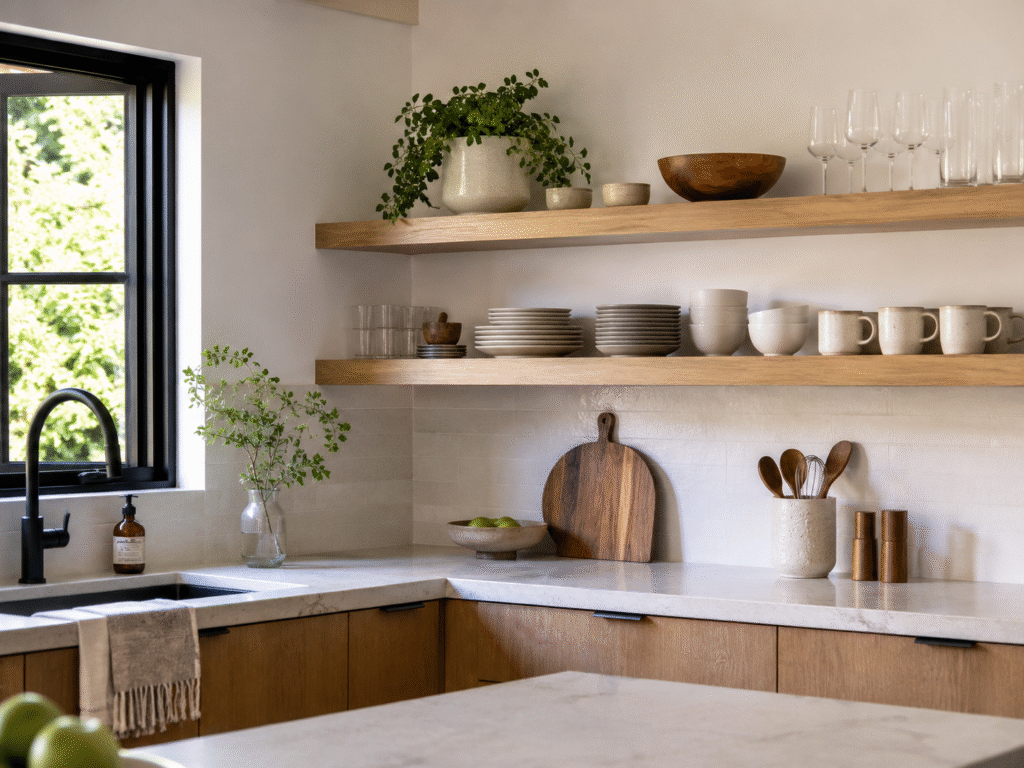
What Are Closed Cabinets?
Closed cabinets are traditional kitchen storage units equipped with doors that fully conceal stored items.
Key Characteristics:
- Fully enclosed storage
- Hinged or sliding doors
- Clean and uniform appearance
- High storage efficiency
Closed cabinetry remains the dominant choice in North American residential construction due to its practicality and broad market acceptance.
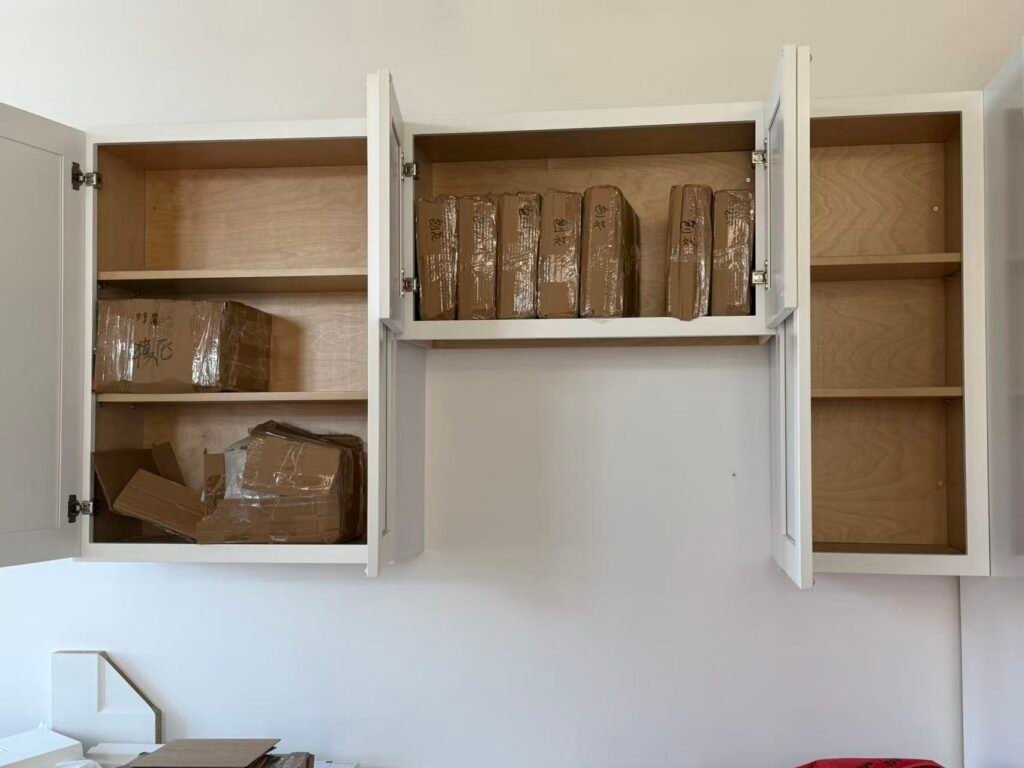
Pros and Cons of Open Shelving
Advantages
1. Modern Aesthetic Appeal
Open shelving creates a light, airy, and contemporary kitchen look.
2. Lower Material Cost
Without doors, hinges, and additional hardware, open shelving reduces overall material and manufacturing costs.
3. Easy Accessibility
Frequently used items are visible and easy to reach, improving daily workflow.
4. Ideal for Small Spaces
Helps visually expand compact kitchens by reducing visual weight.
Disadvantages
1. Higher Maintenance Requirements
Items are exposed to dust, grease, and moisture.
2. Limited Storage Efficiency
Not suitable for bulk storage or clutter-heavy households.
3. Requires Constant Organization
Visual appeal depends heavily on consistent arrangement and cleanliness.
Pros and Cons of Closed Cabinets
Advantages
1. Maximum Storage Capacity
Closed cabinets fully utilize internal space for efficient storage.
2. Clean and Uniform Appearance
All items are hidden behind doors, creating a consistent visual style.
3. Better Protection
Contents are protected from dust, grease, and moisture.
4. Higher Resale Value
Most homebuyers still prefer enclosed storage systems.
Disadvantages
1. Higher Cost
Requires doors, hinges, and additional installation labor.
2. Heavier Visual Impact
If not properly designed, closed cabinetry can make small kitchens feel more enclosed.
3. Less Immediate Accessibility
Items are not visible without opening cabinet doors.
Cost Comparison: Open Shelving vs Closed Cabinets
| Category | Open Shelving | Closed Cabinets |
|---|---|---|
| Material Cost | Low | Medium–High |
| Hardware Cost | Minimal | Higher |
| Installation Cost | Lower | Higher |
| Maintenance Cost | Higher | Lower |
| Long-Term Value | Moderate | High |
Best Kitchen Layout Applications
1. Best Uses for Open Shelving
Small Modern Kitchens
Ideal for apartments and compact residential units to enhance openness.
Feature Display Walls
Commonly installed above sinks or countertops for decorative purposes.
Frequently Used Items Zones
Suitable for dishes, cups, and spices used daily.
2. Best Uses for Closed Cabinets
Family Kitchens
Best for households requiring large storage capacity.
High-End Residential Projects
Provides a clean, premium, and consistent aesthetic.
High-Usage Kitchens
More durable and easier to maintain long term.
3. Hybrid Kitchen Design (Recommended for Builders)
In most residential projects, a hybrid approach delivers the best performance:
- Closed base cabinets for heavy storage
- Closed or partially open upper cabinets
- Selective open shelving for visual balance
This approach improves:
- Functionality
- Cost efficiency
- Design flexibility
- Market appeal
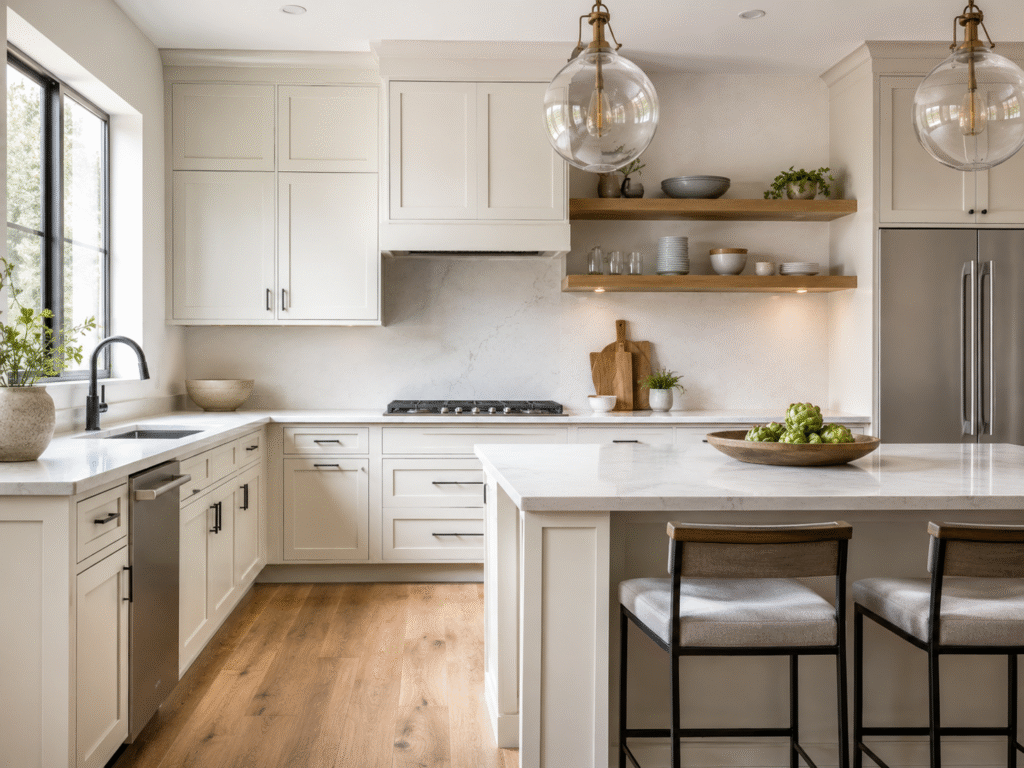
Expert Builder Insights
Based on residential project experience, the choice between open shelving and closed cabinets is not purely aesthetic—it is also a strategic decision related to market positioning and cost control.
Builders should consider:
- Target buyer demographics
- Budget constraints
- Kitchen size and layout
- Long-term maintenance expectations
In production housing, closed cabinetry remains the standard due to its practicality and durability. However, in modern design-focused projects, integrating open shelving strategically can significantly enhance perceived design value without substantially increasing cost.
Common Design Mistakes
Overusing Open Shelving
Can lead to visual clutter and reduced functionality.
Ignoring Real Storage Needs
Prioritizing aesthetics over practicality can reduce homeowner satisfaction.
Inconsistent Material Coordination
Poor integration between open and closed elements reduces design quality.
Frequently Asked Questions About Open Shelving vs. Closed Cabinets
Q: What are the main advantages and limitations of specifying open shelving in a kitchen layout?
A: Open shelving creates a light, airy, and contemporary aesthetic that visually expands compact spaces while offering lower initial material, hardware, and installation costs. However, its key limitations include limited overall storage efficiency, a strict requirement for constant organization to prevent visual clutter, and higher maintenance needs since exposed items are vulnerable to dust, grease, and moisture.
Q: Why do closed cabinets remain the dominant storage choice in North American residential construction?
A: Closed cabinetry remains the standard selection due to its superior practicality, high storage efficiency, and ability to fully utilize internal space while maintaining a clean, uniform appearance. By concealing clutter behind doors and protecting contents from dust and grease, closed cabinets align with broad market preferences and deliver a higher resale value for homebuyers.
Q: How do open shelving and closed cabinets compare regarding overall project costs?
A: Open shelving has a low material cost, minimal hardware requirements, and a lower installation cost, making it highly affordable upfront. Closed cabinetry carries a medium-to-high material cost alongside higher hardware and installation labor costs; however, it requires much lower long-term maintenance and retains a higher long-term asset value.
Q: What is the recommended hybrid approach for production homebuilders and developers?
A: For optimal performance, a hybrid kitchen design is highly recommended. This balanced strategy combines closed base cabinets for heavy, bulk storage with closed or partially open upper cabinetry, adding selective open shelving to create visual interest. This hybrid method improves functionality, provides design flexibility, and enhances property marketability while keeping construction costs controlled.
Conclusion
Open shelving and closed cabinets each play important roles in modern kitchen design. Open shelving offers a cost-effective, modern aesthetic but requires higher maintenance and careful organization. Closed cabinets provide superior storage capacity, durability, and long-term practicality, making them the dominant choice in residential construction.
For builders, the most effective solution is typically a hybrid system that combines both approaches based on project requirements, budget, and target market. This balanced strategy ensures both functional efficiency and strong visual appeal in residential kitchen design.
Articles that you may be interested in:
Plywood vs. Particle Board Cabinets: Which Is Better for Your Project?
Solid Wood vs. MDF for Painted Cabinets: Which Is Better for Your Project?