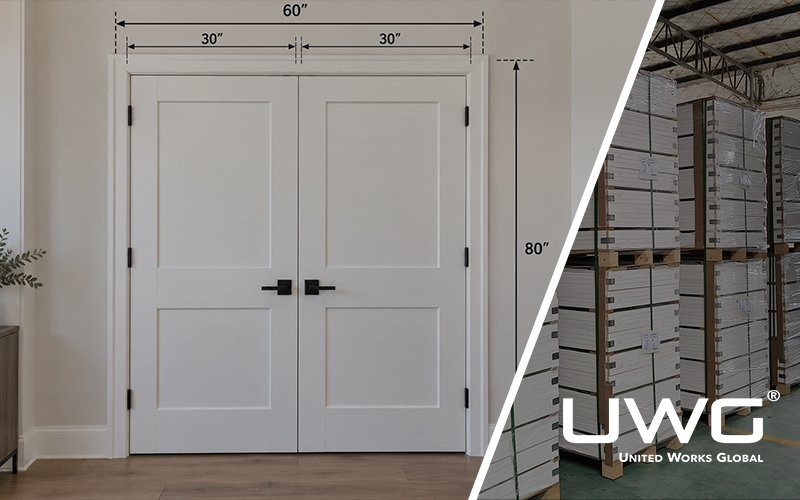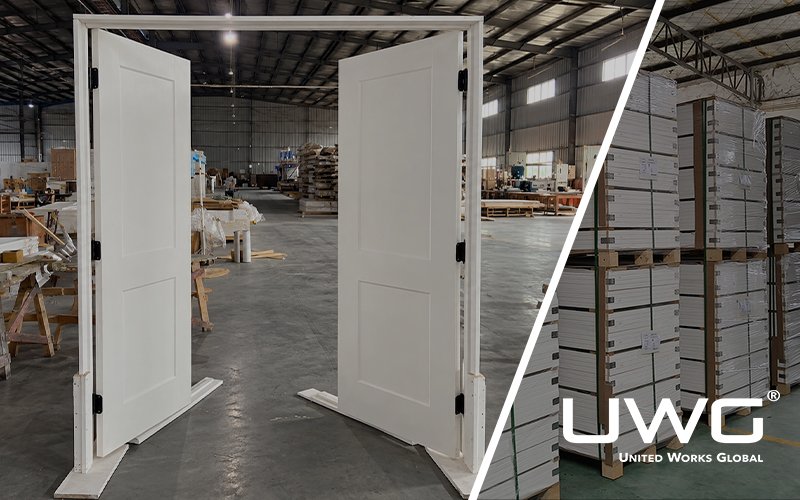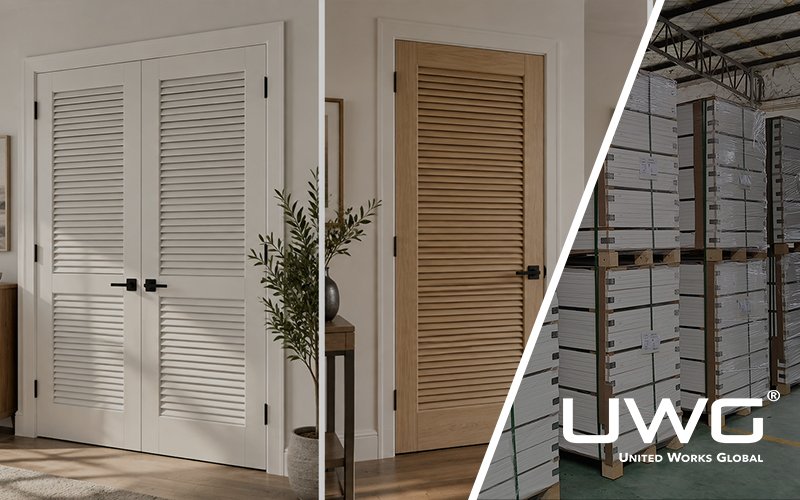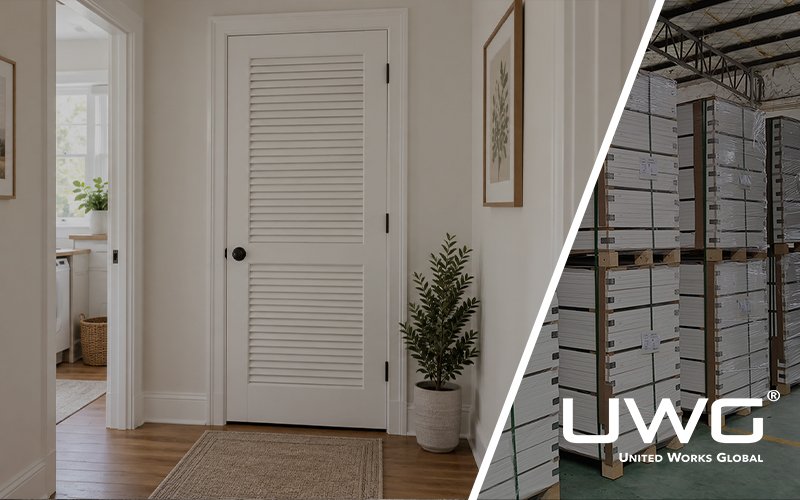
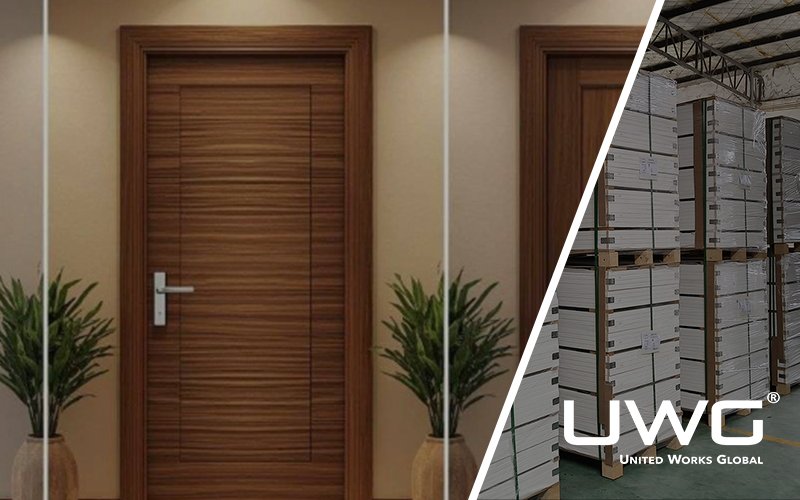
Builders often deal with moisture issues, repainting costs, and inconsistent door quality across large housing projects. Traditional wooden doors increase maintenance workload and project timelines. PVC paint-free doors provide a more stable and low-maintenance alternative suitable for modern construction demands.
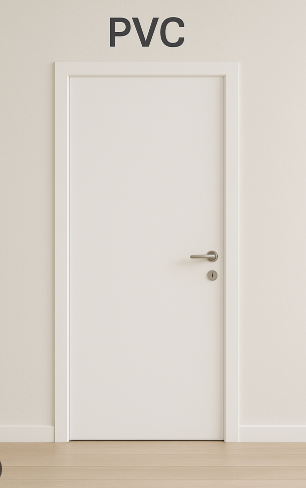
A PVC paint-free door is a door made from polyvinyl chloride-based panels that do not require painting or surface finishing. Its core structure usually includes a PVC skin, engineered wood or foam core, and a sealed surface layer. It is widely used in residential and commercial projects due to its low maintenance, moisture resistance, and cost efficiency. For builders, it reduces labor time and long-term repainting costs while maintaining stable appearance quality.
To decide whether PVC paint-free doors fit your project, it is important to understand how they are built, what materials are used, and where they perform best.
What Is a PVC Paint-Free Door Made Of?
A PVC paint-free door is not a single-material product. It is usually a composite structure designed for cost efficiency and durability:
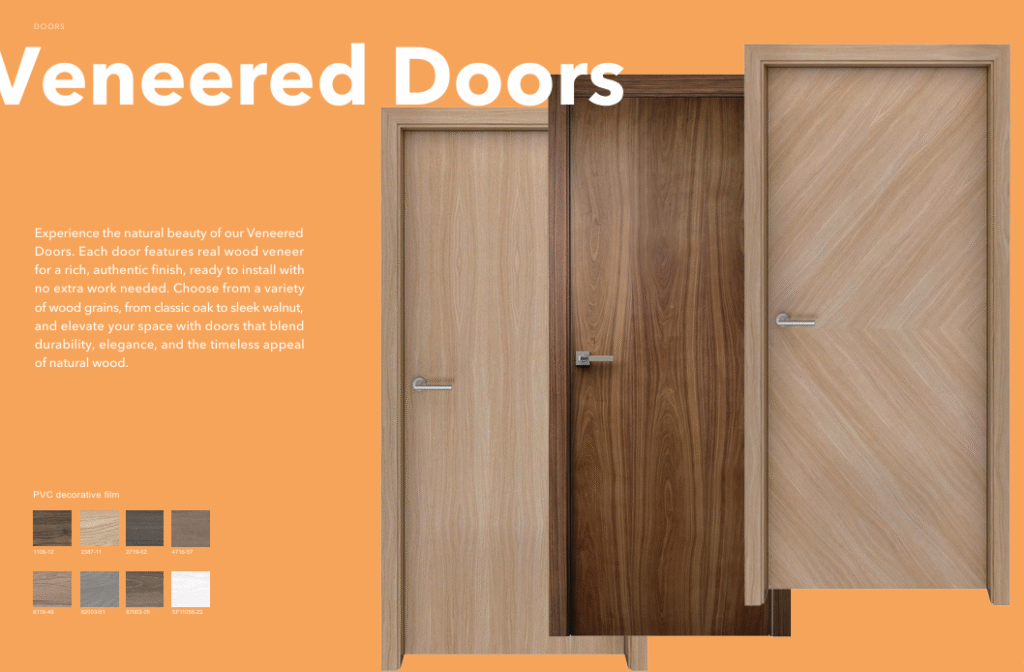
- PVC surface layer: Decorative film that eliminates the need for painting
- Core material: Often engineered wood, MDF, or lightweight foam
- Edge sealing: Prevents moisture penetration and deformation
- Internal reinforcement (varies): Improves stability for long-term use
In most construction projects I’ve seen, this structure is optimized for fast installation and uniform appearance across multiple units.
Why Builders Use PVC Paint-Free Doors
From a contractor’s perspective, the biggest advantage is time efficiency.
Instead of:
- sanding
- priming
- painting
- drying cycles
PVC paint-free doors arrive ready to install.
This reduces:
- labor dependency
- on-site finishing errors
- project delays
For large-scale residential developments, this difference becomes significant in both cost and scheduling.
Pros of PVC Paint-Free Doors
1. Low maintenance
No repainting required during normal use. Cleaning is usually enough.
2. Moisture resistance
Better performance than many untreated wood-based doors in humid environments.
3. Cost efficiency
Lower total lifecycle cost in mass housing projects.
4. Consistent appearance
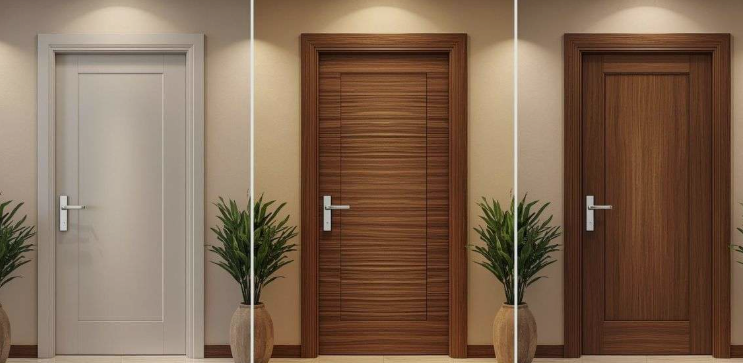
Factory-finished surface ensures uniformity across units.
5. Fast installation
Suitable for tight construction schedules.
Cons of PVC Paint-Free Doors
1. Limited high-end aesthetic perception
They may not match solid wood in premium luxury projects.
2. Heat and impact limitations
Extreme heat or heavy impact can damage surface layers.
3. Repair difficulty
Surface damage is harder to restore compared to painted wood doors.
4. Material quality varies
Low-end products may have weak cores or poor adhesion of PVC layers.
What Are the Disadvantages of PVC Doors?
The main disadvantages include limited structural strength compared to solid wood or composite premium doors, and potential surface damage under harsh conditions. They are best used in controlled indoor environments rather than extreme exterior exposure.
What Is the Best Material for an Exterior Door?
For exterior use, builders typically consider:
- solid wood (high-end residential)
- fiberglass (weather-resistant performance)
- steel (security-focused applications)
PVC paint-free doors are generally not the first choice for exterior entrances, but they work well for interior doors in apartments, hotels, and office spaces.
Which Door Is Better, Composite or PVC?
Composite doors usually offer:
- stronger structure
- better insulation
- higher durability
PVC paint-free doors offer:
- lower cost
- faster installation
- simpler maintenance
For builders, the decision often depends on project budget vs. performance requirement.
Which Door Is Best, PVC or Fiber?
Fiber (fiberglass) doors generally perform better in:
- durability
- weather resistance
- long-term stability
PVC doors are better in:
- interior applications
- cost-sensitive projects
- large-scale standardized housing
Wooden Door Materials List
In construction projects, wooden doors can include:
- solid wood doors
- MDF doors
- plywood doors
- engineered wood doors
Wood-based doors still dominate premium interiors, but they require higher maintenance compared to PVC systems.
Fiberglass Door Overview
Fiberglass doors are commonly used for exterior applications due to their resistance to:
- moisture
- warping
- temperature changes
Compared to PVC paint-free doors, fiberglass is more durable but also more expensive.
PVC Door vs Aluminium Door for Bathroom
For bathroom applications, PVC paint-free doors are commonly used because:
- they resist moisture well
- they are lightweight
- they are cost-effective for multiple-unit projects
They are often selected in apartments and hotels where standardization matters more than premium aesthetics.
Summary
PVC paint-free doors are widely used in construction projects due to their low maintenance, moisture resistance, and cost efficiency. While not suitable for all premium applications, they are highly practical for large-scale residential and commercial developments where speed and consistency are priorities.What Is a PVC Paint-Free Door? Materials, Pros, Cons, and Uses for Builders
Articles that you may be interested in:
Molded vs Shaker vs Shaker-Style Molded Doors: Pros, Cons, Design and Cost Comparison