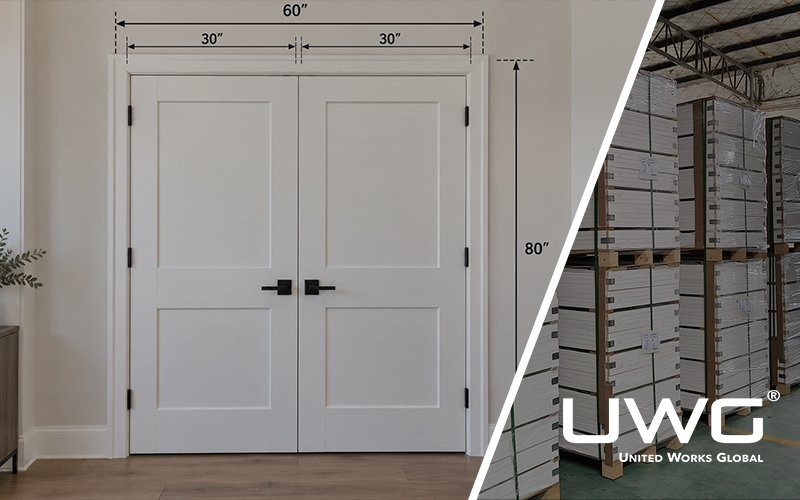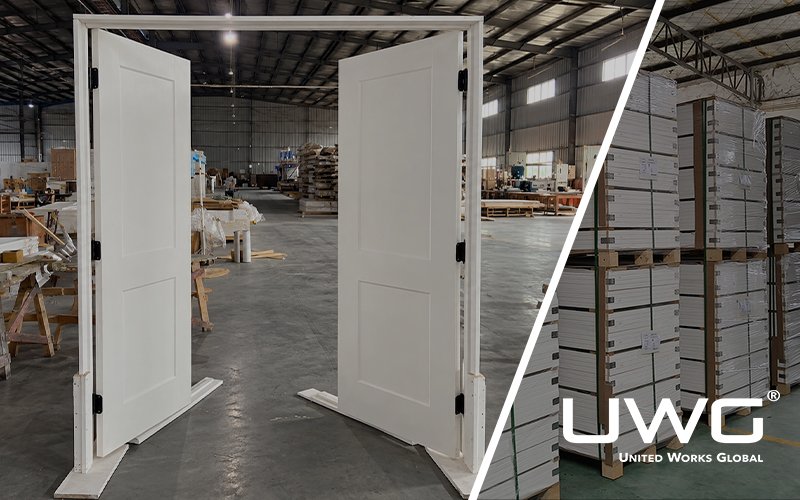
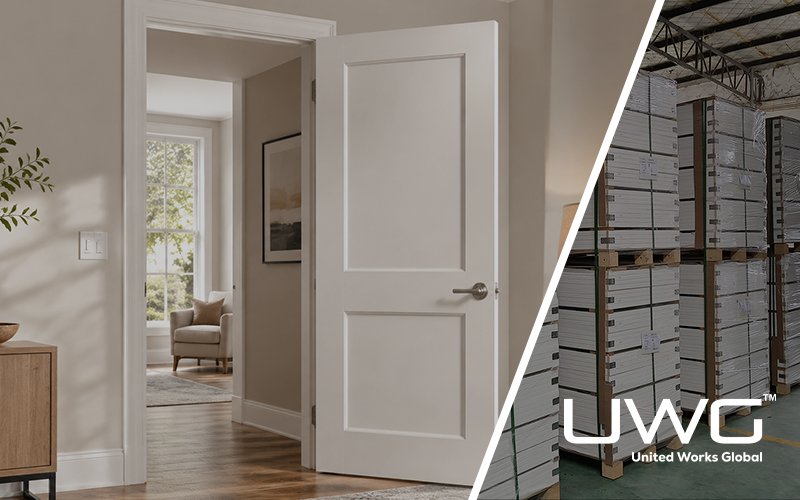
The Shaker door has become one of the most widely adopted interior door styles in North American residential construction. Its simple recessed-panel design, broad architectural compatibility, and cost-efficient production profile have made it a default specification across production housing, custom homes, and renovation projects.
However, as demand has expanded, the supplier landscape behind Shaker doors has become increasingly complex. Builders and wholesalers are no longer choosing between individual brands, but between fundamentally different production systems that vary in scale, customization depth, and supply chain reliability.
How should Shaker door suppliers actually be evaluated within the structure of the North American construction supply chain?
Shaker door manufacturers in North America are best evaluated through a supply chain segmentation model rather than a ranked list. The market is structured into three operational categories—high-volume manufacturers, semi-custom producers, and custom woodworking specialists—each serving distinct construction segments based on scalability, customization requirements, and project complexity.
1.Why the Shaker Door Market Is Structurally Segmented
The Shaker door manufacturing ecosystem does not evolve around branding competition alone. Instead, it is shaped by the structural requirements of the residential construction industry.
Different types of housing projects require fundamentally different supply chain characteristics:
- Production builders prioritize speed, cost efficiency, and repeatability
- Custom homebuilders prioritize design flexibility and material variation
- Renovation and specialty contractors prioritize precision and adaptability
These conflicting requirements have forced manufacturers to specialize in different operational models. As a result, the market has naturally segmented into three distinct supply chain categories.
This segmentation is not arbitrary—it reflects underlying production economics and demand structure within North American residential construction.

2. Three Operational Models in Shaker Door Manufacturing
2.1 High-Volume Manufacturers: Standardization-Driven Systems
This category exists to serve large-scale residential development projects where cost control and delivery consistency are the primary requirements.
These manufacturers optimize for:
- High-volume production efficiency
- Standardized product configurations
- Distribution network scalability
- Predictable lead times at scale
Their competitive advantage is not customization, but operational consistency.
Representative manufacturers:
- JELD-WEN
- Masonite
These companies dominate production housing supply chains because they align with the economics of large-scale construction.
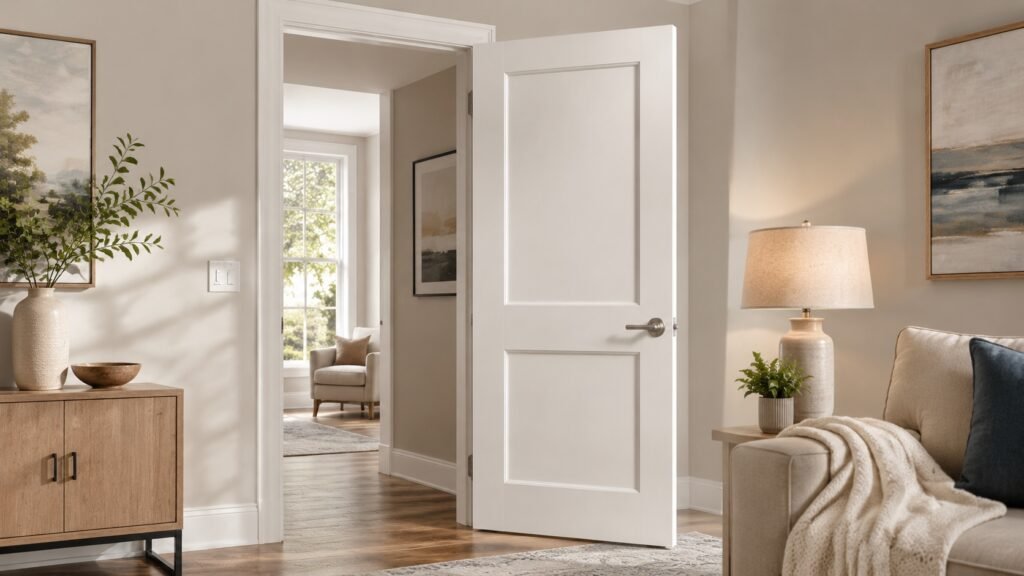
2.2 Semi-Custom Manufacturers: Balanced Flexibility Systems
Semi-custom manufacturers emerged as builders began demanding greater design flexibility without sacrificing production efficiency.
They operate within a controlled customization framework, offering:
- Expanded finish and material options
- Moderate dimensional flexibility
- Configurable design systems
- Structured production scheduling
This model represents a balance between scalability and customization depth, making it the most widely used segment in mid-to-high-end residential construction.
Representative manufacturers:
- MasterBrand Cabinets
- Wellborn Cabinet
- Dura Supreme Cabinetry
2.3 Custom Manufacturers: Design-Driven Production Systems
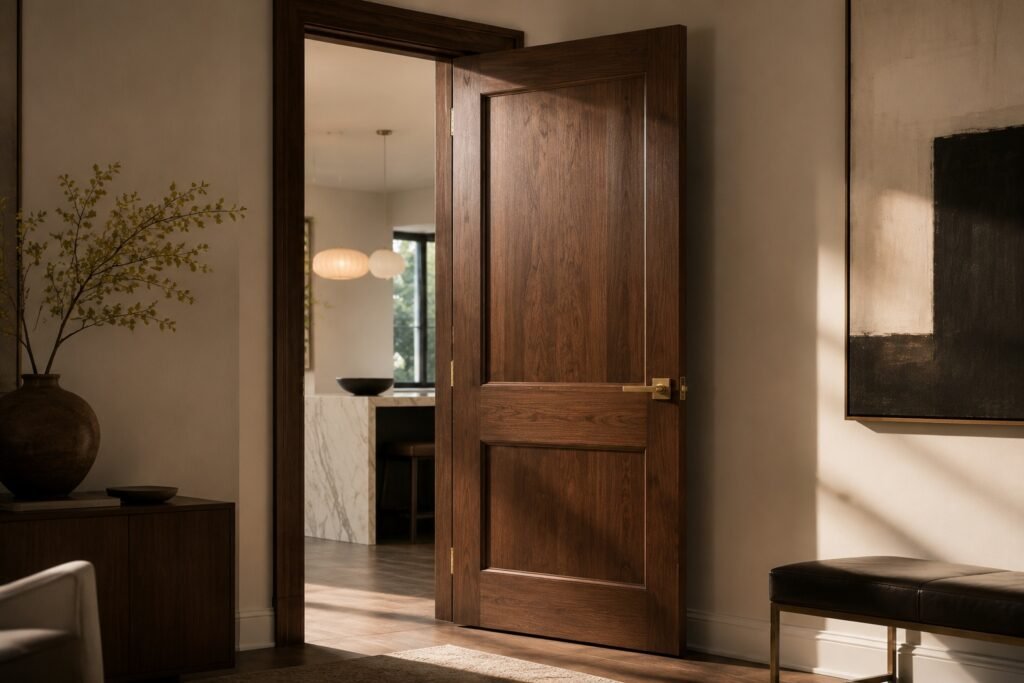
Custom manufacturers operate under a fundamentally different logic: production is driven by architectural intent rather than standardized output.
These systems support:
- Low-volume, high-variation production
- Full design customization
- Material flexibility
- Project-specific manufacturing workflows
This category is essential for architectural projects where standard configurations cannot satisfy design requirements.
Representative manufacturers:
- TruStile Doors
- WalzCraft
- Conestoga Wood Specialties
- Decore-ative Specialties
3. Manufacturer Capability Comparison Framework
Instead of evaluating manufacturers by brand strength, a more accurate approach is to compare them based on operational capability across supply chain dimensions.
| Capability Dimension | High-Volume | Semi-Custom | Custom Specialists |
|---|---|---|---|
| Production Scale | Very High | High | Low |
| Customization Depth | Low | Medium | Very High |
| Lead Time Stability | High | Medium-High | Medium |
| Cost Efficiency | Very High | Medium | Low |
| Design Flexibility | Low | Medium | Very High |
| Supply Chain Predictability | High | Medium | Low-Medium |
This framework highlights an important insight: no single manufacturer type is universally superior. Performance is context-dependent.
4. How Builders and Wholesalers Should Evaluate Suppliers
Supplier selection in the Shaker door market should not be based on brand familiarity or price comparison alone.
Instead, procurement decisions should be aligned with project requirements:
- Production housing projects require scalability and cost efficiency
- Mid-market residential projects require balanced customization and reliability
- Custom residential projects require design flexibility and material control
The most effective sourcing strategy is therefore not supplier selection, but supplier alignment.
5. Market Trends Reshaping Shaker Door Manufacturing
Several structural trends are reshaping the North American Shaker door supply chain:
- Increasing demand for MDF painted Shaker doors
- Expansion of semi-custom cabinetry systems
- Shorter lead time expectations from builders
- Greater emphasis on finish consistency across large projects
- Integration between manufacturing and distribution networks
These trends are reinforcing segmentation rather than eliminating it.
Manufacturers that can operate across multiple segments are gaining competitive advantage.
Frequently Asked Questions About the Shaker Door Supply Chain
Q: How is the North American Shaker door manufacturing market structurally organized?
A: Rather than a simple ranked list of brands, the market is organized through a supply chain segmentation model divided into three operational categories: high-volume manufacturers, semi-custom producers, and custom woodworking specialists. Each specific category serves distinct construction segments based on its production scalability, customization depth, and project design complexity.
Q: What are the primary characteristics and examples of high-volume Shaker door manufacturers?
A: High-volume manufacturers utilize standardization-driven systems optimized for massive production efficiency, standardized product configurations, distribution network scalability, and highly predictable lead times at scale. Representative manufacturers in this category include JELD-WEN and Masonite, who dominate production housing supply chains because their operations align with the tight cost-control economics of large-scale builds.
Q: How do semi-custom and custom specialists balance design flexibility against production scale?
A: Semi-custom manufacturers (such as MasterBrand Cabinets, Wellborn Cabinet, and Dura Supreme Cabinetry) use balanced flexibility systems that offer expanded finish choices, material options, and configurable dimensions without completely sacrificing production efficiency. Custom specialists (such as TruStile Doors, WalzCraft, Conestoga Wood Specialties, and Decore-ative Specialties) run design-driven production systems engineered for low-volume, high-variation workflows dictated entirely by architectural intent.
Q: What structural market trends are currently reshaping the Shaker door procurement landscape?
A: The North American supply chain is currently being reshaped by an increasing demand for MDF painted Shaker doors, the expansion of semi-custom cabinetry configurations, compressed lead time expectations from on-site builders, a greater emphasis on batch-to-batch finish consistency across large projects, and tighter structural integration between manufacturing and regional distribution networks.
Conclusion
The North American Shaker door market should not be understood as a list of competing manufacturers, but as a structured supply chain composed of distinct operational models.
Each manufacturing category exists to serve a different segment of the construction industry, defined by scale, design complexity, and project requirements.
For builders and wholesalers, the most effective procurement strategy is not identifying the “best” manufacturer, but selecting the manufacturing model that aligns with the specific needs of each project.
In this context, competitive advantage is determined not by brand selection, but by supply chain fit, operational reliability, and production capability alignment.
Articles that you may be interested in:
2026 Ultimate Guide: Top 10 Door Manufacturers for Builders & Contractors
Are There Overseas Manufacturers That Can Deliver Like Local Suppliers?