
Choosing interior doors for a builder project involves much more than comparing prices. The right door specification can influence installation efficiency, occupant satisfaction, maintenance costs, and even a building’s long-term operating value. Although solid core and hollow core doors often look similar after installation, their internal construction leads to very different performance. For builders and wholesalers, understanding these differences helps ensure every project achieves the right balance between quality, budget, and lifecycle value.
For builder projects, the best door is not necessarily the most expensive one—it is the one that best fits the project’s performance requirements. Solid core doors are typically selected for projects that demand better durability, sound insulation, and a premium user experience, while hollow core doors remain an excellent choice for cost-sensitive developments where installation efficiency and budget control are the primary priorities.
What Are Solid Core Doors?
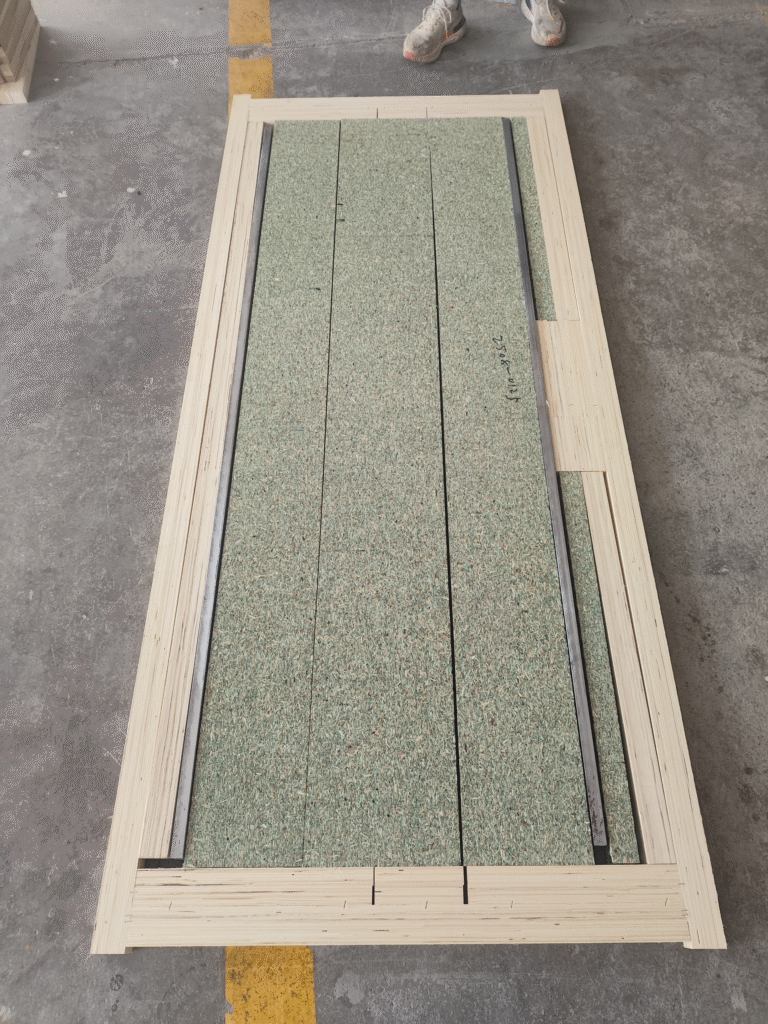
Solid core doors are engineered doors built around a dense internal core and finished with wood veneer, laminate, MDF, or HDF surfaces. Unlike traditional solid wood doors, they are manufactured using engineered materials that provide consistent dimensions, reliable structural performance, and improved resistance to seasonal movement.
Common core materials include:
- Engineered wood
- Particleboard
- MDF (Medium Density Fiberboard)
- HDF (High Density Fiberboard)
For higher-performance engineered doors, manufacturers often incorporate LVL (Laminated Veneer Lumber) into door stiles and rails. LVL is engineered by laminating multiple layers of wood veneer under controlled pressure, creating a material with greater dimensional stability than conventional lumber.
Solid core doors are commonly specified for apartments, hotels, office buildings, schools, healthcare facilities, and other projects where durability, privacy, and acoustic performance are priorities.
What Are Hollow Core Doors?
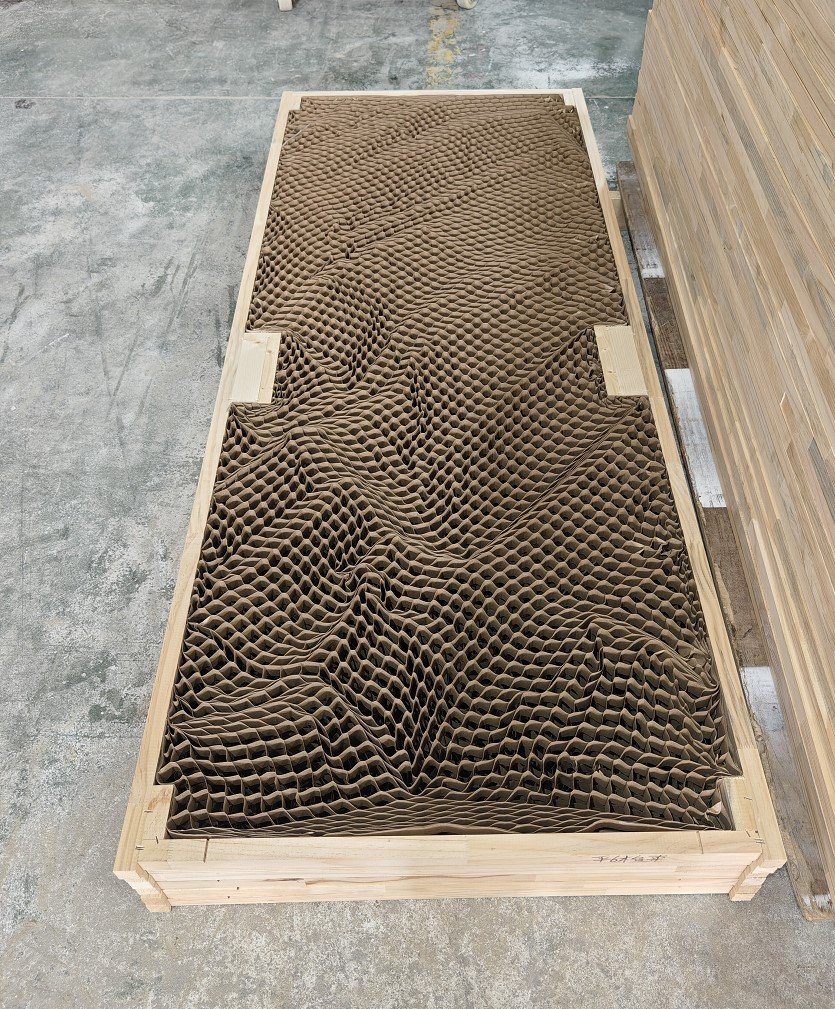
A hollow core door is designed with a lightweight honeycomb or grid structure inside a timber frame, finished with MDF or plywood face panels. Although referred to as “hollow,” these doors contain an internal support structure that provides sufficient rigidity for normal residential use while significantly reducing overall weight.
Because they require less material, hollow core doors offer several practical advantages:
- Lower manufacturing costs
- Easier transportation
- Faster installation
- Reduced labor requirements
- Better suitability for high-volume residential developments
For many builders, hollow core doors remain an efficient solution when project budgets take priority over premium performance.
Solid Core vs Hollow Core Doors: Understanding the Real Difference
Many comparisons focus only on purchase price, but experienced builders evaluate doors based on their contribution to the entire project lifecycle.
| Comparison Factor | Solid Core Doors | Hollow Core Doors |
|---|---|---|
| Internal Construction | Dense engineered core | Honeycomb or lightweight core |
| Weight | Heavy | Lightweight |
| Sound Insulation | Excellent | Moderate |
| Impact Resistance | High | Moderate |
| Service Life | Long | Moderate |
| Installation Speed | Slower | Faster |
| Initial Investment | Higher | Lower |
| Lifecycle Maintenance | Lower | Higher in heavy-use areas |
| Typical Applications | Hotels, apartments, offices | Affordable housing, renovations |
Instead of asking which door is universally better, builders often achieve better project outcomes by matching door performance to the intended use of each space.
How Door Selection Affects Project Performance
Door performance extends well beyond appearance.
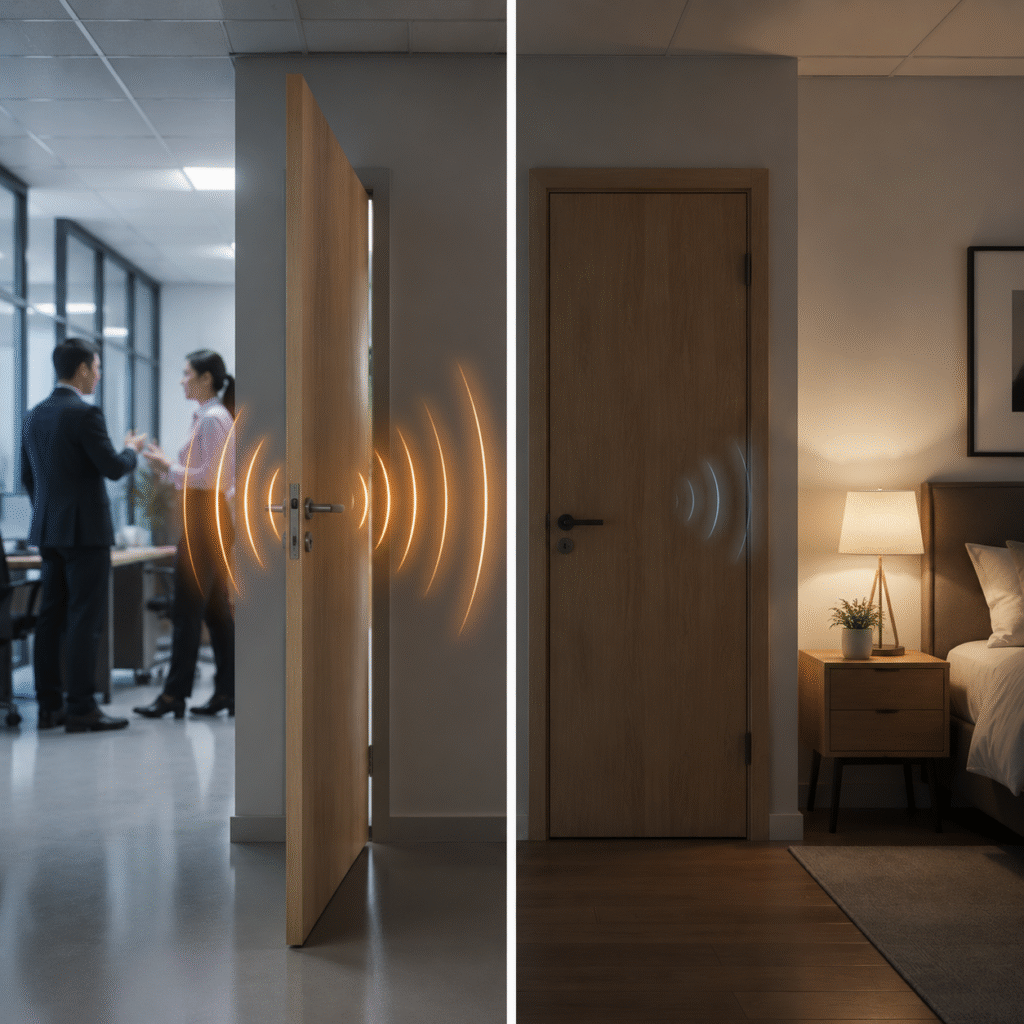
A heavier, denser door naturally reduces sound transmission between rooms, making solid core doors particularly suitable for hotels, apartment buildings, offices, and student housing where occupant comfort is important.
Hollow core doors, on the other hand, reduce transportation weight and installation time. On projects involving hundreds of units, even small labor savings per door can significantly improve installation efficiency.
Based on our experience supplying engineered doors for international builder projects, developers rarely specify a single door construction for every room. Instead, many combine solid core doors in bedrooms, meeting rooms, or guest areas with hollow core doors in closets, utility rooms, or storage spaces. This specification strategy helps balance project cost while maintaining performance where occupants notice it most.
Comparing Long-Term Value Instead of Initial Cost
The purchase price represents only one part of a door’s total cost.
Builders increasingly evaluate products according to factors such as maintenance frequency, replacement rates, occupant satisfaction, warranty claims, and installation efficiency.
| Project Type | Recommended Solution | Primary Consideration |
|---|---|---|
| Luxury Apartments | Solid Core | Premium finish and privacy |
| Hotels | Solid Core | Acoustic comfort |
| Office Buildings | Solid Core | Durability |
| Student Housing | Mixed Specification | Balance cost and performance |
| Affordable Housing | Hollow Core | Construction budget |
| Residential Renovation | Project Dependent | Customer expectations |
In many projects, a mixed specification delivers the best overall value by allocating higher-performance doors only where they provide measurable benefits.
Why LVL Is Becoming a Preferred Material in Engineered Doors
As builders demand greater consistency across large projects, the materials inside engineered doors have become increasingly important.
LVL (Laminated Veneer Lumber) is manufactured by bonding thin wood veneers together under heat and pressure. Unlike conventional solid timber, the grain direction and manufacturing process help distribute natural wood characteristics more evenly, resulting in predictable strength and improved dimensional stability.
For builders, this offers several practical advantages:
- Better resistance to warping and twisting
- Improved screw-holding performance
- More consistent machining accuracy
- Reliable dimensions across large production runs
Our Vietnam manufacturing facility uses LVL components in engineered door production to help deliver stable quality for builders and wholesalers managing large-volume projects. Consistent product dimensions can reduce installation adjustments on-site and improve construction efficiency across multiple phases of a development.
According to APA – The Engineered Wood Association, engineered wood products such as LVL are manufactured to provide predictable structural performance and improved dimensional stability, making them suitable for demanding construction applications.
Selecting a Manufacturing Partner Matters Too
Door quality depends not only on design but also on manufacturing consistency.
From our project experience, wholesalers purchasing container-load quantities often place equal importance on dimensional accuracy, moisture control, and production consistency as they do on unit pricing. Even small variations between production batches can increase installation time and create unnecessary adjustments on-site.
When evaluating suppliers, builders should consider:
- Manufacturing quality control
- Material traceability
- Stable moisture content
- Production capacity
- Delivery reliability
- After-sales technical support
These factors frequently have a greater impact on project success than choosing the lowest quotation.
Frequently Asked Questions
Q: Are solid core doors worth the additional investment?
A:For hotels, apartments, offices, and other high-traffic buildings, solid core doors often provide better long-term value because they offer greater durability, improved acoustic performance, and lower replacement rates.
Q: What is inside a hollow core door?
A:Most hollow core doors contain a honeycomb or lightweight engineered core surrounded by a timber frame and finished with MDF or plywood skins.
Q: Can builders use both door types in the same project?
A:Yes. Many builders specify solid core doors in spaces where privacy and durability are important while installing hollow core doors in secondary rooms to optimize construction costs.
Q: Does LVL improve door quality?
A:LVL helps improve dimensional stability and structural consistency, reducing the likelihood of warping or twisting compared with conventional lumber when manufactured under proper quality control.
Conclusion
Choosing between solid core and hollow core doors is not about identifying a universally superior product. Successful builder projects begin by selecting door specifications that align with the building’s function, occupancy requirements, acoustic expectations, and long-term maintenance goals. Solid core doors provide outstanding durability, privacy, and lifecycle value for premium developments, while hollow core doors offer an economical solution for projects focused on budget efficiency. By considering construction performance, lifecycle costs, manufacturing consistency, and supply reliability together, builders and wholesalers can make informed decisions that deliver lasting value throughout the life of the project.
Articles that you may be interested in:
What Is a Typical Interior Door Package for a 3-Bedroom House?
What Is the Standard Interior Door Height? 80″ vs. 84″ vs. 96″