
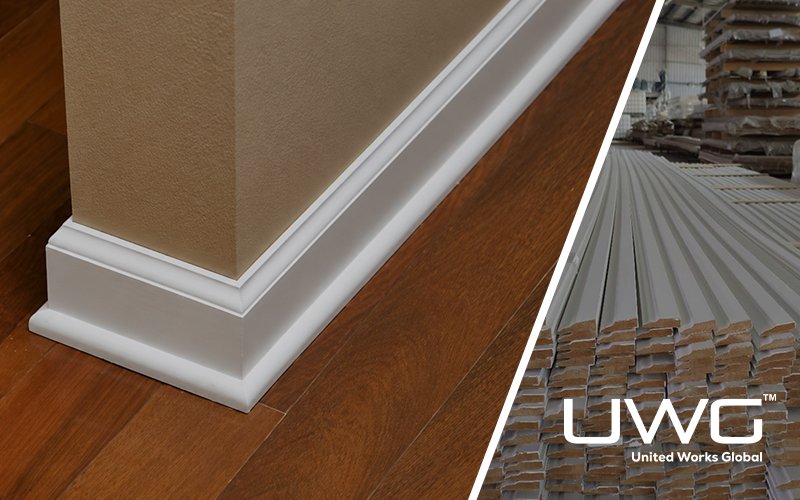
Quarter round molding is a small but essential finishing trim commonly used in North American residential construction. It is typically installed at the joint between flooring and baseboards, helping to cover expansion gaps while creating a clean and polished transition between surfaces.
Although it may seem like a minor detail, quarter round plays an important role in completing the overall appearance of a room. It is widely used in projects involving hardwood, laminate, vinyl, and SPC flooring, where expansion space is required along the perimeter of the floor. Without it, visible gaps between the flooring and wall can affect both aesthetics and perceived quality of installation.
Quarter round molding is available in a variety of materials, sizes, and finishes, making it suitable for different budgets, design styles, and project requirements. From production housing to custom residential builds, it remains one of the most commonly used trim components in North American interior finishing systems.
What Is Quarter Round Molding?
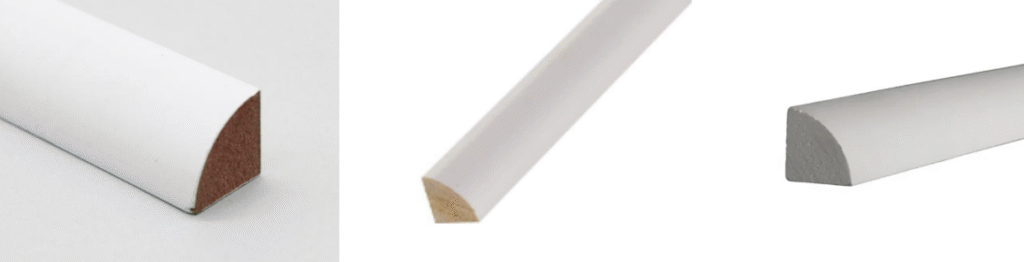
Quarter round molding is a small, rounded trim piece used in interior finishing, most commonly in North American homes. It gets its name from its profile shape, which forms a quarter-circle radius, creating a smooth transition between two surfaces.
In most applications, quarter round is installed at the junction between the baseboard and the flooring. Its primary function is to cover the expansion gap that is required for materials like hardwood, laminate, vinyl, and SPC flooring, while also providing a clean and finished appearance along the wall edge.
Beyond its functional role, quarter round also serves an aesthetic purpose by softening the transition between horizontal flooring and vertical baseboards. It is widely available in different materials such as MDF, solid wood, and PVC, allowing it to be used in both budget-friendly production housing and higher-end residential projects.
Because of its simple profile and versatility, quarter round molding has become a standard trim component in North American interior construction and remodeling projects.
Common Materials Used in North America
In North America, quarter round molding is available in several common materials, each offering different advantages in terms of cost, durability, appearance, and installation requirements. The choice of material often depends on the project type, budget level, and whether the application is in a dry or moisture-prone area.
MDF (Medium Density Fiberboard) is the most widely used option in residential construction. It is cost-effective, easy to paint, and commonly used in production homes. However, it is not recommended for areas with high moisture exposure unless properly sealed.
Solid wood, such as pine, oak, or maple, is often used in higher-end projects or where stain-grade finishes are required. It offers a natural appearance and good durability, but typically comes at a higher cost and may require more careful installation.
PVC or vinyl-based quarter round is designed for moisture-resistant applications such as kitchens, bathrooms, and basements. It is highly durable in wet environments and requires minimal maintenance, making it a practical choice for functional spaces.
Finger-jointed pine (paint-grade wood) is another common option, offering a balance between affordability and strength. It is widely used for painted trim applications and provides better stability than solid natural wood in some cases.
Each material serves a specific purpose in North American construction, and selecting the right type helps ensure both long-term performance and a consistent finished appearance.
Standard Sizes and Dimensions
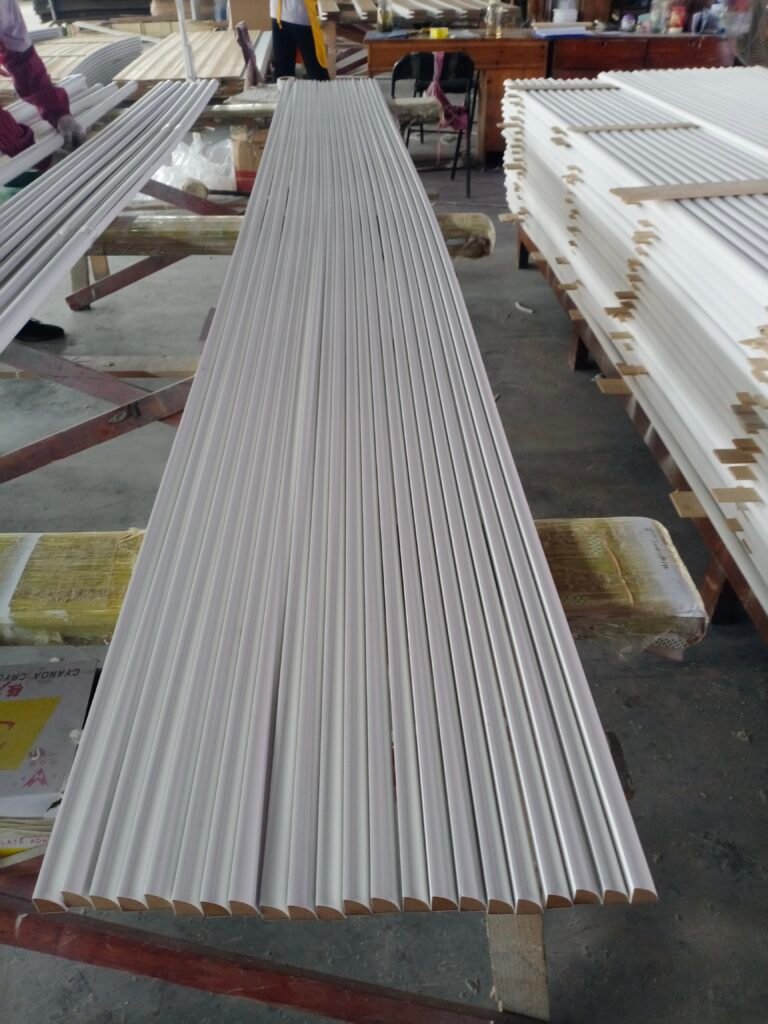
In North American construction, quarter round molding is available in several standard profiles and lengths. These options are designed to match common baseboard heights and flooring installation requirements.
Common Standard Sizes (Profile Dimensions):
- 5/8″ × 5/8″ – Slim profile for modern or minimal trim applications
- 11/16″ × 11/16″ – Most commonly used standard size in residential projects
- 3/4″ × 3/4″ – Slightly larger profile for better gap coverage or taller baseboards
Common Standard Lengths:
- 7 feet – Common in retail and smaller residential projects
- 8 feet – Most widely used standard length in North America
- 16 feet – Used in larger projects to reduce joints and improve finish consistency
These standard sizes allow builders and installers to easily match quarter round molding with different flooring and baseboard configurations while maintaining a clean and consistent appearance throughout the project.
Where Quarter Round Is Used
Quarter round molding is widely used in both residential and commercial construction:
- Covering expansion gaps in vinyl and laminate flooring
- Transitioning between baseboards and flooring surfaces
- Finishing edges around cabinets, islands, and built-ins
- Enhancing perimeter detailing in retail and office spaces
In many residential and multifamily projects, quarter round is especially common in floating floor systems such as SPC, LVP, and laminate installations, where expansion space is required but must be neatly concealed for a clean finished look. Based on our project experience working with builders and distributors, it is typically specified as part of the standard trim package to ensure consistency across units and to simplify on-site installation.
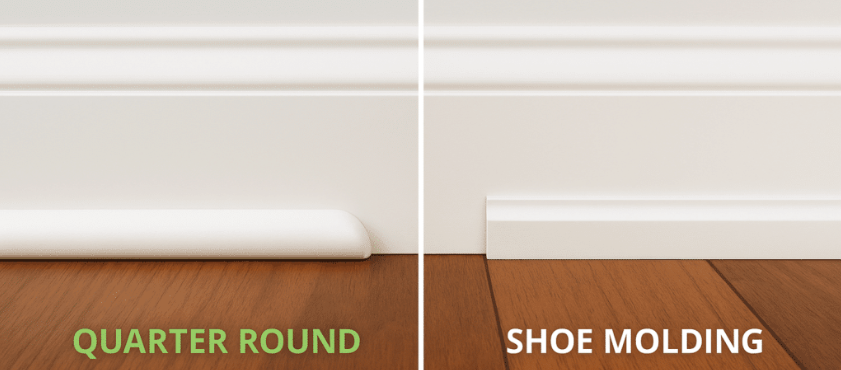
Quarter Round vs Shoe Molding
| Feature | Quarter Round | Shoe Molding |
|---|---|---|
| Shape | Full quarter-circle (90° radius) | More flattened, slightly oval profile |
| Appearance | More visible and pronounced | Subtle and refined look |
| Typical Use | Traditional homes and standard builds | Modern and higher-end interior finishes |
| Coverage | Better for larger expansion gaps | Suitable for tighter, more precise gaps |
| Flexibility | More rigid | Slightly more flexible for uneven surfaces |
| Design Impact | More noticeable trim line | Cleaner, minimal visual impact |
| Common Preference | Budget and production housing | Contemporary and upgraded interiors |
Both quarter round and shoe molding serve the same functional purpose of covering the expansion gap between flooring and baseboards. The choice mainly depends on the desired aesthetic style and overall project design direction.
For wholesalers, both products often sit in the same category but serve different design expectations depending on customer demand.
Installation Considerations
Proper installation ensures both durability and appearance quality. Quarter round is typically installed after flooring and baseboards are completed.
Key considerations include:
- Maintaining consistent expansion gaps during flooring installation
- Using brad nails or construction adhesive depending on substrate
- Cutting precise 45-degree angles for corners and joints
- Selecting PVC when moisture or high-traffic durability is required
PVC options are increasingly preferred in large-scale projects because they do not split during nailing and require less finishing work.
Design Options & Finishes
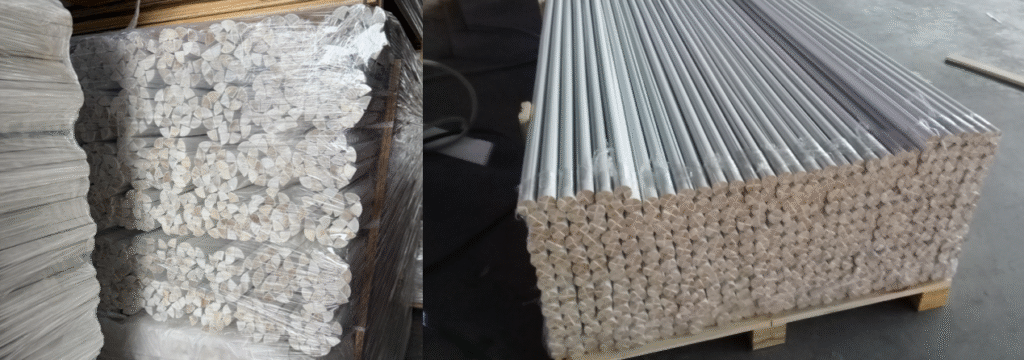
Quarter round molding comes in several common design and finish options to match different flooring and interior styles in North American homes.
- Primed MDF/FJP (paint-ready white) – Most commonly used, designed to be painted on-site
- PVC / Vinyl white finish – Moisture-resistant, ideal for kitchens and bathrooms
- Stain-grade wood – Used in higher-end projects for natural wood finishes
- Pre-finished painted options – Factory-finished for faster installation
In most projects, quarter round is either color-matched to baseboards for a seamless look or matched to flooring for a more blended transition.
Frequently Asked Questions About Molded vs Shaker Doors
Q: Is a shaker-style molded door a real shaker door?
A: No. It is a molded MDF door designed to replicate the shaker appearance.
Q: Why are shaker doors more expensive?
A: Because they use a true frame-and-panel construction that requires more material, labor, and precision assembly.
Q: What is the key structural difference between them?
A: Shaker doors use 90-degree assembled geometry, while shaker-style molded doors use 45-degree molded geometry.
Q: Which type is most common in production housing?
A: Molded doors and shaker-style molded doors dominate due to cost efficiency and scalability.
Summary
With a variety of material options such as MDF, solid wood, and PVC, as well as multiple standard sizes and finishes, quarter round can be adapted to different project budgets, environments, and design styles. While its function is simple, proper selection and installation can significantly improve the overall quality and visual consistency of a space.
Whether used in production housing or custom residential projects, quarter round remains a practical and cost-effective solution for achieving a professional flooring finish.
Articles that you may be interested in:
Top 10 North American Moulding Brands Comparison
Moulding or Molding? What is Molding? (A Guide for Builders)