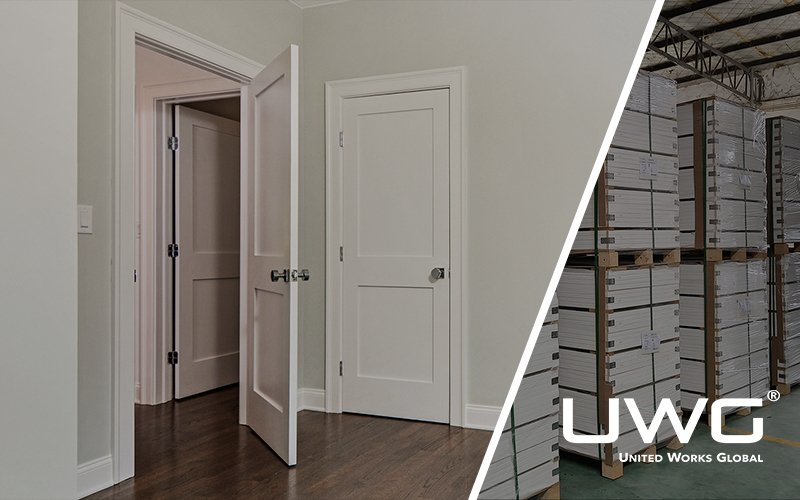
Interior door swing identifies the hinge side and the direction in which a hinged door opens from a defined reference side. Depending on the convention, a door may be designated LH, RH, LHR, or RHR.
Because residential suppliers and commercial hardware schedules may use different reference methods, builders should confirm the hinge side, swing arc, room relationship, and hardware preparation on an approved drawing before production.
This information affects more than installation. On factory-prepared doors, handing can determine hinge mortises, lock and latch preparation, strike-jamb machining, edge bevels, hardware orientation, decorative face direction, and package labeling.
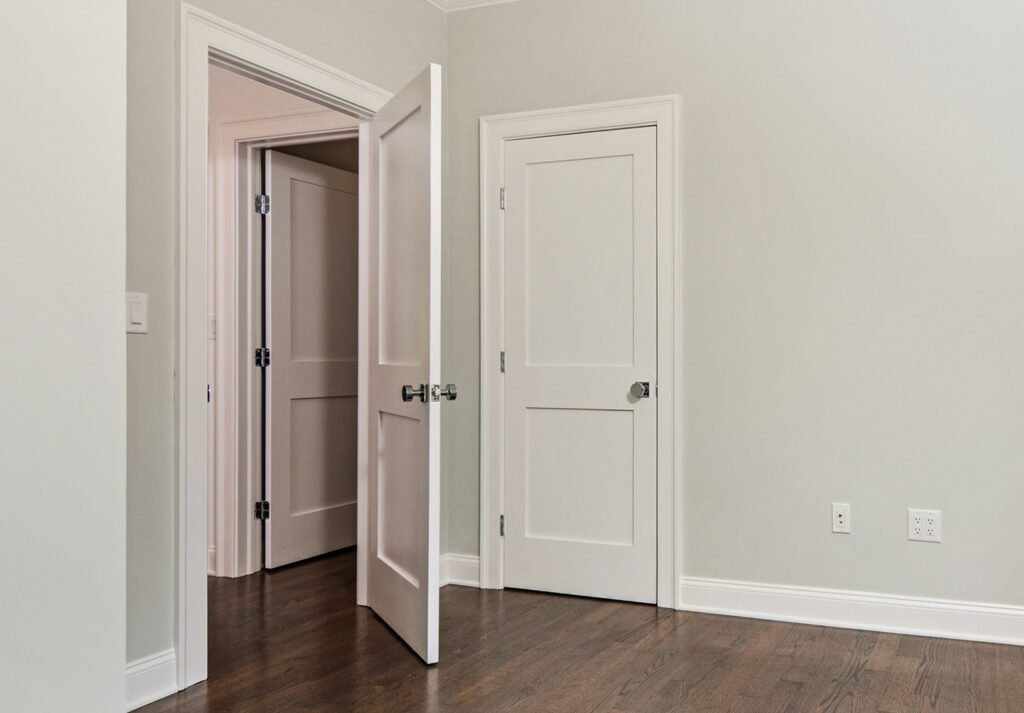
What Does Interior Door Swing Mean?
For an interior hinged door, the swing information normally includes:
- Handing: Left Hand (LH) or Right Hand (RH)
- Hinge side: The side of the opening where the hinges are located
- Opening direction: The space or direction toward which the door swings
LH/RH is read from a defined reference side. When the viewing side changes, the visual left/right relationship changes as well.
This reference should remain consistent between the floor plan, door schedule, hardware information, and production drawing.
What Do LH, RH, LHR and RHR Mean?
In a commonly used commercial door and hardware convention, the observer stands on the defined outside, secure or key side of the opening.
| Designation | Hinge Position From Reference Side | Door Movement |
|---|---|---|
| LH — Left Hand | Hinges on the left | Door swings away from the observer |
| RH — Right Hand | Hinges on the right | Door swings away from the observer |
| LHR — Left Hand Reverse | Hinges on the left | Door swings toward the observer |
| RHR — Right Hand Reverse | Hinges on the right | Door swings toward the observer |
These abbreviations are useful only when everyone uses the same reference side and convention.
Some residential suppliers instead use a back-to-hinges method. Under that method, the observer stands with their back against the hinge jamb and identifies the side on which the open door is located.
Both methods can describe the physical opening, but mixing them can reverse the written designation. For project orders, the approved floor plan or swing diagram should take priority over an unclear verbal description.
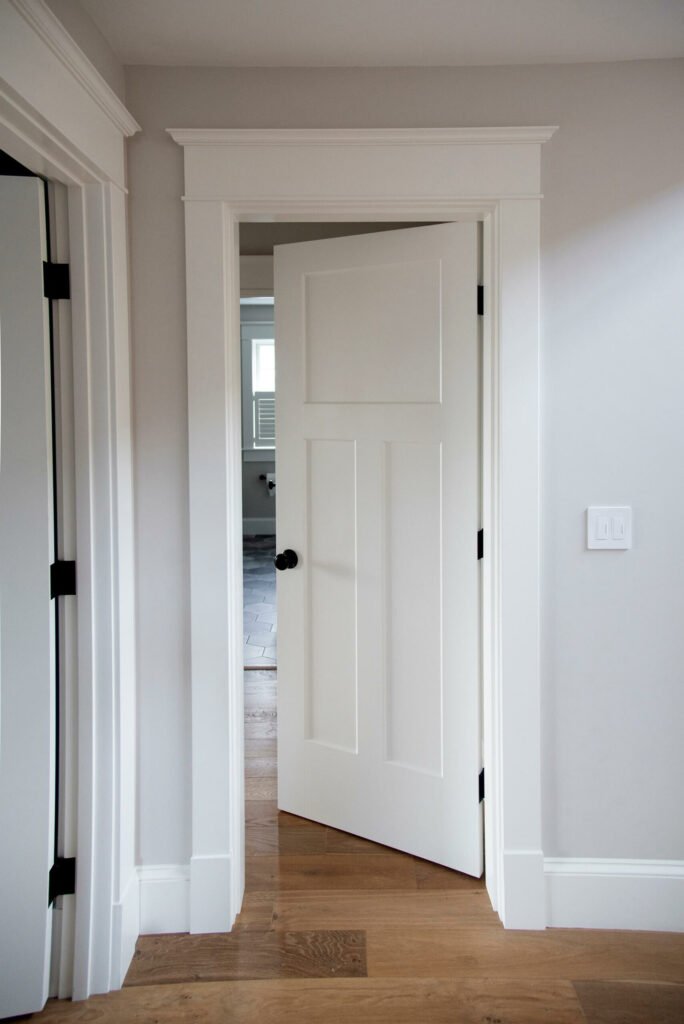
How to Identify Left-Hand and Right-Hand Interior Doors
Step 1: Establish the Reference Side
Before deciding whether a door is left- or right-handed, identify the side from which the handing will be read.
The reference may be:
- The corridor side
- The key or secure side
- The outside of a room
- A defined side shown in the supplier’s handing diagram
- The side specified in the project hardware convention
For interior rooms, “inside” and “outside” may not be obvious. A connecting door between two occupied rooms, for example, does not have a naturally defined exterior side.
Avoid writing only “viewed from outside” unless the outside is clearly identified.
Step 2: Locate the Hinges
From the defined reference side, determine whether the hinges are on the left or right.
Do not use the lock or handle position alone. The hinge side is the primary reference for door handing.
Step 3: Determine the Direction of Movement
Confirm whether the door moves:
- Away from the observer; or
- Toward the observer.
Under the commercial convention above, this determines whether the designation is a regular hand or reverse hand.
Step 4: Check the Floor-Plan Swing Arc
Compare the written handing with the swing arc shown on the architectural floor plan.
The drawing should make clear:
- The hinge jamb
- The door leaf position
- The direction of travel
- The room the door opens toward
- Nearby walls, fixtures and doors
If the abbreviation and drawing disagree, stop and obtain confirmation before machining or ordering handed hardware.
Step 5: Record the Approved Condition
The confirmed handing should be carried consistently into:
- Door schedule
- Floor plan
- Hardware schedule
- Frame or jamb schedule
- Shop drawing
- Machining drawing
- Purchase order
- Packaging label
This prevents one opening from being described differently by design, purchasing, production and installation teams.
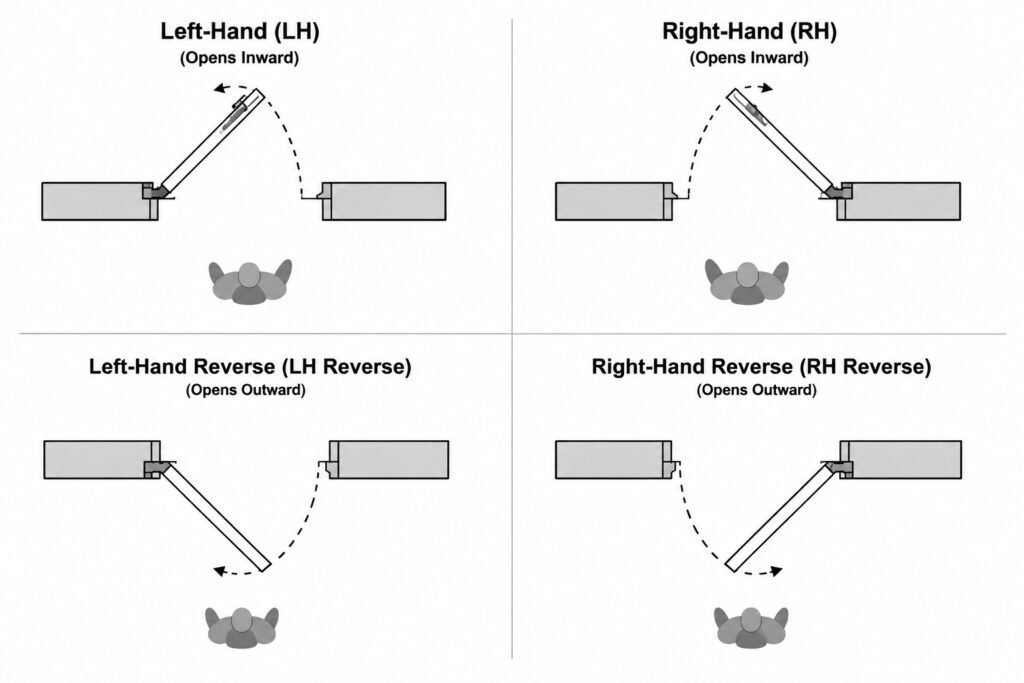
Inswing vs Outswing for Interior Doors
Inswing and outswing describe the space toward which the door opens. These terms are straightforward for an exterior entrance, but can be ambiguous for interior openings unless the reference room is named.
Instead of writing only:
Door 105 — Outswing
use a clearer description such as:
Door 105 — swings from Bedroom 2 into the corridor
or show the condition directly on the approved plan.
Many residential bedroom doors open into the room, but this is not a universal rule. The correct direction depends on the floor plan, circulation, furnishings, hardware, project requirements and intended use of the opening.
How Door Swing Affects the Floor Plan
Door swing should be coordinated before framing and door ordering because the open leaf can interfere with:
- Cabinets and built-ins
- Vanities and plumbing fixtures
- Electrical switches
- Adjacent doors
- Closet shelving
- Furniture
- Corridor circulation
- Access panels
- Floor transitions
- Required clear space
Two doors located close together can collide even when each opening works correctly by itself. The plan should therefore be reviewed with all nearby leaves shown in their open positions.
Changing the swing after framing may also affect switch placement, hardware preparation, strike location and the usability of the room.
How Door Handing Affects Factory Machining
For factory-prepared interior doors, handing can affect:
- Hinge edge
- Hinge mortise locations
- Lock bore
- Edge bore
- Latch preparation
- Strike-jamb preparation
- Door-edge bevel
- Jamb machining
- Handed hardware
- Decorative face orientation
- Packaging and opening labels
The hinge preparation follows the hinge jamb, while the latch and strike must align on the opposite side.
A symmetric, unmachined slab may not initially be handed. Once the slab receives hinge mortises, lock preparation, edge beveling, directional glazing, asymmetric routing or another side-specific feature, reversing it may require substantial rework or replacement.
For a comparison of factory-prepared and site-prepared door packages, see slab vs knock-down vs prehung doors.
How Door Swing Requirements Change by Interior Door Configuration
Single Hinged Interior Doors
For a standard single hinged interior door, the production schedule normally identifies:
- Door mark
- LH or RH
- Swing direction where specified
- Hinge preparation
- Lock / latch preparation
- Jamb configuration
- Hardware set
These details provide the reference for machining the slab and jamb as a coordinated opening.
Double Interior Doors
For double interior doors, the production information also identifies how the two leaves operate and stay closed.
For closets, pantries, and similar interior openings where privacy is not required, a common configuration is ball catches or roller catches with dummy knobs or levers. Both leaves can operate independently, so an active leaf does not necessarily need to be designated.
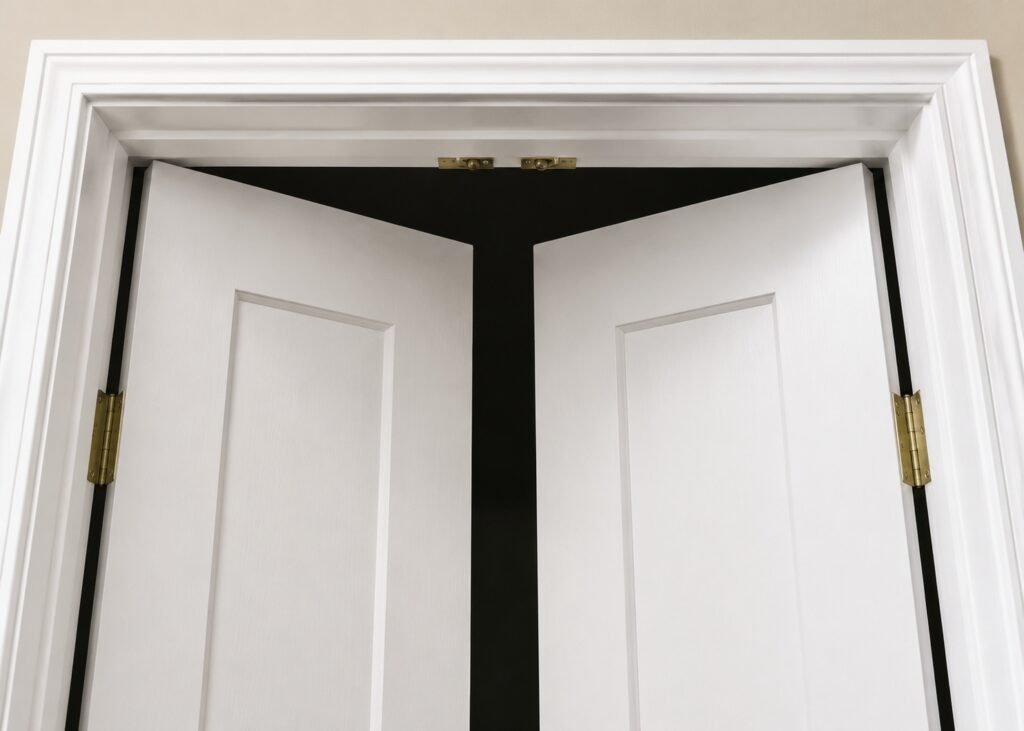
Some interior double doors use an active and inactive leaf configuration. One leaf receives the operating passage or privacy hardware, while the other leaf remains secured when not in use.
The inactive leaf may use a flush bolt or other specified bolt hardware. A T-astragal can also be specified for interior paired doors where required by the door and hardware schedule.
The production information for a double interior door may include:
- Swing direction
- Ball catch, roller catch, or other catch configuration
- Dummy or operating handles
- Active / inactive leaf, where applicable
- Flush-bolt preparation, where required
- Lock and latch preparation
From our project experience, specifying “double interior door” alone does not define the machining requirements. A ball-catch pair with dummy handles requires different preparation from an active/inactive pair using operating hardware and a flush bolt.
When a project schedule identifies a double interior door without the operating hardware, we confirm the intended configuration with the customer before preparing the machining drawing.
For closet or pantry pairs, this is often a ball catch with dummy handles. Where one leaf is intended to remain secured, we confirm the active leaf and any required flush-bolt preparation.
Glass and Asymmetric Decorative Doors
Handing also affects doors where the two faces are not visually interchangeable.
This can apply to:
- Textured glass
- Etched or printed glass
- Readable glass
- Louvers
- Asymmetric panel designs
- Other directional decorative surfaces
This is particularly relevant to modern interior glass doors with textured, etched, printed, or other directional glass designs.
Clear glass usually has little visual difference from side to side, while textured, etched, printed, or readable glass may have a specified viewing face.
For these doors, the production information identifies both:
Door handing + decorative / viewing side
For example, if a textured glass surface is intended to face the hallway while the smooth side faces the room, that orientation should be shown together with the door swing on the approved drawing.
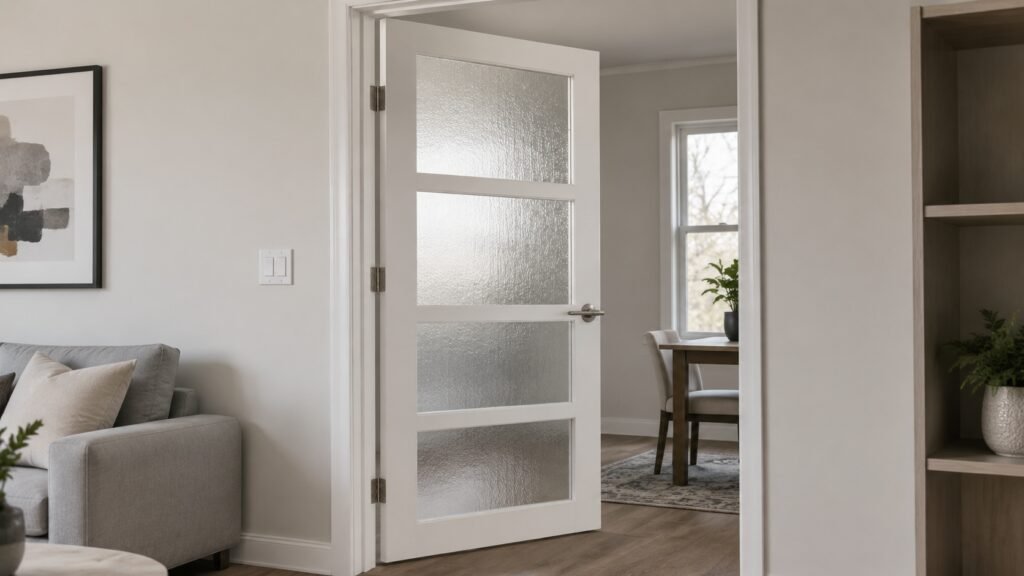
Different door styles and configurations can require different handing, hardware, and machining details. Explore our Interior Doors to review available door types, glass options, configurations, and project-ready specifications.
How to Read Interior Door Swing on a Door Schedule
A typical project door schedule may include:
| Item | What to Check |
|---|---|
| Door Mark / Opening No. | Matches the opening shown on the floor plan |
| Size | Width × height × thickness where specified |
| Door Type | Molded, Shaker, flush, glass, etc. |
| Frame Type | Jamb/frame construction and depth |
| Handing / Swing | LH, RH, and applicable swing designation |
| Hardware Set | Hinges, passage/privacy hardware, catches, flush bolts, etc. |
| Remarks | Special machining or installation requirements |
When both the floor plan and door schedule are available, we cross-check the handing shown in the schedule against the floor-plan swing arc.
For example, if Door 102 is listed as RH in the schedule while the architectural plan shows the opposite hinge/swing condition, we mark that opening for confirmation before releasing the machining schedule.
For repeat residential or multifamily units, the approved handing schedule can then be used as the production reference for repeated openings.
Common Interior Door Swing Ordering Mistakes
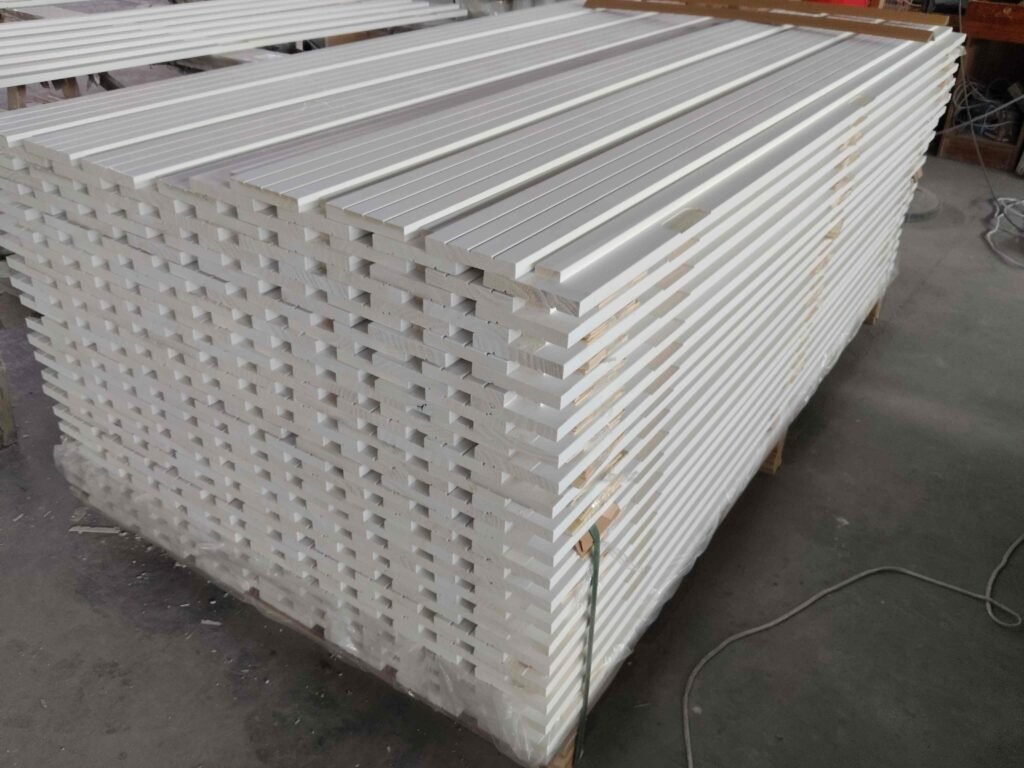
Door swing discrepancies usually appear between the floor plan, door schedule, hardware schedule, and supplier production information.
Common coordination issues include:
- LH/RH is provided without a clear reference convention.
- The door schedule and floor-plan swing arc do not match.
- A revised swing has not been carried into the production information.
- The hardware set does not match the door preparation.
- A double door is specified without identifying the catch or active/inactive configuration.
- The active leaf is not identified where the operating hardware requires one.
- A decorative or readable glass face is not oriented.
- Repeated openings use inconsistent handing descriptions.
- Factory machining is released before the handing information is approved.
For our project orders, unclear LH/RH descriptions are normally resolved by marking the hinge side and swing directly on the floor plan or machining drawing and returning it for confirmation.
The approved drawing then provides the same opening reference for sales, engineering, production, and QC.
FAQ
Is a Left-Hand Door the Same From Both Sides?
The physical hinge and swing condition remains the same, while the observer’s visual left/right perspective changes from the opposite side.
The LH/RH designation therefore follows the reference convention being used for the project or supplier.
Is Right-Hand Outswing the Same as Left-Hand Inswing?
RH outswing and LH inswing should not automatically be treated as interchangeable designations.
The terminology depends on the reference convention being used. For project orders, the supplier’s handing convention and the approved swing diagram provide the production reference.
Can LH/RH Terminology Vary by Supplier?
Yes. Residential door suppliers, commercial hardware systems, and individual manufacturers may use different handing conventions.
When terminology differs, we confirm the actual hinge side and opening direction on the drawing before production.
How Is Door Swing Shown on Architectural Plans?
A floor plan normally shows the door leaf together with an arc indicating its direction of travel.
The door mark can then be cross-referenced with the door schedule for size, door type, frame, handing, hardware, and other opening information.
When Does an Interior Double Door Require an Active / Inactive Leaf?
An active/inactive designation applies when one leaf carries the primary operating hardware and the other is normally secured.
Closet and pantry pairs using ball or roller catches can allow both leaves to operate independently and may not require an active/inactive designation.
For pairs using operating hardware and a secured secondary leaf, the production schedule identifies the active leaf together with any required flush-bolt or related preparation.
Does Door Handing Affect Hinge and Lock Machining?
Yes.
Handing determines the hinge edge and coordinates the lock/latch preparation with the strike side of the jamb. Depending on the door package, it can also affect edge beveling, jamb machining, hardware preparation, and labeling.
For factory-machined doors, these details are included in the approved production information before machining.
Summary
Interior door swing defines the handing, hinge position, and opening direction of a hinged door. In project orders, this information carries through the floor plan, door schedule, hardware schedule, jamb preparation, and factory machining.
Handing conventions can vary between suppliers and hardware systems. For our factory-prepared orders, the approved door schedule, swing diagram, or machining drawing is used as the production reference.
Double doors and directional decorative doors may require additional information such as the active leaf, catch or flush-bolt configuration, and glass viewing side.