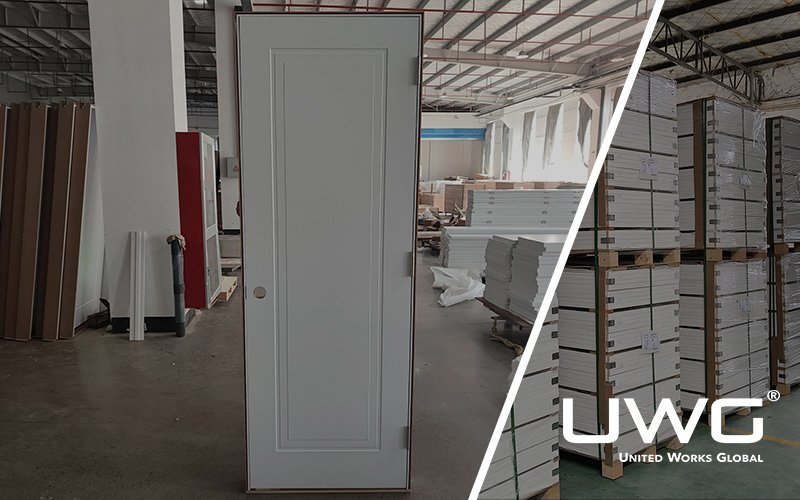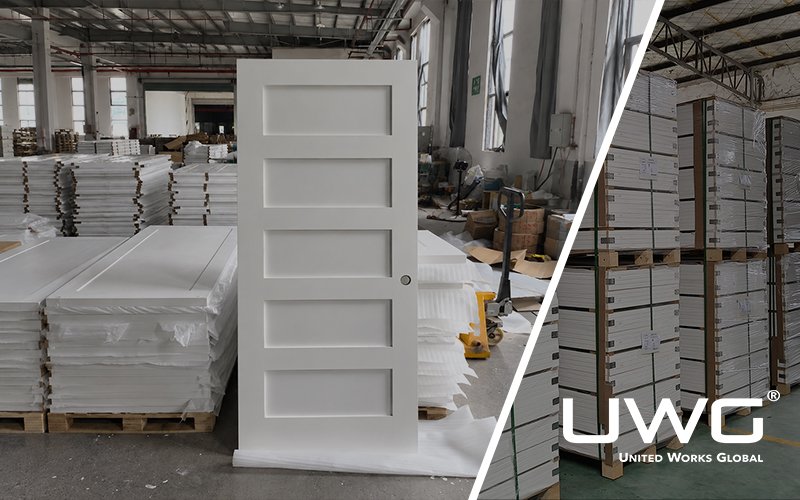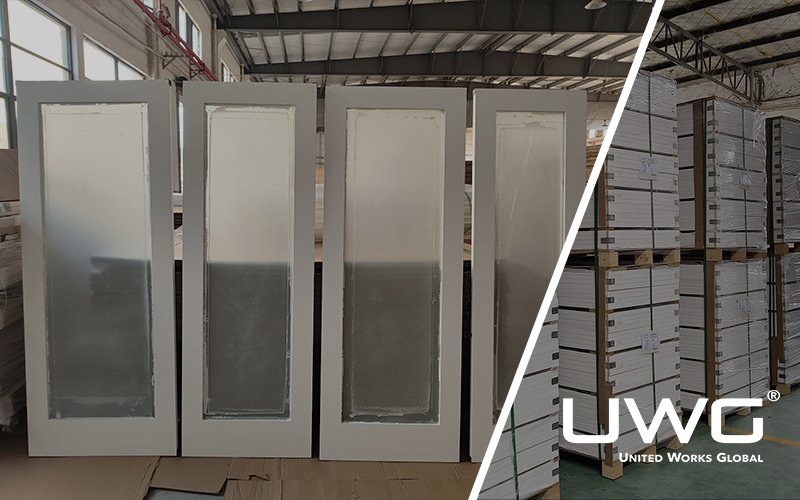
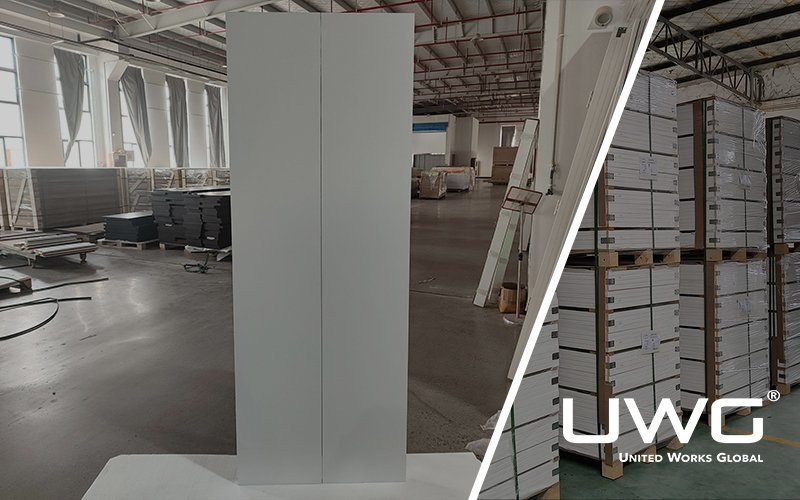
Two flush doors can look almost identical while being built very differently. A residential interior door may use a lightweight honeycomb core with hardboard faces, while a solid-core or architectural flush door may use a denser engineered core with wood veneer, decorative laminate, or other specified faces.
For project selection, core construction, face material, edge details, hardware preparation, and required performance all help define the actual door behind that simple flat appearance.
What Is a Flush Door Made Of?
A flush door is generally built from a face or skin, internal core, vertical and horizontal edge components, adhesive, and reinforcement or blocking where required. Crossbands, backers, or overlays may also be used in certain constructions.
The exact assembly varies by manufacturer and door specification.
Core
The core occupies most of the space between the two faces. Lightweight interior flush doors commonly use a paper or corrugated honeycomb-type cellular core.
Solid-core doors use denser materials, which may include:
- Particleboard
- MDF or other engineered fiber products
- Structural composite or engineered wood
- Other manufacturer-specific engineered cores
“Solid core” is therefore a construction category, not the name of one specific core material.
Face / Door Skin
The face forms the visible surface on each side of the door. Depending on the product, common materials and surfaces include:
- Hardboard or HDF
- MDF where applicable
- Plywood
- Natural or engineered wood veneer
- High-pressure decorative laminate
Different combinations of face and core can produce the same flat appearance. A primed hardboard hollow-core door and a wood-veneer solid-core door, for example, are both flush doors.
Perimeter, Edge and Hardware Reinforcement
Structural material around the perimeter supports the door faces and provides edge strength. The exact vertical and horizontal edge construction varies by product.
Hollow-core doors commonly include solid material or blocking around the lock area. Hardware such as hinges, locks, or closers may require suitable reinforcement depending on the construction. Architectural doors can use more specific edge and blocking arrangements according to the hardware schedule and performance requirements.
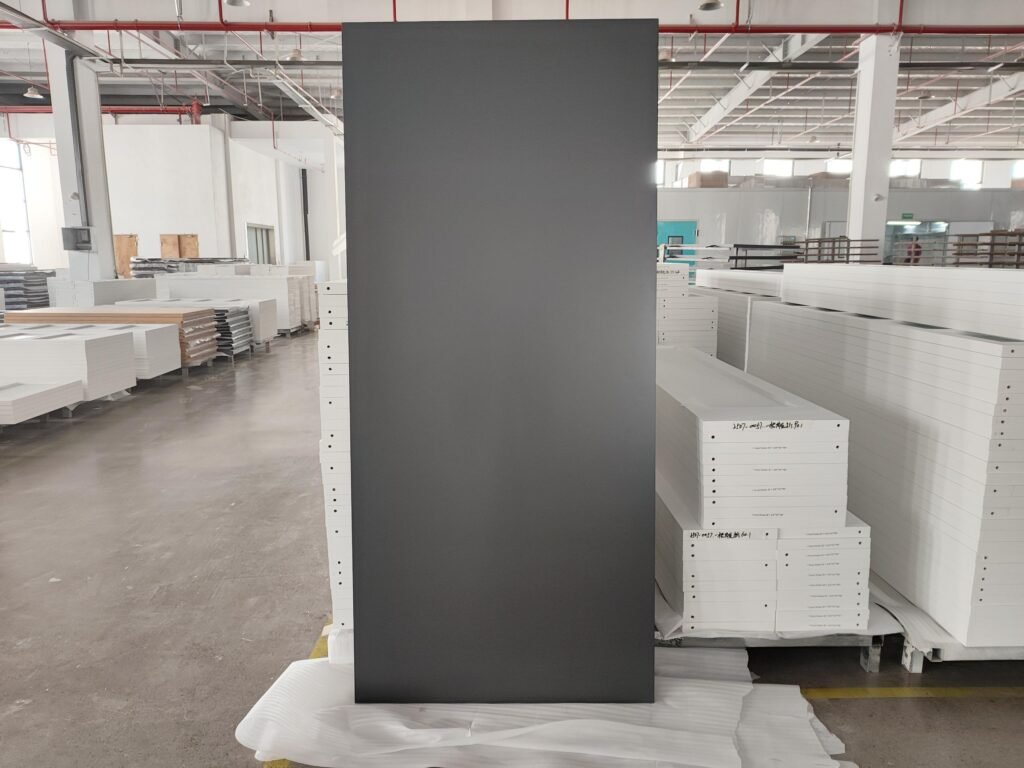
Common Flush Door Types by Face and Finish
Flush doors can be grouped by their visible face and finish as well as by their internal construction.
| Flush Door Type | Typical Face / Finish | Common Project Scenario |
|---|---|---|
| Primed / Paint Grade | Hardboard, HDF or MDF | Production housing and multifamily interiors |
| Wood Veneer | Natural or engineered wood veneer | Hospitality, office and architectural interiors |
| Decorative Laminate | HPL / HPDL or decorative surface | Commercial and design-led interiors |
Primed or Paint-Grade Flush Doors
Paint-grade flush doors provide a smooth surface for a standardized painted finish. They are common in repeated residential and multifamily openings and may be supplied with hollow-core or solid-core construction.
Wood-Veneer Flush Doors
Wood veneer combines a flat door profile with a natural wood appearance. Architectural specifications may identify veneer species, cut, grain direction, matching, and factory finish, especially where multiple doors appear along the same corridor or adjacent leaves require coordinated grain.
Decorative-Laminate and Customized Flush Faces
Decorative laminate provides another surface option, including solid colors, patterns, and wood-grain visuals. The finish can be selected separately from the internal core, allowing different door constructions to maintain a coordinated appearance.

Flush Door Core Options
Hollow-Core Flush Doors
A hollow-core flush door typically combines thin faces, perimeter construction, and a lightweight cellular or honeycomb core.
Its lower weight makes it common for residential interior openings where heavy-duty or rated performance is not specified. Suitable reinforcement is still required in hardware areas.
Solid-Core Flush Doors
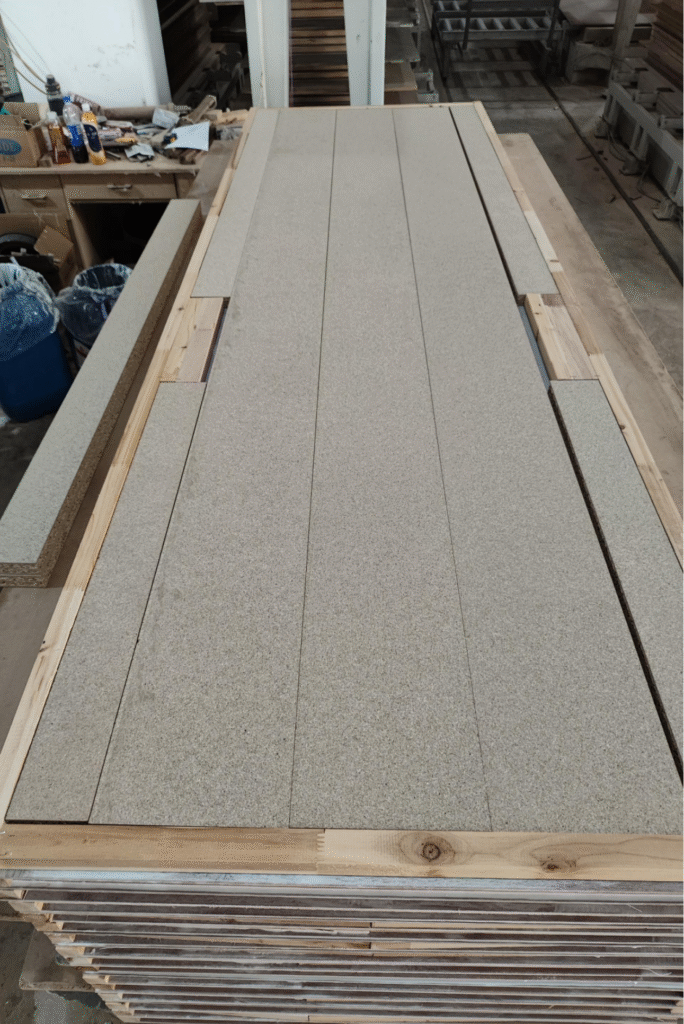
A solid-core flush door uses a denser core through most of the leaf. Particleboard and other engineered wood or fiber-based materials are common, although the actual construction varies by manufacturer.
Compared with a similar hollow-core door, the additional material increases weight and changes hardware support and sound-control characteristics.
A solid-core door does not automatically carry a fire or acoustic rating. Those requirements depend on the specific tested or listed construction and assembly.
Special-Performance Cores
Architectural flush doors may use constructions developed for specific requirements, including fire-rated and acoustic applications. More specialized commercial or institutional openings can use other core systems according to the required performance.
Flush Door vs. Molded, Panel and Flush-to-Wall Doors

These terms describe different aspects of a door:
- Flush Door: A door with a flat, continuous face without raised or recessed panel profiles.
- Panel Door: A door with a defined panel configuration, which may be raised, recessed, molded, or assembled depending on its construction.
- Molded Door: An interior door using molded faces to create a panel design. Molded doors can be hollow-core or solid-core.
- Flush-to-Wall Door: A door-and-frame system designed to align closely with the surrounding wall surface. A standard flush door does not automatically create this type of installation.
- Slab Door: A door leaf supplied without a complete prehung frame assembly. A slab can be flush, molded, stile-and-rail, or another door type.
If you’re comparing options for an upcoming purchase, you can view our full range of interior doors.
How Core Choice Changes the Project Decision
Core construction becomes particularly relevant when a project has large quantities or different opening requirements.
Handling and weight: Hollow-core doors are relatively light. Dense solid-core doors add weight during unloading, distribution through the building, and installation. Across hundreds of openings, this can affect site handling.
Hardware preparation: Hinges, locks, closers, and other hardware need suitable material or reinforcement at their fixing locations. Hardware preparation should match the selected construction.
Traffic and duty: A bedroom door in production housing and a heavily used hotel or office door do not have the same service conditions. Traffic level and hardware use can influence the appropriate core.
Privacy and acoustics: Denser construction can contribute to improved sound control. For a defined acoustic target, the complete opening—including the door, frame, seals, and installation—needs to meet the required performance.
Fire requirements: Solid core alone does not establish a fire rating. Rated openings require a tested or listed door and assembly for the specified rating.
Budget and replacement: Door price is only one part of the comparison. Quantity, hardware, handling, traffic, performance requirements, and expected replacement cycle can also affect the final selection.
From our project experience, large door schedules are rarely evaluated on “hollow” or “solid” alone. Opening use, hardware, required performance, quantity, and budget usually need to be reviewed together.
Where Flush Doors Are Used
Production Housing
Paint-grade flush doors are common across repeated residential openings. Hollow-core construction can serve standard interior locations, while solid-core doors can be used where a denser construction is specified.
Multifamily Projects
Multifamily projects can maintain the same flush appearance while changing internal construction across the door schedule. Standard unit openings and doors with additional privacy, hardware, or performance requirements do not necessarily need the same core.
Hospitality and Office Projects
Hotels and offices may introduce heavier traffic, more complex hardware, privacy requirements, fire ratings, and architectural finishes. Solid-core, veneer, laminate, and performance-specific flush doors can address these requirements while retaining a consistent flat face.
Design-Led Interiors
The continuous face also works well where the door forms part of the interior finish. Wood veneer can emphasize grain and matching, while painted or laminate surfaces can coordinate with adjacent walls and millwork.
What Builders Should Check When Specifying a Flush Door
A project specification or door schedule should provide enough information to compare equivalent products. Typical items include:
- Door width, height, and thickness
- Hollow-core or solid-core construction
- Actual core material where specified
- Face material and finish
- Edge requirements
- Hardware preparation and reinforcement
- Fire rating where applicable
- Acoustic requirement where applicable
A description such as “solid-core flush door” can still leave important details unresolved.
In project quotations, two suppliers may both offer a solid-core flush door while using different core materials, face constructions, edge details, or finishes. From our experience reviewing door schedules and quotations, these details need to be compared together with size, hardware preparation, and required performance before the products are treated as equivalent.
FAQ
Is a Flush Door Hollow or Solid?
It can be either. Flush describes the flat face, while hollow-core and solid-core describe the internal construction.
What Is Inside a Flush Door?
A hollow-core flush door generally contains a lightweight cellular or honeycomb core with structural material around the perimeter. A solid-core door contains a denser engineered core such as particleboard or another specified material.
What Are the Main Types of Flush Door?
By core construction, the main categories are hollow-core and solid-core, with special-performance constructions available for certain projects. By surface, flush doors may be paint-grade, wood-veneer, decorative-laminate, or another specified finish.
Is a Flush Door the Same as a Slab Door?
No. Flush describes the door face or construction style, while slab describes a door leaf supplied without a complete prehung frame assembly.
Can a Flush Door Be Fire Rated?
Yes. Flush doors are available in fire-rated constructions. The rating comes from the specific tested or listed door and assembly; solid-core construction alone does not establish a fire rating.
Summary
A flush door is defined by its flat, continuous face, while the construction behind that face can range from lightweight hollow-core residential doors to solid-core and performance-specific architectural doors.
For project selection, core construction, face material, finish, edge details, hardware preparation, size, and required fire or acoustic performance provide a more useful basis for comparing flush doors than appearance alone.