
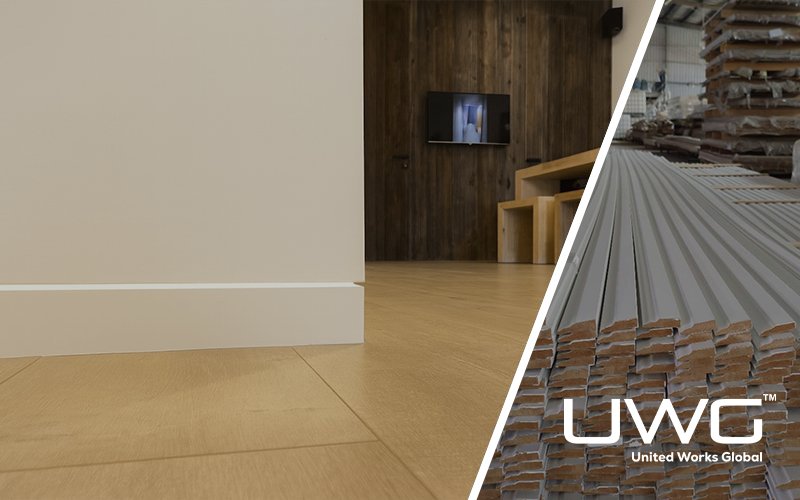
Imagine walking into a freshly renovated home where the walls are smooth, the lighting is warm, and the floors are perfectly laid—but something feels distinctly different. There’s no trim running along the bottom of the walls. The transition between the wall and the floor is clean, uninterrupted, and almost impossibly seamless. This is the appeal of no baseboard walls—a modern interior design trend in 2026 gaining traction among homeowners, architects, and builders who prefer minimalist, high-end interiors.
At first glance, skipping baseboards may seem like a simple stylistic preference. But the decision goes far beyond appearance. Whether you’re constructing a new home or remodeling a single room, the presence—or absence—of baseboards affects installation difficulty, wall durability, flooring movement, and long-term maintenance. What appears effortless in finished photos often demands precise craftsmanship and thoughtful planning during construction.
Choosing no baseboard walls ultimately comes down to balancing aesthetics with practicality. On the pro side, trim-less walls offer a sleek, modern, seamless look that visually enlarges a space and enhances minimalist design. On the con side, they require far higher construction precision, increase installation costs, and leave walls more vulnerable to damage over time—especially in high-traffic areas or active households. As one of the key baseboard trends in 2026, this trim-free approach is becoming increasingly popular in modern residential design.Understanding these trade-offs will help determine whether this clean, trim-free finish is the right choice for your home or building project.
What Are No Baseboard Walls?
Traditional baseboards serve multiple functional and aesthetic purposes:
- Concealing the joint between the wall and floor
- Covering installation imperfections
- Allowing flooring expansion gaps
- Protecting walls from cleaning tools, furniture, and foot traffic
- Providing a defined visual transition line in the room
No baseboard walls eliminate this trim completely. The wall meets the floor directly, requiring flawless alignment, crisp edges, and smooth finishing. This design is most often associated with modern minimalist interiors and is widely considered one of the most popular baseboard alternatives in contemporary architecture, including Scandinavian and Japanese design styles.
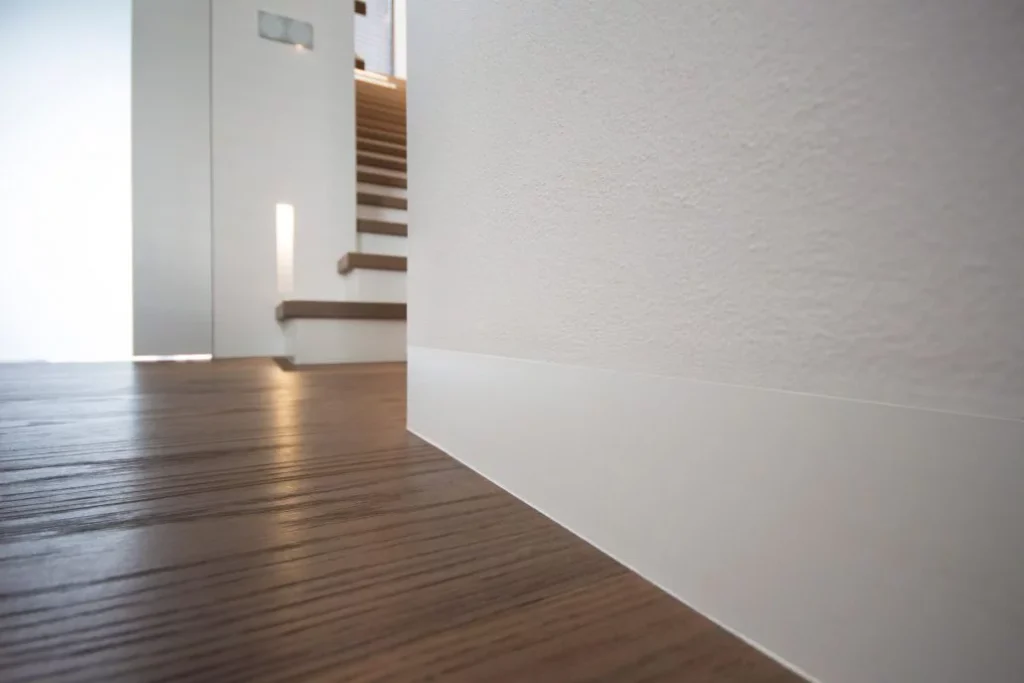
Comparison: Traditional Baseboards vs. No-Baseboard Design
| Feature | Traditional Baseboards | No-Baseboard (Trimless) | Shadow Gap (Reveals) |
| Aesthetic | Classic & Defined | Ultra-Minimalist | Architectural & Floating |
| Installation | Easy (DIY Friendly) | Difficult (High Precision) | Very Difficult (Specialist) |
| Wall Protection | Excellent | Minimal | Moderate |
| Cost (Labor) | Low | High | Premium |
| Maintenance | Low | High (Scuff prone) | Medium |
Pros of No Baseboard Walls
Sleek, Minimalist Aesthetics
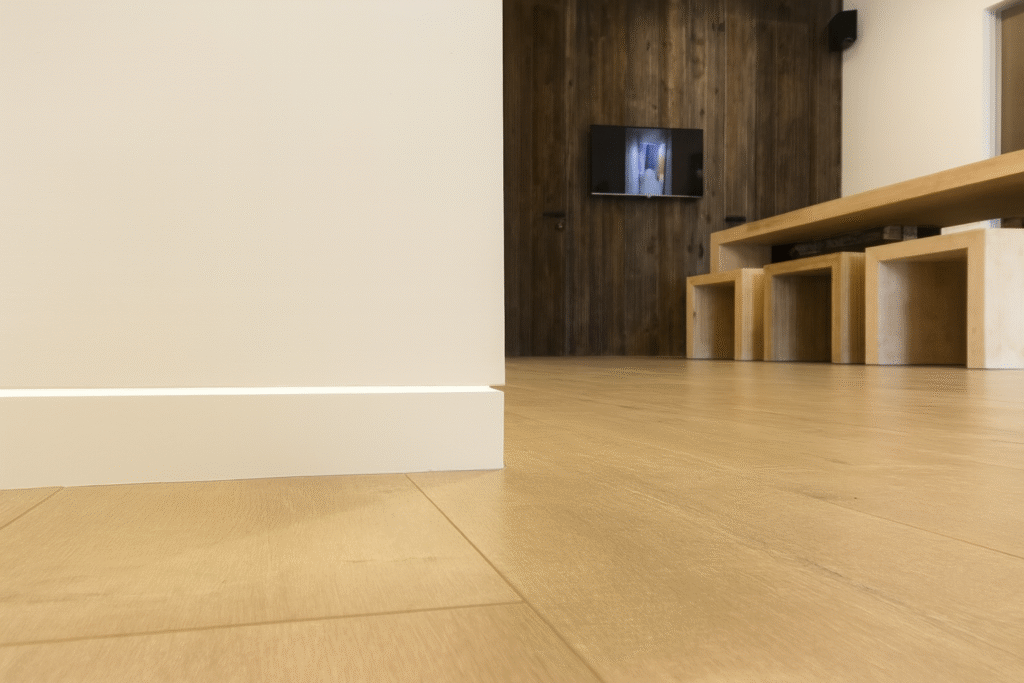
With no trim breaking up the vertical plane, walls appear continuous and visually calm. This enhances modern architecture and supports minimalism, making it popular in luxury homes and design-forward spaces.This aligns with the growing demand for minimalist baseboard design and seamless wall finishes in 2026 interior trends.
Makes Rooms Look Larger and More Open
Removing baseboards eliminates horizontal visual breaks, helping rooms feel taller, wider, and more open. This is especially useful in smaller or narrow spaces.Many designers consider this a key advantage of no baseboard walls in modern space optimization.
Clean Backdrop for Furniture and Decor
Furniture can sit closer to the wall without visual interference, enabling gallery-like interior styling and emphasizing textures and materials.This effect is especially valued in modern wall design where simplicity and clean lines are prioritized.
Cons of No Baseboard Walls
Requires High Construction Precision and Increases Labor Costs
Achieving a clean trim-less finish demands:
- Perfectly level floors
- Straight, plumb walls
- Tightly finished drywall
- Sharp, consistent corners
- Expert painting and detailing
The labor cost is often significantly higher than using traditional baseboards.This is one reason why no baseboard walls are typically seen in high-end or custom-built projects rather than standard residential construction.
Walls Are More Vulnerable to Damage
Without baseboards, walls are exposed to:
- Vacuums and robot cleaners
- Mops and cleaning tools
- Chairs and furniture impacts
- Pets and children
Scuffs and dents become more common, especially in high-traffic areas.Compared to traditional baseboards, the lack of protection is one of the biggest trade-offs homeowners must consider.
Repairs Are More Noticeable and Costly
Even minor damage may require repainting an entire wall for smooth blending. Flooring expansion gaps must also be addressed with alternative methods that add complexity.This makes maintenance more demanding compared to homes with standard baseboards.
Not Ideal for Certain Flooring Materials
Wood and laminate floors require expansion space. Without baseboards, installers must rely on high-precision edging to prevent future cracking or lifting.This is especially critical when working with hardwood flooring, where expansion gaps are unavoidable.
Expert Tip: The “Invisible” Protection Strategy
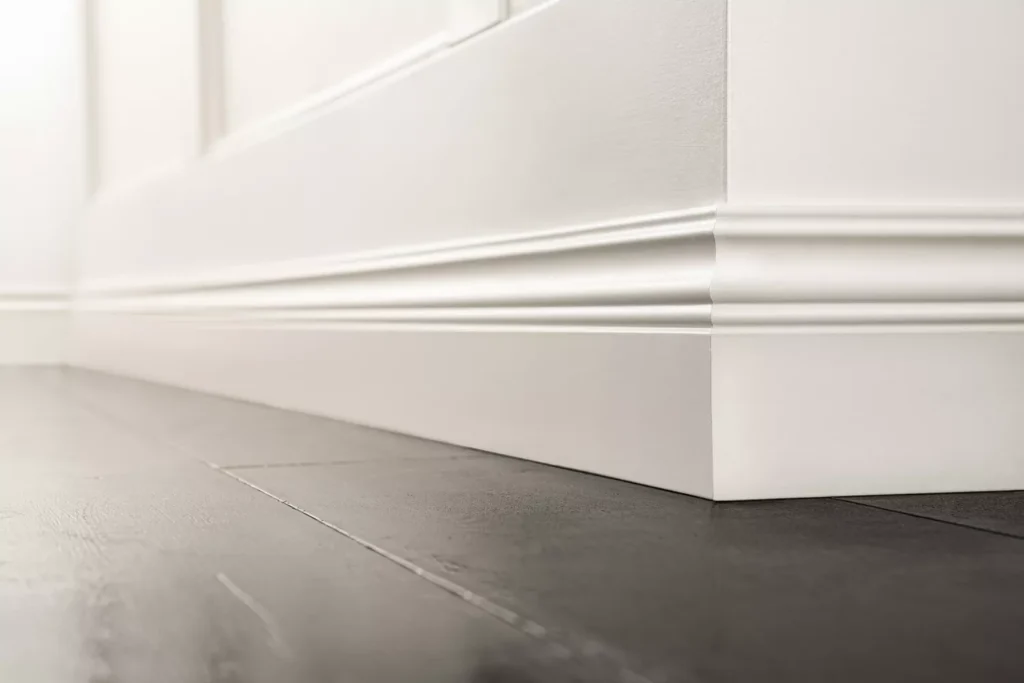
While no-baseboard walls offer a stunning aesthetic, they are vulnerable to scuffs from robotic vacuums. We recommend applying a Level 5 drywall finish combined with high-durability Scuff-X paint for the bottom 6 inches. This approach is commonly used in modern baseboard alternatives to improve durability without compromising aesthetics.
Where No Baseboard Walls Work Best
Best Applications
- High-end residential builds
- Minimalist design styles
- Low-traffic rooms such as bedrooms or offices
- Homes with stable furniture arrangements
- Renovations with controlled sequencing
- Projects focused on modern baseboard trends and seamless interior finishes
Less Suitable Applications
- Homes with kids or pets
- Rental properties
- Commercial spaces
- Budget-driven projects
- Older homes with uneven surfaces
Technical Execution
Advanced Techniques for Trimless Wall Finishes To ensure structural integrity and a clean finish, three primary architectural methods are used:
- Shadow Gap Reglets: Utilizing aluminum Z-profiles to create a precise 1/2″ recessed reveal.
- Flush-Mounted Baseboards: Installing a recessed trim that sits level with the drywall surface for a seamless yet protected look.
- L-Bead Corner Reinforcement: Applying a vinyl L-bead to the bottom edge of the drywall to prevent crumbling and ensure a sharp, 90-degree angle.These techniques are widely used in high-end baseboard alternatives and modern minimalist construction.
These techniques are widely used in high-end baseboard alternatives and modern minimalist construction.
Smart Alternatives for a Minimalist Look
Ultra-Thin Baseboards
Slim profiles (5–8 mm) maintain a clean look while still protecting walls.
Flush or Recessed Baseboards
These sit level with the wall surface for a hidden, seamless appearance.
More Durable Wall Finishes
Microcement, wood veneer, or high-durability paint can reduce wall damage without altering the minimalist aesthetic.
These solutions are often considered practical baseboard alternatives for homeowners who want a modern look without the drawbacks of fully removing baseboards.
Practical Advice for Builders and Homeowners
For builders:
- Communicate the added precision and labor required
- Plan construction sequencing carefully
- Offer alternatives when needed
For homeowners:
- Consider lifestyle needs and long-term maintenance
- Don’t rely solely on photos—think about everyday use
- Work with contractors familiar with minimal-trim construction
Frequently Asked Questions About No Baseboard Walls
Q: What are the pros of having no baseboards?
A: Trim-less walls create a sleek, minimalist aesthetic that visually enlarges a space. It removes horizontal visual breaks, allowing furniture to sit flush against the wall and emphasizing the room’s clean lines.
Q: What are the cons of skipping baseboards?
A: No baseboard walls require exceptional construction precision, which significantly increases labor costs. Without the protective trim, the bottom of the drywall is highly vulnerable to scuffs, dents from vacuums, and damage from everyday foot traffic.
Q: Are there alternatives to completely removing baseboards for a modern look?
A: Yes. Flush or recessed baseboards are an excellent alternative. They sit level with the wall surface, providing a highly desired seamless, modern residential aesthetic while still offering crucial protection against wear and tear.
Q: Do no baseboard walls work well with wood or laminate flooring?
A: Hardwood and laminate floors require expansion gaps. Without a traditional baseboard to cover this gap, installers must use high-precision edging techniques to hide the space, adding complexity and cost to the flooring installation.
Conclusion
No baseboard walls provide a strikingly modern and sophisticated look but require exceptional craftsmanship and careful planning. For some homes, the seamless aesthetic justifies the investment. For others, traditional or slim baseboards may offer a better balance of style, practicality, and long-term durability.
As part of the broader baseboard trends in 2026, no baseboard walls represent a shift toward cleaner, more minimalist interior design—but they are not suitable for every project.
By understanding the pros and cons, builders and homeowners can make informed choices and select the best finish for their lifestyle, design goals, and project requirements.
Articles that you may be interested in:
Baseboard, Crown, and Casing: Understanding Common Trim Types
Modern Baseboard Designs for 2026 Interiors: The Definitive Guide