
When choosing materials for a door jamb, builders, contractors, and homeowners often compare MDF and solid wood. Both materials are widely used in residential and commercial construction, but they differ significantly in durability, moisture resistance, cost, installation performance, and long-term maintenance. The right choice depends on the project environment, budget, design goals, and expected lifespan. Understanding the pros and cons of MDF vs wood door jambs can help buyers avoid costly repairs, reduce installation issues, and improve overall door performance.
MDF and wood door jambs each offer unique advantages depending on the application. MDF door jambs are more affordable, smoother for painting, and resistant to warping, making them ideal for interior dry environments and budget-friendly projects. Wood door jambs, however, provide superior strength, moisture resistance, impact durability, and long-term performance, especially in high-traffic or humid areas. For premium durability and structural reliability, wood is generally the better option, while MDF is suitable for cost-effective interior installations where moisture exposure is limited.
What Is a Door Jamb?
A door jamb is the vertical portion of the door frame that supports the door and hinges. It plays a critical role in:
- Structural stability
- Door alignment
- Hinge support
- Insulation and sealing
- Overall door durability
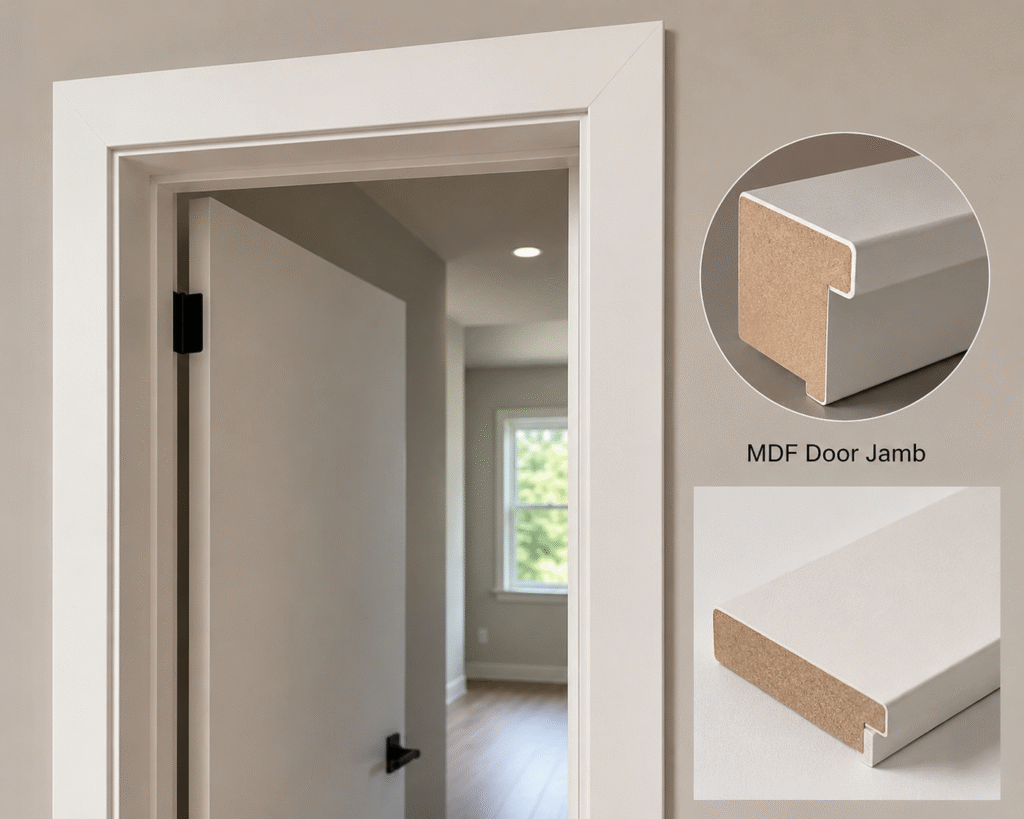
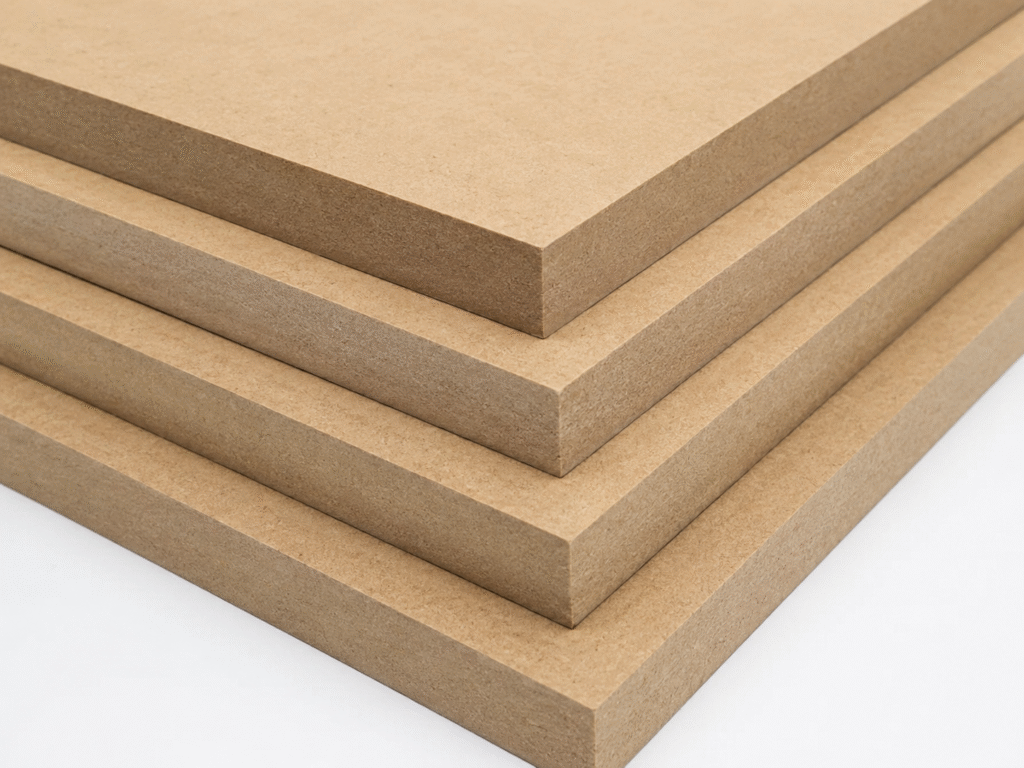
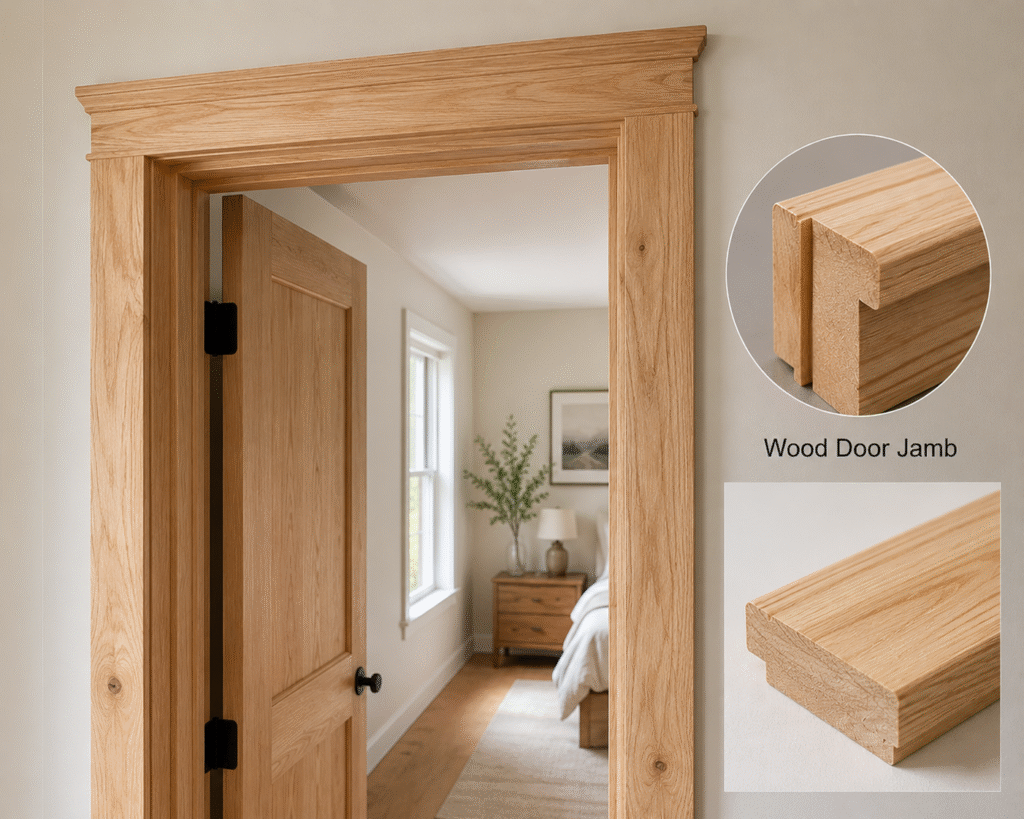
Door jambs are commonly made from either MDF (Medium Density Fiberboard) or solid wood.
MDF vs Wood Door Jamb
| Feature | MDF Door Jamb | Wood Door Jamb |
|---|---|---|
| Cost | Lower | Higher |
| Strength | Moderate | High |
| Moisture Resistance | Poor to Moderate | Better |
| Paint Finish | Excellent Smooth Finish | Good |
| Impact Resistance | Lower | Higher |
| Warp Resistance | Excellent | Can Warp |
| Lifespan | Moderate | Long |
| Best Use | Interior Dry Areas | Interior & Exterior |
| Repairability | Difficult | Easier |
| Premium Appearance | Moderate | Excellent |
Advantages of MDF Door Jambs
1. Lower Cost
One of the biggest advantages of MDF door jambs is affordability.
For:
- Apartment projects
- Budget renovations
- Large-volume housing developments
MDF can significantly reduce material costs.
In high-volume construction, this cost difference becomes substantial.
2. Smooth Surface for Painting
MDF has an extremely smooth and consistent surface.
This makes it ideal for:
- White painted doors
- Modern interior designs
- Contemporary trim systems
Unlike natural wood, MDF does not have visible grain patterns that may show through paint.
3. Better Dimensional Stability
Solid wood can:
- Expand
- Shrink
- Warp
when humidity changes.
MDF is more dimensionally stable in controlled indoor environments, which helps maintain consistent door alignment.
4. Easier Machining
MDF is easy to:
- Cut
- Shape
- Route
- Prime
This makes manufacturing more efficient for painted interior door systems.
Disadvantages of MDF Door Jambs
1. Poor Moisture Resistance
Moisture is the biggest weakness of MDF.
When exposed to water:
- MDF swells
- Edges deteriorate
- Structural integrity weakens
Therefore, MDF is generally not recommended for:
- Exterior doors
- Bathrooms with poor ventilation
- High-humidity climates
2. Lower Impact Resistance
Compared with wood, MDF dents more easily.
In high-traffic areas such as:
- Schools
- Commercial buildings
- Rental properties
MDF jambs may wear faster over time.
3. Difficult to Repair
Damaged MDF is harder to repair than wood.
Wood can often be:
- Sanded
- Filled
- Refinished
while severely damaged MDF usually requires replacement.
Advantages of Wood Door Jambs
1. Superior Strength and Durability
Wood door jambs provide excellent structural support.
They perform better under:
- Heavy doors
- Frequent use
- High-traffic environments
Solid wood also holds screws and hinges more securely.
2. Better Moisture Resistance
Properly sealed wood performs much better than MDF in humid environments.
This makes wood more suitable for:
- Exterior doors
- Coastal regions
- Kitchens
- Bathrooms
3. Longer Lifespan
High-quality wood jambs can last decades when properly maintained.
This makes them a preferred choice for:
- Premium homes
- Luxury projects
- Long-term property investments
4. Natural Appearance
Wood offers:
- Natural grain
- Premium aesthetics
- High-end appearance
For stained finishes, MDF cannot replicate the authentic look of real wood.
Disadvantages of Wood Door Jambs
1. Higher Cost
Solid wood is significantly more expensive than MDF.
Costs increase further when using:
- Hardwood species
- Custom profiles
- Premium finishes
2. Potential Warping
Wood naturally reacts to environmental changes.
Without proper drying and sealing, wood may:
- Warp
- Crack
- Expand
especially in fluctuating humidity conditions.
3. Surface Imperfections
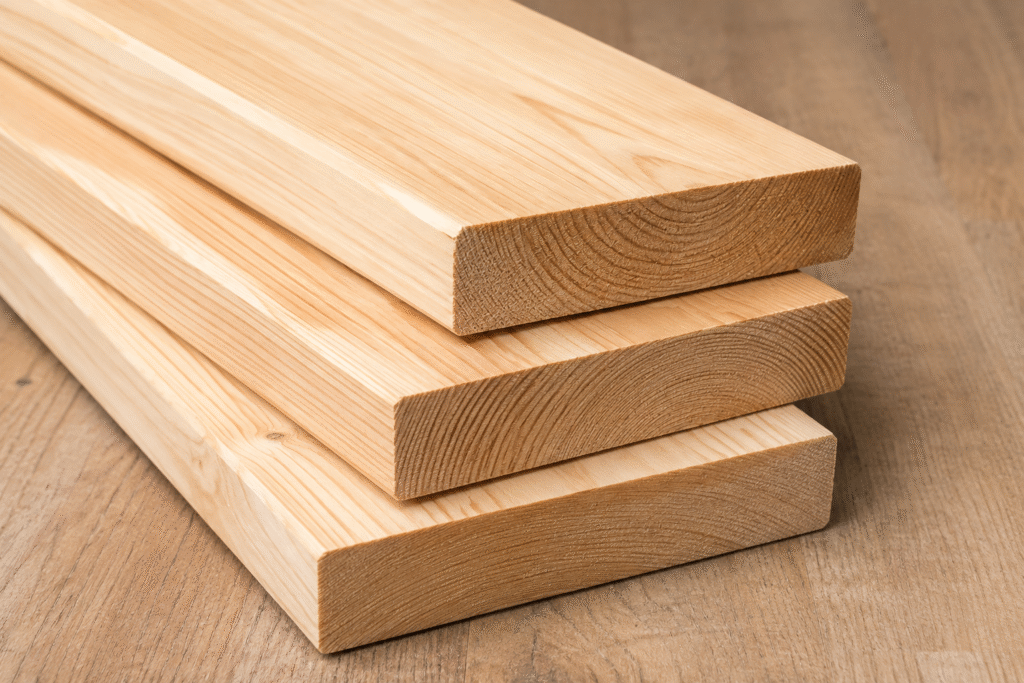
Natural wood may contain:
- Knots
- Grain variation
- Color inconsistency
This can require additional finishing work.
Which Is Better for Interior Doors?
For interior residential doors in dry environments:
MDF is often the better value option.
Especially for:
- Painted doors
- Modern interiors
- Budget-conscious projects
MDF provides:
- Smooth appearance
- Lower cost
- Good dimensional stability
Many production builders use MDF jambs for standard interior applications.
Which Is Better for Exterior Doors?
For exterior doors:
Wood is clearly the better option.
Exterior door jambs must handle:
- Moisture
- Temperature changes
- Impact
- Structural stress
Solid wood provides far better long-term performance under these conditions.
MDF vs Wood for Commercial Projects
Commercial projects often prioritize:
- Durability
- Maintenance
- Traffic resistance
In high-use commercial buildings, wood generally performs better.
However, MDF may still be used in:
- Low-traffic interiors
- Budget-sensitive developments
- Decorative applications
Environmental and Sustainability Considerations
MDF uses recycled wood fibers, which can reduce waste.
However:
- Some MDF products contain formaldehyde-based adhesives
- Quality standards vary
High-quality CARB-compliant MDF products are safer for indoor air quality.
Wood, especially FSC-certified wood, can also be environmentally sustainable when responsibly sourced.
How to Choose the Right Door Jamb Material
Choose MDF if:
- The application is interior only
- Budget is important
- Painted finish is preferred
- Moisture exposure is minimal
Choose wood if:
- Durability is critical
- The area has humidity exposure
- The project is premium-grade
- Long-term performance matters most
Frequently Asked Questions About Door Jamb Materials
Q: What are the primary advantages of using MDF for door jambs?
A: MDF door jambs are highly popular because they offer a perfectly smooth, knot-free surface that is ideal for painting. They are also more dimensionally stable than many wood types, meaning they are less likely to warp, twist, or shrink over time. Furthermore, MDF is generally more cost-effective, providing significant savings for large-scale projects where material budgets are a primary concern.
Q: In what situations is solid wood a better choice than MDF for door jambs?
A: Solid wood jambs are superior in areas prone to high moisture, as MDF can swell or disintegrate if the protective paint or finish is compromised and it is exposed to standing water. Wood also provides a more authentic, natural aesthetic that is preferred for stained finishes, and it offers better screw-holding power, making it a stronger choice for heavy-duty applications like exterior doors or commercial high-traffic entries.
Q: How do MDF and wood jambs compare in terms of installation?
A: Both materials can be installed using similar methods, but MDF is often easier to work with because it is consistent in density and lacks grain defects that can complicate cutting or nailing. However, installers must be careful when fastening MDF, as it is more prone to splitting if pilot holes are not properly drilled before driving in fasteners.
Q: Why might a project budget dictate the choice between these two materials?
A: Project budgets often favor MDF because it is a manufactured product with lower production costs compared to solid wood species. For builders focusing on standard interior applications where cost-efficiency and a clean painted finish are required, MDF provides a reliable, budget-friendly solution that meets industry standards.
Conclusion
When comparing MDF vs wood for door jambs, neither material is universally better for every situation. MDF door jambs offer affordability, smooth paintability, and dimensional stability, making them ideal for interior dry-area applications and cost-sensitive projects. Wood door jambs, however, deliver superior durability, strength, moisture resistance, and long-term reliability.
For most premium residential and commercial applications, wood remains the better overall choice due to its durability and structural performance. However, MDF continues to be an excellent solution for interior painted door systems where cost efficiency and smooth finishes are priorities.
Articles that you may be interested in:
Door Jamb Styles Guide: How to Choose Between Double Rabbeted, Single Rabbeted, Split, and Flat
Interior Door Packages for Multi-Family Projects: What Should Be Standardized Early?