
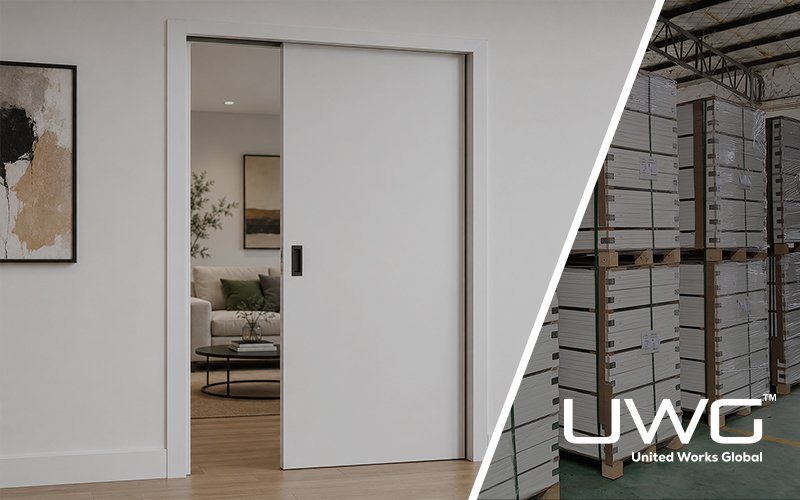
Pocket doors are increasingly popular in modern homes because they save space, create a clean look, and improve functionality. However, the door’s performance depends heavily on its hardware system—tracks, rollers, soft close mechanisms, and weight capacity.
Understanding these basics helps you choose a smoother, quieter, and longer-lasting pocket door system. Proper hardware selection improves durability, functionality, and user experience.
What Is Pocket Door Hardware?
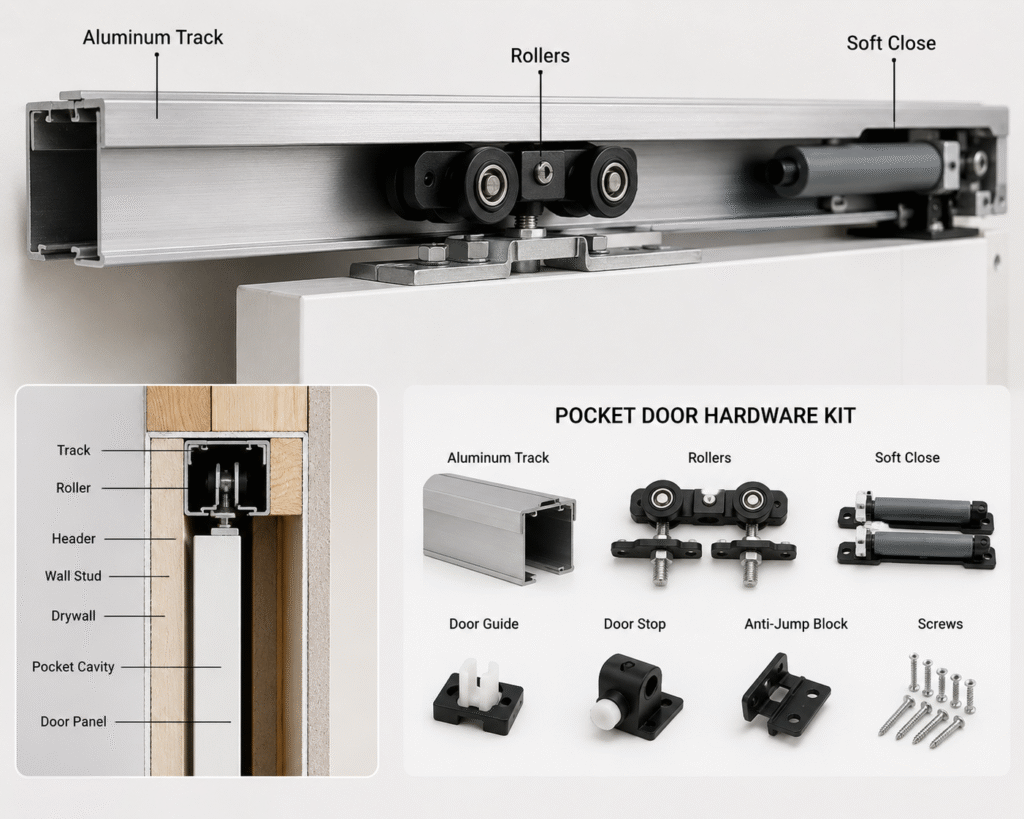
Pocket door hardware refers to the mechanical system that allows a door to slide into a hidden compartment inside the wall. Unlike traditional hinged doors, pocket doors rely on tracks and rollers to operate smoothly.
A complete pocket door hardware system typically includes:
- Track system
- Rollers or hangers
- Soft close mechanism
- Guides
- Door stops
- Mounting brackets
Each component plays an important role in ensuring smooth movement, proper alignment, and long-term reliability.
Understanding Pocket Door Tracks
The track is the foundation of the entire pocket door system. It controls how the door slides and directly affects stability and smoothness.
Types of Pocket Door Tracks
Aluminum Tracks
- Lightweight, corrosion-resistant, easy to install
- Best for standard interior doors in residential projects
Steel Tracks
- Stronger, higher durability, supports heavier doors
- Best for solid wood doors, large doors, and commercial applications
Track Quality Matters
Low-quality tracks can cause wobbling, noisy operation, uneven sliding, and faster roller wear. High-quality tracks ensure smooth movement, stability, reduced maintenance, and longer service life.
What Is a Soft Close Pocket Door System?
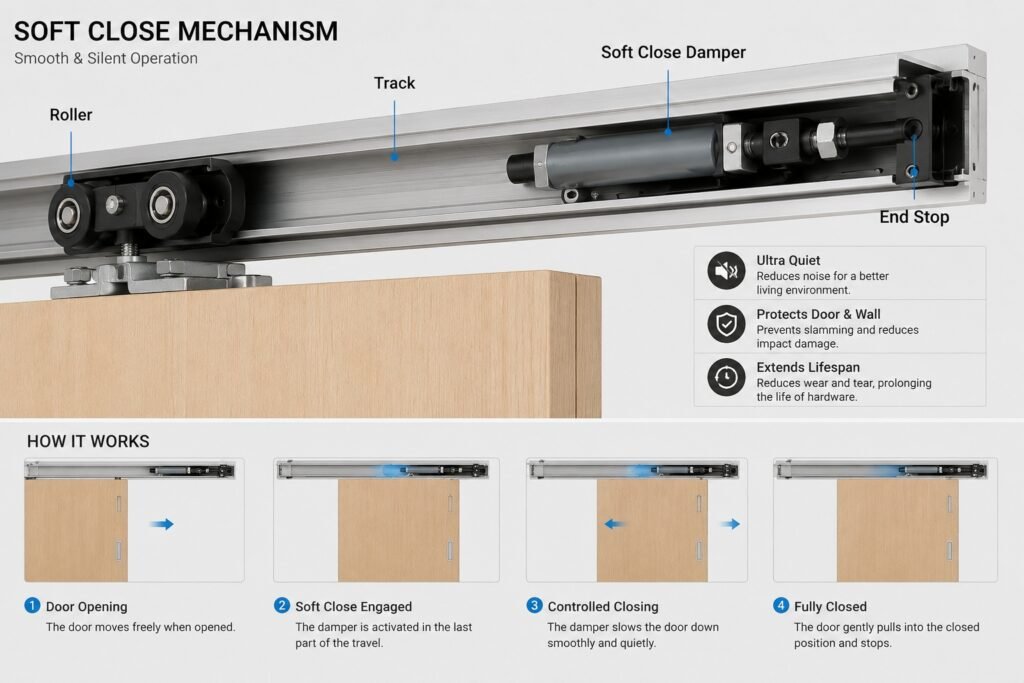
Soft close mechanisms gently slow the door before it fully opens or closes, preventing slamming.
How It Works: A hydraulic or spring-loaded damper inside the track catches the door during the final few inches, slowing it and pulling it into place.
Benefits
- Quieter operation: Ideal for bedrooms, bathrooms, offices
- Improved safety: Reduces finger injuries and wall damage
- Longer hardware life: Less stress on tracks, rollers, and frames
- Premium user experience: Smooth, luxurious feel
Weight Capacity Explained
Weight capacity refers to the maximum door weight that the hardware system can safely support.
This is one of the most important factors when selecting pocket door hardware.
If the hardware cannot handle the door weight properly, problems may occur:
- Track bending
- Roller failure
- Difficult sliding
- Misalignment
Typical Weight Capacities
| Hardware Type | Typical Weight Capacity | Recommended Use |
|---|---|---|
| Standard Residential | 60–100 lbs | Hollow core doors |
| Heavy-Duty Residential | 150–220 lbs | Solid wood doors |
| Commercial Grade | 250–400 lbs | Large or high-traffic doors |
| Architectural Systems | 400+ lbs | Oversized custom doors |
Choosing the Right Weight Capacity
- Hollow Core Doors: 40–70 lbs, standard hardware
- Solid Wood Doors: 100–220 lbs, reinforced hardware
- Glass Doors: 150+ lbs, specialized rollers and stronger tracks
Pocket Door Hardware Comparison
| Feature | Standard Hardware | Premium Hardware |
|---|---|---|
| Track Material | Basic aluminum | Heavy-duty aluminum or steel |
| Roller Quality | Plastic rollers | Precision ball-bearing rollers |
| Soft Close | Optional or unavailable | Integrated soft close |
| Weight Capacity | Up to 100 lbs | 200–400+ lbs |
| Noise Level | Moderate | Very quiet |
| Durability | Medium | High |
| Maintenance | More frequent | Minimal |
Common Pocket Door Hardware Problems
1. Poor Sliding Performance
Usually caused by:
- Low-quality rollers
- Bent tracks
- Incorrect installation
2. Door Jumping Off Track
This may happen when:
- Weight exceeds capacity
- Rollers are worn out
- Guides are improperly aligned
3. Excessive Noise
Noisy operation often results from:
- Cheap rollers
- Lack of lubrication
- Track debris
Installation Considerations
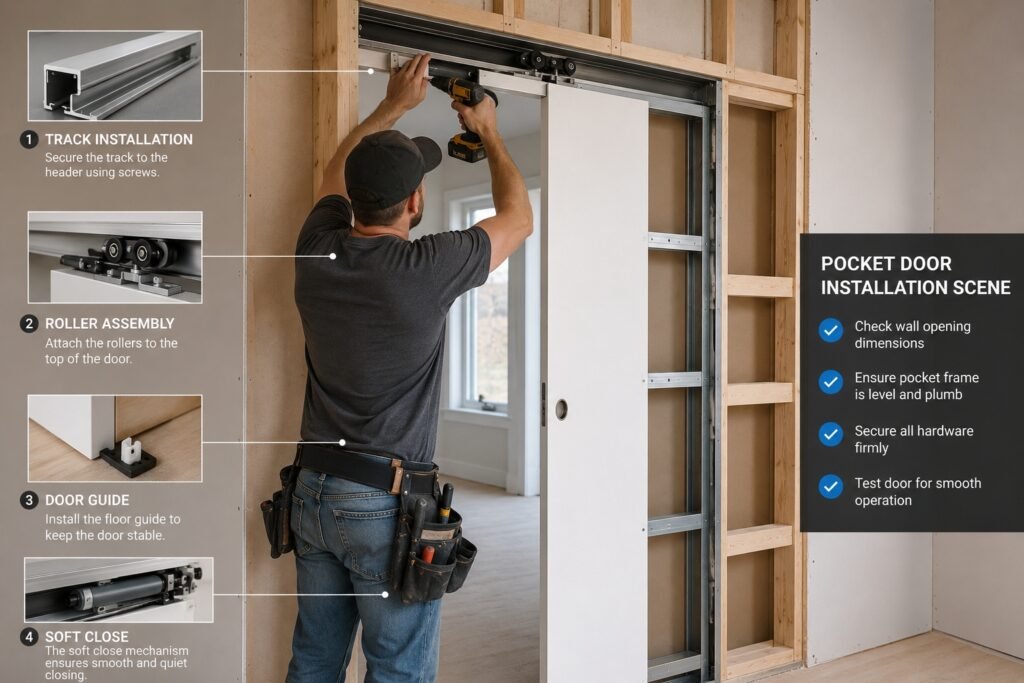
Even premium hardware performs poorly if installed incorrectly.
Important installation factors include:
- Proper wall framing
- Correct track alignment
- Accurate weight distribution
- Sufficient pocket clearance
Professional installation is strongly recommended for:
- Heavy doors
- Soft close systems
- Commercial projects
How to Choose the Best Pocket Door Hardware
When selecting a pocket door system, consider:
Door Weight
Always verify the actual weight of the door before choosing hardware.
Frequency of Use
High-traffic areas require stronger systems.
Soft Close Preference
Soft close adds comfort and durability but may increase cost.
Material Quality
Investing in premium rollers and tracks often reduces long-term maintenance costs.
Frequently Asked Questions About Pocket Door Hardware
Q: Why is selecting the right track material important for pocket doors?
A: The track is the foundation of the entire pocket door system and dictates long-term stability. Aluminum tracks are lightweight, corrosion-resistant, and ideal for standard residential interior doors. However, for heavy solid wood doors or high-traffic commercial applications, reinforced steel tracks are necessary to prevent bending and ensure a perfectly smooth slide under constant load.
Q: Is a soft-close system worth the additional investment for multifamily projects?
A: Yes, soft-close mechanisms are highly recommended for all modern developments. They automatically catch the door and glide it to a gentle stop, preventing it from slamming against the jamb. This significantly reduces noise in shared living environments, prevents finger injuries, and protects both the hardware and the internal wall framing from repeated impact stress, leading to fewer maintenance calls.
Q: How do I determine the correct weight capacity for my pocket door hardware?
A: Hardware weight capacity must strictly match the actual weight of your door slab. Standard residential hardware typically supports 60–100 lbs, suitable for hollow-core doors. If you are specifying solid wood, heavy MDF, or glass-insert doors, you must upgrade to heavy-duty hardware rated for 150–220 lbs or even 400+ lbs for architectural systems to avoid roller failure and track deformation.
Q: What are the most common causes of poor pocket door performance?
A: Poor performance is usually the result of using low-quality rollers or incorrect track alignment during the wall framing stage. Doors “jumping” off the track often occur when the slab weight exceeds the hardware’s rated capacity or when floor guides are misaligned. M4B recommends using precision ball-bearing rollers and heavy-duty tracks to ensure smooth, quiet, and maintenance-free operation for the life of the building.
Conclusion
Pocket door hardware plays a critical role in the performance, durability, and overall user experience of sliding pocket doors. Tracks provide structural guidance, soft close systems improve comfort and safety, and proper weight capacity ensures reliable operation over time.
Choosing high-quality hardware is especially important for heavy doors, modern interior designs, and frequently used spaces. By understanding the basics of tracks, soft close mechanisms, and weight ratings, homeowners and professionals can select a pocket door system that delivers smooth, quiet, and dependable performance for years to come.
Articles that you may be interested in: