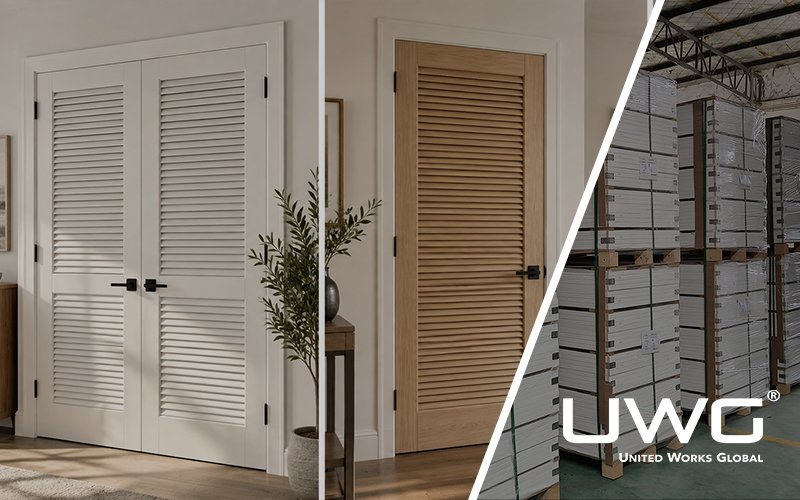
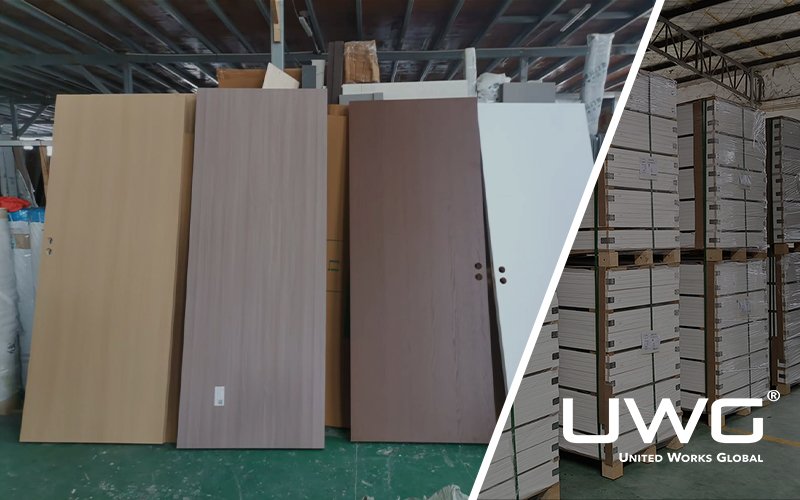
Veneer and laminate doors can look similar in a catalog, but they serve different project needs. Veneer provides the appearance and texture of real wood, while laminate focuses more on consistency, wear resistance, and cost control.
For builders, the right choice usually comes down to where the doors will be used, the required finish, expected traffic, maintenance needs, and total project budget.
What Is a Veneer Door?
A veneer door is finished with a thin layer of real wood applied over a stable substrate or door construction. Instead of manufacturing the entire door from solid lumber, veneer allows builders to achieve a genuine wood appearance while using engineered materials underneath.
A typical veneer door consists of:
Wood veneer surface + substrate + door core + edge treatment
This construction is particularly useful when a project wants the warmth of natural wood without the cost, and dimensional movement associated with a fully solid-wood door.
Veneer Face Material and Door Construction
The visible surface of a veneer door is real wood. The veneer is typically bonded to an MDF, HDF, plywood, or other engineered substrate, depending on the door design and manufacturer.
Under the face material, the door may use different core constructions, such as:
- Hollow core
- Tubular particleboard core
- Solid particleboard core
- Engineered wood core
- Mineral or other fire-rated cores
This distinction matters when comparing quotations. Two veneer doors with the same exterior appearance can have very different prices if one uses a lightweight core and the other uses a heavy solid or fire-rated core.
The veneer itself is only one part of the specification.
Common Veneer Wood Species and Finishes
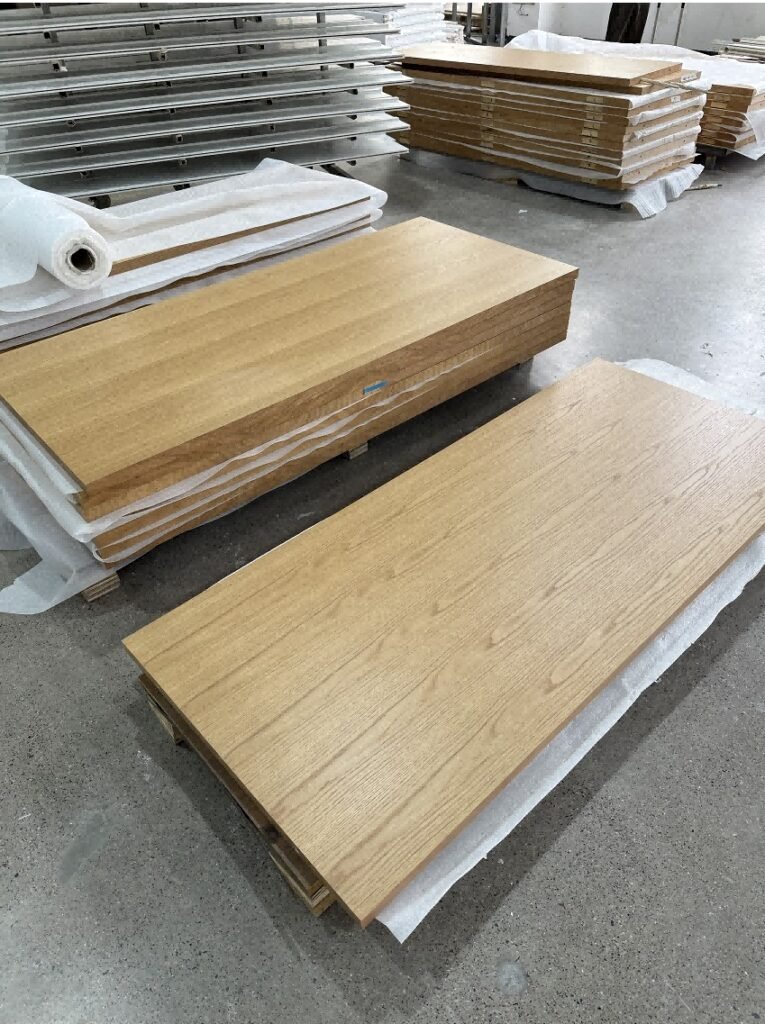
Common veneer species include:
- White Oak
- Red Oak
- Walnut
- Maple
- Cherry
- Birch
- Ash
The final appearance can then be adjusted through staining, clear coating, toned finishes, lacquer or PU coating.
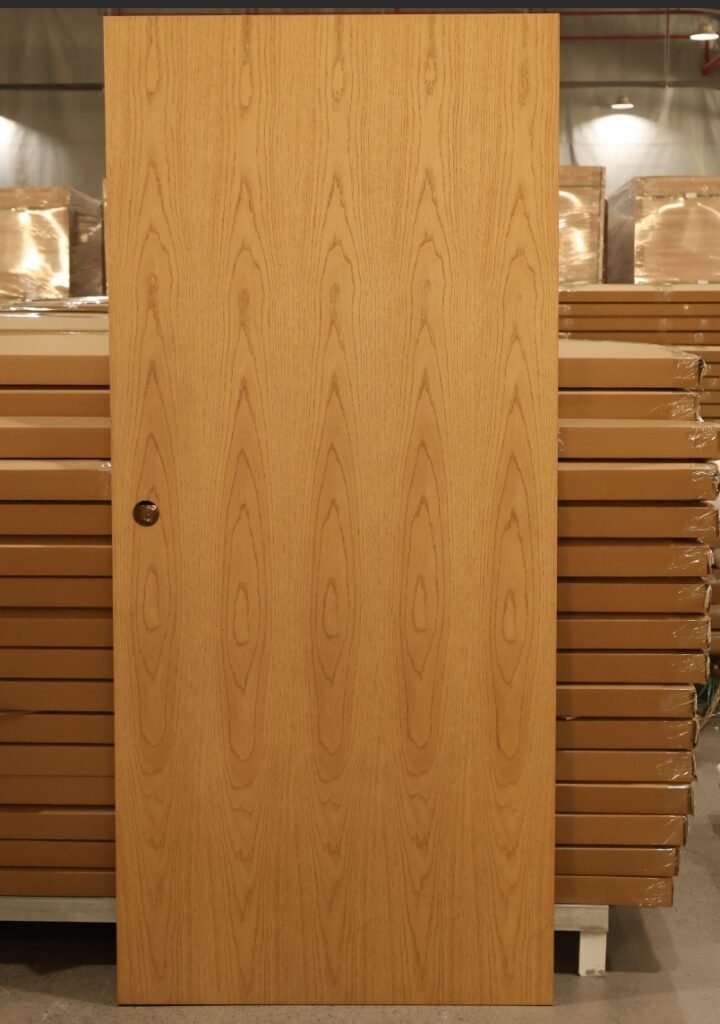
Natural variation is part of the appeal. Grain pattern and color will not be perfectly identical from one door to another.
For custom homes, this variation often makes the material feel more authentic. For a large project requiring hundreds of doors to look nearly identical, however, builders should approve samples and establish an acceptable range for color and grain before production.
The veneer itself is only one part of the specification. For a broader look at how these components come together in a complete door assembly, see our guide to veneer doors.
What Is a Laminate Door?
A laminate door uses a manufactured decorative surface bonded to the door substrate rather than a layer of natural wood.
The purpose of laminate is different from veneer. It is designed to provide a controlled surface with repeatable color, pattern, texture, and performance.
That makes it particularly practical for projects where a large quantity of doors must maintain a consistent appearance.
What Does “Laminate” Mean in a Door Specification?
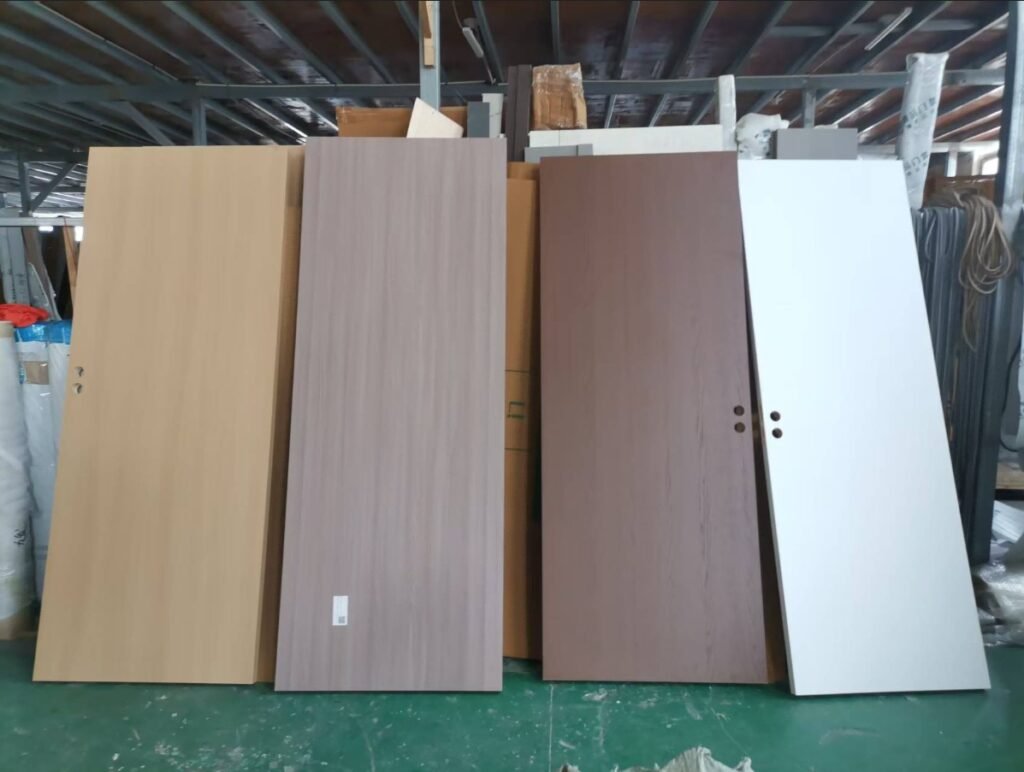
“Laminate” is a broad term rather than one single material.
Depending on the manufacturer and project, it may refer to different decorative surface systems. Therefore, a quotation simply stating “laminate door” does not provide enough information for an accurate comparison.
Builders should confirm the exact laminate type, thickness, finish, substrate, edge treatment, and door core.
This is especially important when comparing quotations from different suppliers. A lower-priced laminate specification may use a different surface grade or construction and therefore may not be directly comparable.
Laminate Face and Door Construction
A typical laminate door consists of:
Decorative laminate surface + substrate + door core + edge treatment
As with veneer doors, laminate doors can be manufactured with different internal cores.
The laminate surface primarily determines appearance and surface performance, while the internal core has a much greater influence on weight, sound control, fire performance, hardware holding strength, and overall door cost.
Common Laminate Types and Finish Options
Depending on the market and manufacturer, laminate options may include HPL, CPL and other decorative laminate surfaces.
Available designs can include:
- Wood grain
- Solid colors
- Stone-inspired patterns
- Matte finishes
- Textured surfaces
- Contemporary decorative patterns
Wood-look laminate has improved considerably. From a normal viewing distance, a good-quality laminate can provide a convincing wood appearance while maintaining much greater consistency from door to door.
Want to compare veneer, laminate, and other interior door finish options in actual product configurations? Explore our Interior Doors to review available styles, core options, finishes, and project configurations.
Veneer Door vs Laminate Door: Quick Comparison
| Factor | Veneer Door | Laminate Door |
|---|---|---|
| Surface Material | Real wood veneer | Manufactured decorative surface |
| Appearance | Natural and unique | Consistent and controlled |
| Grain Variation | Naturally varies | Highly repeatable |
| Scratch/Wear Resistance | Depends heavily on finish | Often better for high-traffic use |
| Moisture Performance | Requires good finishing and edge protection | Generally practical, but edges still require protection |
| Repair/Refinishing | Some veneer surfaces can be repaired or refinished | Usually replaced rather than refinished |
| Maintenance | Moderate | Relatively low |
| Cost | Often higher for premium species/finishes | Often more predictable for volume projects |
| Typical Applications | Custom homes, premium interiors | Multifamily, rental, hospitality, commercial |
This table should be treated as a general purchasing guide. Door core, surface grade, dimensions, machining, fire rating, hardware preparation, and order volume can change both performance and price substantially.
Key Differences Between Veneer and Laminate Doors
Appearance, Wood Grain, and Design Consistency
Appearance is the clearest difference.
Veneer is real wood, so every sheet contains natural differences in grain, tone, and figure. This gives the finished door depth and character that printed surfaces are intended to imitate.
For builders working on custom or higher-end residential projects, this can be an advantage. The door feels more like part of the architectural finish rather than simply a functional building component.
Laminate provides a different benefit: repeatability.
A 200-unit apartment project may require hundreds of doors across different production batches. In that situation, predictable color and grain can be more valuable than natural variation.
The decision is therefore less about which material “looks better” and more about whether the project values natural variation or controlled consistency.
Durability, Scratch, and Wear Resistance
For high-traffic applications, surface durability deserves careful consideration.
Depending on the laminate type and grade, many commercial laminate surfaces provide good resistance to abrasion, stains, and repeated cleaning. This makes them practical for apartments, rental properties, hotels, offices, and other spaces where doors receive frequent use.
Veneer can also provide long service life, but much depends on the coating system protecting the wood surface. A high-quality factory finish can significantly improve wear resistance.
Builders should therefore compare more than the face material. Ask how the veneer is finished and what laminate grade is being supplied.
Moisture Resistance and Edge Protection
Moisture performance is often oversimplified in door specifications.
Laminate itself may have good resistance to surface moisture, but the complete door still contains joints, edges, hardware preparations, and potentially moisture-sensitive core materials.
Water entering through an unprotected bottom edge or damaged corner can affect the substrate even when the face surface remains intact.
Veneer doors similarly depend on proper sealing and finishing.
For either material, pay particular attention to:
- Top and bottom edges
- Vertical edges
- Lock preparation
- Hinge preparation
- Cutouts made on site
- Areas exposed to repeated cleaning or humidity
For wet or exterior environments, builders should specify a door system designed for that application rather than relying on the decorative face material alone.
Cost and Long-Term Project Value
Laminate is often selected for budget-sensitive and volume projects because its finish is repeatable, maintenance is relatively straightforward, and large quantities can be standardized efficiently.
Veneer pricing can vary much more depending on wood species, veneer grade, grain matching, stain requirements, and finishing process. White oak or walnut veneer with a custom finish, for example, belongs to a very different cost category from a standard commercial laminate.
However, initial purchase price should not be the only comparison.
Builders should also consider:
Door cost + installation + expected maintenance + replacement risk + required appearance
A slightly more expensive laminate may make sense in a high-turnover rental building if it reduces maintenance. A more expensive veneer door may make sense in a custom home where the interior finish contributes directly to the perceived quality of the property.
Veneer vs Laminate Doors for Different Projects
Residential and Custom Home Projects
Veneer is particularly well suited to residential projects where natural materials are part of the design language.
It works well with:
- Wood flooring
- Veneered cabinetry
- Natural trim
- Contemporary luxury interiors
- Custom stains
Builders should pay particular attention to sample approval. A small veneer sample cannot guarantee that every finished door will have identical grain and color because natural wood varies.
For projects where homeowners expect a very uniform finish, laminate may actually be the easier specification.
Multifamily and Rental Projects
Laminate often has a practical advantage in multifamily housing.
A builder ordering several hundred doors typically cares about:
- Repeatable appearance
- Controlled procurement cost
- Easy cleaning
- Surface durability
- Replacement availability
- Consistent specifications across units
Laminate addresses these priorities well.
Another advantage appears later in the building’s life. When one damaged door needs replacement, reproducing a standardized laminate finish may be easier than matching the natural grain and aging of an existing veneer door.
Hotels, Offices, and Commercial Buildings
Both materials are used in commercial interiors, but the decision depends heavily on the design and traffic level.
Veneer is common where appearance matters, such as executive offices, upscale hotel rooms, meeting spaces, and premium public areas.
Laminate is often more practical in corridors, standard hotel rooms, offices, service areas, and other frequently used spaces.
For commercial projects, the decorative surface should never be evaluated separately from code and performance requirements. Fire rating, hardware, door core, frame compatibility, and applicable building requirements may ultimately determine the door construction.
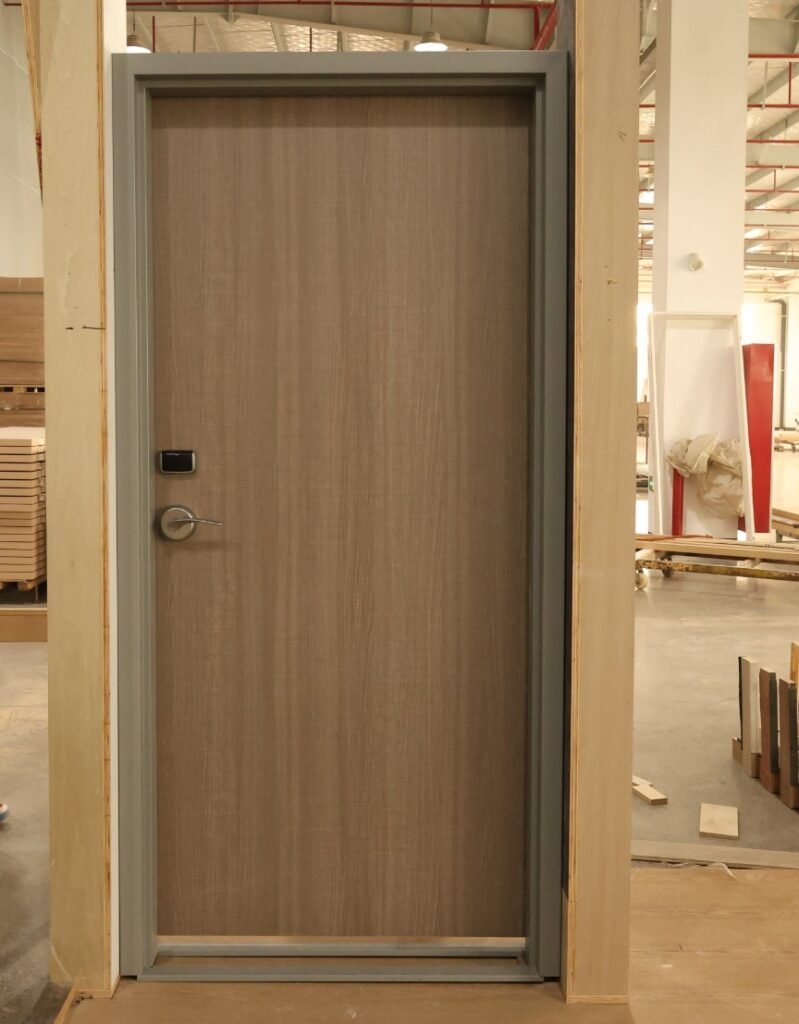
What Should Builders Check Before Ordering Veneer or Laminate Doors?
Door Core, Size, and Thickness Requirements
Before requesting a final quotation, specify:
- Door width
- Door height
- Door thickness
- Door core
- Quantity
- Opening direction where applicable
- Interior or exterior application
A 1-3/8-inch hollow-core interior door and a 1-3/4-inch solid-core door may use a similar decorative surface but are fundamentally different products.
For B2B purchasing, surface description alone is never enough.
Finish Samples and Batch Consistency
Request physical samples before mass production whenever finish appearance is important.
For veneer, confirm:
- Wood species
- Grain direction
- Veneer cut
- Stain color
- Gloss level
- Acceptable natural variation
For laminate, confirm:
- Manufacturer or equivalent specification
- Pattern
- Color
- Texture
- Gloss
- Surface grade
For large orders, keep an approved sample as the production reference.
This small step can prevent expensive disputes when hundreds of doors arrive on site.
Fire Rating, Hardware Preparation, Jambs, and Casings
The door leaf is only one part of the opening.
Builders should also confirm:
- Fire-rating requirements
- Hinge size and quantity
- Lock preparation
- Backset
- Door handing
- Jamb width
- Jamb material
- Casing profile
- Threshold where required
- Door sweep where required
- Applicable labels and certification
This becomes especially important for prehung and commercial door packages.
A door that arrives with the wrong machining or jamb specification can create considerably more site cost than a small difference in the original unit price.
Veneer Door vs Laminate Door FAQs
Is Veneer Better Than Laminate?
Neither material is universally better.
Veneer is usually preferred when natural wood appearance and premium interior design are priorities. Laminate is often more suitable when durability, consistency, maintenance, and cost control matter more.
Which Is More Expensive, Veneer or Laminate?
Veneer doors are often more expensive, particularly when premium wood species, grain matching, staining, or specialized finishing is required.
However, price should be compared using equivalent door cores, sizes, hardware preparation, and performance requirements.
Which Lasts Longer, Veneer or Laminate Doors?
Service life depends on the complete door construction and environment.
In high-traffic interiors, quality laminate can offer an advantage because of its wear and scratch resistance. A well-made and properly finished veneer door can also last for many years, particularly in controlled residential environments.
Can Veneer Doors Be Refinished?
In many cases, yes, but the options depend on veneer thickness and the existing finish.
Because veneer is a thin layer of real wood, aggressive sanding can damage it. Light refinishing or recoating may be possible, while major surface damage can be more difficult to repair.
Are Laminate Doors Waterproof?
A laminate-faced door should not automatically be considered waterproof.
The laminate surface may resist moisture well, but edges, joints, machining areas, adhesives, and the internal core can still be affected by prolonged water exposure.
Always specify a door specifically designed for wet environments when that performance is required.
Can Veneer and Laminate Doors Use the Same Door Core?
Yes. In many cases, veneer and laminate are surface options rather than completely different door structures.
Both may be applied over similar engineered substrates and paired with hollow, particleboard, engineered wood, or specialized cores depending on the manufacturer and required performance.
This is why builders should compare complete door specifications, rather than comparing veneer and laminate only by appearance.
Conclusion
Veneer and laminate doors solve different project priorities. Veneer offers real wood grain and a more natural, premium finish, making it attractive for custom homes and design-focused interiors. Laminate provides greater finish consistency, practical surface durability, and predictable maintenance, which makes it particularly useful for multifamily, rental, hospitality, and commercial projects.
For builders, the final decision should include the door core, surface specification, dimensions, hardware preparation, fire requirements, jamb package, expected traffic, and project budget. Comparing the complete door system rather than the face material alone leads to a more accurate quotation and a better long-term result.