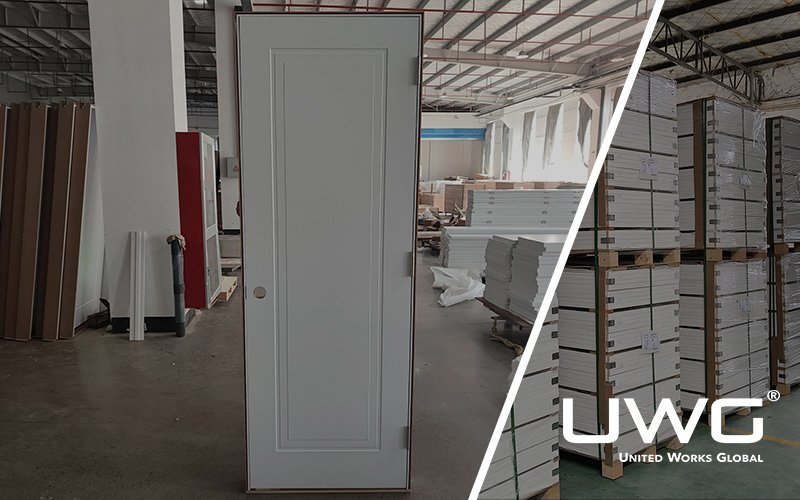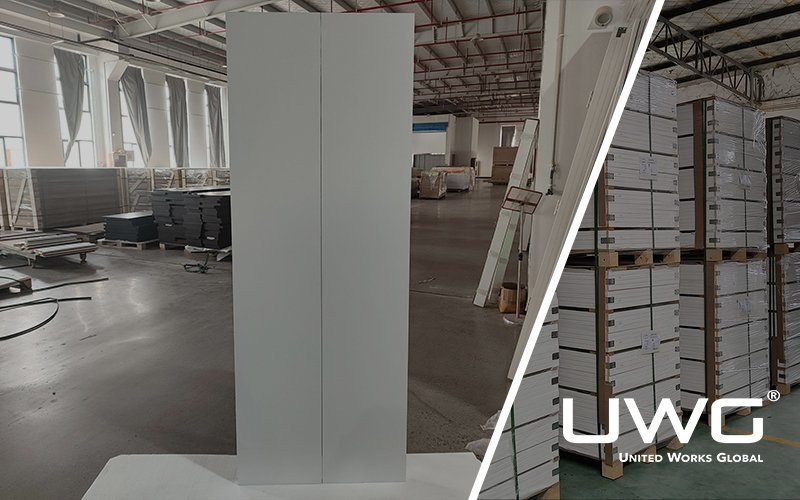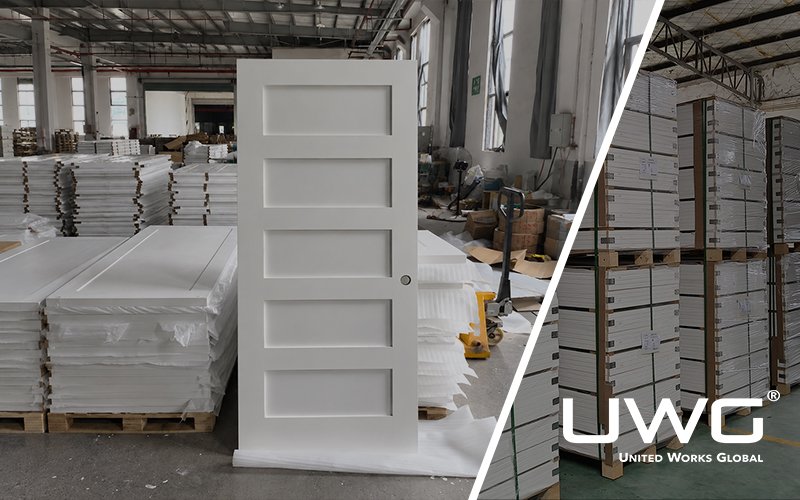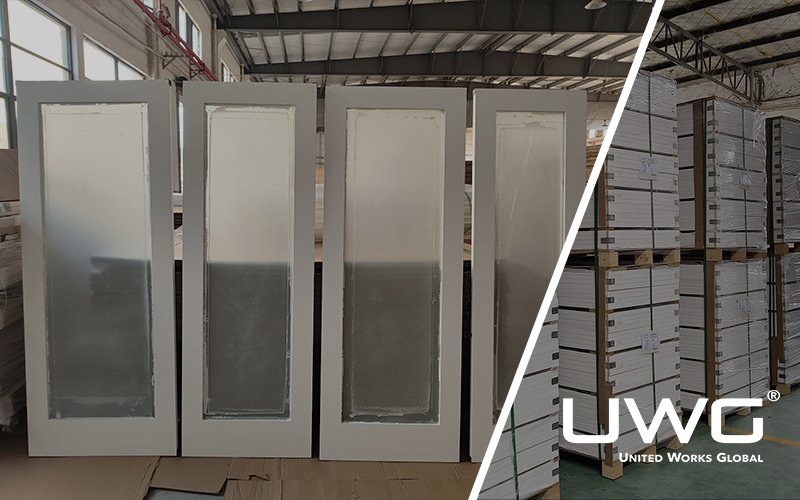
Solid core and hollow core interior doors can use the same panel design, dimensions, and exterior finish while performing differently because of their internal construction.
For builders, contractors, and project buyers, core selection affects more than product price. It can change door weight, handling, hinge and jamb requirements, sound control, impact resistance, shipping weight, and the overall door-package budget.
This guide compares the two core types and explains how to assign them according to room function and project requirements.
What Is a Solid Core Door?
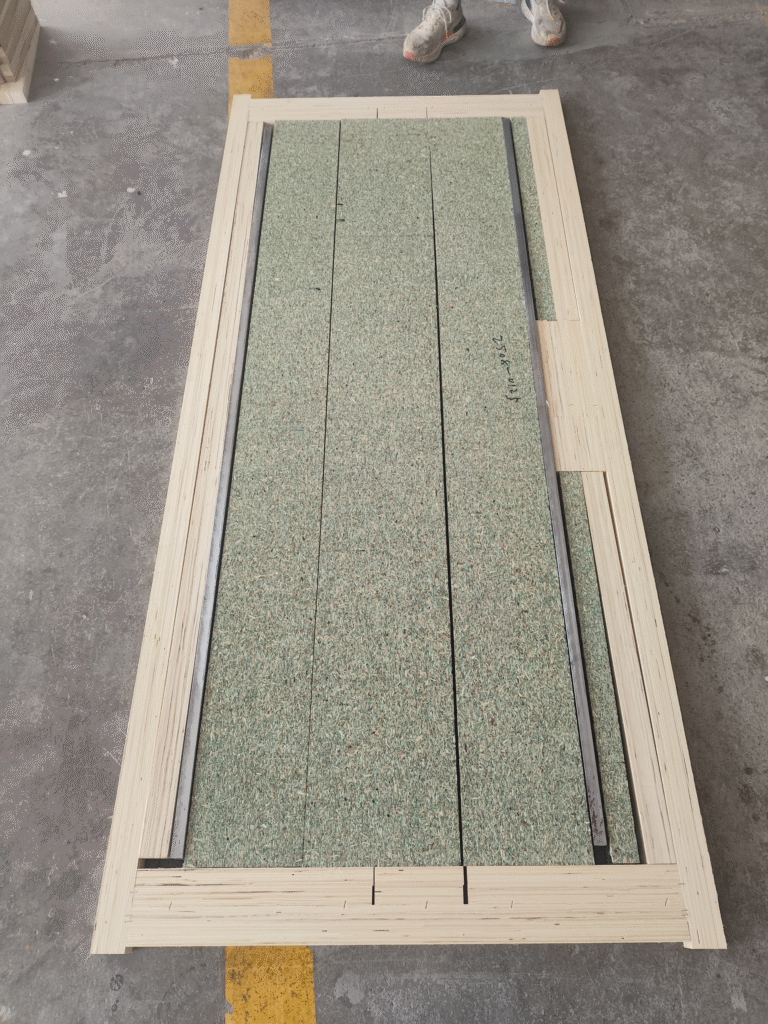
A solid core door uses a dense internal core beneath the door faces or skins. Depending on the manufacturer and door construction, the core may use particleboard, tubular particleboard, MDF, engineered wood, mineral-based materials, or another specified dense core.
In selected molded interior doors supplied by UWG, the solid core configuration may use tubular particleboard together with additional engineered filling, perimeter stiles and rails, door skins, and reinforcement around the hardware area. The exact construction should be confirmed in the applicable product specification.
The additional mass generally improves sound reduction, impact resistance, and the substantial feel of the door compared with a hollow core version of a similar size and construction.
“Solid core” does not mean that the entire door is made from solid natural wood. It describes the internal core category of the door slab.
What Is a Hollow Core Door?
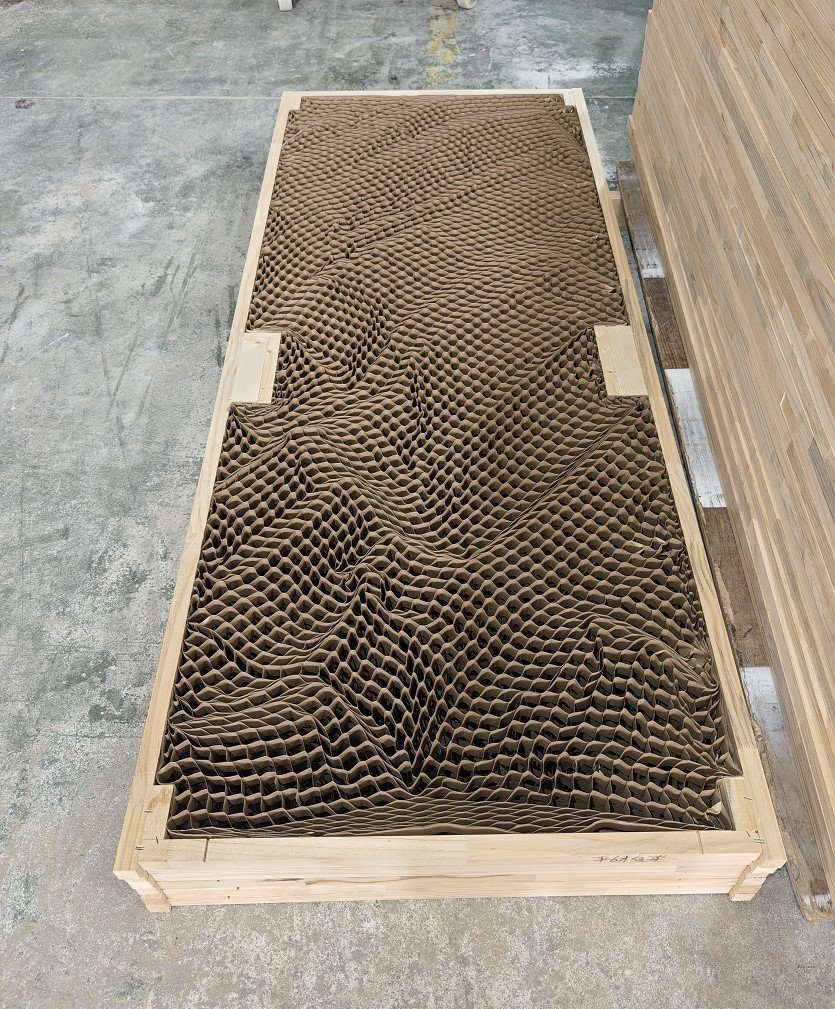
A hollow core door is not an empty shell. It normally uses a lightweight cellular or honeycomb structure between the door skins, together with perimeter stiles and rails and reinforcement around specified hardware areas.
In the molded hollow core doors commonly supplied by UWG, a lightweight honeycomb core supports the door skins while reducing the total weight and material cost of the slab.
Hollow core construction can simplify transportation, handling, and installation, particularly when a project includes a large number of openings. However, the exact core, edge construction, hardware reinforcement, and trimming allowance should still be confirmed for the selected product.
Can Molded Doors Be Solid Core or Hollow Core?
Yes. A molded door can be manufactured with either a solid core or a hollow core.
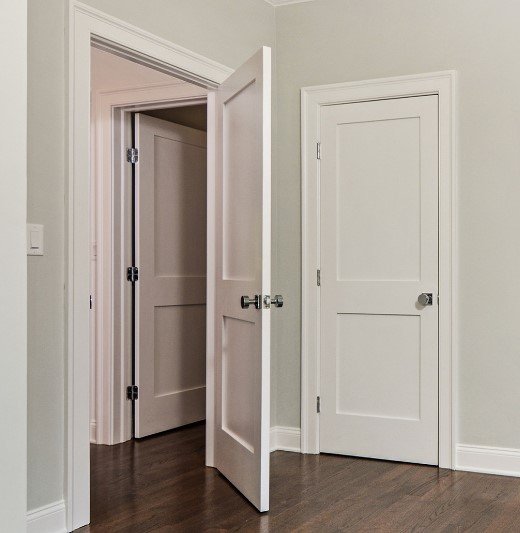
“Molded” describes the door-face construction and panel design, usually formed from pressed hardboard, HDF, MDF, or another molded composite skin. “Solid core” and “hollow core” describe the internal construction behind those skins.
This means two molded doors can have the same exterior panel design but different internal cores, weights, hardware requirements, sound-control characteristics, and prices.
Door style, face material, core construction, and supply format should therefore be treated as separate specification decisions.
Solid Core vs Hollow Core Doors: Key Differences
Exact figures vary according to door size, thickness, style, finish, and manufacturer. Based on the molded interior door configurations we commonly supply, the practical differences are typically as follows:
| Factor | Solid Core Doors | Hollow Core Doors |
|---|---|---|
| Typical Core Construction | Tubular particleboard with additional MDF filling | Lightweight honeycomb filling with perimeter reinforcement |
| Typical Product Cost* | Approx. $102 | Approx. $80 |
| Typical Door Weight* | Approx. 37.9 lb. (17.2 kg) | Approx. 25.4 lb. (11.5 kg) |
| Sound Control | Better due to greater internal mass | Suitable for basic interior separation |
| Impact Resistance | Higher | Lower |
| Door Feel | Heavier and more substantial | Lighter |
| Handling | Requires more attention during bulk handling and installation | Easier to carry and install |
| Hardware | Door weight should be considered when confirming hinges and frames | Lock preparation should align with the reinforced lock area |
| Typical Uses | Bedrooms, offices, and higher-priority openings | Closets, pantries, and secondary openings |
*The cost and weight figures above are based on UWG’s 30″ × 80″ 6-panel molded door specifications.
Product cost and door weight vary with size, thickness, design, core material, finish, and other specifications. For the same UWG 35 mm thick, 30″ × 80″ 6-panel molded door, the honeycomb-core version weighs approximately 11.5 kg, while the tubular-particleboard-core version weighs approximately 17.2 kg. Door size also affects weight: when the width of the same 35 mm thick, tubular-particleboard-core 6-panel door increases from 30″ to 36″, the weight increases to approximately 20.3 kg. For builders, door weight should therefore be evaluated together with core material, slab dimensions, and thickness when planning handling, hardware, and installation.
Core type alone does not determine the acoustic performance of an installed opening. The slab construction, thickness, mass, frame, perimeter seals, undercut, hardware, wall assembly, and installation all affect sound transmission. Where a specific acoustic target is required, buyers should request test data for the applicable complete assembly.
Key Factors When Choosing Between Solid Core and Hollow Core Doors
Project Budget Considerations
The difference between $80-100 may not appear dramatic when comparing one door, but the impact changes with project scale.
If a residential project requires 200 interior doors, for example, upgrading every opening to solid core can affect not only the product budget but also total shipment weight and jobsite handling.
For this reason, we normally recommend looking at the complete door schedule rather than comparing only the unit price of one solid core and one hollow core door.
Weight, Handling, and Hardware Requirements
Weight should be considered together with the complete door system.
Based on our current product configurations, hollow core molded doors commonly fall around 8–12 kg, while solid core versions may range from approximately 10–20 kg depending on size and specification.
For comparable door dimensions, the additional weight of solid core construction should be considered when confirming hinges, jamb construction, machining, and installation requirements.
Hollow core doors have a different consideration: lock machining needs to correspond with the reinforced lock area. If the core type changes after hardware details have already been selected, the hinge, lock, frame, and machining specifications should be reviewed again before production.
Sound Control, Privacy, and Durability
The additional mass inside a solid core door generally helps reduce sound transmission compared with a comparable hollow core door. This makes solid core useful for spaces where privacy matters.
However, a solid core door is not automatically soundproof. Door undercuts, perimeter gaps, seals, jamb construction, and installation all influence the acoustic performance of the complete opening.
The denser internal construction also provides better resistance to everyday impacts. Hollow core remains practical where traffic, privacy, and impact requirements are lower.
Where Should Solid Core and Hollow Core Doors Be Used?
Where Solid Core Interior Doors Work Best
Solid core doors are commonly considered for bedroom doors, home offices, media rooms, and frequently used openings where privacy, noise control, or a more substantial door feel has greater value.
If a builder wants to upgrade only selected openings instead of the entire interior door package, bedrooms are often more logical candidates than closets or pantries. Occupants are more likely to notice the benefit of additional mass where conversations, television noise, and everyday privacy matter.
Where Hollow Core Interior Doors Work Best
Hollow core doors are practical for closets, pantries, storage rooms, and other secondary openings where acoustic privacy and impact resistance are less important.
Their lighter construction also has a practical advantage in high-volume residential projects. When hundreds of doors need to be shipped, unloaded, moved between floors, and installed, differences in individual door weight accumulate across the project.
Using hollow core in these locations does not automatically mean choosing a lower-quality door. It means matching the internal construction to an opening that does not require the additional material and weight of solid core.
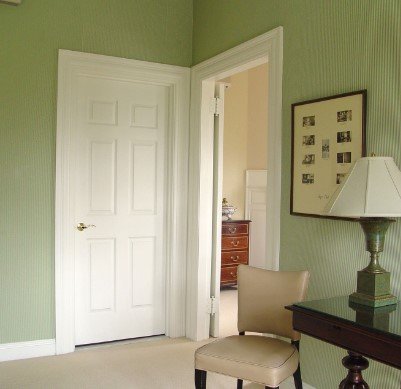
How Project Type Changes the Best Core Mix
Entry-Level Residential Projects
Entry-level projects usually place greater emphasis on controlling the total door-package cost. Hollow core doors can cover many standard openings, while solid core can be reserved for selected bedrooms or other rooms where additional privacy or durability is required.
Rental and Multifamily Projects
Rental and multifamily projects need to balance initial cost, durability, privacy, installation efficiency, and maintenance.
When reviewing these projects, it is often more useful to look at the function of each opening than to automatically specify one core throughout every unit. Bedrooms may have different priorities from closets, pantries, and utility spaces even when the doors share the same size and appearance.
High-End Residential Projects
For higher-end residential projects, solid core may be specified for a larger share of the interior door schedule, particularly in bedrooms, offices, and frequently used rooms.
The decision is not only about sound reduction. Door weight and closing feel are also noticeable to occupants, so the core can become part of the overall interior specification rather than simply a hidden construction detail.
Builder Specification Strategy
From the residential door schedules we review, using one core type for every opening is not always necessary.
For example, a project may specify solid core for bedrooms and offices while keeping hollow core for closets, pantries, and selected secondary openings. This concentrates the additional material cost in spaces where occupants are more likely to notice the performance difference.
This becomes more important as project volume increases. A relatively small difference per door can become significant when repeated across dozens or hundreds of openings.
For that reason, we prefer to review core selection together with room function and the complete door schedule rather than automatically upgrading every interior door to solid core.
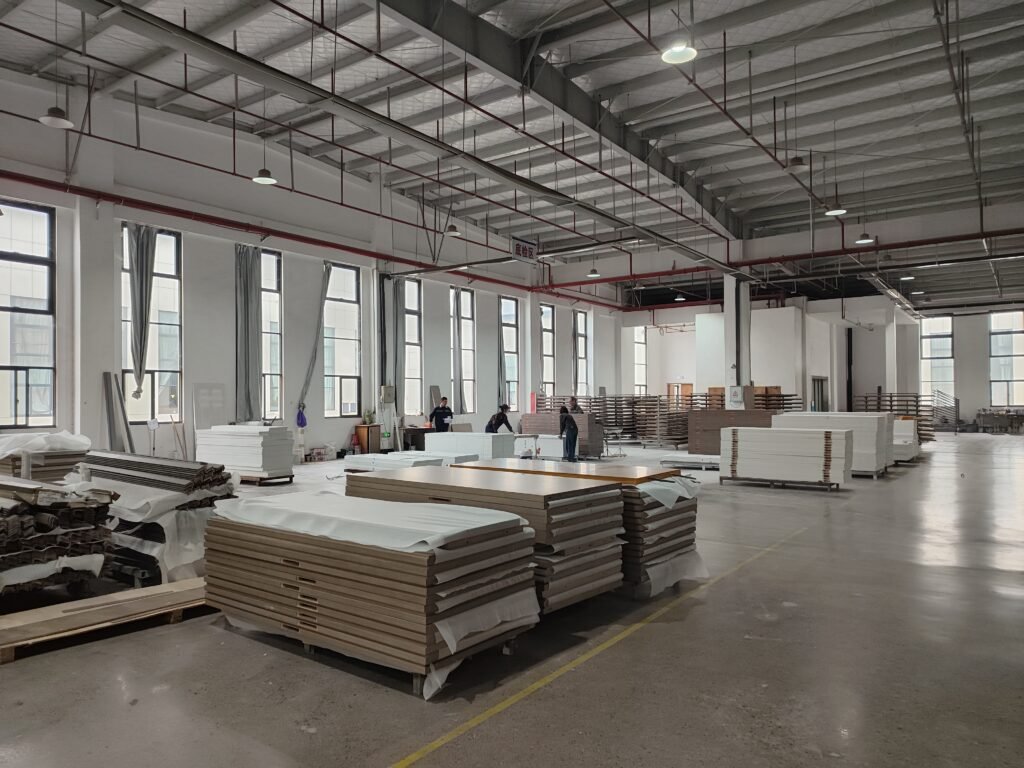
Planning a residential project? Explore our Single-Family Solutions to see how door specifications, core options, and material selections can be coordinated around different rooms and project requirements.
What Builders Should Confirm Before Ordering Interior Doors
Core construction should be confirmed together with the other production requirements rather than treated as an isolated specification.
| Specification | What to Confirm |
|---|---|
| Core Construction | Solid core or hollow core |
| Door Dimensions | Width, height, and thickness |
| Door Style | Molded panel, Shaker, flush, etc. |
| Configuration | Slab or prehungSee our door supply format comparison for the key differences. |
| Frame | Jamb material and width |
| Handing | Left-hand or right-hand |
| Hinges | Size, quantity, finish, and preparation |
| Lock Preparation | Bore, backset, and reinforced lock area |
| Finish | Primed, painted, veneer, etc. |
| Performance | Fire or acoustic requirements where applicable |
Two doors can have identical dimensions and face designs but still require different production preparation because of their core and hardware specifications.
For wholesalers, this distinction also matters when creating SKUs. A 6-panel hollow core door and a 6-panel solid core door should not be treated as the same product simply because their exterior design and nominal dimensions match.
What Are Common Solid Core and Hollow Core Door Specification Mistakes?
Using One Core Specification for Every Opening
Using solid core throughout an entire project can add material cost and shipment weight in openings where the additional performance may offer limited practical value.
Using hollow core everywhere can create the opposite problem when bedrooms or other privacy-sensitive spaces require a higher specification.
The room schedule should help determine where each core provides value.
Overlooking Door Weight and Hardware Requirements
Changing from hollow core to solid core should not be treated as a simple material substitution.
Because the weight can change, the associated hinges, jambs, machining, and installation requirements should be checked again. This is particularly important if the door size or height is also being changed.
Reviewing the Door Schedule Only by Size and Quantity
Two 30 × 80 doors do not necessarily need the same core simply because their dimensions match.
When we review residential door schedules, we also look at room names and functions. A 30 × 80 bedroom door and a 30 × 80 closet door may appear identical in a quantity takeoff, but the bedroom may have a higher privacy requirement while the closet does not.
This becomes especially important in projects with repeated unit types. If the schedule is reviewed only by size and quantity, opportunities to optimize the core mix can easily be missed.
FAQ
Are Solid Core Interior Doors Soundproof?
No. Solid core interior doors generally reduce sound better than comparable hollow core doors because of their greater mass, but the complete opening also matters. Undercuts, perimeter gaps, frames, seals, and installation can all affect acoustic performance.
Which Core Is Better for Bedroom Doors?
Solid core is generally the better choice when bedroom privacy and noise reduction are priorities. Hollow core bedroom doors can still be appropriate for projects where controlling the overall door-package budget is more important.
Can Builders Mix Solid Core and Hollow Core Doors in One Project?
Yes. In many residential projects, different cores can be assigned according to room function. Bedrooms and offices may use solid core while closets, pantries, and secondary openings remain hollow core.
Are Solid Core Doors Fire-Rated?
Not automatically. A solid core construction alone does not establish a fire rating. Fire-rated doors must meet the applicable tested and labeled assembly requirements.
Are Solid Core Doors Worth the Extra Cost?
They can be where privacy, sound reduction, impact resistance, or a more substantial door feel matters. For secondary openings with lower performance requirements, hollow core may provide better project value.
Summary
Solid core and hollow core doors differ primarily in their internal construction. Solid core doors use a denser core and are generally heavier, with better sound reduction and impact resistance than comparable hollow core doors. Hollow core doors use a lightweight honeycomb or cellular structure, reducing weight, handling requirements, and product cost.
The most effective specification does not have to use the same core in every opening. Bedrooms, offices, and other privacy- or performance-priority spaces may benefit from solid core construction, while closets, pantries, and selected secondary openings may use hollow core construction.
Builders should confirm core type together with door dimensions, style, supply format, hinges, jamb construction, lock preparation, finish, and any tested fire or acoustic requirements. For project-specific coordination, review UWG’s interior door options or submit a room-by-room door schedule.