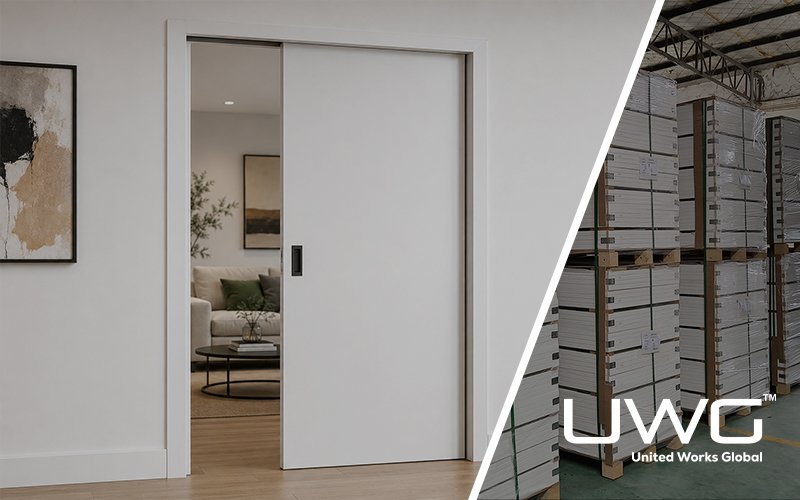

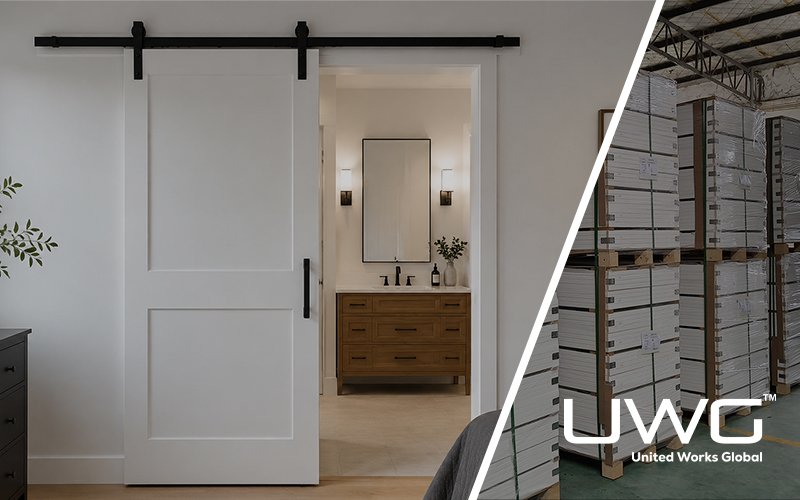
From clean Shaker styles to rustic K-frame designs and budget-friendly molded options, different barn door styles offer different advantages in appearance, durability, cost, and installation performance. For builders, developers, and distributors, understanding these differences is essential when selecting the right barn door system for a project.
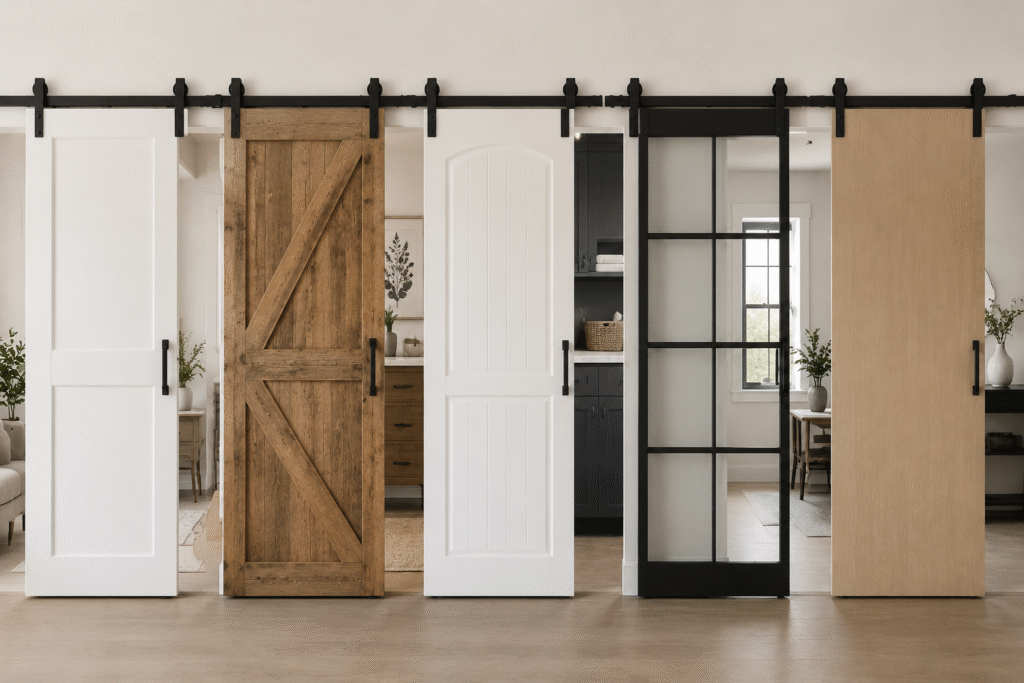
Barn door styles such as Shaker, Molded, K-Frame, Glass, and Flush designs each serve different residential and commercial applications. Shaker barn doors are favored for modern and transitional interiors because of their clean appearance and versatility, while K-frame barn doors remain popular in farmhouse and rustic projects. Molded barn doors offer a cost-effective solution for large housing developments, and glass barn doors are ideal for contemporary spaces that require more natural light. Choosing the right barn door depends on project style, material selection, hardware quality, acoustic performance, and long-term maintenance needs.
What Is a Barn Door?
A barn door is a sliding door mounted on an exposed or concealed track system rather than traditional hinges. Unlike swing doors, barn doors slide horizontally, helping save floor space while creating a stronger architectural feature within the interior.
Today, barn doors are commonly used in:
- Residential homes
- Multifamily apartments
- Hospitality projects
- Offices
- Renovation projects
- Luxury custom homes
According to the National Association of Home Builders (NAHB), flexible layouts and multifunctional interior spaces continue to influence modern housing trends, helping increase demand for sliding door systems.
Why Barn Doors Continue to Grow in Popularity
For developers and builders, barn doors offer several practical advantages beyond aesthetics.
They help maximize usable floor space, especially in smaller rooms where traditional swing doors may limit furniture placement or traffic flow. Barn doors also allow designers to create feature walls and more visually dynamic interiors without major structural changes.
In our previous residential and multifamily projects, barn doors were frequently selected for master bathrooms, home offices, laundry rooms, and open-concept transitional spaces where both functionality and visual impact were important.
Another reason for their popularity is design flexibility. Modern barn doors now work across farmhouse, contemporary, minimalist, industrial, and transitional interiors, making them suitable for a wider range of projects than ever before.
Common Barn Door Styles
1. Shaker Barn Doors
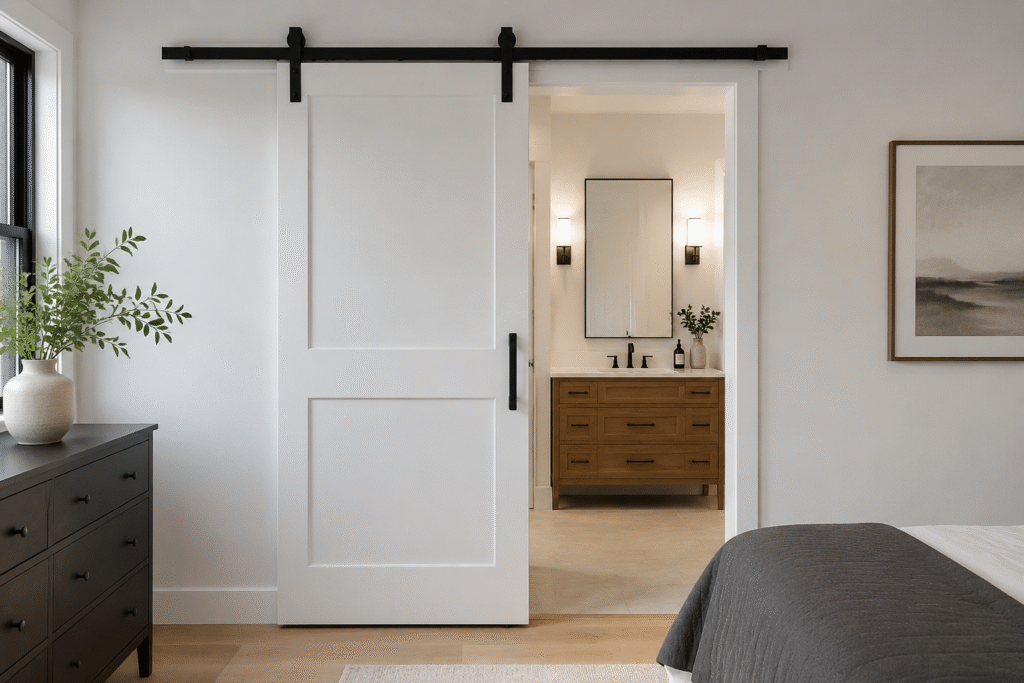
Shaker barn doors are among the most commercially successful styles in today’s market. Their clean recessed panels and simple geometry make them highly adaptable across multiple interior styles.
They are commonly used in:
- Modern homes
- Transitional interiors
- Multifamily projects
- Scandinavian-style spaces
- Luxury apartments
Most Shaker barn doors are available in MDF, engineered wood, or solid wood construction.
In large-scale housing developments, paint-grade MDF Shaker doors remain especially popular because they provide a clean finish, efficient production, and stable pricing. However, in higher-end custom homes, solid wood or engineered-core Shaker doors are often preferred for better durability and a more premium feel.
2. Molded Barn Doors
Molded barn doors are designed using molded composite skins pressed over lightweight core structures. They are typically one of the most cost-effective barn door solutions available.
Builders often choose molded barn doors for:
- Entry-level housing
- Apartment developments
- Budget-sensitive projects
Their advantages include lower manufacturing costs, lighter installation weight, and consistent production quality. However, compared with Shaker or solid wood doors, molded styles generally provide lower acoustic performance and less premium visual appeal.
For large-volume projects where cost efficiency is a priority, molded barn doors can still provide reliable functionality while helping control procurement budgets.
3. K-Frame Barn Doors
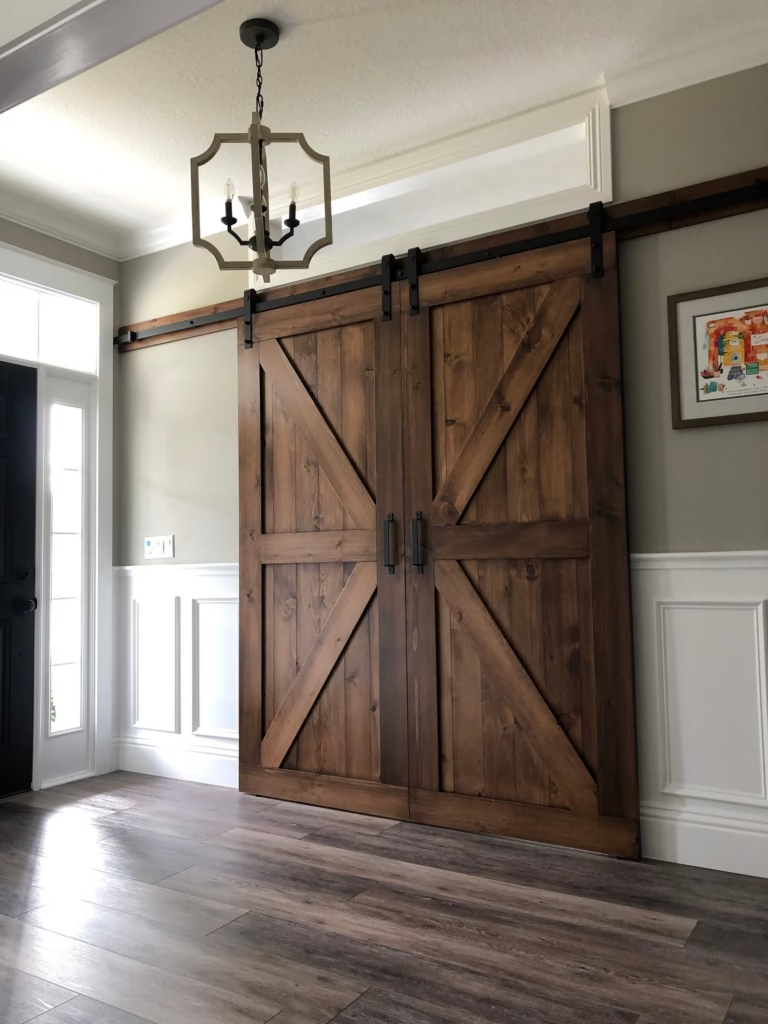
K-frame barn doors remain strongly associated with farmhouse and rustic interior design.
Their signature diagonal brace pattern creates a bold architectural appearance that works particularly well in:
- Ranch-style homes
- Rustic hospitality projects
- Farmhouse interiors
- Country club properties
K-frame doors are commonly produced using solid pine, knotty alder, reclaimed wood, or engineered wood veneers.
In one hospitality renovation project we supplied, oversized K-frame barn doors helped create a strong premium rustic identity while reducing the need for additional decorative wall features. However, heavier solid wood construction also required upgraded hardware systems to ensure long-term performance stability.
4. Glass Barn Doors
Glass barn doors have become increasingly common in modern residential and commercial interiors.
Unlike traditional solid doors, glass barn doors help improve natural light flow and create a more open visual environment.
Popular applications include:
- Offices
- Modern apartments
- Luxury homes
- Conference rooms
- Contemporary renovations
Frosted glass options are often used where privacy is still required, while clear or reeded glass designs are commonly selected for more decorative architectural effects.
Because glass doors are typically heavier and more delicate, hardware quality becomes especially important in these systems.
5. Flush Barn Doors
Flush barn doors feature completely flat surfaces with minimal detailing, making them one of the fastest-growing categories in contemporary design.
As modern interiors increasingly favor clean lines and simplified detailing, flush barn doors are becoming more common in:
- Luxury residential projects
- Contemporary office spaces
- High-end multifamily developments
Many designers pair flush barn doors with hidden hardware systems and minimalist trim packages to create seamless wall integrations.
Barn Door Style Comparison
| Style | Best For | Common Materials | Design Style | Budget Level |
|---|---|---|---|---|
| Shaker | Modern & Transitional Homes | MDF, Solid Wood, Engineered Wood | Clean & Versatile | Mid-Range |
| Molded | Budget Housing Projects | Composite/Molded Skins | Simple & Functional | Low |
| K-Frame | Farmhouse & Rustic Spaces | Pine, Alder, Reclaimed Wood | Rustic Statement | Mid-High |
| Glass | Offices & Contemporary Interiors | Glass + Aluminum/Wood | Modern & Open | High |
| Flush | Minimalist Luxury Projects | MDF, Engineered Wood | Ultra Modern | Mid-High |
How to Choose the Right Barn Door for Your Project
Define the Design Direction
The first step is understanding the overall interior style of the project.
- Shaker doors work best in modern and transitional spaces.
- K-frame doors fit rustic and farmhouse interiors.
- Flush doors complement minimalist architecture.
- Glass systems support contemporary commercial environments.
Maintaining design consistency throughout the project is especially important in multifamily and large residential developments.
Consider Material Performance
Material selection directly affects durability, dimensional stability, acoustics, and maintenance.
For example:
- MDF doors provide excellent paint finishes and cost efficiency.
- Solid wood offers premium appearance but may experience seasonal movement.
- Engineered wood often provides better long-term stability for larger projects.
Builders should also evaluate moisture exposure, installation conditions, and expected daily usage before finalizing specifications.
Evaluate Acoustic Needs
Unlike swing doors, sliding barn doors do not fully seal against the opening, which may reduce sound insulation.
For better acoustic performance, many contractors recommend:
- Solid core construction
- Heavier door panels
- Soft perimeter seals
- Higher-quality track systems
This becomes particularly important in hospitality and multifamily environments.
Plan for Long-Term Maintenance
For large-scale projects, maintenance efficiency matters just as much as initial appearance.
Developers often benefit from:
- Standardized hardware systems
- Replaceable rollers
- Scratch-resistant finishes
- Consistent door sizing
These details can significantly reduce future repair and replacement costs.
Frequently Asked Questions About Evaluating Solid Wood Door Suppliers
Q: What are the key indicators of a reliable solid wood door supplier for long-term projects?
A: For long-term residential construction or commercial developments, procurement teams should evaluate a supplier’s total manufacturing volume, global export experience, and raw material grading systems. A truly professional partner ensures production scalability during peak seasons, batch-to-batch finishing consistency, and dependable delivery schedules rather than just offering a low initial price.
Q: Why is moisture content control a critical factor when auditing wood door manufacturers?
A: Improper moisture control is the leading cause of post-installation failures, such as cracking, warping, and swelling on the job site. Reputable manufacturers utilize advanced kiln-drying equipment and maintain wood moisture content strictly between 8% and 12% for export products to ensure the door slabs adapt predictably to the climate conditions of the destination market.
Q: Which international compliance certifications should a professional door supplier hold?
A: For large-scale residential, hospitality, or multifamily developments, builders should verify that the manufacturer holds recognized international certifications. Key credentials include FSC for sustainable and verifiable timber sourcing, ISO 9001 for quality management systems, UL for fire-rated door compliance, and CARB Phase 2 to guarantee low formaldehyde emissions.
Q: How does M4B differentiate its supply chain support for long-term commercial developments?
A: M4B combines robust factory-direct manufacturing capabilities with highly reliable logistics networks and localized distribution support. By offering full transparency through verifiable factory audits, strict moisture-stabilization protocols, and an integrated supply system that coordinates matching doors, framing, and millwork, M4B eliminates middleman markups to protect project margins and guarantee stable lead times.
Conclusion
Barn doors have evolved from traditional farmhouse elements into highly versatile interior door systems suitable for modern residential and commercial construction. Whether choosing Shaker, Molded, K-frame, Glass, or Flush styles, builders and developers should evaluate not only aesthetics, but also material quality, hardware performance, installation requirements, and long-term durability.
As modern projects continue prioritizing space efficiency, flexible layouts, and clean architectural styling, barn doors are expected to remain a major trend across both residential and commercial interiors for years to come.
Articles that you may be interested in:
Comparing Barn Door Styles: Molded, Shaker, and K-Frame for Residential Projects
Barn Doors for Interiors: Materials, Tracks, and Installation Tips