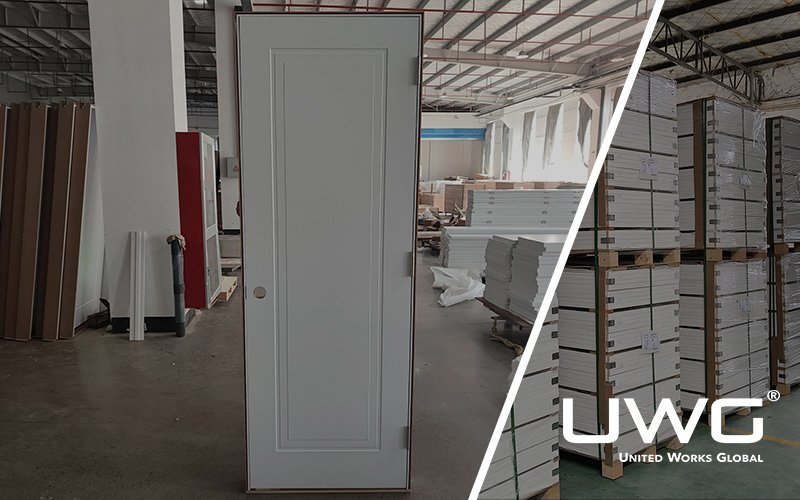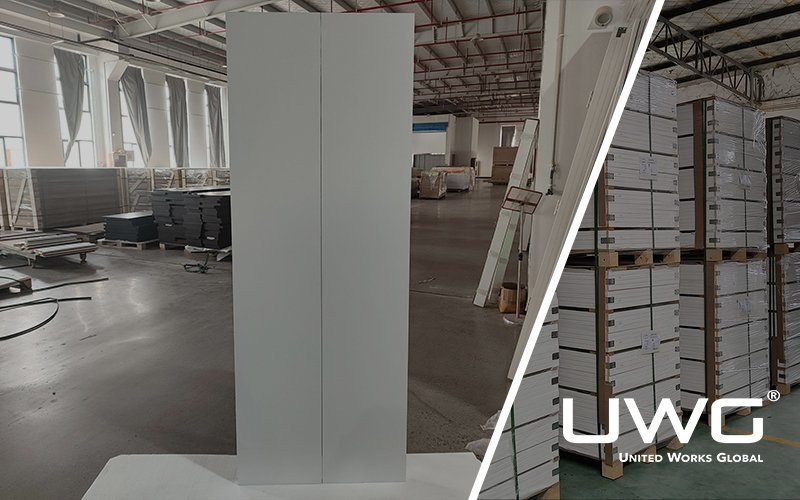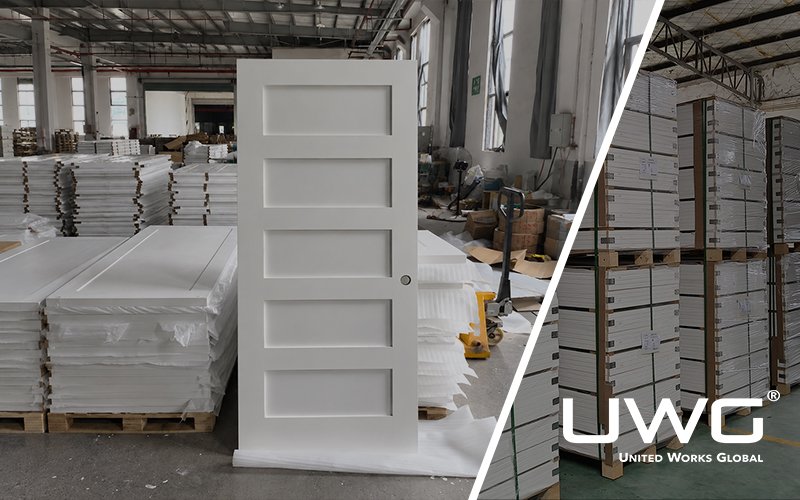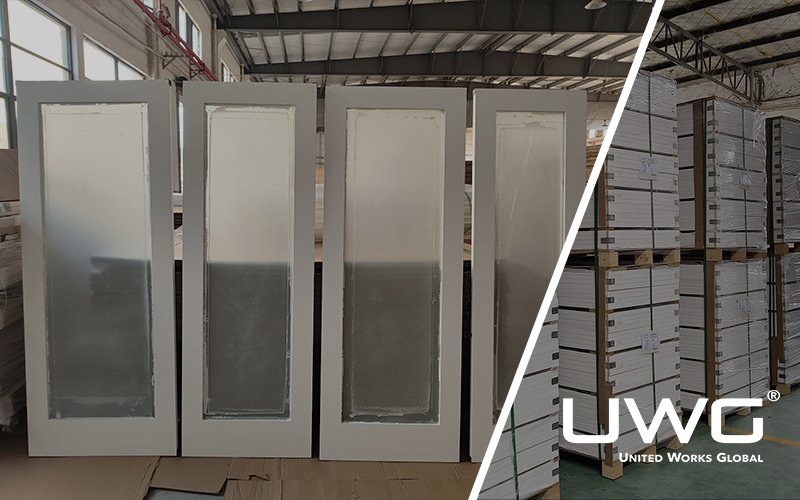
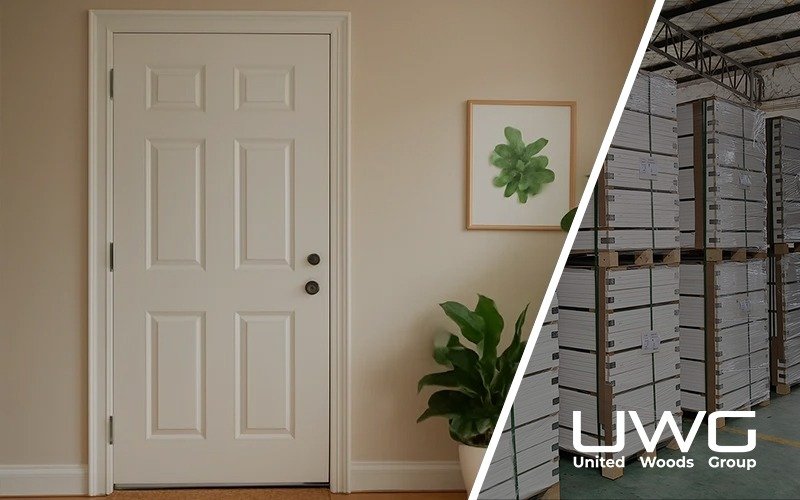
A molded door is an interior door made with factory-formed composite skins bonded over perimeter framing and a hollow or solid core. The molded skins create the visible panel design, while the core affects door weight, sound control, handling, durability, and cost.
Molded interior doors are commonly used in single-family, multifamily, and selected light-commercial projects because they combine repeatable panel designs with efficient production. The same exterior design may be supplied with different cores, finishes, machining, and door-package configurations, so buyers should evaluate the complete specification rather than appearance alone.
What is a Molded Door?
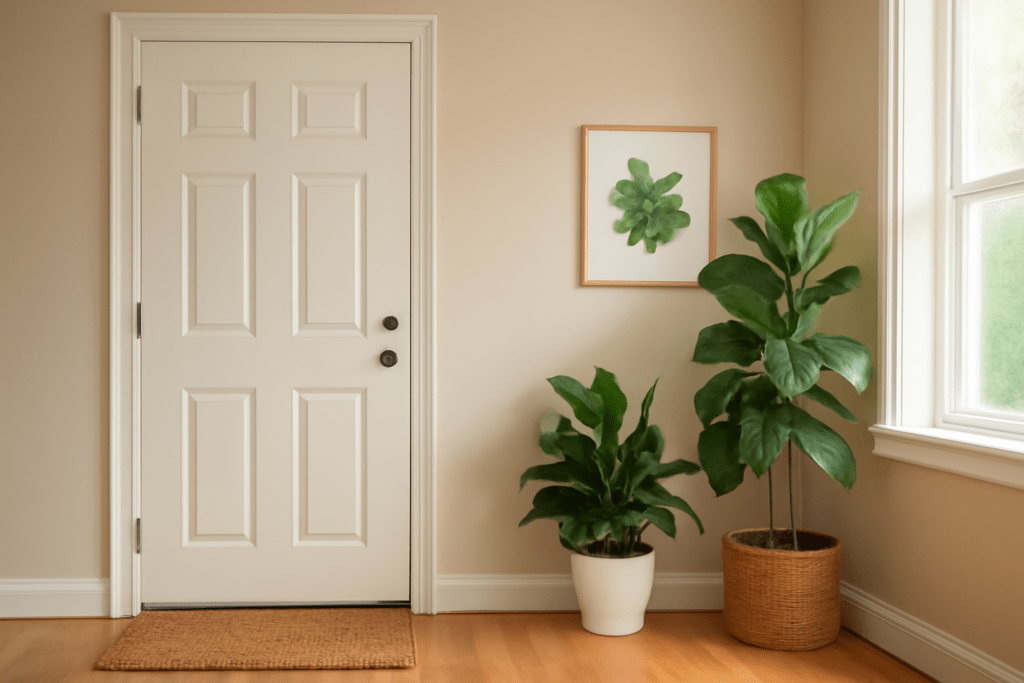
A molded door uses formed door skins to create raised, recessed, or other panel profiles on the faces of the slab. Unlike a traditional stile-and-rail door, the visible panel design is formed in the skins rather than assembled from separate visible stiles, rails, and panels.
Molded door skins: Create the panel profile, surface texture, and visible finish.
Perimeter stiles and rails: Form the supporting structure around the edges of the slab.
Internal core: May use a lightweight honeycomb or cellular construction, or a denser engineered core.
Hardware reinforcement: Supports specified lock and hinge preparation where required.
Adhesive system: Bonds the skins, perimeter structure, and core into a complete slab.
Primer or finish: Many molded interior doors are supplied primed for painting; other finishes depend on the product specification.
The term “molded” describes the door-face construction and manufacturing method. It does not define the core, supply format, fire rating, or acoustic performance.
How Molded Doors are Made
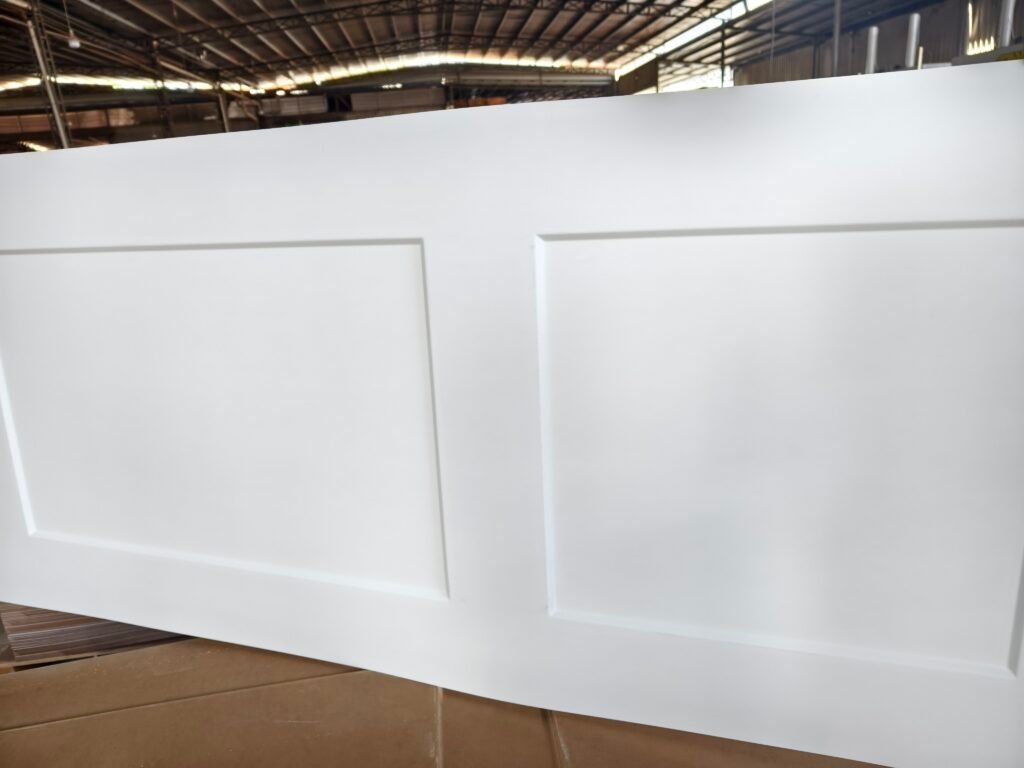
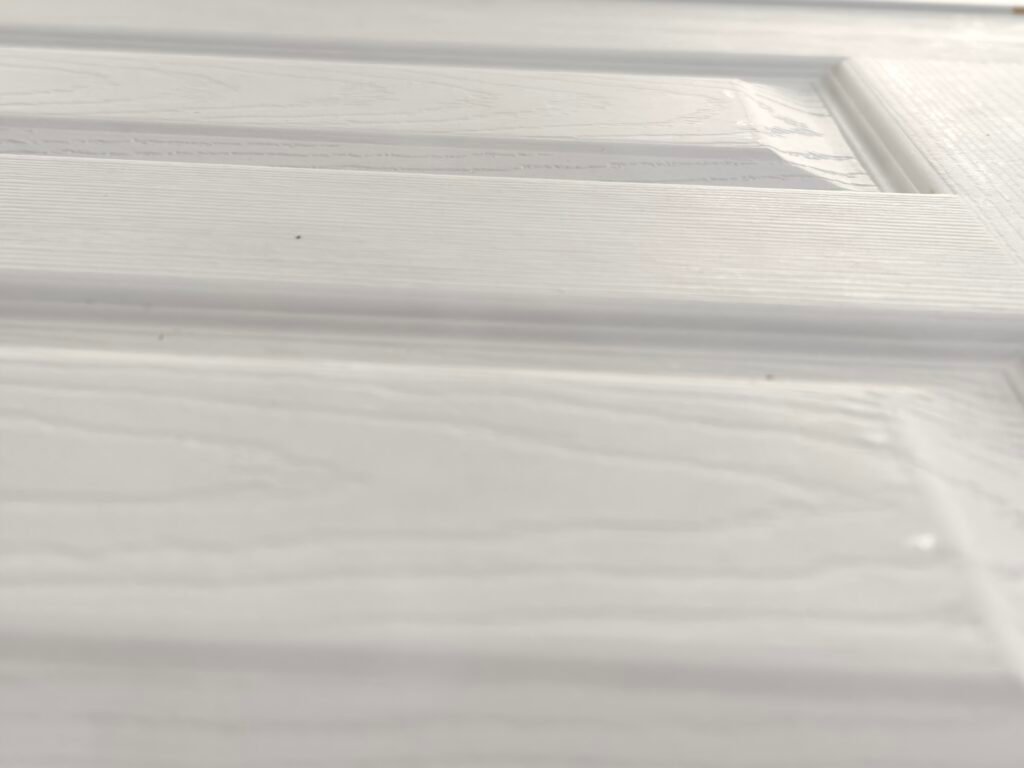
Door Skin
- Constructed from MDF, shaped under high-pressure compression
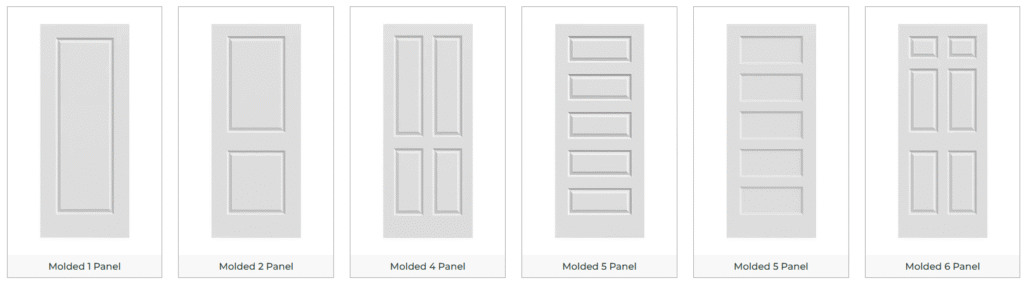
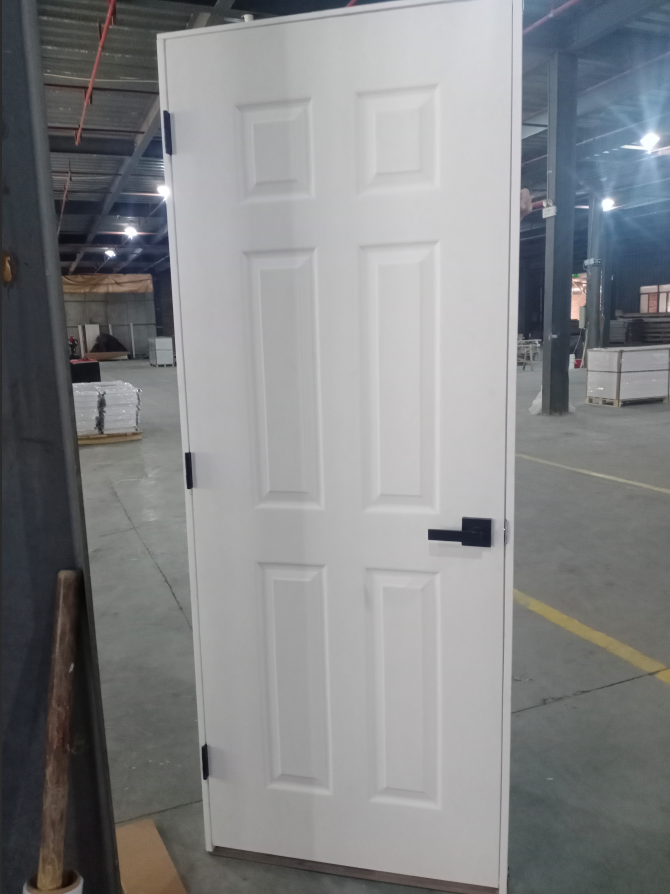
- Available in 2-panel, 6-panel, arch-top, or flat panel designs
- Can be smooth or textured to mimic wood grain
- Usually comes primed for easy painting
Core Material
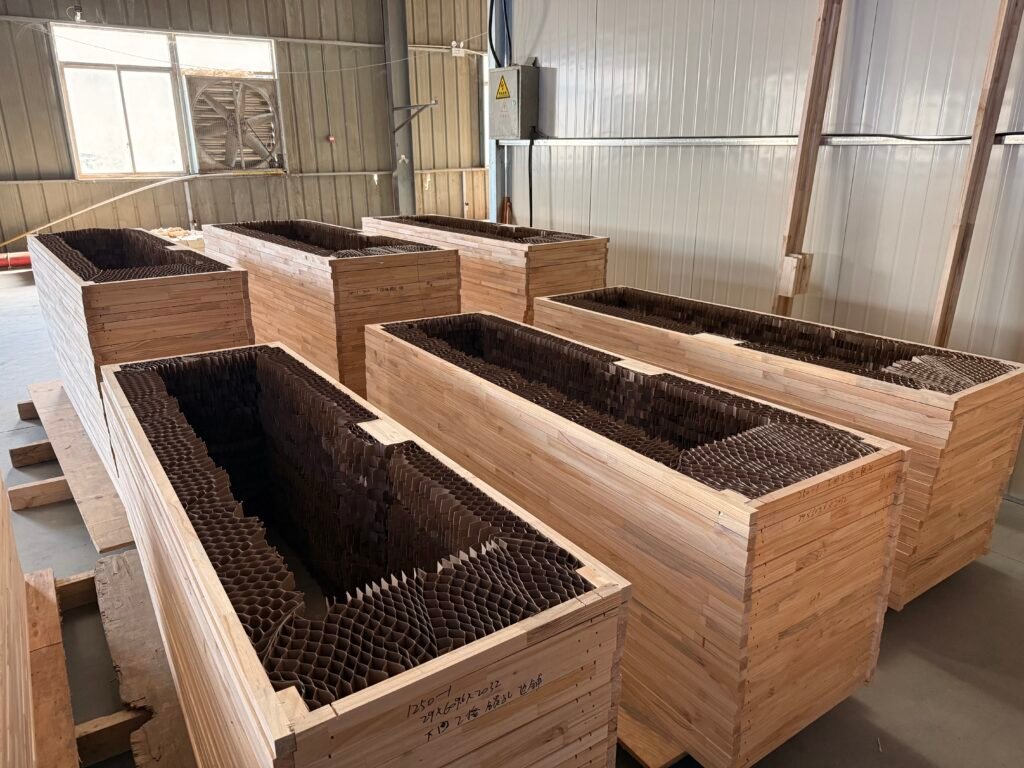
The interior filling affects strength, durability, and soundproofing. Common types include:
| Core Type | Characteristics | Best For |
|---|---|---|
| Honeycomb Paper Core | Lightweight, low cost | Standard interior doors |
| Particleboard Core | Better sound insulation | Bedrooms, offices |
| Tubular / Solid Core | High durability, dense | Areas requiring stronger doors |
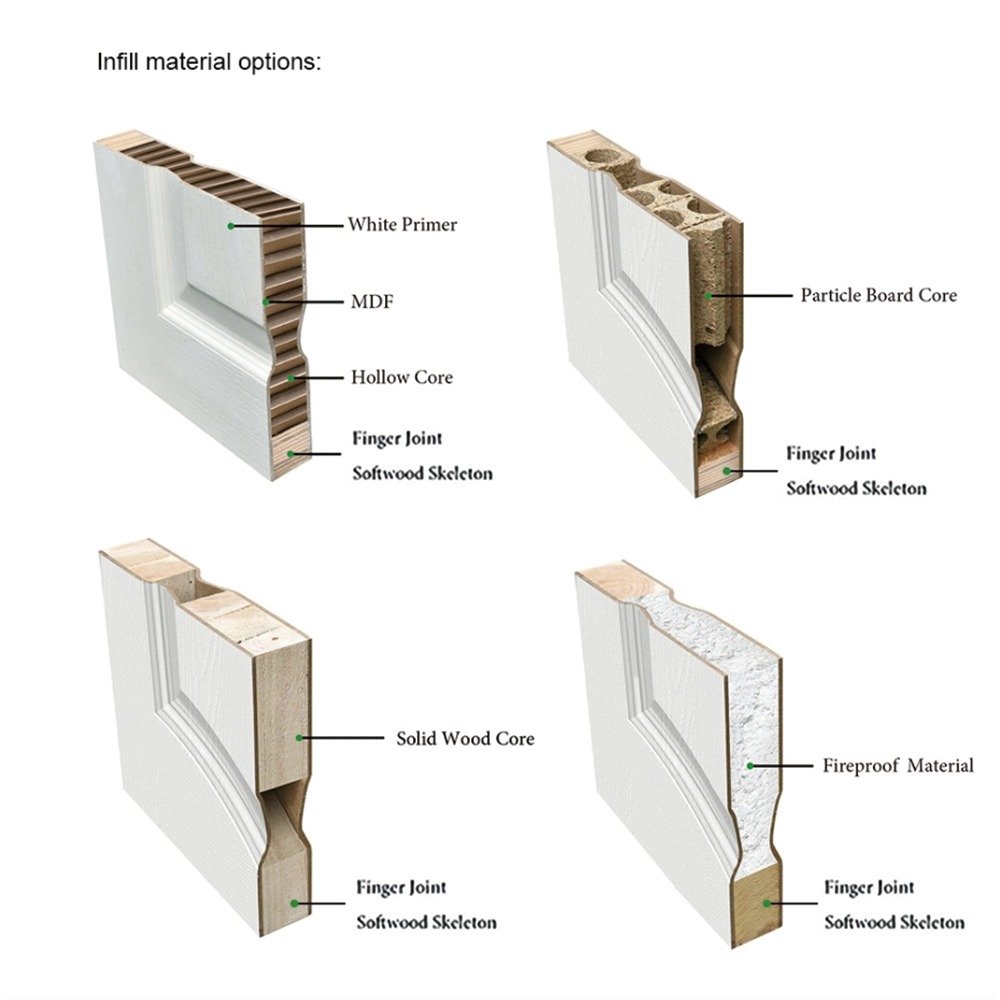
Stiles and Rails (Door Frame)
- Edges are reinforced with solid wood for structural stability
- Provides strong screw-holding for hinges and locks
Surface Coating
- Most molded doors come with a white primer coat, allowing for custom painting after delivery.
- Optional finishes include factory painting, film lamination, or veneer.
Hollow-Core vs. Solid-Core Molded Doors
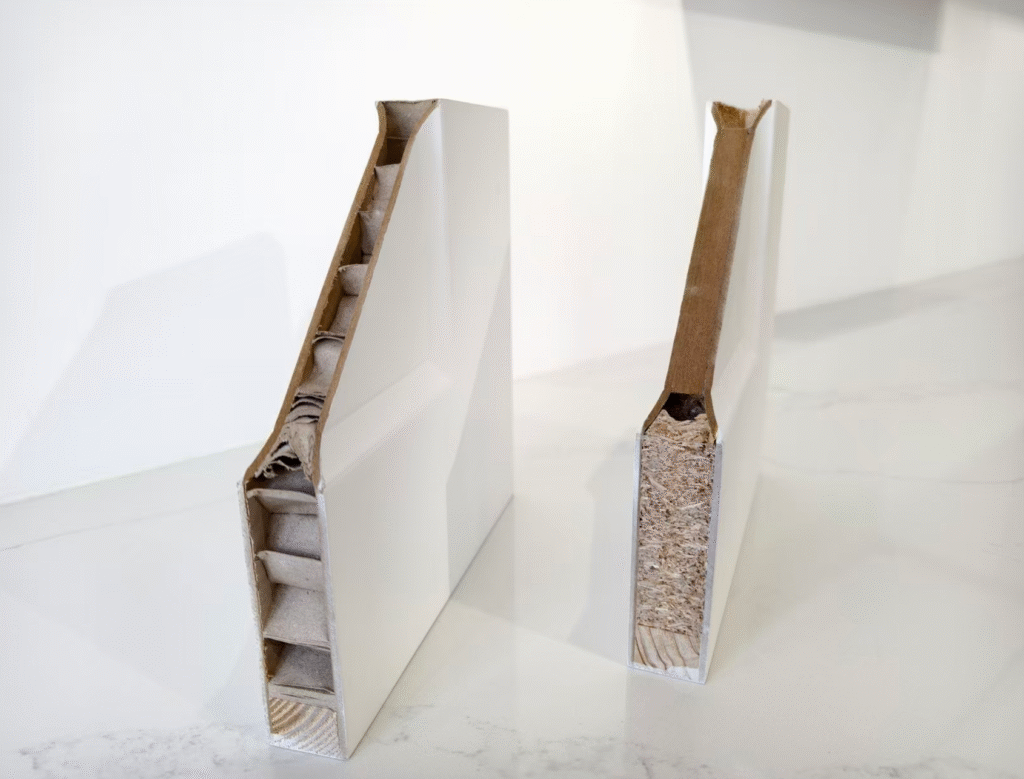
A molded door can use either a hollow core or a solid core. The panel design does not identify which core is inside the slab.
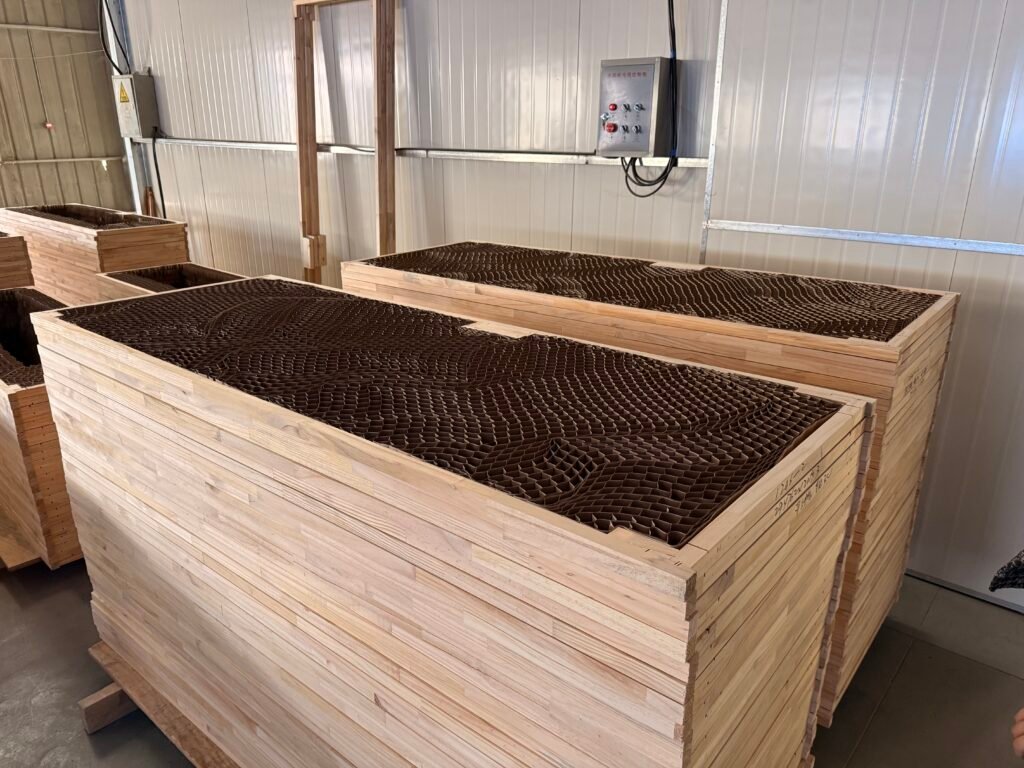
Hollow-Core Molded Doors
Hollow-core molded doors normally use a lightweight honeycomb or cellular structure between the skins. Perimeter framing and specified hardware reinforcement support the slab and machining areas.
Their lower weight can simplify shipping, unloading, staging, and installation. They are commonly considered for closets, pantries, storage rooms, and selected standard residential openings where enhanced sound control or impact resistance is not required.
Solid-Core Molded Doors
Solid-core molded doors use a denser engineered core. Depending on the product, this may include particleboard, tubular particleboard, MDF, engineered wood, or another specified dense material.
Compared with a similar hollow-core door, the additional mass generally increases door weight, impact resistance, and sound reduction. Door weight should be considered when confirming hinges, jamb construction, machining, handling, and installation.
Core type alone does not establish an acoustic or fire rating. Any required performance must be supported by the applicable tested or listed door assembly.
For a detailed comparison, see our guide to solid-core vs. hollow-core doors.
Common Molded Door Styles
Molded doors come in a wide variety of styles, which makes them appealing to homeowners and builders alike. You’ll find:
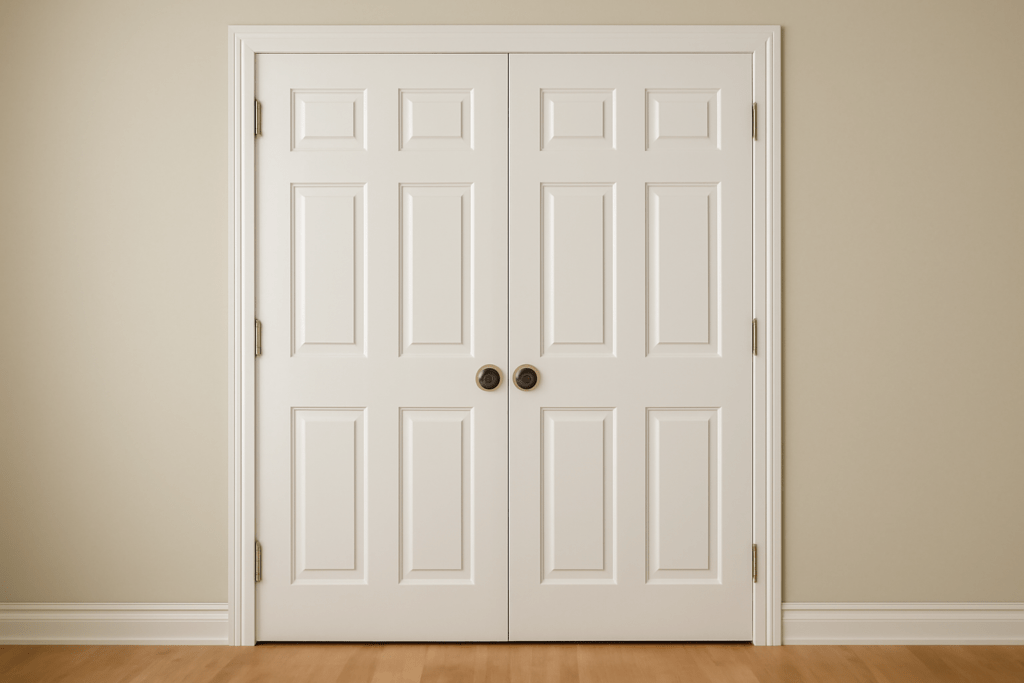
- Two-panel and six-panel doors – classic and versatile
- Arch-top or square-top panels – decorative touches
- Smooth or textured finishes – mimic real wood or offer sleek modern look
- Popular designs: Cambrian style with clean lines and subtle paneling
One popular design is the Cambrian door style, which features clean lines and subtle paneling—perfect for modern and transitional interiors.
This variety makes molded doors flexible for everything from minimalist homes to more traditional spaces.
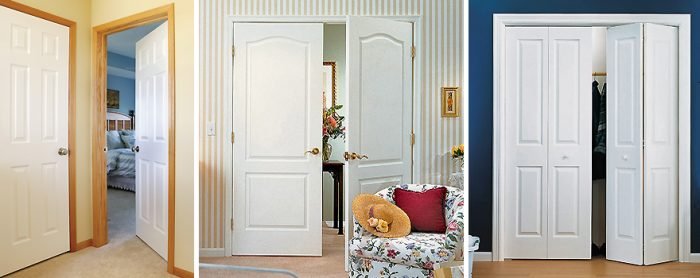
The available designs depend on the manufacturer’s molds and tooling. A project requiring an exact panel profile should use approved samples or profile drawings rather than relying only on a panel-count description.
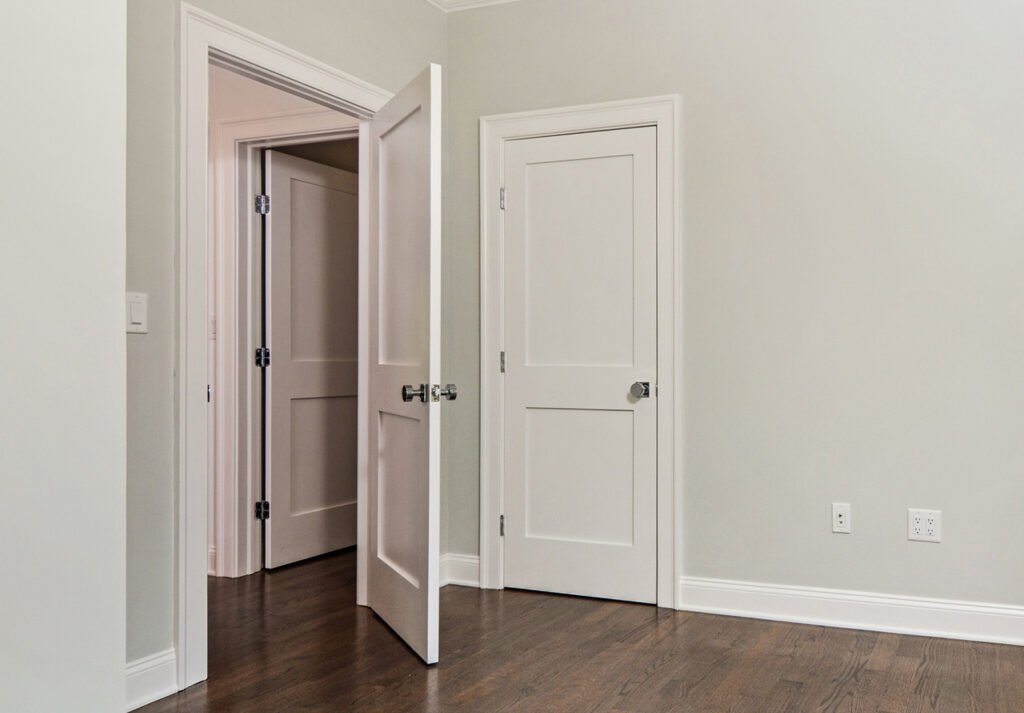
A Shaker-inspired molded door can create a clean recessed-panel appearance, but it is not necessarily constructed in the same way as an assembled Shaker or stile-and-rail door. For a closer comparison, see our guide to Molded, Shaker, and Shaker-style molded doors.
Advantages and Disadvantages of Molded Doors
Like any product, molded doors have their pros and cons:
| Advantages | Disadvantages |
|---|---|
| Affordable compared to solid wood | Not ideal for high-moisture areas |
| Variety of surface designs | Less durable than hardwood over time |
| Lightweight and easy to install | Difficult to modify or trim extensively |
| Mass-producible and consistent | Quality varies in low-cost market |
They stack up well in terms of value, especially when comparing a molded composite door vs MDF or molded composite door vs wood. For most interior uses, they offer a smart middle ground between budget and style.
Where Are Molded Interior Doors Used?
Single-Family Residential Projects
Molded doors are commonly used for bedrooms, bathrooms, closets, hallways, utility rooms, and other interior openings. Core selection can vary by room function: a project may use denser cores for privacy-priority rooms and lightweight cores for selected secondary openings.
Multifamily Projects
Standardized panel designs can help maintain a consistent appearance across repeated units. Builders should still coordinate core type, dimensions, handing, hardware preparation, packaging, and opening numbers with the door schedule.
Light-Commercial Interiors
Molded doors may be considered for offices, hotel rooms, and other selected interiors when the specified construction meets the required durability, fire, acoustic, hardware, and code requirements. A standard molded door should not be assumed to meet a rated opening without supporting documentation.
Bathrooms and Humid Interiors
Molded wood-fiber doors may be used in bathrooms when the product, edge sealing, finish, ventilation, and expected exposure are suitable. They should not be treated as waterproof. Continuously wet or exterior conditions require a product designed and documented for that exposure.
Molded Door vs. Other Interior Door Types
| Feature | Molded Door | Flush Door | Stile-and-Rail Door |
|---|---|---|---|
| Face construction | Formed skins create the panel profile | Flat faces without a raised or recessed panel profile | Visible components are assembled from stiles, rails, and panels |
| Appearance | Standardized molded panel patterns | Flat, continuous surface | Greater panel depth and profile flexibility |
| Core options | Hollow or solid core | Hollow, solid, or special-performance cores | Depends on the materials and construction |
| Customization | Primarily based on available molds and finishes | Surface, finish, veneer, and routing options | High design and profile flexibility |
| Relative cost | Generally economical for repeated projects | Varies by face, core, and finish | Typically higher for detailed or natural-wood construction |
| Common uses | Residential and multifamily interiors | Residential, multifamily, office, and commercial interiors | Custom residential and design-focused interiors |
These categories describe different construction methods and appearances. They do not, by themselves, establish durability, fire resistance, acoustic performance, or suitability for a specific opening.
Molded Door Assembly and Delivery Options
Core construction and supply format are separate decisions. A molded door may be supplied as:
- Slab: The door panel without a complete frame assembly.
- Knock-down system: Door and prepared frame components supplied separately for field assembly.
- Semi-prehung package: Factory-matched components supplied with an intermediate level of preparation; the exact scope varies by supplier.
- Prehung unit: The slab is mounted in an assembled frame with hinges before delivery.
“RTA molded door” is not a sufficiently precise project specification. Buyers should identify the actual included components, machining, assembly status, packaging, and installation responsibility.
For a complete comparison, see our guide to slab, knock-down, semi-prehung, and prehung door systems.
What Should Builders Confirm Before Ordering Molded Doors?
For accurate quoting and production, confirm:
- Door width, height, and thickness
- Panel design and profile
- Skin material, thickness, and surface texture
- Hollow-core or solid-core construction
- Smooth, textured, primed, painted, laminated, or other specified finish
- Slab, knock-down, semi-prehung, or prehung supply format
- Door handing and swing where applicable
- Hinge quantity, size, finish, corner type, and locations
- Lock bore, backset, latch preparation, and reinforced hardware area
- Jamb material, jamb width, stop, casing, and frame profile where included
- Manufacturer-approved trimming allowance
- Required fire, acoustic, or other tested performance criteria
- Approved samples, drawings, opening numbers, packaging, and delivery sequence
For project-specific options, review UWG molded interior doors and the broader interior door collection.
Frequently Asked Questions
What is a molded door?
A molded door is an interior door that uses factory-formed composite skins to create its visible panel design. The skins are bonded over perimeter framing and a specified hollow or solid core.
Is a molded door the same as an MDF door?
Not necessarily. “Molded” describes how the door face or panel profile is formed, while MDF describes a material. Some molded doors use MDF skins, while others may use HDF, hardboard, or another composite skin.
Are molded doors hollow core or solid core?
They can be either. Hollow-core versions normally use a lightweight honeycomb or cellular structure, while solid-core versions use a denser engineered core. The exact construction should be confirmed in the product specification.
Are molded doors real wood?
Molded door skins are normally made from engineered wood-fiber or composite materials rather than solid natural lumber. Perimeter framing and reinforcement may include wood or engineered wood components, depending on the product.
Are molded doors suitable for bedrooms?
Yes. Hollow-core or solid-core molded doors may be used for bedrooms depending on the project’s privacy, sound-control, handling, hardware, and budget requirements. A denser core is generally considered where greater mass and sound reduction are priorities.
Can molded doors be used in bathrooms?
They may be used in bathrooms when the selected product, edge sealing, finish, ventilation, and expected moisture exposure are suitable. Standard molded wood-fiber doors are not waterproof and should not be used where continuous wet exposure is expected.
Can a molded door be trimmed?
Only within the manufacturer-approved limits for the selected construction. Excessive trimming can remove edge structure or reinforcement and may affect strength, appearance, machining, or warranty coverage.
Are molded doors fire-rated?
Not automatically. A molded appearance or solid core does not establish a fire rating. Rated openings must use the applicable tested and labeled door, frame, hardware, glazing where relevant, and installation requirements.
Summary
A molded door uses factory-formed skins to create a repeatable panel design over perimeter framing and a hollow or solid core. The molded appearance does not, by itself, identify the skin material, core, supply format, fire rating, or acoustic performance.
For builders and project buyers, the complete specification should include dimensions, panel profile, skin, core, finish, hardware preparation, frame requirements, packaging, and any tested performance criteria. Clearly defining these details before quotation and production helps maintain consistency across repeated openings and reduces field modifications.
Builders sourcing molded doors for residential, multifamily, or selected light-commercial projects can review UWG’s molded door options or submit a door schedule for project-specific coordination.