
Builders often struggle to balance aesthetics with functionality when selecting interior doors. Choosing the wrong style can disrupt design cohesion and reduce perceived property value. Five-panel doors offer a practical solution, blending versatility, durability, and timeless appeal across both modern and traditional interiors.
Five-panel doors enhance both modern and traditional interiors by combining clean geometric design with structural durability. Their symmetrical panel layout allows flexible styling—minimal finishes suit modern spaces, while natural wood textures complement traditional designs. Widely used in residential construction, they provide consistent performance, material versatility, and strong market appeal, making them a preferred choice for builders seeking both function and visual value.
Why Builders Should Consider Five-Panel Doors
To fully understand their value, builders must evaluate design flexibility, structural performance, and compatibility with various residential styles.
What Is a Five-Panel Door?
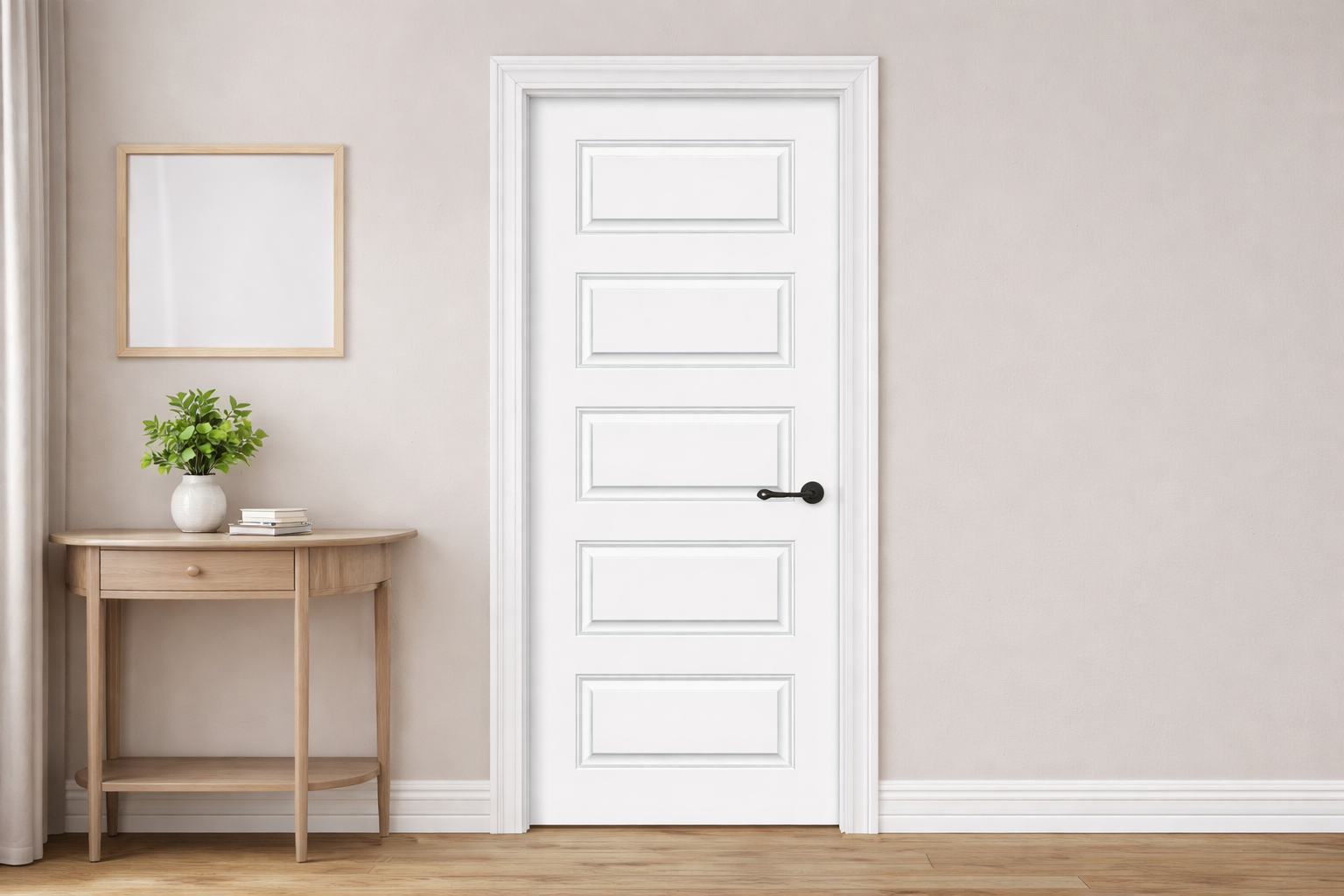
A five-panel door is a type of interior or exterior door featuring five rectangular panels arranged vertically. These panels are framed within stiles and rails, creating a structured and balanced appearance.
In residential construction, five panel interior doors are commonly used because they:
- Provide visual depth without excessive ornamentation
- Fit both contemporary and classic layouts
- Allow flexibility in finishes and materials
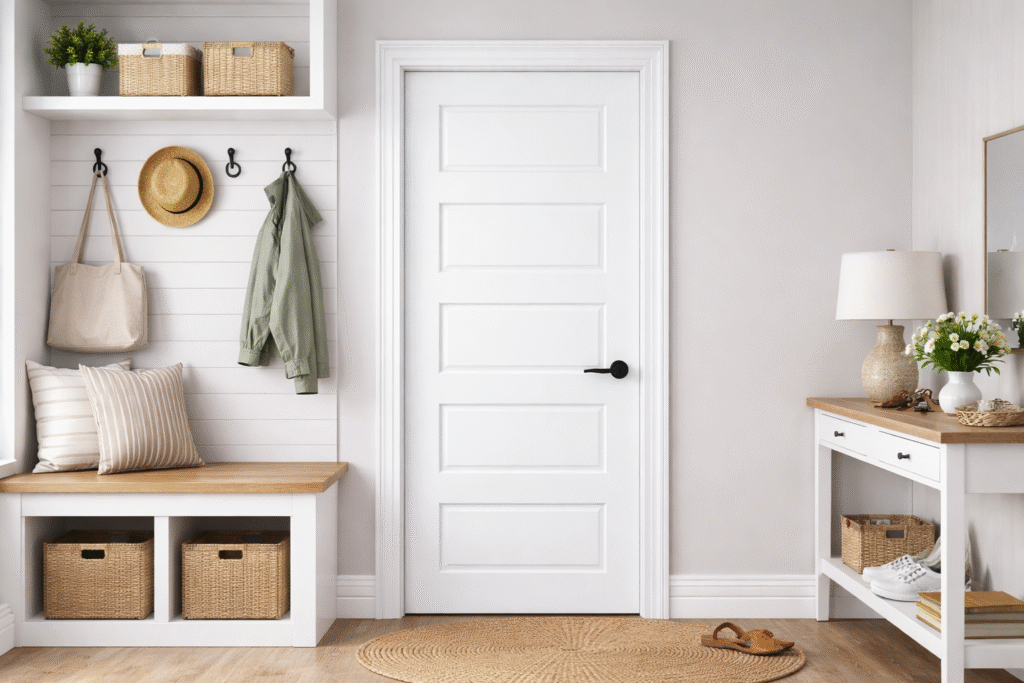
What Is a Five-Panel Door?
Are Five-Panel Doors Modern or Traditional?
One of the biggest advantages of five-panel doors is their dual-style adaptability.
- In modern panel doors, smooth finishes, neutral colors, and minimal hardware create a clean, sleek look
- In traditional panel doors, natural wood grains and detailed finishes enhance warmth and character
This flexibility allows builders to standardize door selection across projects while still meeting diverse design requirements.
Technical Breakdown: How Five-Panel Doors Are Constructed
Understanding construction is critical when selecting the best doors for residential construction.
Core Types
- Solid core vs hollow core doors
- Solid core: better sound insulation, durability, and premium feel
- Hollow core: lightweight and cost-effective but less durable
Materials
- Solid wood → high-end, durable, premium appearance
- MDF → stable, cost-efficient, smooth finish
- Composite → balanced performance and moisture resistance
Performance Factors
- Sound insulation (important in multi-room housing)
- Resistance to warping or cracking
- Long-term structural integrity
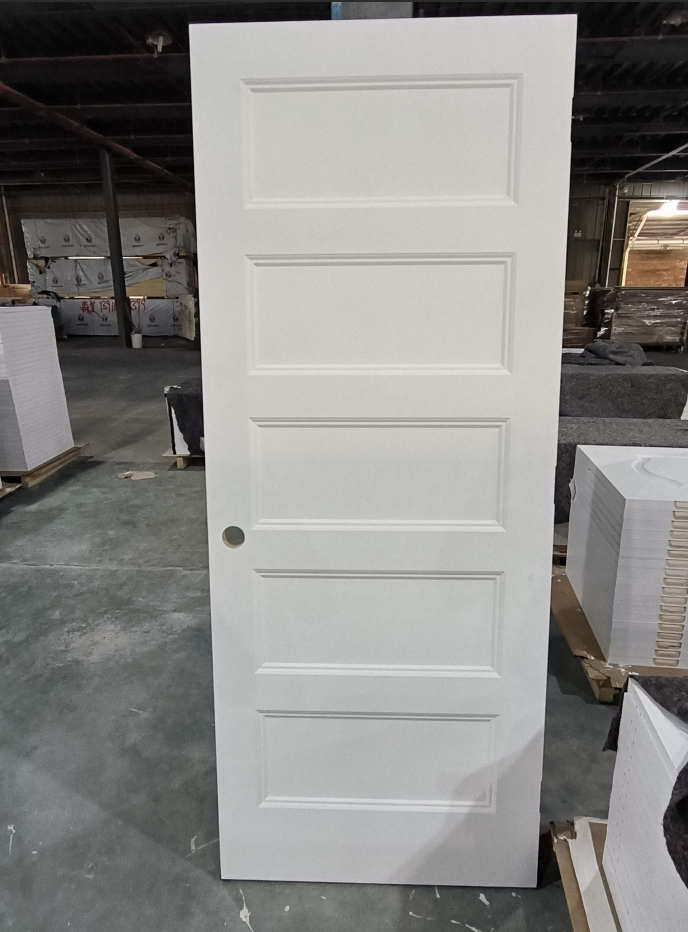
Comparison Table: Five-Panel Doors vs Other Interior Door Styles
| Feature | Five-Panel Doors | Flush Doors | Shaker Doors |
|---|---|---|---|
| Design Flexibility | High | Low | Medium |
| Structural Strength | Strong | Moderate | Strong |
| Style Compatibility | Modern + Traditional | Modern | Mostly Modern |
| Cost | Medium | Low | Medium |
| Customization | High | Low | Medium |
For builders, five-panel doors offer the best balance between cost, performance, and visual adaptability.
What Are the Advantages of Panel Doors?
Pros
- Strong and durable construction
- Versatile design for multiple architectural styles
- Improves perceived property value
- Works across various interior door styles for homes
- Compatible with different materials and finishes
Cons
- Higher cost than basic flush doors
- Requires precise installation for alignment
- Material choice impacts performance (e.g., wood panel doors vs MDF)
Despite these drawbacks, the long-term value typically outweighs initial costs.
What Materials Are Used for Five-Panel Doors?
Material selection directly affects performance, cost, and application.
- Solid wood: premium projects, luxury homes
- MDF: cost-effective and stable for painted finishes
- Fiberglass/composite: moisture-resistant, ideal for humid environments
Builders should select materials based on:
- Budget constraints
- Environmental conditions
- Target market expectations
Are Panel Doors Durable Enough for Long-Term Use?
Yes—especially when using solid-core or engineered materials.
Durability depends on:
- Core construction
- Installation quality
- Environmental exposure
In high-traffic residential projects, five-panel doors maintain structural integrity better than many lightweight alternatives.
Statistical Insights: Why Builders Prefer Panel Doors
Market trends show increasing demand for panel-style doors in residential construction.
- Over 60% of new residential builds incorporate panel door designs due to their versatility
- Homebuyers often associate panel doors with higher quality interiors
- Properties with upgraded interior finishes, including panel doors, can see increased resale value
These insights reinforce why five-panel doors remain a strategic choice for developers and builders.
Frequently Asked Questions About Five-Panel Doors
Q: Are five-panel doors considered modern or traditional?
A: Five-panel doors are highly versatile and fit perfectly into both modern and traditional interiors. A five-panel door painted in a crisp, solid color with sleek, minimalist hardware creates a highly modern, contemporary look. Conversely, when finished with a natural wood grain and paired with classic trim, it effortlessly complements traditional, craftsman, or farmhouse-style homes.
Q: What is the difference between a five-panel door and a shaker door?
A: While both are classic choices, they differ in design. A traditional shaker door typically features one to three large recessed panels with extremely simple, sharp, 90-degree square edges. A five-panel door is defined by its five distinct, horizontally stacked rectangular panels. While it can be built using shaker-style square sticking, it often features stepped or beveled molding (sticking) around the panels for added architectural depth.
Q: Should I choose a solid-core or hollow-core five-panel door?
A: For master bedrooms, bathrooms, and laundry rooms, a solid-core five-panel door is highly recommended. It offers superior sound insulation, feels heavier, and resists daily wear and tear much better. Hollow-core doors are lightweight and more budget-friendly, making them acceptable for closets, pantries, or low-traffic rooms where sound transmission is not a major concern.
Q: What materials are best for a painted five-panel interior door?
A: If your project calls for a painted finish, MDF (Medium-Density Fiberboard) is generally the best material. MDF provides a flawlessly smooth, grain-free surface that takes paint perfectly without showing knots or splitting over time. For stained doors, solid wood species like pine, oak, or mahogany are required to showcase the natural grain.
Summary
Five-panel doors offer builders a reliable solution that balances design flexibility, durability, and market appeal. Their ability to fit both modern and traditional interiors makes them a smart investment for residential construction projects aiming for long-term value and buyer satisfaction.
Articles that you may be interested in:
Choosing Shaker Door Finishes: Primed vs Painted for Construction Projects