
With the rise of Shaker-look molded doors and modern engineered Shaker manufacturing, the difference between the two is becoming smaller. This article explains when builders should choose molded doors or Shaker doors in budget projects based on cost, project positioning, and current design trends.
For builders, molded doors are ideal for budget-focused housing projects where cost control and standardization are priorities, while Shaker doors are better suited for projects that require a more modern appearance and stronger market appeal. Today, Shaker-look molded doors have become increasingly popular because they offer a similar look to real Shaker doors at a lower cost. Meanwhile, modern engineered Shaker doors are now faster and more efficient to produce than traditional versions, making them more practical for large residential developments.
What Are Molded Doors?
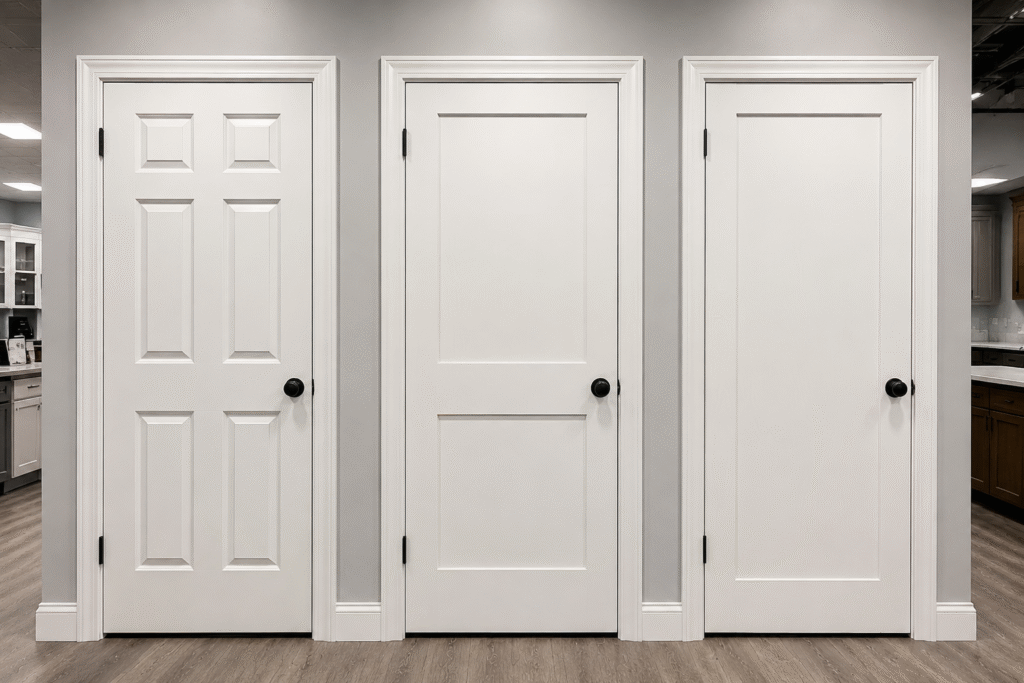
Molded doors are interior doors manufactured using molded HDF (High-Density Fiberboard) or MDF skins that are pressed into specific patterns under heat and pressure. These skins are then bonded onto hollow-core or solid-core structures to create the finished door.
Because molded doors offer:
- Stable production
- Controlled manufacturing costs
- High-volume production capability
- Consistent appearance
they have remained one of the most widely used interior door solutions in North American residential construction for decades.
Today’s molded door market is no longer limited to traditional designs.
Common Molded Door Styles Fall Into Two Main Categories
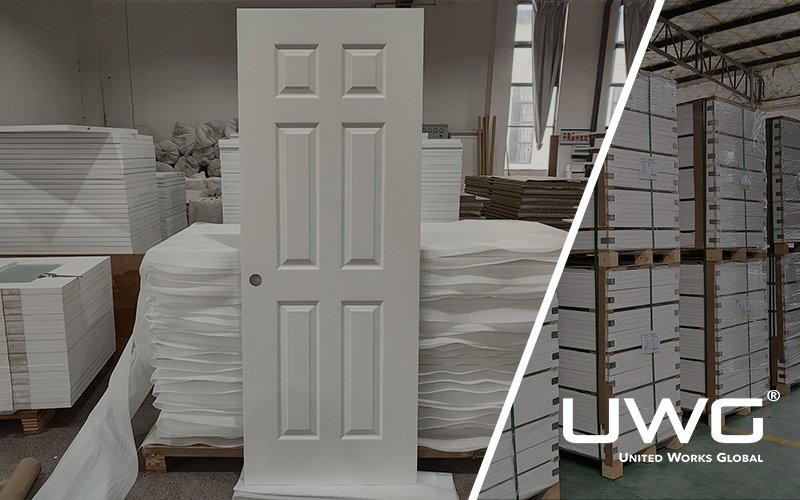
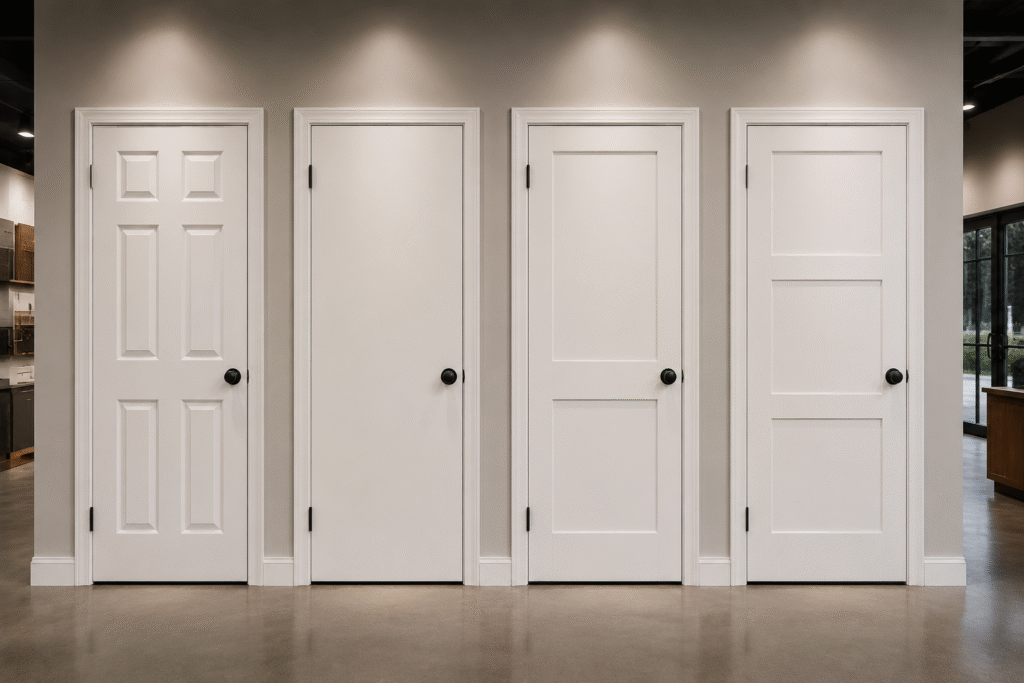
1. Traditional Molded Doors
These are commonly used in affordable housing, apartments, and standardized residential projects, including:
- Flush Molded Doors
- 2-Panel Molded Doors
- 5-Panel Molded Doors
- 6-Panel Molded Doors
For many years, 6-panel molded doors dominated the North American housing market. However, modern interior design trends are gradually reducing their popularity in newer developments.
2. Shaker-Look Molded Doors
This is one of the fastest-growing molded door categories today.
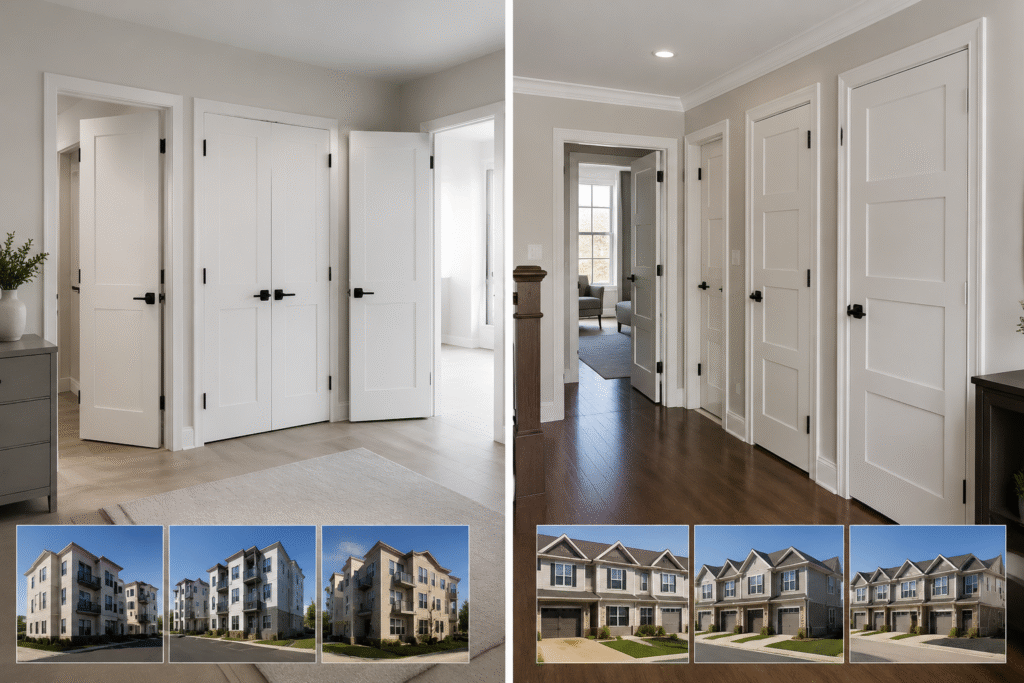
Because these doors closely resemble real Shaker doors while remaining significantly more affordable, they have become extremely popular among builders.
Common styles include:
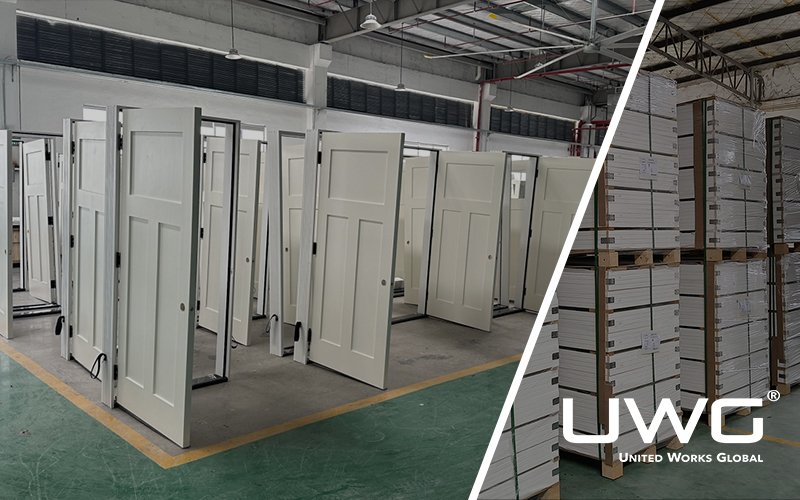
- 1-Panel Shaker-look Molded Doors
- 2-Panel Shaker-look Molded Doors
- 3-Panel Shaker-look Molded Doors
For many budget residential developments, these products have become one of the best cost-to-appearance solutions available.
Demand is especially increasing in:
- Townhouse developments
- Build-to-Rent projects
- Mid-to-entry-level residential communities
- Apartment renovation projects
- Multifamily housing
From a market perspective, Shaker-look molded doors are gradually replacing traditional 6-panel molded doors in many new projects.
What Are Shaker Doors?
Shaker doors originated from classic Shaker design principles and are known for their:
- Clean lines
- Flat recessed panels
- Minimalist appearance
- Straight-edge framing
Traditionally, Shaker doors were manufactured using assembled wood frame construction, where:
- Rails
- Stiles
- Center panels
were individually joined together. This method created a premium appearance but also increased production cost and labor requirements.
However, modern Shaker doors have evolved significantly.
Today’s Shaker doors are no longer entirely dependent on traditional assembled construction methods.
Modern manufacturing technology has introduced several new production approaches.
1. Traditional Assembled Shaker Doors
These are still commonly produced using solid wood or MDF frame assembly.
Advantages:
- Strong depth and dimension
- Premium appearance
- Heavier, more solid feel
Disadvantages:
- Higher cost
- More labor-intensive
- Greater sensitivity to humidity conditions
2. Engineered Shaker Doors
This is currently one of the fastest-growing categories in the market.
Using CNC machining, engineered wood construction, and integrated manufacturing methods, these doors provide:
- Better structural stability
- Lower cracking risk
- Faster production efficiency
- Better scalability for large residential projects
Many modern Shaker doors now use:
- Routed groove construction
- Engineered wood composite structures
- Integrated MDF machining
- CNC processing technology
As a result, modern Shaker doors are increasingly suitable for high-volume builder projects.
3. Slim Shaker Doors
Slim Shaker doors are one of the fastest-growing interior door styles in North America today.
Key characteristics include:
- Narrower frame profiles
- Minimalist aesthetics
- Contemporary appearance
- Strong appeal among younger homebuyers
Many new townhouse and modern residential developments now use Slim Shaker doors extensively.
Key Differences Between Molded Doors and Shaker Doors
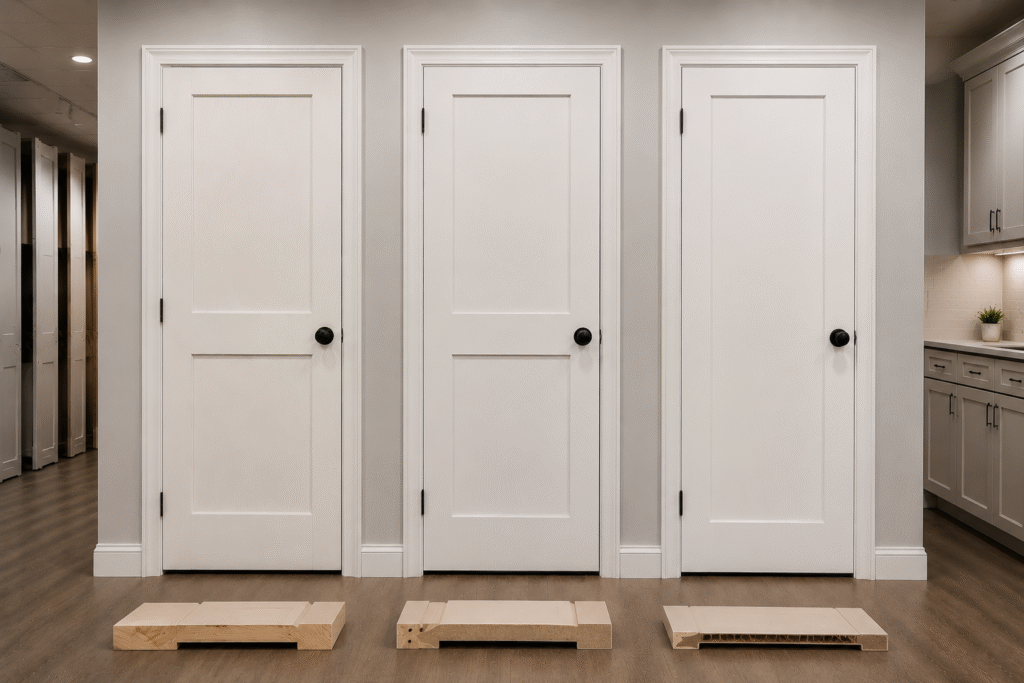
| Category | Molded Doors | Shaker Doors |
|---|---|---|
| Design Style | Traditional to modern | More modern and minimalist |
| Cost | Lower | Slightly higher |
| Project Positioning | Budget-focused projects | Mid-range and higher |
| Premium Appearance | Moderate | Stronger |
| Customization | Limited | More flexible |
| Market Acceptance | Extremely broad | Rapidly growing |
| Modern Design Compatibility | Strong in Shaker-look styles | Very strong |
| Manufacturing Method | Molded skin production | Engineered/CNC/assembled |
| Large-Scale Consistency | Very high | Now also highly stable |
When Should Builders Choose Molded Doors?
1. When Budget Control Is the Top Priority
For many builders, interior doors do not directly increase home pricing, but they significantly impact total construction cost.
Molded doors are usually the better option for:
- Affordable housing
- Large apartment developments
- Student housing
- Build-to-Rent projects
- Government housing programs
Especially with Shaker-look molded doors, builders can maintain a modern appearance while keeping procurement budgets under control.
In several North American apartment projects we supported, builders reduced total interior door procurement costs by approximately 12%–20% by switching from real Shaker doors to 2-panel Shaker-look molded doors.
2. When the Project Requires High Standardization
One of the biggest advantages of molded doors is:
- Uniform appearance
- Stable dimensions
- Strong project consistency
For large residential communities, this level of standardization is extremely valuable.
It helps reduce:
- Installation inconsistencies
- Future maintenance issues
- Replacement mismatches
- Jobsite rework risks
3. When Builders Want Modern Design Without Premium Pricing
Many builders used to associate molded doors with outdated traditional styles.
But today’s Shaker-look molded doors can deliver a surprisingly modern appearance at a much lower cost than real Shaker doors.
For budget-conscious projects that still need to “look modern,” Shaker-look molded doors have become one of the most practical solutions available.
When Should Builders Choose Shaker Doors?
1. When Sales Competitiveness Matters
Today’s residential market is increasingly driven by:
- Model home presentation
- Interior design trends
- First impressions from buyers
Because Shaker doors align strongly with modern aesthetics, they often help improve:
- Perceived home quality
- Showroom presentation
- Buyer emotional response
- Overall project positioning
This is especially important in townhouse developments, mid-range residential communities, and modern suburban housing.
2. When Target Buyers Are Younger Demographics
Today’s younger buyers strongly prefer:
- Minimalist interiors
- Modern farmhouse aesthetics
- Contemporary design
- Clean-line architecture
As a result, even budget-focused builders are increasingly selecting:
- 1-panel Shaker doors
- 2-panel Shaker doors
- Slim Shaker doors
because they better align with current market demand.
3. When Long-Term Market Value Matters
Compared with traditional 6-panel molded doors, Shaker doors tend to age better visually over time.
For builders looking to improve:
- Long-term market competitiveness
- Future resale value
- Design longevity
Shaker doors are often the safer long-term investment.
Advantages of Molded Doors in Today’s Market
1. Strong Cost Advantage
Molded doors remain one of the most cost-effective interior door solutions available today.
For large-volume developments, the savings can be substantial.
2. Shaker-Look Designs Are Rapidly Growing
Modern molded doors are no longer limited to traditional 6-panel styles.
Shaker-look molded doors now provide modern aesthetics while maintaining affordable pricing.
This is one of the biggest shifts happening in today’s door market.
3. Better Fit for Budget Modern Housing
For many builders, the real priority is not whether the door is technically “Shaker.”
The real question is:
“Does the finished home look modern?”
Shaker-look molded doors solve this challenge extremely well.
4. Stronger Standardization for Large Projects
Molded doors still offer major advantages in:
- High-volume supply capability
- Project consistency
- Simplified jobsite management
especially for large-scale builder developments.
Advantages of Modern Shaker Doors
1. Better Alignment With Current Design Trends
Shaker doors have become one of the defining elements of modern residential interiors.
2. Easier to Elevate Project Perception
Many builders have found that simply upgrading interior doors can significantly improve how buyers perceive overall project quality.
3. Modern Engineered Shaker Doors Are Much Faster to Produce
Historically, Shaker doors were associated with:
- Slow production
- High labor requirements
But with engineered manufacturing improvements, many modern Shaker doors can now be produced extremely efficiently.
In some factories, Shaker doors are actually produced faster than molded doors because:
- There is no dependency on molded skin supply
- No waiting for door skin molds
- Manufacturing flexibility is higher
This is one reason many builders are re-evaluating Shaker doors for budget projects.
Procurement Recommendations for Builders
Choose Shaker-Look Molded Doors If Your Project:
- Is highly budget-sensitive
- Requires large-scale standardization
- Targets entry-level buyers
- Prioritizes total cost control
Choose Modern Engineered Shaker Doors If Your Project:
- Needs stronger sales competitiveness
- Emphasizes modern aesthetics
- Targets younger homebuyers
- Wants to improve perceived project value
Frequently Asked Questions About Molded vs. Shaker Doors
Q: What is the primary difference in construction between traditional Shaker doors and Shaker-style molded doors?
A: Traditional Shaker doors are built using a five-piece structural assembly, whereas Shaker-style molded doors are manufactured from a single piece of compressed fiberboard (MDF/HDF) that is molded to mimic the Shaker appearance.
Q: How can one visually distinguish an imitation molded Shaker door from an authentic Shaker door?
A: Authentic Shaker doors feature sharp 90-degree internal corner angles resulting from their multi-piece jointed construction. In contrast, molded Shaker doors, being pressed from a single skin, typically feature softer lines with sloped 45-degree bevel edges within the recessed panel details.
Q: In what types of environments should molded doors be avoided?
A: Molded fiberboard doors should be avoided in areas prone to high moisture, such as unvented bathrooms or laundry rooms, as prolonged exposure to humidity can cause the compressed wood fibers to swell, warp, or chip.
Q: Which door style is generally more cost-effective for large-scale projects?
A: Shaker-style molded doors are significantly more cost-effective for large-scale budget projects because they are produced from single sheets of fiberboard, which lowers both material and manufacturing costs compared to the labor-intensive assembly required for traditional solid wood Shaker doors.
Conclusion
For today’s builders, choosing between molded doors and Shaker doors is no longer simply a “cheap vs premium” decision. The right choice depends on project positioning, target buyers, budget goals, and modern design expectations.
Shaker-look molded doors continue gaining popularity because they offer a modern appearance at a lower cost, while engineered Shaker doors are becoming more efficient and builder-friendly than ever before.
In many budget projects, the best solution is not necessarily the cheapest door, but the one that delivers the best balance between cost, appearance, standardization, and long-term market appeal.
Articles that you may be interested in:
Solid Core vs Hollow Core Doors: Are Molded Doors Solid or Hollow Core?