When selecting interior doors for residential or multifamily projects, builders and general contractors typically choose between three common options: molded doors, shaker doors, and shaker-style molded doors. While they may appear similar at first glance, the differences in construction method, edge detailing, durability, and cost structure can significantly impact both project budget and long-term performance.
So what’s the right choice?
In simple terms:
- Molded doors are the most budget-friendly and widely used option in production housing.
- Shaker doors offer a cleaner, more premium appearance with true frame-and-panel construction.
- Shaker-style molded doors sit in the middle, combining a shaker look with molded MDF manufacturing efficiency.
For builders, the decision usually comes down to balancing cost efficiency, visual consistency, and project specification requirements.
1. What Are Molded Doors?
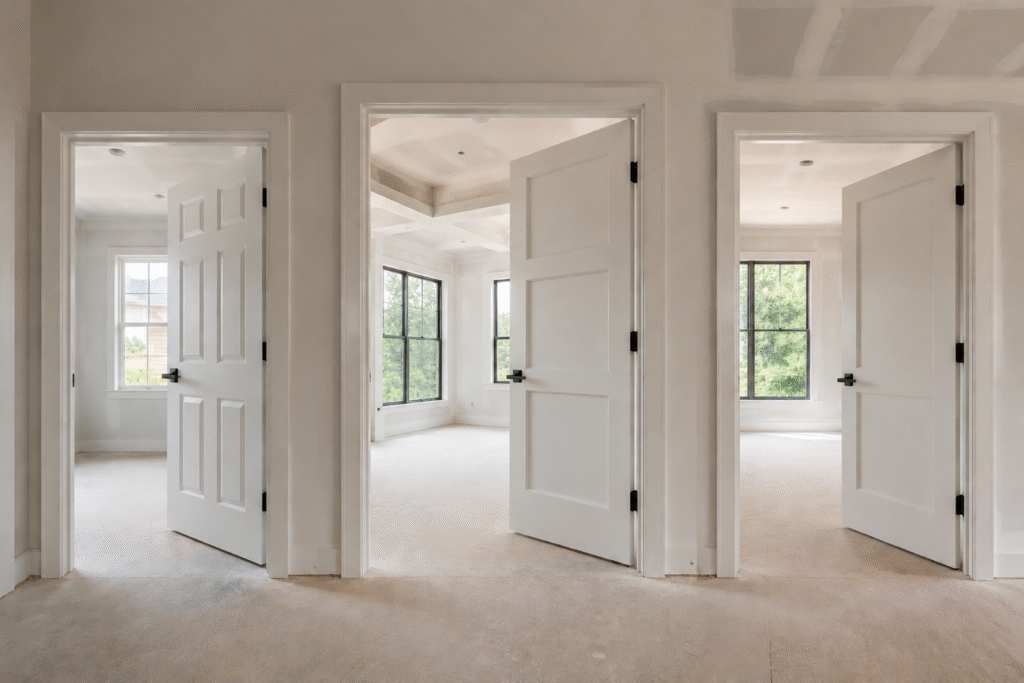
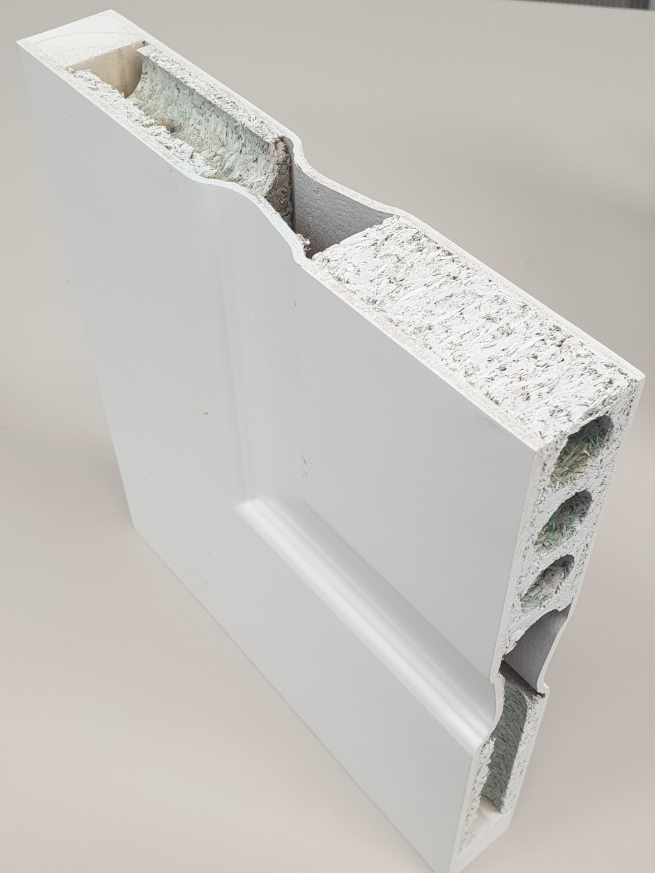
Molded doors are manufactured using wood fibers or MDF that are pressed into steel molds under high temperature and pressure. Most products in this category are hollow-core or semi-solid core, making them lightweight and cost-efficient.
Key Features:
- Mass-produced through high-pressure molding process
- Available in hollow core or composite core options
- Primed or pre-finished surface options
- Standardized embossed panel designs for volume residential projects
Pros and Cons
| Pros | Cons |
|---|---|
| Lowest cost per unit | Basic visual appearance |
| Fast production lead time | Lower impact resistance |
| Lightweight and easy to install | Limited design flexibility |
| Widely available in stock programs | Reduced sound insulation |
In most residential projects, molded doors are still the baseline specification for rental housing and entry-level production builds, especially when cost control is the primary factor.
2. What Are Shaker Doors?
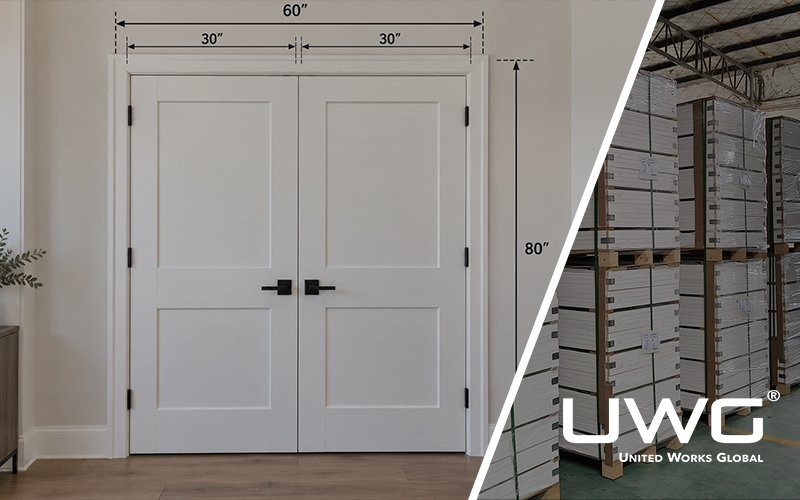
Shaker doors are built using a true frame-and-panel construction, consisting of vertical stiles, horizontal rails, and an inserted center panel.
Key Features:
- Real assembled frame construction (stiles and rails)
- Center panel typically MDF, commonly available in 8mm or 12mm thickness
- Clean 90-degree sharp-edge geometry
- Strong architectural and modern design appeal
Pros and Cons
| Pros | Cons |
|---|---|
| Premium architectural appearance | Higher material and labor cost |
| Strong structural integrity | Heavier weight |
| Excellent long-term durability | Longer production lead time |
| Strong acceptance in high-end markets | Requires precise installation |
From our experience, shaker doors are commonly selected for custom homes and mid-to-high-end residential projects where design consistency and perceived value matter more than unit cost.
3. What Are Shaker-Style Molded Doors?
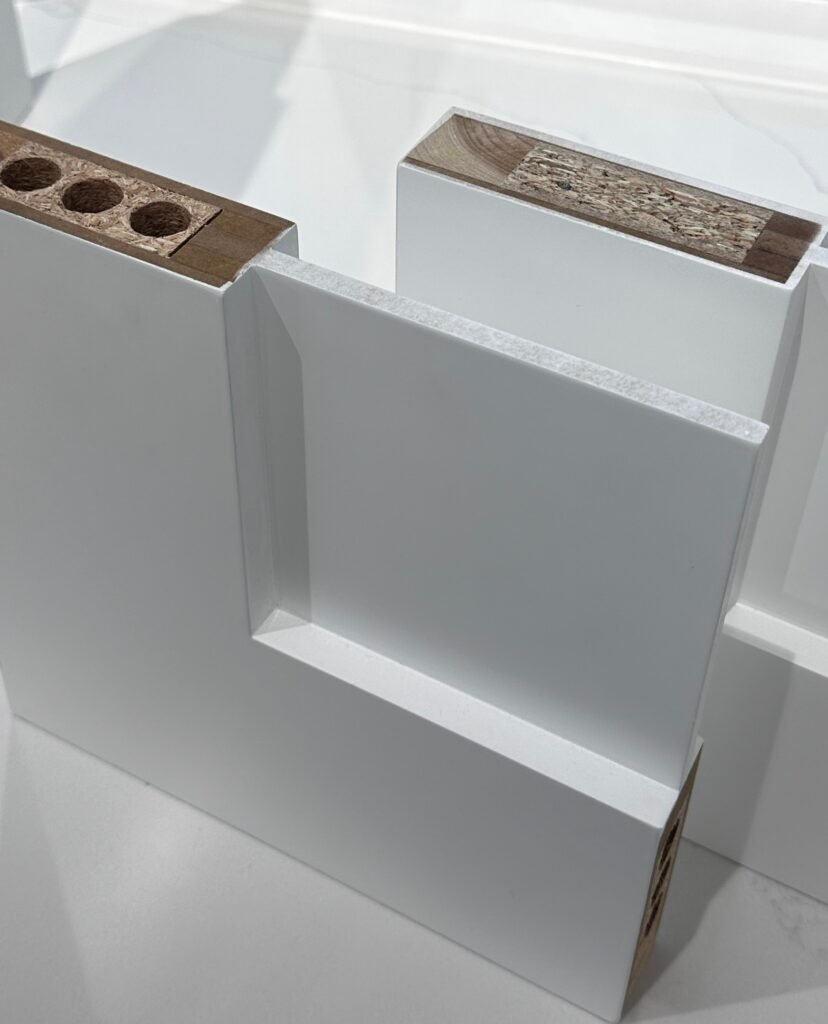
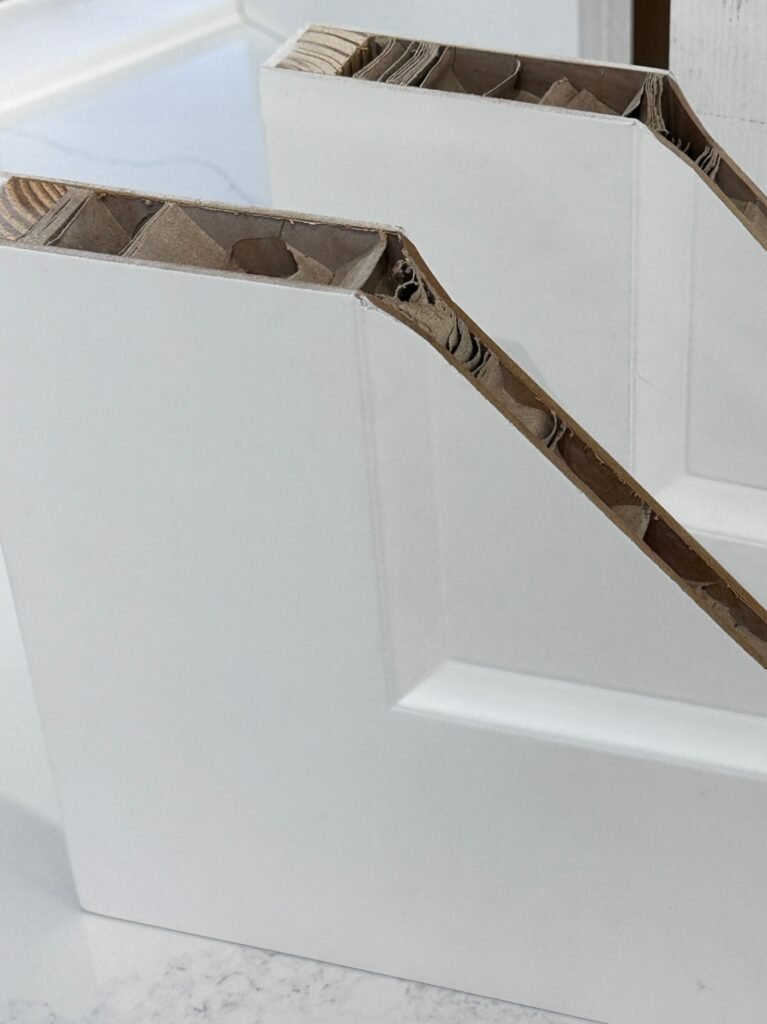
Shaker-style molded doors are still MDF molded doors, but the surface is designed to replicate the shaker aesthetic.
Engineering Reality Behind the Design
This difference comes from manufacturing requirements rather than design preference:
- Molded doors need to release cleanly from steel molds
- Sharp 90-degree internal corners are not practical for high-volume production
- As a result, shaker-style molded doors are produced with beveled edges instead of sharp internal corners
4. Side-by-Side Comparison (Construction + Market Position)
| Feature | Molded Door | Shaker Door | Shaker-Style Molded |
|---|---|---|---|
| Cost Level | Lowest | Highest | Medium |
| Structure | Press molded MDF with embossed panel design | Frame + panel assembly | Press molded MDF |
| Edge Detail | Embossed / contoured molded profile | 90-degree sharp edge | 45-degree beveled edge |
| Durability | Suitable for standard residential use | High structural durability | Medium durability |
| Appearance | Basic molded design | Premium architectural look | Shaker-style simulation |
| Best Use | Rental / entry housing | Custom homes | Production housing upgrades |
| Lead Time | Short | Longer | Short |
5. Cost Comparison: Molded vs Shaker vs Shaker-Style Molded Doors
Based on our official retail prehung door pricing for standard residential contractor projects:
| Door Type | Hollow Core | Solid Core (Primed) | Market Position |
|---|---|---|---|
| Molded Door | $77.5 – $92 | $140 – $180 | Entry / Rental |
| Shaker-Style Molded | $95 – $140 | $160 – $220 | Production Upgrade |
| Shaker Door (True Construction) | $180 – $260 | $220 – $320+ | Custom / Premium |
From real project experience, many production housing developers use a dual-spec approach:
- Molded doors as the base package
- Shaker-style molded doors as an upgrade option
This allows better control of cost while improving perceived interior quality and overall project positioning.
6. Which One Should Builders Choose?
From a builder and procurement perspective, the decision is not only about aesthetics, but also project tier, budget structure, and sales positioning.
Choose Molded Doors if:
- Working on rental housing or entry-level developments
- Cost per unit is the primary concern
- Fast delivery is required
Choose Shaker Doors if:
- Targeting mid-to-high-end residential projects
- Architectural detail and premium perception matter
- Higher finish expectations are required
Choose Shaker-Style Molded Doors if:
- A balance between cost and modern appearance is needed
- Large-scale production housing projects
- Shaker look is required without full frame cost
In many real projects, builders combine:
Molded doors as base specification + shaker-style molded doors as upgrade packages
This creates a practical balance between cost efficiency and design flexibility.
FAQ
Q1: Is a shaker-style molded door a real shaker door?
A: No. It is a molded MDF door designed to replicate the shaker appearance.
Q2: Why are shaker doors more expensive?
A: Because they use a true frame-and-panel construction that requires more material, labor, and precision assembly.
Q3: What is the key structural difference between them?
A: Shaker doors use 90-degree assembled geometry, while shaker-style molded doors use 45-degree molded geometry.
Q4: Which type is most common in production housing?
A: Molded doors and shaker-style molded doors dominate due to cost efficiency and scalability.
Conclusion
Choosing between molded, shaker, and shaker-style molded doors is ultimately a balance between cost control, design intent, and project positioning.
For builders and general contractors:
- Molded doors provide maximum cost efficiency
- Shaker doors deliver premium architectural value
- Shaker-style molded doors offer a practical middle ground
Understanding the structural differences behind the visual appearance helps optimize procurement decisions and improve project outcomes in today’s competitive residential construction market.