
High-traffic zones—such as entryways, kitchens, corridors, and living areas—require flooring that maintains dimensional stability, surface integrity, and aesthetic appeal under constant stress. For architects and builders, the right material selection can significantly reduce long-term maintenance and warranty risks while enhancing end-user satisfaction. So, which flooring types offer the best combination of durability, moisture resistance, and structural reliability for high-traffic residential spaces in 2025?
The most durable flooring options for high-traffic homes in 2025 include engineered hardwood, solid hardwood, waterproof laminate (AC4+), luxury vinyl plank (LVP) with SPC cores, and multi-layer composite systems. These solutions provide proven resistance to abrasion, impact, and moisture, ensuring long-term performance in both residential and light commercial applications.
Each of these flooring types has distinct structural advantages and application best practices. Let’s examine how they compare in real-world use cases.
Top Flooring Types for High-Traffic Homes in 2025
Selecting flooring for high-traffic environments requires more than aesthetics—it demands dimensional stability, abrasion resistance, moisture tolerance, and long-term performance. In 2025, the following flooring categories consistently meet professional standards for residential and light commercial applications:
● Solid Hardwood
Constructed from a single species of wood throughout, solid hardwood offers long-term refinishing capability and authentic texture. However, its vulnerability to seasonal expansion and contraction limits its performance in moisture-prone zones or slab-on-grade installs.
● Engineered Hardwood
Built with cross-laminated plywood or multi-layer cores beneath a solid wood veneer, engineered hardwood offers enhanced structural stability. Its reduced expansion coefficient makes it suitable for radiant heating systems, finished basements, and transitional climates.
● Luxury Vinyl Plank (LVP)
A multi-layer synthetic product featuring a PVC core and wear-resistant topcoat, LVP provides excellent waterproofing and dimensional stability. It installs via click-lock or glue-down systems and is ideal for kitchens, entryways, and pet zones.
● Laminate Flooring (AC4 Rated and Above)
Utilizing high-density fiberboard (HDF) cores and melamine wear layers, commercial-grade laminate resists impact, indentation, and UV fading. With AC4 or AC5 ratings, it performs well in high-traffic zones, provided moisture exposure is controlled.
● Formaldehyde-Free Composite Flooring
Zero-VOC engineered flooring made with MDI adhesives offers a hypoallergenic, low-emission solution for schools, hospitals, and homes with children or elderly occupants. Paired with water-resistant cores and chamfered edge profiles, it balances health and performance.

Solid Hardwood vs Engineered Hardwood: Which Holds Up Better?
Solid hardwood is composed of a single species throughout, typically ¾” thick, and is prized for its authentic texture and the ability to refinish multiple times over decades. However, it is highly sensitive to changes in ambient moisture and temperature. When installed over concrete or radiant heat systems, solid wood can expand or contract significantly, leading to gapping or cupping.
Engineered hardwood, on the other hand, consists of a solid wood wear layer (typically 2–6 mm thick) bonded over a core of cross-laminated plywood or multi-layer fiberboard. This construction significantly enhances dimensional stability, making it ideal for high-traffic areas subject to climate fluctuation. Builders often prefer engineered wood for installation over radiant heating systems or in below-grade spaces like finished basements.
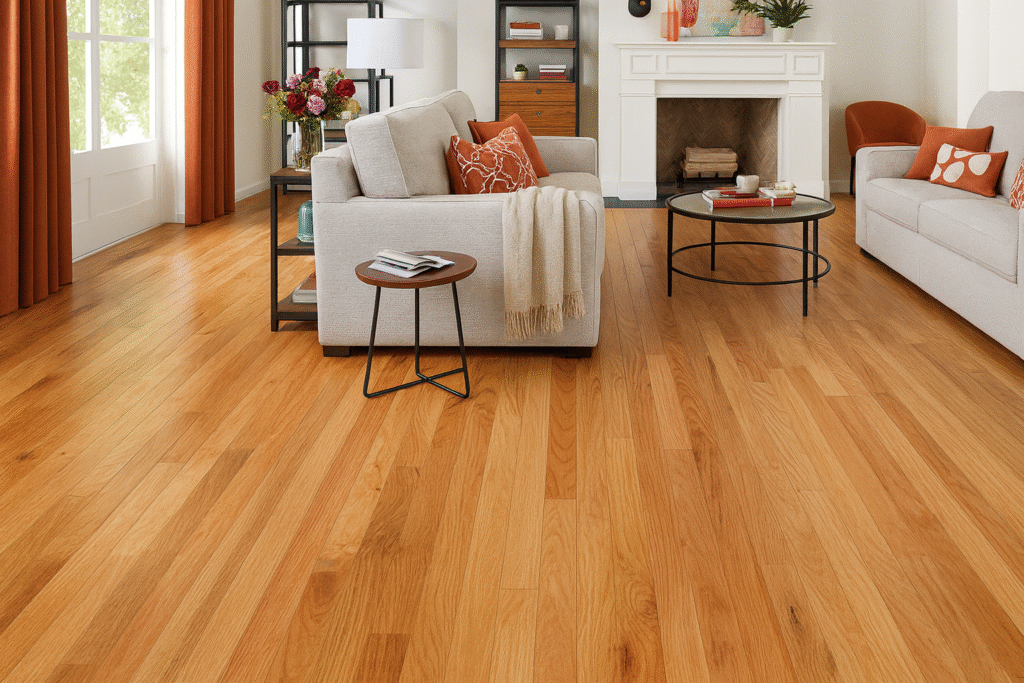
Engineered Wood Flooring: Structural Options and Performance
Not all engineered floors are created equal. In 2025, the most common formats include:
- 3-Layer Construction: Features a 3mm sawn-cut hardwood top layer, a 9mm softwood cross core (e.g. pine), and a 3mm hardwood backing (e.g. poplar). This configuration balances economy and performance, ideal for moderate-traffic areas.
- Multi-Layer Plywood Core: Designed with 5–9 layers of cross-directional plywood, this premium structure offers exceptional strength, reduced deflection, and longer lifespan—often used in commercial-residential hybrids.
Additional performance enhancers include:
- Click-lock systems: Allow floating or glue-down installation with tight seams.
- Surface beveling: Rounded or V-groove edges enhance joint concealment and reduce tripping risk.

Luxury Vinyl Plank (LVP) and Laminate: Budget-Friendly, Job-Site Efficient
LVP features a rigid core (SPC or WPC) topped with a photographic layer and a protective wear coat (typically 12–20 mil). It is fully waterproof, resistant to pet stains, and rated for high-impact zones. Most LVPs can be installed over existing subfloors using click-lock systems—ideal for fast-turnaround projects.
Laminate flooring, particularly with AC4 or AC5 ratings, is engineered with a high-density fiberboard (HDF) core and a melamine-infused top layer. It offers excellent scratch resistance and dimensional performance, though it’s less suited for areas with standing moisture unless explicitly waterproof-rated.
Key PDF-based enhancements include:
- Rounded bevel edges for seamless transition between planks;
- Formaldehyde-free adhesives (MDI) improving indoor air quality compliance;
- Visual chamfering to increase surface depth and simulate natural wood grain.
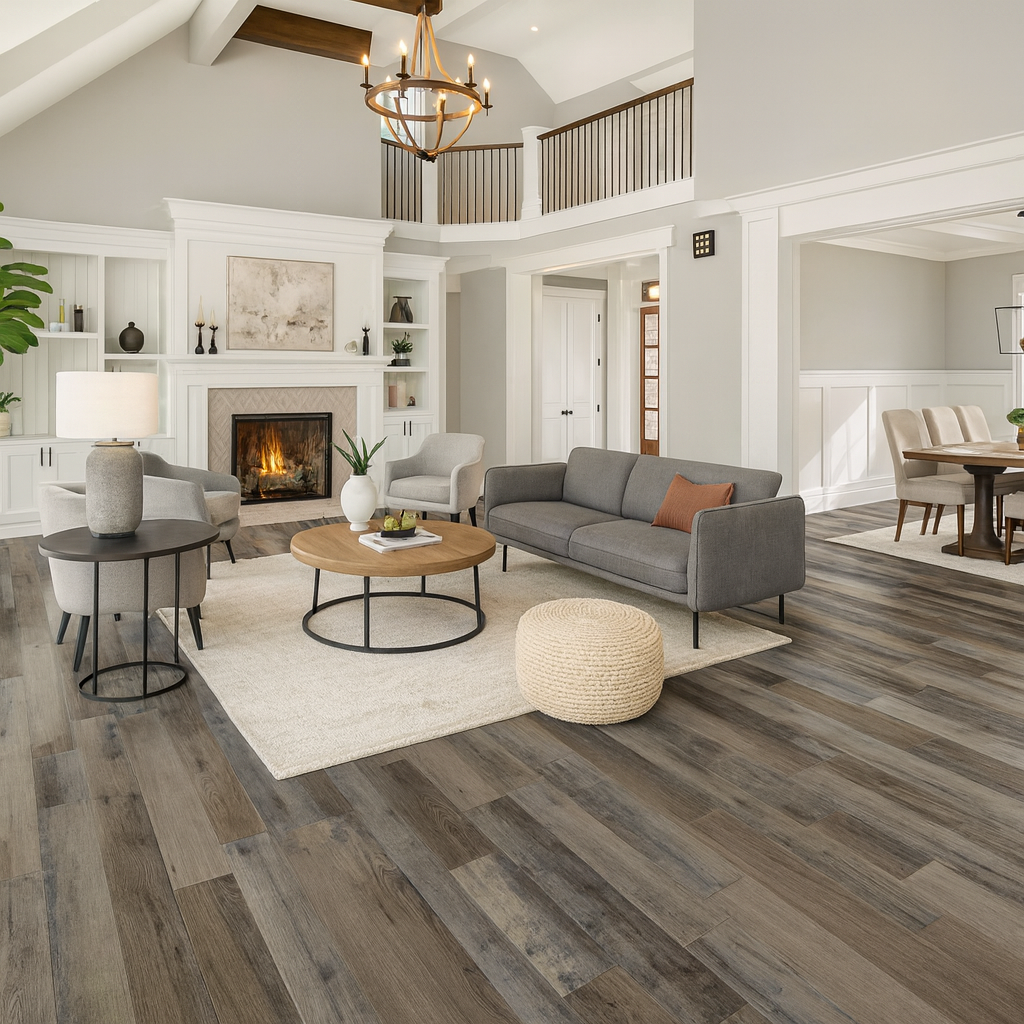
Waterproof Laminate and Formaldehyde-Free Options for Sensitive Spaces
For residential environments with strict indoor air quality requirements—such as nurseries, elderly housing, or LEED-compliant buildings—formaldehyde-free laminate flooring offers a certified low-emission solution. These floors use MDI adhesives with no added urea-formaldehyde, eliminating off-gassing risks associated with conventional HDF cores.
Pairing this with AC4-rated wear layers and water-resistant sealed cores, waterproof laminate delivers both durability and health safety. The 30° visual chamfering technique (as referenced in the product catalog) enhances dimensional perception while minimizing dirt buildup at joints.
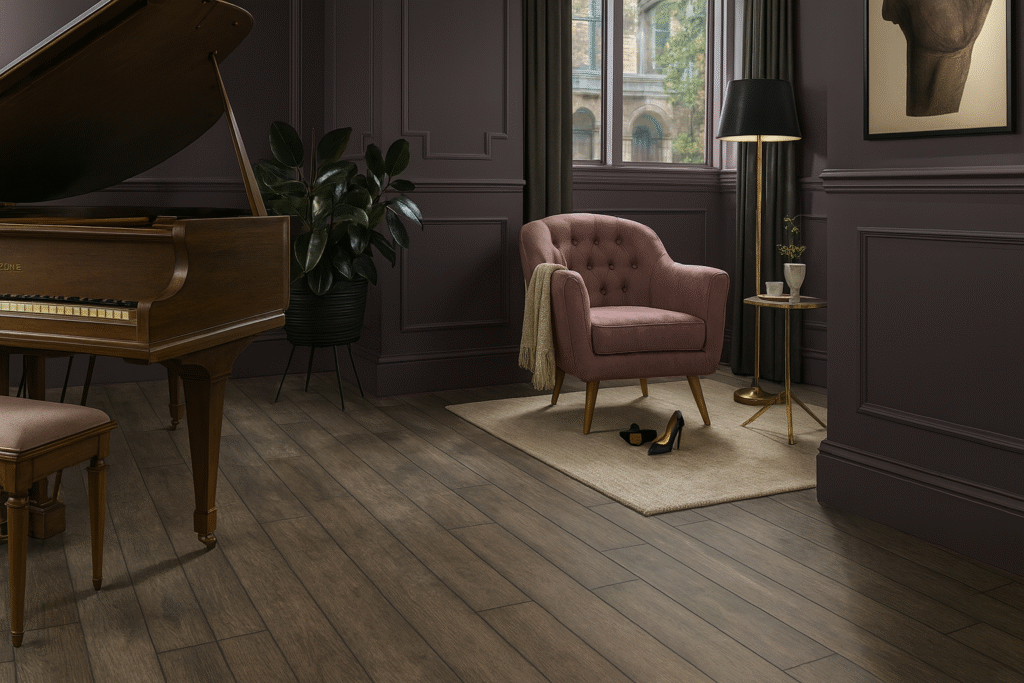
Best Flooring for Homes with Pets and Children
Pet claws, spilled juice, toy cars—all daily realities in family homes. Flooring in these environments must balance resilience, hygiene, and safety.
- Luxury Vinyl Plank (LVP) with a 20-mil wear layer resists abrasion from claws and wheels, while its waterproof SPC core ensures no warping from spills.
- Waterproof laminate offers high AC ratings (AC4–AC5), handling impact and scratch damage effectively with minimal maintenance.
- Formaldehyde-free engineered floors improve indoor air quality and reduce allergy triggers, especially for crawling infants and sensitive users.
Select products with:
- High slip resistance (R9 or above),
- Easy-to-clean surface coatings,
- Low-VOC certifications (e.g. FloorScore, GREENGUARD).
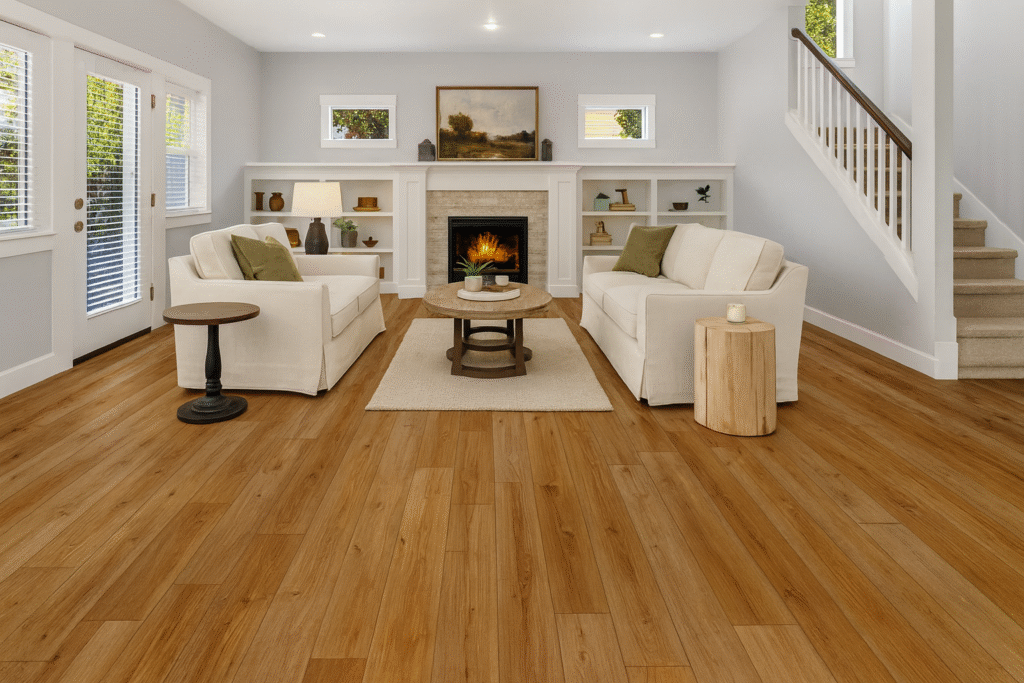
Wood-Look Flooring That Lasts: Best Real Wood Alternatives
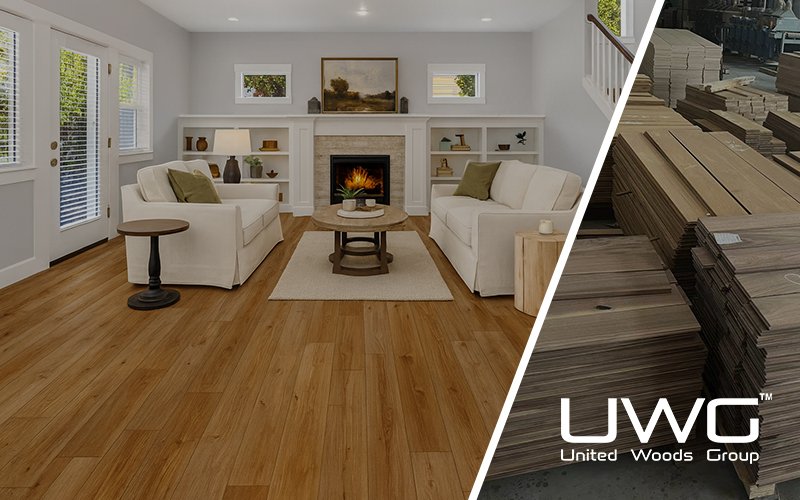
For clients seeking the warmth of natural wood without the upkeep, advanced wood-look technologies now rival traditional timber in both realism and resilience.
- LVP uses high-definition photographic layers and embossed-in-register (EIR) texture to simulate grain and knots.
- Laminate integrates pressed bevels and deep-sheen finishes for a more dimensional, authentic appearance.
- Bevel options—V-groove, rounded bevel, and Contura—improve the plank outline and joint realism.
Unlike real hardwood, these materials:
- Don’t require sanding or refinishing,
- Resist sun fading and water damage,
- Offer seamless designs across large open spaces (especially with continuous pattern printing).
Choosing the Right Floor for Heavy Foot Traffic and Easy Maintenance
In spaces subjected to high footfall, flooring must be judged by durability-to-maintenance ratio. Below is a performance-driven selection matrix:
- Engineered hardwood: Best for upscale interiors requiring longevity, refinishing options, and heat resistance (radiant systems).
- LVP with SPC core: Optimal for wet environments, pet zones, and rental properties due to its 100% waterproof nature and fast install.
- Waterproof laminate: Offers high abrasion resistance (AC4+), fast installation, and reduced costs in multi-unit housing or quick-flip builds.
Always align flooring choice with:
- Subfloor condition (e.g., concrete, radiant heating),
- Traffic density (e.g., family home vs. short-term rental),
- Moisture exposure (kitchen, basement, laundry).
Match the material to the space’s traffic type, moisture level, and cleaning expectations to minimize repairs and maximize satisfaction.
In high-traffic residential design, durability is no longer optional—it’s a specification standard. From engineered hardwoods with multi-layer stability to waterproof laminates with AC4-rated protection, today’s materials are built to withstand wear, moisture, and daily impact.
Which flooring system aligns best with your project’s performance requirements, occupancy patterns, and lifecycle goals?