
Cabinet hardware may be one of the smallest components in a kitchen, but it plays a significant role in both functionality and overall design. The right knobs and pulls not only improve everyday usability but also enhance the appearance and perceived quality of cabinetry. For builders, selecting the appropriate cabinet hardware involves balancing durability, aesthetics, budget, and installation efficiency.
Selecting the right cabinet hardware requires evaluating material, size, finish, durability, and project style. Stainless steel offers the best corrosion resistance for high-use environments, while zinc alloy provides an affordable solution for large residential developments. Aluminum hardware is lightweight and modern, and solid brass delivers premium quality with exceptional longevity. Proper pull length and knob size should match cabinet dimensions and design style to ensure both visual balance and comfortable operation. For builders, choosing cabinet hardware that aligns with the project’s budget, target market, and cabinet design helps improve homeowner satisfaction, reduce maintenance concerns, and create a cohesive finished appearance.
What Is Cabinet Hardware?
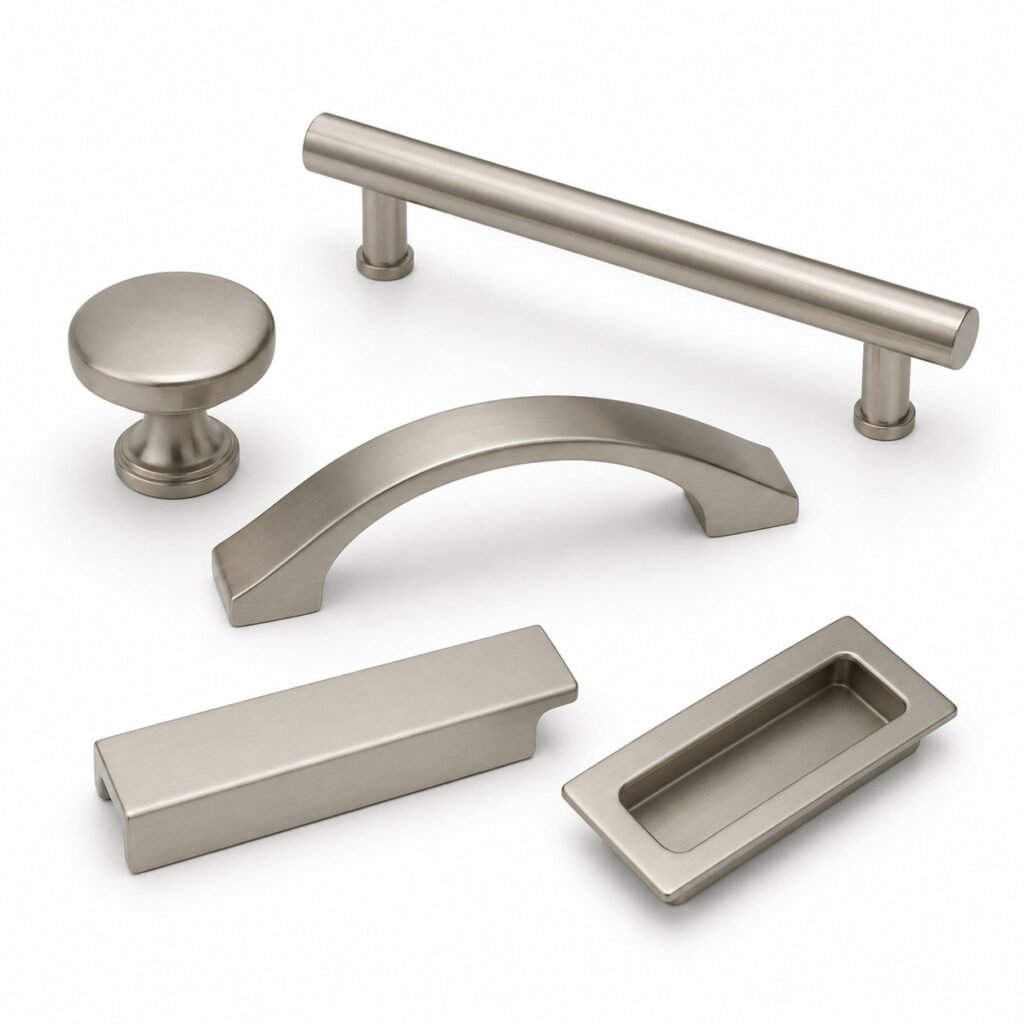
Cabinet hardware refers to the functional components attached to cabinet doors and drawers that allow users to open and close them comfortably.
The most common types include:
- Cabinet knobs
- Cabinet pulls
- Bar handles
- Finger pulls
- Edge pulls
- Decorative handles
Although cabinet hardware represents a relatively small percentage of the total cabinet cost, it has a significant influence on both the appearance and daily usability of the kitchen.
Why Cabinet Hardware Selection Matters
Many builders focus on cabinet construction, door style, and finishes while treating hardware as a final detail. In reality, hardware selection affects several important aspects of a project:
- Overall kitchen aesthetics
- User comfort
- Durability
- Installation efficiency
- Long-term maintenance
- Homebuyer perception
Based on our experience supplying cabinets for residential projects, replacing cabinet hardware is often one of the simplest ways to upgrade the perceived value of a kitchen without significantly increasing overall costs.
Common Cabinet Hardware Materials
1. Stainless Steel
Stainless steel is one of the most durable and widely used cabinet hardware materials.
Advantages
- Excellent corrosion resistance
- High durability
- Easy to clean
- Suitable for humid environments
- Modern appearance
Disadvantages
- Higher cost than zinc alloy
- Fingerprints may be more visible on polished finishes
Best Applications
- Residential kitchens
- Coastal homes
- High-moisture environments
- Contemporary cabinetry
2. Zinc Alloy
Zinc alloy remains one of the most popular materials for residential cabinet hardware because of its balance between cost and appearance.
Advantages
- Cost-effective
- Wide variety of designs
- Easy to manufacture
- Suitable for large-volume projects
Disadvantages
- Lower strength than stainless steel
- Surface finish quality varies between manufacturers
Best Applications
- Production housing
- Multifamily developments
- Budget-conscious residential projects
3. Aluminum
Aluminum hardware is increasingly used in modern cabinet designs.
Advantages
- Lightweight
- Corrosion resistant
- Modern appearance
- Easy installation
Disadvantages
- Softer than stainless steel
- Can scratch more easily
Best Applications
- Contemporary kitchens
- Minimalist cabinetry
- Lightweight cabinet systems
4. Solid Brass
Solid brass is widely regarded as a premium cabinet hardware material.
Advantages
- Exceptional durability
- Premium appearance
- Naturally corrosion resistant
- Long service life
Disadvantages
- Higher initial cost
- Some finishes develop a natural patina over time
Best Applications
- Luxury homes
- Custom cabinetry
- High-end residential projects
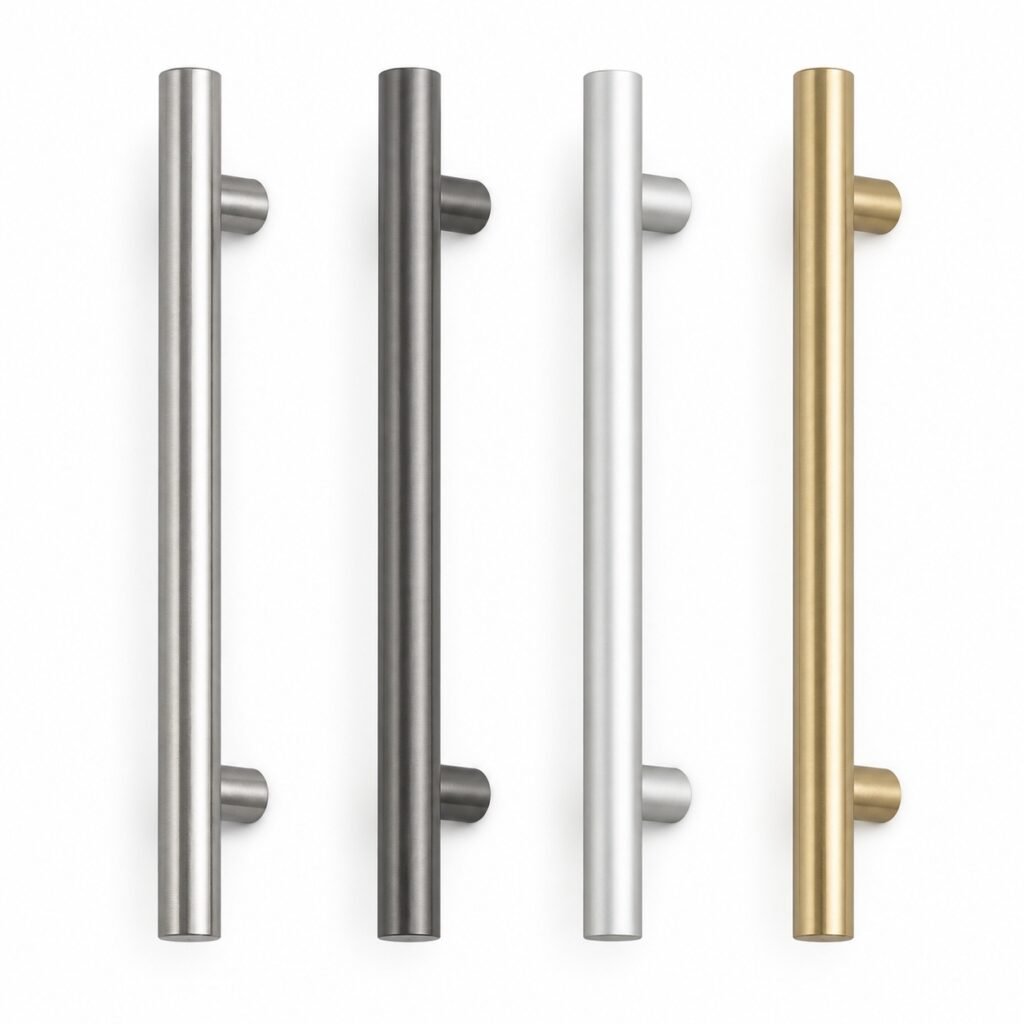
Cabinet Hardware Material Comparison
| Material | Durability | Corrosion Resistance | Cost | Best For |
|---|---|---|---|---|
| Stainless Steel | Excellent | Excellent | Medium-High | High-use residential projects |
| Zinc Alloy | Good | Good | Low-Medium | Production housing |
| Aluminum | Good | Very Good | Medium | Modern kitchens |
| Solid Brass | Excellent | Excellent | High | Luxury cabinetry |
Choosing the Right Hardware Size
Selecting the correct hardware size is just as important as choosing the right material.
Cabinet Knobs
Knobs are commonly used on:
- Base cabinet doors
- Wall cabinet doors
- Vanity cabinets
They provide a clean, classic appearance and are generally recommended for smaller cabinet doors.
Cabinet Pulls
Pulls offer greater leverage and are typically preferred for:
- Drawers
- Large cabinet doors
- Pantry cabinets
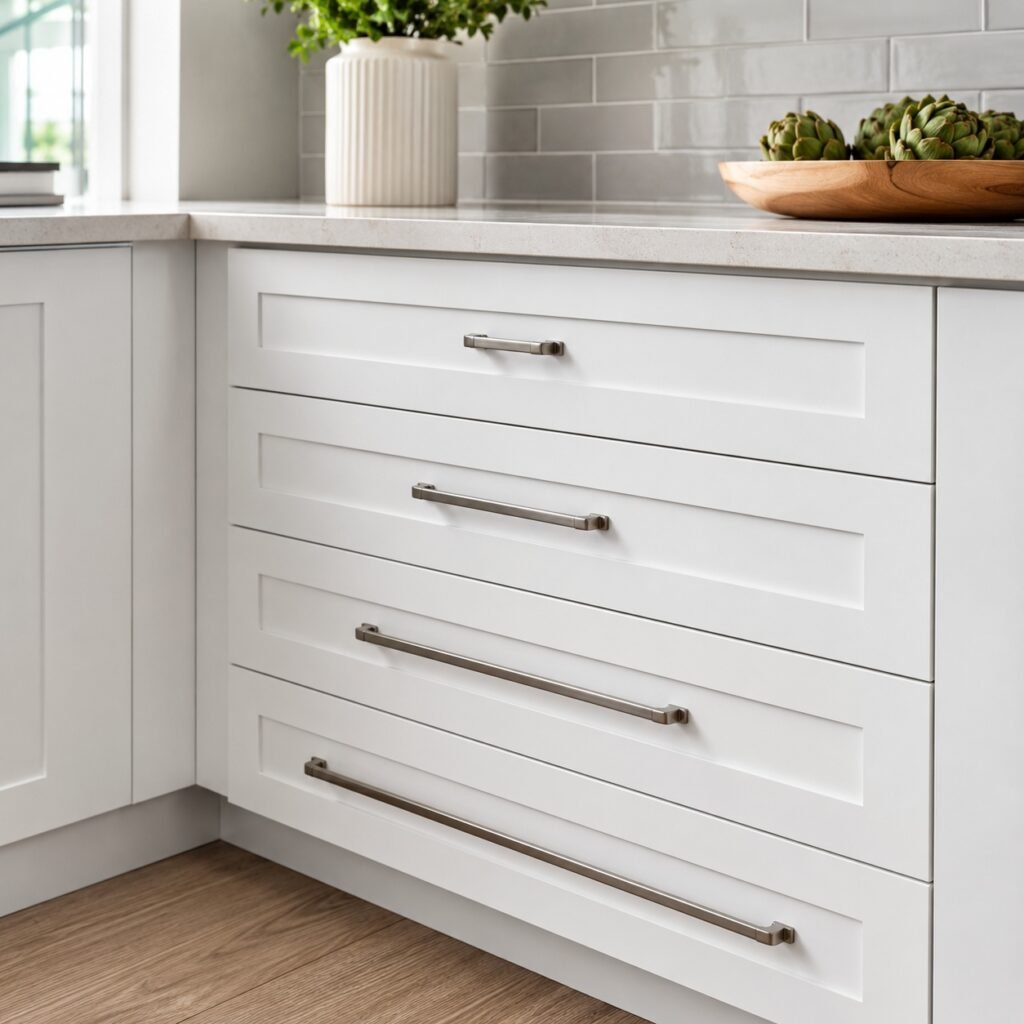
Longer pulls are often more comfortable to use and create a more contemporary appearance.
Common Pull Sizes
Some of the most common center-to-center pull sizes include:
- 96 mm (3.78″)
- 128 mm (5.04″)
- 160 mm (6.30″)
- 192 mm (7.56″)
- 224 mm (8.82″)
- 256 mm (10.08″)
For larger drawers, builders increasingly specify longer pulls to improve both functionality and visual proportion.
Popular Cabinet Hardware Finishes
The finish has a significant impact on the overall kitchen style.
Popular finishes include:
Matte Black
- Modern
- Contemporary
- Industrial
Brushed Nickel
- Transitional
- Fingerprint resistant
- Versatile
Satin Brass
- Warm appearance
- Luxury feel
- Increasingly popular
Chrome
- Bright
- Reflective
- Easy to match
Oil-Rubbed Bronze
- Traditional
- Rustic
- Farmhouse style
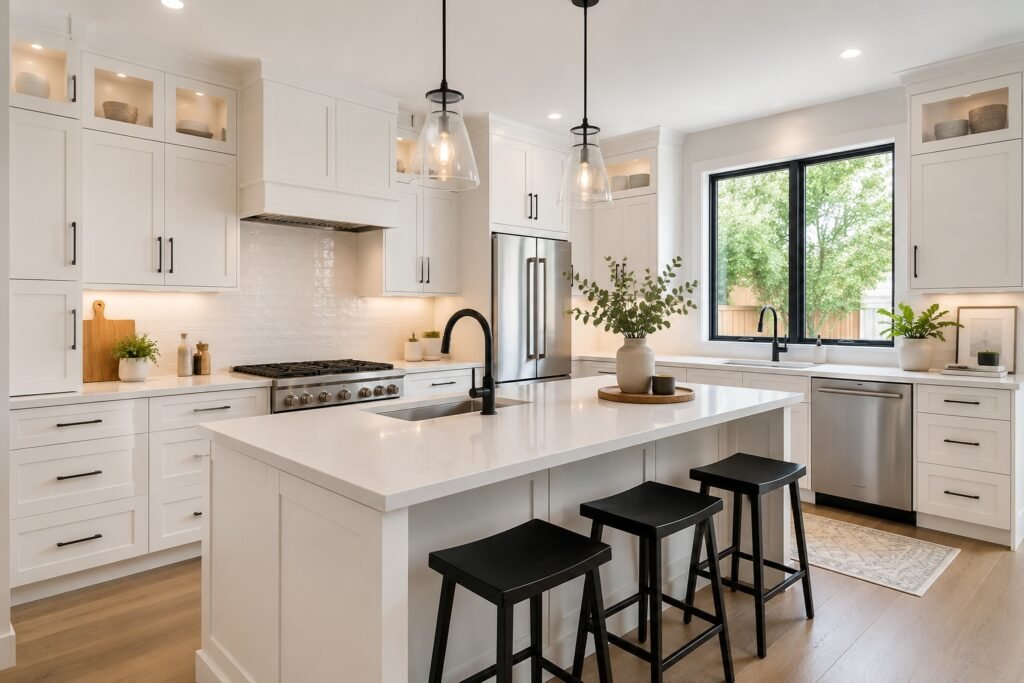
Selecting a finish that complements cabinet color, countertop material, and faucet finish helps create a cohesive kitchen design.
Pros and Cons of Knobs vs. Pulls
Cabinet Knobs
Advantages
- Lower cost
- Traditional appearance
- Easier installation
- Minimal visual impact
Disadvantages
- Less comfortable for large drawers
- Slightly reduced grip
Cabinet Pulls
Advantages
- Easier to grip
- Better for heavy drawers
- Modern appearance
- Improved accessibility
Disadvantages
- Higher cost
- Requires more precise installation
Current Market Trends
According to residential kitchen design trends reported by the National Association of Home Builders (NAHB), homeowners continue to favor clean-lined, functional cabinet hardware that complements modern and transitional kitchens.
Key market trends include:
- Increasing demand for matte black hardware
- Growing popularity of satin brass finishes
- Longer cabinet pulls for large drawers
- Minimalist hardware profiles
- Mixed-metal design accents
These trends reflect the broader movement toward simple, durable, and timeless kitchen designs.
Reference: NAHB – Kitchen Trends Report: https://www.nahb.org/
Builder Recommendations
When selecting cabinet hardware for residential projects, builders should consider more than appearance alone.
Based on our project experience, the following recommendations help achieve the best balance between cost, performance, and homeowner satisfaction:
- Use zinc alloy hardware for large production housing projects where cost control is a priority.
- Choose stainless steel hardware for kitchens exposed to higher humidity or heavy daily use.
- Specify solid brass hardware for luxury homes where long-term durability and premium aesthetics are important.
- Match pull length to drawer width to create balanced proportions.
- Keep hardware finishes consistent with faucets, lighting fixtures, and appliances for a cohesive overall design.
Making these decisions early in the design phase helps streamline purchasing, simplify installation, and maintain consistency across the entire project.
Conclusion
Cabinet hardware is a small detail that makes a significant difference in the functionality, durability, and appearance of a kitchen. From selecting the right material and finish to choosing the appropriate size, every decision contributes to the overall user experience and perceived quality of the cabinetry.
For builders, understanding the advantages and limitations of different hardware materials and styles makes it easier to specify products that meet project budgets while delivering long-term value. By choosing cabinet hardware that complements both the cabinet design and the target market, builders can create kitchens that are practical, visually appealing, and built to last.
Articles that you may be interested in:
What Is the Best Corner Cabinet Hardware for Efficient Storage?
Trending Door and Cabinet Hardware Styles for Modern Homes in 2026