
The kitchen is one of the busiest areas in any home, exposed to daily foot traffic, spills, dropped utensils, and constant cleaning. Choosing the right flooring is important not only for appearance but also for durability, maintenance, and long-term performance. As a result, many homeowners and builders compare options such as tile, hardwood, laminate, and SPC flooring when planning a kitchen renovation or new construction project.If you’re considering a kitchen flooring upgrade, you may be wondering whether SPC flooring is the right choice.
The short answer is yes. SPC flooring is generally considered a good choice for kitchens because it is waterproof, durable, and easy to maintain. Its rigid core construction helps resist moisture and everyday wear, making it well-suited for high-traffic environments. However, factors such as comfort, product quality, and installation requirements should also be considered before making a final decision.
In this guide, we’ll explore the advantages and disadvantages of SPC flooring in kitchens, compare it with other flooring options, and highlight key factors to consider before making a purchase.
What Is SPC Flooring?
SPC flooring, short for Stone Plastic Composite (or Stone Polymer Composite), is a type of rigid core luxury vinyl flooring designed to provide durability, stability, and water resistance. It combines limestone powder, stabilizers, and polymers to create a dense and highly durable core layer.
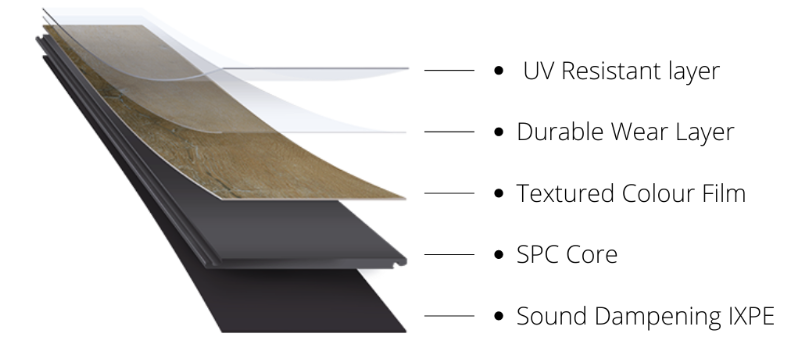
A typical SPC flooring plank consists of several layers:
- UV Coating Layer – Helps protect the surface from fading, stains, and everyday wear while making cleaning easier
- Wear Layer – Provides resistance against scratches, dents, and abrasion
- Decorative Layer – Creates the realistic wood, stone, or tile appearance
- SPC Core – The rigid waterproof core that delivers strength and dimensional stability
- Underlayment (optional) – Improves comfort underfoot and helps reduce sound transmission
One of the key advantages of SPC flooring is its ability to resist moisture while maintaining excellent stability. Unlike traditional wood flooring, SPC flooring will not easily swell, warp, or expand when exposed to normal household moisture, making it a popular choice for kitchens, bathrooms, laundry rooms, and other high-traffic areas.
Why SPC Flooring Is Popular for Kitchens
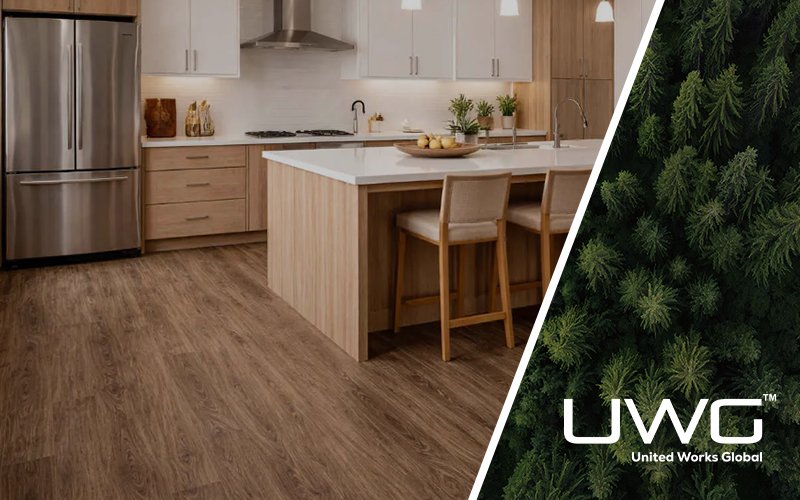
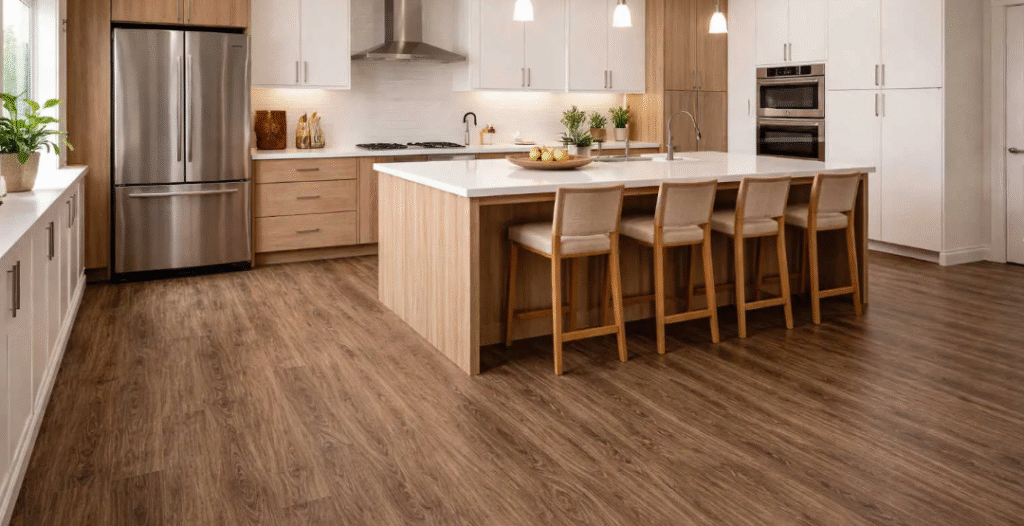
SPC flooring has become a popular choice for kitchens because it combines the appearance of wood or stone with the practical benefits needed in a high-traffic environment. Kitchens are exposed to moisture, spills, dropped objects, and frequent cleaning, making durability and water resistance essential.
Some of the key reasons homeowners and builders choose SPC flooring for kitchens include:
- Waterproof Performance – SPC flooring is highly resistant to moisture, making it well-suited for areas where spills and splashes are common.
- Durability – The rigid core structure and wear layer help resist scratches, dents, and everyday wear.
- Easy Maintenance – Routine sweeping and occasional mopping are usually enough to keep the floor looking clean.
- Dimensional Stability – SPC flooring is less likely to expand or contract due to temperature and humidity changes than many traditional flooring materials.
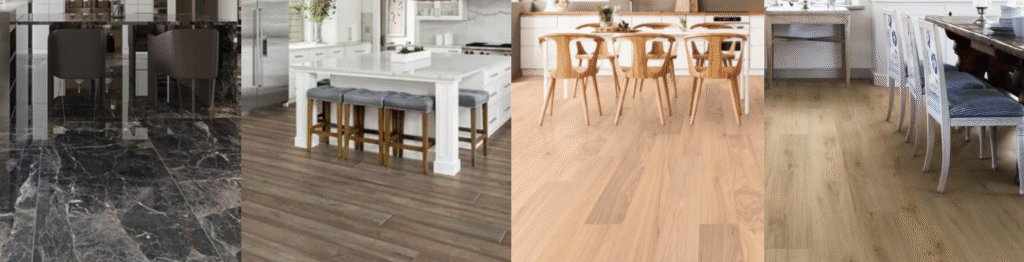
- Wide Range of Designs – Modern SPC flooring is available in a variety of wood and stone looks, allowing homeowners to achieve different design styles without the maintenance requirements of natural materials.
These advantages make SPC flooring a practical solution for kitchens where appearance, durability, and ease of maintenance are all important considerations.
Pros and Cons of SPC Flooring in Kitchens
SPC flooring offers many advantages for kitchen applications, but like any flooring material, it also has some limitations. Understanding both sides can help homeowners and builders determine whether it is the right fit for their project.
| Pros | Cons |
|---|---|
| 100% waterproof and resistant to spills | Can feel harder underfoot than wood flooring |
| Durable and resistant to scratches and dents | Lower-quality products may sound hollow when walked on |
| Easy to clean and maintain | Can feel colder than carpet or wood in some climates |
| Stable under temperature and humidity changes | Requires a relatively flat subfloor for best performance |
| Available in a wide range of wood and stone looks | May not add the same premium value as real hardwood |
| Generally more affordable than hardwood flooring | Deep scratches or damaged planks may require replacement |
For most kitchens, the benefits of SPC flooring—particularly its waterproof performance, durability, and ease of maintenance—often outweigh the drawbacks. However, product quality, wear layer thickness, and installation quality can significantly impact long-term performance and user satisfaction.
What to Consider Before Choosing SPC Flooring
Not all SPC flooring products are the same. Before making a purchase, it’s important to evaluate several factors that can affect durability, comfort, and long-term performance in a kitchen environment.
- Wear Layer Thickness – A thicker wear layer generally provides better protection against scratches and daily wear.
- Core Thickness – Thicker SPC cores can improve stability and help the floor feel more solid underfoot.
- Attached Underlayment – Some products include built-in underlayment for improved comfort and sound reduction.
- Slip Resistance – Kitchens are prone to spills, so choosing a floor with good slip resistance can improve safety.
- Design and Color – Consider how the flooring will coordinate with cabinets, countertops, and overall kitchen style.
- Warranty and Product Quality – Higher-quality products often offer better performance, stronger locking systems, and longer warranties.
By comparing these factors alongside budget and project requirements, homeowners and builders can select an SPC flooring product that delivers both the appearance and performance needed for a busy kitchen.
SPC Flooring vs Other Kitchen Flooring Options
SPC flooring is just one of several popular choices for kitchens. Comparing it with other flooring materials can help homeowners and builders determine which option best fits their priorities in terms of durability, comfort, maintenance, and budget.
| Flooring Type | Water Resistance | Durability | Comfort Underfoot | Maintenance | Cost |
|---|---|---|---|---|---|
| SPC Flooring | Excellent | Excellent | Good | Easy | Moderate |
| Ceramic/Porcelain Tile | Excellent | Excellent | Fair | Easy | Moderate to High |
| Hardwood Flooring | Poor | Good | Excellent | Higher | High |
| Laminate Flooring | Moderate | Good | Good | Moderate | Low to Moderate |
Compared with traditional flooring options, SPC flooring offers one of the best combinations of waterproof performance, durability, and affordability. Builders often find it easier to recommend when balancing performance and budget requirements.
Installation and Maintenance Tips
Proper installation and routine maintenance can help maximize the performance and lifespan of SPC flooring in a kitchen environment.
Installation Tips:
- Ensure the subfloor is clean, dry, and level before installation.
- Allow the flooring to acclimate according to the manufacturer’s recommendations.
- Leave the recommended expansion gap around walls and fixed objects.
- Follow the manufacturer’s installation guidelines for locking systems and transitions.
Maintenance Tips:
- Sweep or vacuum regularly to remove dirt and debris.
- Clean spills promptly to prevent slipping hazards.
- Use a damp mop with a flooring cleaner approved for SPC flooring.
- Place protective pads under furniture and appliances to help prevent scratches.
- Avoid abrasive cleaners, waxes, or steam mops unless approved by the manufacturer.
With proper installation and basic maintenance, SPC flooring can provide years of reliable performance while maintaining its appearance in a busy kitchen setting.
Frequently Asked Questions About Cabinet Door Profiles
Q: What are the most popular cabinet door profiles for North American residential construction?
A: Shaker and Slim Shaker profiles remain the dominant choices in North American residential construction due to their extreme versatility and broad market appeal. Slab (flat panel) doors are highly favored for modern and minimalist aesthetics, whereas Raised Panel, Beaded Inset, and Cathedral Arch profiles are typically reserved for traditional or luxury custom projects.
Q: What is the main design difference between a traditional Shaker and a Slim Shaker cabinet door?
A: Traditional Shaker doors feature a classic five-piece construction with a standard recessed center panel. Slim Shaker is a contemporary evolution of this profile that uses a much narrower frame around the center panel. This structures a cleaner visual line that beautifully bridges the gap between classic framed cabinetry and ultra-modern flat-panel Slab designs.
Q: Why do developers and production builders frequently specify Slab (Flat Panel) cabinet doors?
A: Slab cabinet doors feature a completely flat surface without any framing or decorative trim. Developers select them for luxury apartments, multifamily housing, and urban residential developments because they deliver an efficient manufacturing process and a streamlined, uncluttered appearance that is exceptionally easy to clean and maintain.
Q: When should high-end custom builders specify Raised Panel or Beaded Inset profiles?
A: These profiles are ideal for premium, traditional, or luxury projects requiring intricate architectural detail and a formal look. Raised Panel doors feature a center panel that extends above the frame to add deep visual detailing, while Beaded Inset doors sit entirely inside the cabinet frame with a decorative bead detail, requiring superior manufacturing precision and labor-intensive installation.
Summary
For homeowners, builders, and developers looking for a durable and low-maintenance flooring solution, SPC flooring is often a strong choice for both residential and multifamily kitchen applications. Selecting the appropriate specifications early in the project can help ensure long-term performance and a finished space that meets both functional and aesthetic goals.
We regularly supply SPC flooring alongside doors, mouldings, cabinets, and other building materials for residential and multifamily projects. By coordinating material selections early in the planning process, builders can often simplify procurement and create a more cohesive finished result.
Articles that you may be interested in:
How to Assess SPC Flooring Specifications Before Requesting a Quote
SPC Flooring Thickness and Wear Layer Standards Builders Should Understand