For builders and residential developers, SPC flooring is no longer selected based only on appearance or price. Product specifications directly affect installation efficiency, long-term durability, maintenance costs, and overall project performance.
However, many builders request quotations without clearly defining technical requirements, making it difficult to compare suppliers accurately. Before sending an RFQ, builders should evaluate the flooring structure, wear layer, core density, locking system, and certification standards to ensure the product matches project requirements and budget expectations.
Before requesting an SPC flooring quote, builders and residential developers should evaluate key specifications such as thickness, wear layer, core density, locking system, underlayment, and certifications. Understanding these technical details helps compare suppliers more accurately, reduce hidden project costs, improve installation efficiency, and ensure the flooring meets long-term residential construction requirements. Proper specification evaluation also helps builders avoid quality issues, improve project durability, and achieve better overall value in multifamily and residential developments.
Why SPC Flooring Specifications Matter
Many builders compare SPC flooring suppliers mainly by price. In reality, pricing depends heavily on product specifications.
For example:
- A 4mm SPC floor with a 0.2mm wear layer costs much less than a 6mm floor with a 0.5mm wear layer.
- Virgin material SPC flooring usually performs better than recycled material products.
- Premium locking systems may increase product cost but reduce installation labor time.
Without standardized specifications, supplier quotations cannot be compared fairly.
In one multifamily housing project we supported, low-cost SPC flooring was selected without carefully reviewing wear layer thickness and core density. After installation in corridor areas, premature wear appeared within a short period, resulting in additional replacement costs.
Key SPC Flooring Specifications Builders Should Evaluate
Product Structure
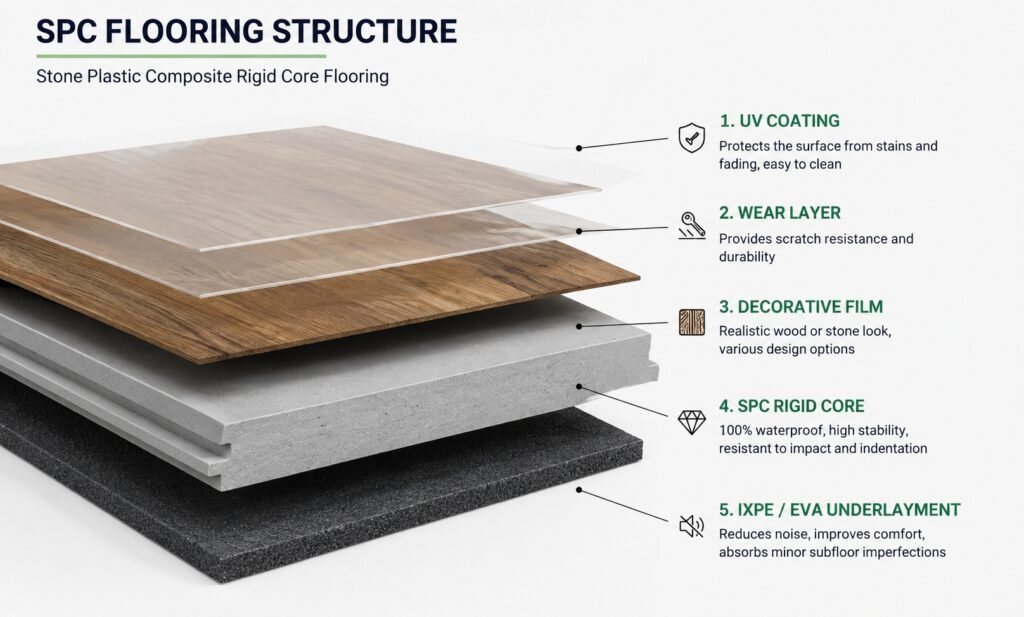
The product structure directly affects durability, comfort, and installation performance.
Total Thickness
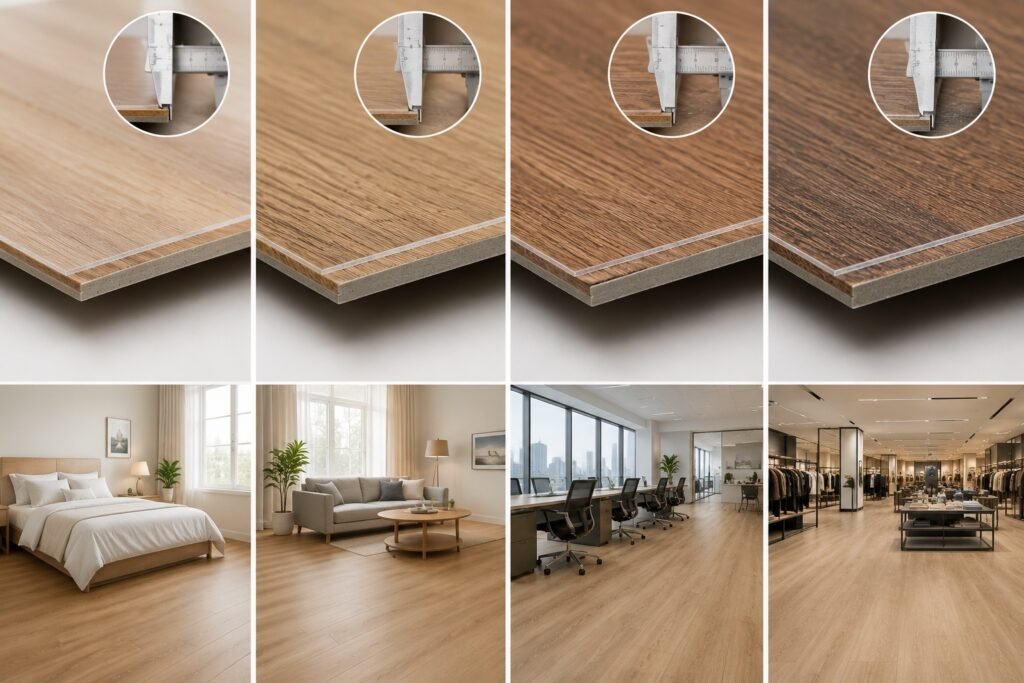
| Thickness | Recommended Application |
|---|---|
| 3.5mm–4mm | Budget residential projects |
| 5mm–5.5mm | Multifamily housing |
| 6mm–7mm | Residential developments |
| 8mm+ | Heavy traffic areas |
For multifamily and residential projects, many builders prefer at least 5mm SPC flooring with attached underlayment for better sound reduction and durability.
Wear Layer Thickness
The wear layer protects the flooring surface from scratches and abrasion.
| Wear Layer | Typical Use |
|---|---|
| 0.2mm | Light residential |
| 0.3mm | Standard residential |
| 0.5mm | Multifamily projects |
| 0.7mm | High-traffic areas |
A thicker wear layer generally provides:
- Better scratch resistance
- Longer service life
- Improved stain resistance
For rental properties and multifamily developments, 0.5mm wear layer SPC flooring is commonly recommended because of higher daily traffic.
SPC Core Density
Core density affects structural stability and long-term flooring performance.
High-density SPC cores usually provide:
- Better indentation resistance
- Improved locking stability
- Reduced expansion and contraction
Builders should request:
- Density testing reports
- Product cross-section images
- ASTM testing documentation
Attached Underlayment
Most SPC flooring products include IXPE or EVA underlayment as part of the product structure.
| Underlayment | Advantages | Disadvantages |
|---|---|---|
| IXPE | Better acoustic performance and waterproofing | Higher cost |
| EVA | Lower cost | Lower sound insulation |
For apartment and residential projects, acoustic performance has become increasingly important. Many North American developments now require:
- IIC ratings
- STC ratings
- Acoustic testing reports
Locking System
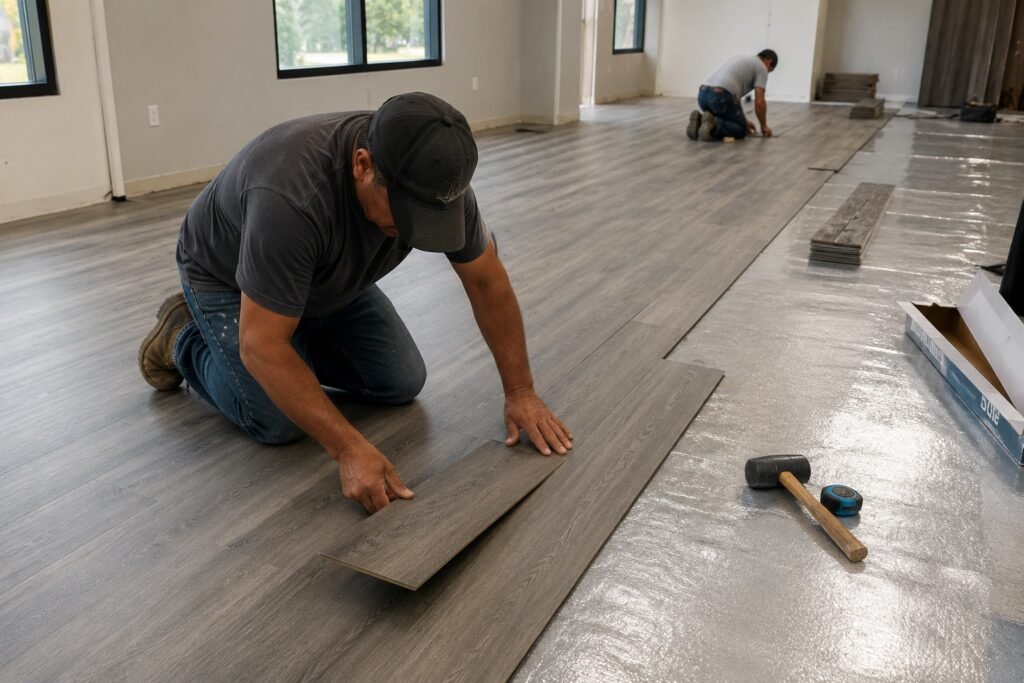
The locking system affects installation speed and flooring stability.
| System | Features |
|---|---|
| Valinge | Premium locking performance |
| Unilin | Faster installation |
| Generic Click | Lower cost |
Poor locking systems may lead to:
- Joint separation
- Edge lifting
- Installation difficulties
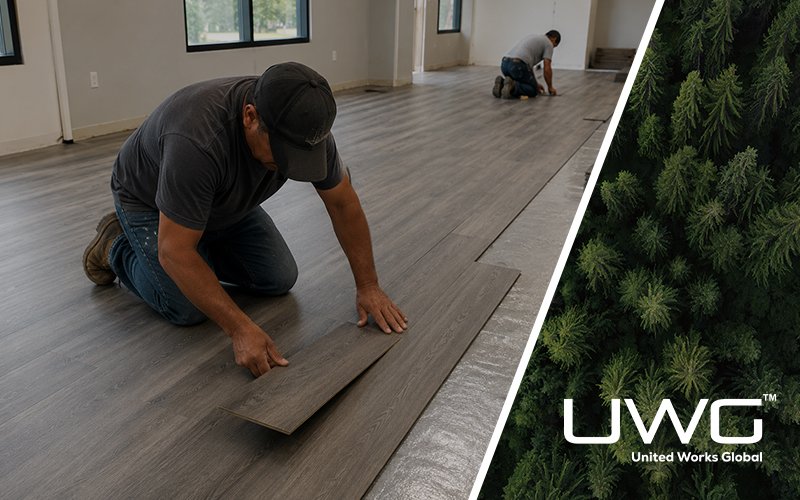
Based on our project experience, premium locking systems can significantly reduce installation labor time in large residential developments.
Surface Finish
Surface treatment affects both appearance and long-term maintenance.
Common Surface Options
- UV coating
- Ceramic bead coating
- EIR (Embossed in Register)
- Matte finish
EIR technology creates a more realistic wood texture appearance and has become increasingly popular in modern residential developments.
Certifications and Compliance
Builders should always confirm certification requirements before procurement.
| Certification | Purpose |
|---|---|
| FloorScore | Indoor air quality |
| GREENGUARD Gold | Low VOC emissions |
| ASTM Standards | Product performance testing |
| CE Certification | European compliance |
These certifications help builders:
- Meet local building codes
- Improve project compliance
- Reduce liability risks
According to EPA indoor air quality recommendations, low-VOC flooring materials are becoming increasingly important in residential construction.
Questions Builders Should Ask Suppliers Before RFQ
Before requesting quotations, builders should confirm:
- Is the flooring made from virgin or recycled material?
- What wear layer thickness is available?
- Which locking system is used?
- Are ASTM and acoustic test reports available?
- What certifications does the product have?
- What is the MOQ requirement?
- Is private labeling available?
- What warranty terms are included?
- What packaging options are offered?
- Can the supplier provide residential project references?
Common Procurement Mistakes
Focusing Only on Price
Low-cost SPC flooring may involve compromises in:
- Core density
- Wear layer quality
- Material composition
Ignoring Installation Conditions
Subfloor flatness, humidity, and temperature conditions directly affect flooring performance.
Skipping Technical Documentation Review
Failing to review testing reports and certifications may increase long-term project risks.
Recommendations for Builders
Experienced builders usually prepare a complete specification sheet before contacting suppliers.

A professional SPC flooring specification sheet should include:
- Total thickness
- Wear layer thickness
- Surface texture
- Underlayment type
- Certification requirements
- Installation environment
- Traffic level expectations
Clear specifications help suppliers provide:
- More accurate quotations
- Faster sample preparation
- Better product recommendations
Frequently Asked Questions Before Requesting an SPC Flooring Quote
Q: Why is it important to define specific SPC flooring technical requirements before requesting a quote?
A: Defining technical requirements ensures an “apples-to-apples” comparison between different suppliers. Without specifics like wear layer thickness or core density, builders often receive quotes based on lower-grade materials that may lead to premature failure and high maintenance costs. Clear specifications help M4B provide precise, transparent pricing that aligns with your project’s durability needs.
Q: What wear layer thickness should I specify for multifamily housing projects?
A: For high-traffic multifamily developments and rental properties, a 0.5mm (20 mil) wear layer is the industry standard. This thickness provides superior resistance to scratches, scuffs, and daily wear compared to the 0.2mm or 0.3mm layers found in light-duty residential products. For heavy commercial or shared corridor areas, a 0.7mm layer may be recommended for maximum longevity.
Q: How does SPC core density impact the overall project quality?
A: Core density directly affects the structural stability and indentation resistance of the floor. High-density cores ensure that the click-lock system remains stable and prevents the floor from expanding or contracting excessively with temperature changes. Specifying high-density virgin material ensures the flooring can withstand heavy furniture and foot traffic without deforming or failing at the joints.
Q: What type of underlayment should be included in an SPC flooring specification?
A: Most professional-grade SPC flooring, such as those within the M4B product line, comes with pre-attached IXPE or EVA underlayment. For residential developments, attached IXPE padding is highly recommended as it provides superior sound reduction, moisture resistance, and underfoot comfort, effectively reducing on-site installation labor costs.
Conclusion
Before requesting an SPC flooring quote, builders should carefully evaluate product structure, wear layer, core density, locking systems, underlayment, and certifications instead of comparing suppliers based only on price.
A clear specification evaluation process helps reduce project risks, improve installation efficiency, and ensure long-term flooring performance. For residential builders and multifamily developers, proper specification planning ultimately leads to more reliable procurement decisions and better project value.
Articles that you may be interested in:
What is Vinyl Flooring (LVP/LVT)? Expert Guide on Types, Installation, and Benefits
Noise-Reducing Flooring Solutions for Multifamily Projects (2026 Guide)