
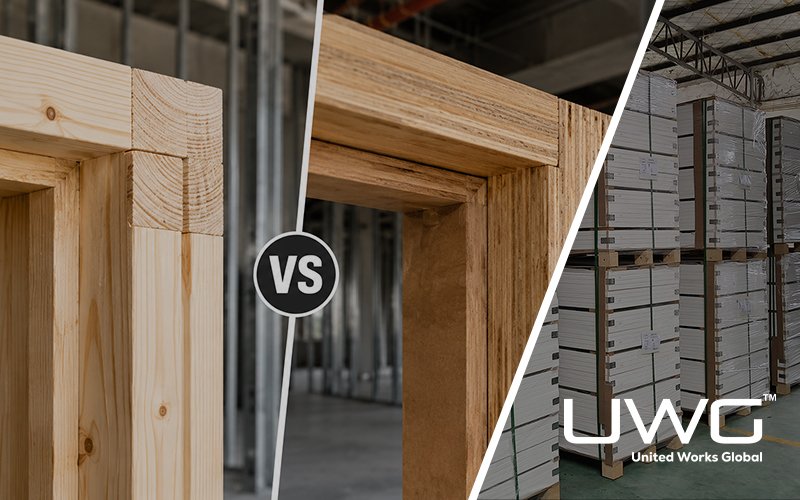
Large construction projects require door frame materials that deliver consistency, dimensional stability, and predictable installation performance. When project scale increases, small material variations can lead to significant cumulative installation issues. This is why the choice between FJP and LVL becomes a key procurement decision rather than just a material preference.
FJP vs LVL door frames differ in both structure and engineering performance. LVL (Laminated Veneer Lumber) provides higher dimensional stability, stronger consistency across production batches, and better resistance to moisture-related deformation, making it more suitable for large-scale and commercial construction projects. FJP (Finger Jointed Pine) offers a more cost-effective solution and is widely used in residential applications, but it is more influenced by natural wood variation and environmental conditions. In large engineering projects, LVL generally reduces installation adjustments and improves workflow efficiency, especially when produced under controlled manufacturing systems such as Vietnam-based engineered wood facilities.
What FJP and LVL Door Frames Mean in Engineering Applications
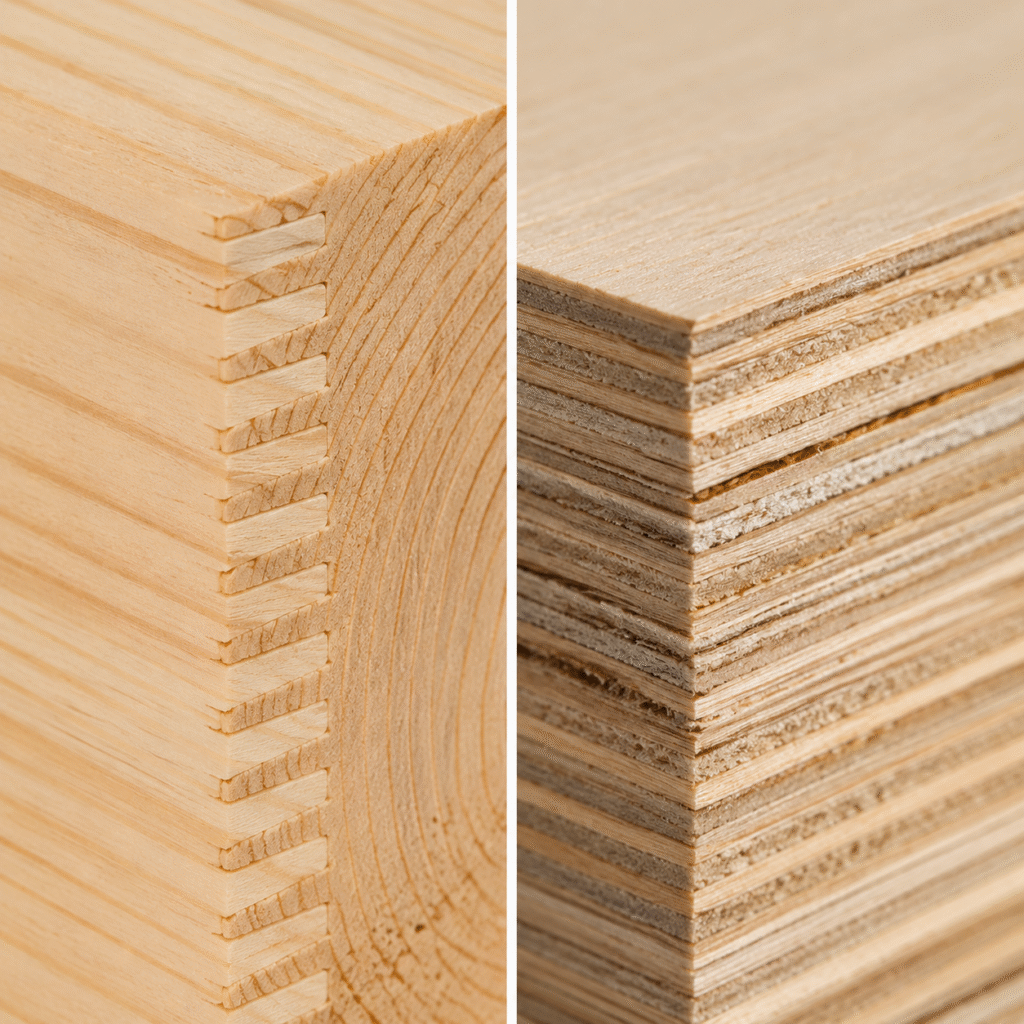
FJP (Finger Jointed Pine) is produced by joining shorter pine wood segments using finger-joint technology. This method improves material utilization and reduces waste, making it a cost-efficient solution. However, because it is still based on solid wood segments, natural grain variation remains part of its structure.
LVL (Laminated Veneer Lumber) is an engineered wood product created by bonding multiple thin veneers under heat and pressure. Each veneer layer is aligned to distribute stress more evenly, resulting in a more stable and uniform structural material.
From an engineering perspective, FJP behaves closer to natural timber, while LVL behaves as a controlled engineered material designed for consistency.
Structural Stability Differences in Large Construction Projects
In large-scale construction, dimensional accuracy becomes increasingly critical as production volume increases. Even small deviations in door frame size can multiply into installation delays across hundreds or thousands of units.
FJP is more sensitive to humidity changes due to its natural wood composition. During storage or transportation, exposure to varying environmental conditions may cause slight expansion or contraction. These variations can affect alignment during installation.
LVL, due to its cross-laminated structure, distributes internal stress more evenly and significantly reduces dimensional movement. This ensures more stable geometry across different production batches.
From project execution experience, this stability directly reduces on-site adjustment time, especially in repetitive installation environments such as apartment buildings and commercial developments.
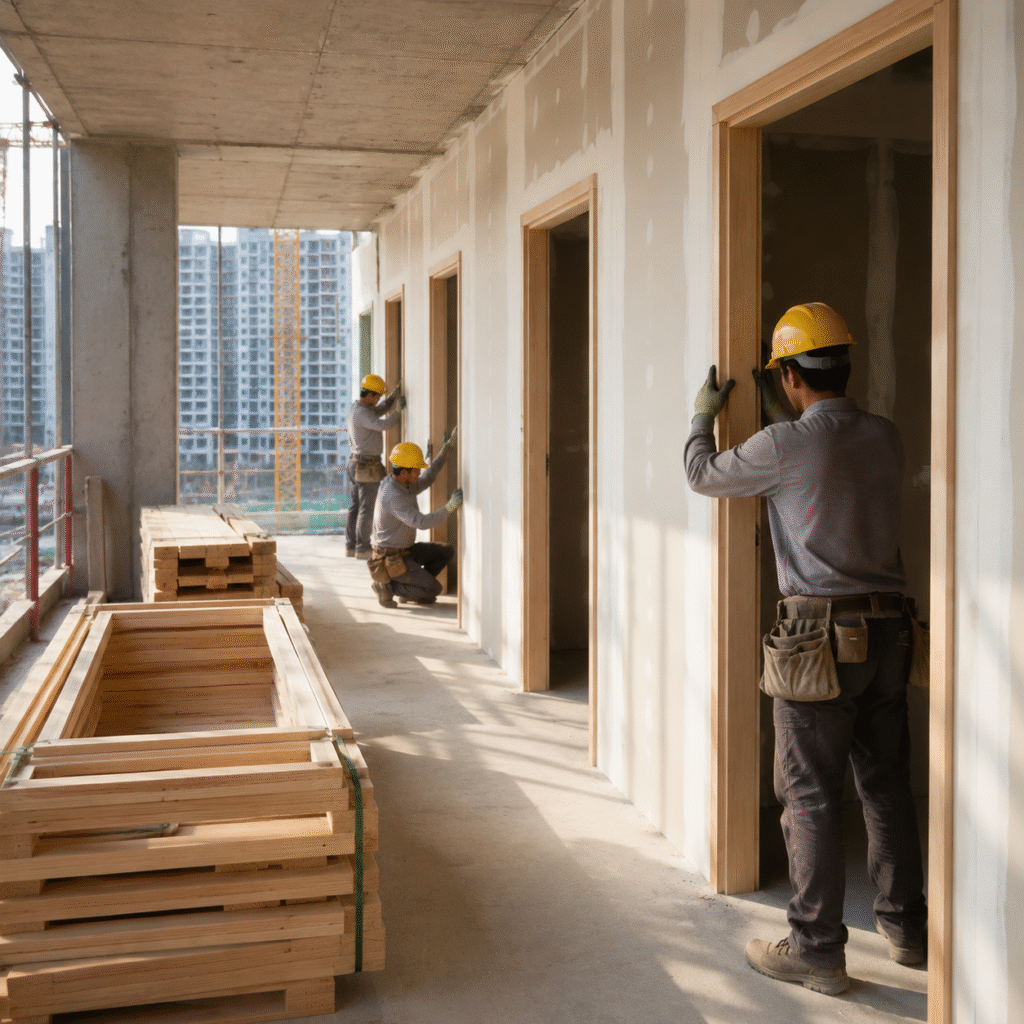
Behavior During Transportation and On-Site Installation
Construction materials often pass through complex logistics chains before installation, including stacking, shipping vibration, and uncontrolled storage conditions.
FJP is more likely to react to these external factors. Slight moisture absorption during transport or storage can result in minor dimensional changes, which may require correction during installation.
LVL maintains more stable performance throughout the supply chain. Its engineered structure helps minimize environmental impact, allowing installation teams to work with more predictable material behavior.
This consistency is particularly important in high-volume projects where installation speed and uniformity are critical.
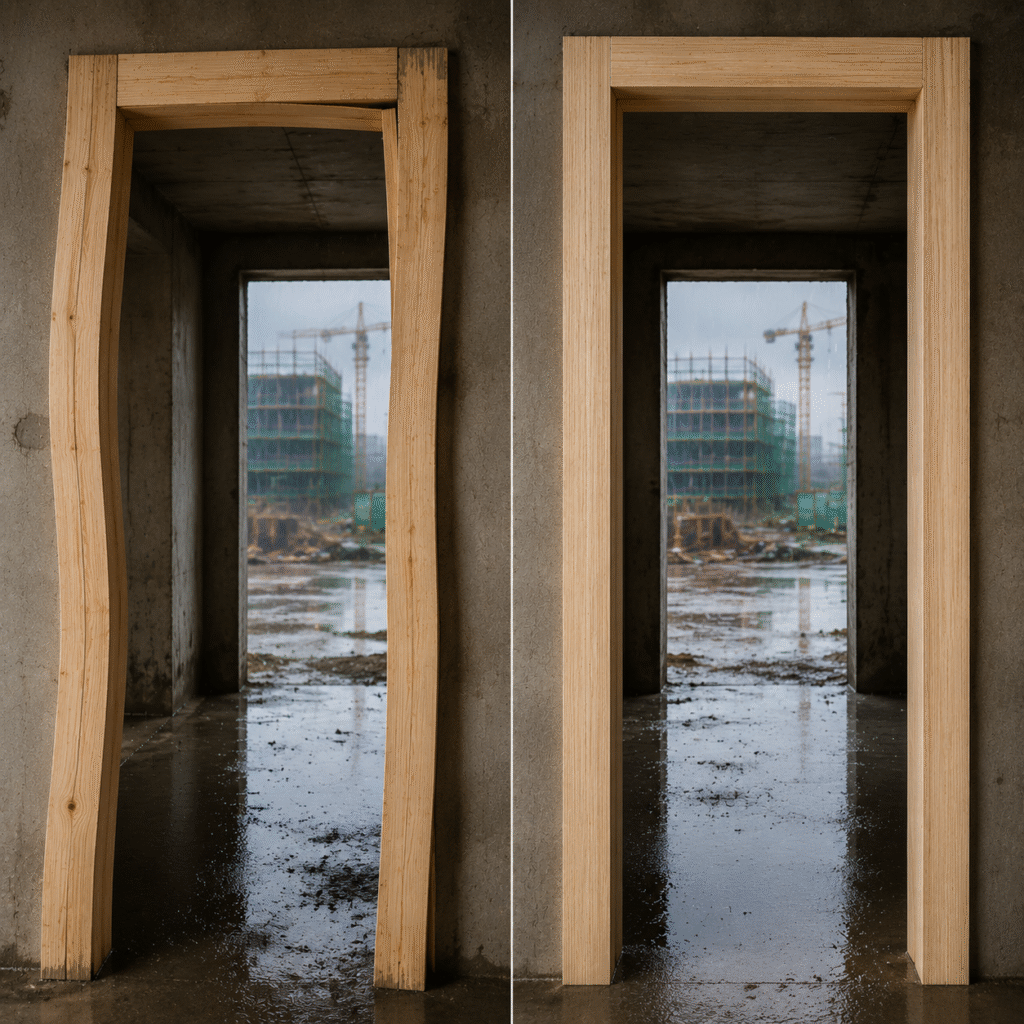
FJP vs LVL Door Frames: Material Comparison
| Feature | FJP (Finger Jointed Pine) | LVL (Laminated Veneer Lumber) |
|---|---|---|
| Dimensional Stability | Medium | High |
| Strength Consistency | Medium | High |
| Moisture Resistance | Lower | Higher |
| Manufacturing Control | Moderate | High |
| Installation Tolerance | Variable | Tight |
| Large Project Suitability | Medium | Excellent |
| Cost Level | Lower | Higher |
The importance of these differences increases as project scale grows. Small residential builds may tolerate minor variability, while large developments require strict consistency to maintain installation efficiency.
Why LVL Is Increasingly Used in Large-Scale Projects
In modern construction, LVL is selected not only for its material strength but also for its contribution to project control and efficiency.
At the engineering level, LVL minimizes dimensional variation between production batches, which is essential when multiple contractors are working across the same project. This reduces installation errors and improves workflow coordination.
At the procurement level, LVL allows wholesalers and builders to standardize inventory more effectively. This simplifies logistics, reduces sorting issues, and improves supply chain reliability.
From our experience in engineered wood manufacturing in Vietnam, maintaining strict control over veneer selection, moisture content, and pressing conditions ensures consistent LVL performance across full container shipments. This level of control is particularly important for export-oriented construction supply chains.
Cost vs Lifecycle Value in Real Construction Projects
Material selection is often influenced by initial cost, but in large-scale construction, total project cost is determined by installation efficiency and long-term performance.
FJP provides a lower upfront cost advantage, making it suitable for budget-sensitive projects. However, its variability may lead to increased installation adjustments and potential rework, which adds indirect costs over time.
LVL requires a higher initial investment, but its consistent performance reduces installation time and minimizes correction work. Over the full project lifecycle, these efficiency gains often offset the material price difference.
In engineering procurement, lifecycle value is generally a more accurate decision metric than unit price alone.

How FJP and LVL Perform in Real Construction Conditions
In real jobsite environments, materials are exposed to humidity changes, stacking pressure, and transport vibration before installation.
FJP, being closer to natural wood, is more affected by these conditions. Slight environmental changes can lead to minor dimensional shifts that impact installation alignment.
LVL maintains more stable behavior due to its engineered layered structure. The cross-oriented veneers reduce internal movement and provide more predictable installation performance.
This stability improves installation speed and reduces correction work, especially in repetitive large-scale applications.
Practical Selection Logic for Builders and Wholesalers
For small residential projects where budget is the primary constraint and installation tolerances are flexible, FJP remains a practical option.
For medium to large-scale developments, LVL becomes the more reliable choice due to its consistency and reduced installation risk.
In real procurement decisions, the key factor is not only material price but also how the material behaves across the entire project lifecycle, including logistics, installation, and long-term performance.
In many cases, the decision comes down to whether the project prioritizes upfront budget control or long-term installation efficiency and dimensional reliability.
Frequently Asked Questions About FJP and LVL Door Frames
Q: What is the primary manufacturing and structural difference between FJP and LVL door frames?
A: FJP (Finger Jointed Pine) is produced by interlocking shorter, solid pine wood segments using finger-joint technology, meaning it retains natural grain variations and behaves similarly to natural timber. LVL (Laminated Veneer Lumber) is an engineered wood product built by bonding multiple thin wood veneers together under intense heat and pressure, resulting in a cross-laminated, highly uniform structure that distributes internal stress evenly.
Q: Why is LVL considered superior to FJP for large-scale or commercial construction projects?
A: Large-scale projects require strict consistency to prevent minor dimensional deviations from multiplying into massive installation delays across hundreds of units. LVL minimizes dimensional variations between production batches, providing much tighter installation tolerances and significantly reducing the on-site adjustment time required by carpentry trades in repetitive installation environments like apartment buildings.
Q: How do FJP and LVL door frames react to moisture and environmental changes during transport?
A: FJP is closer to natural wood and is highly sensitive to humidity changes, which can cause slight expansion, contraction, or warping during complex logistics chains and uncontrolled jobsite storage. LVL possesses much higher moisture resistance and structural stability; its engineered layered layout minimizes environmental impacts, ensuring predictable material behavior from the factory line to final installation.
Q: Does LVL offer a better cost-performance ratio than FJP over a project’s full lifecycle?
A: Yes, particularly for large projects. While FJP delivers a lower upfront material cost suitable for budget-flexible small residential builds, its structural variability can increase indirect costs via installation reworks and adjustments. LVL requires a higher initial investment, but its rapid installation speed and minimal correction requirements yield substantial labor savings that offset the material price difference over the full project lifecycle.
Conclusion
FJP and LVL door frames play different roles in construction supply chains. FJP is suitable for cost-sensitive applications where installation conditions are relatively flexible. LVL, however, is better suited for large-scale projects that require consistent performance, tighter dimensional control, and higher installation efficiency.
From repeated project supply experience in engineered wood manufacturing, LVL becomes increasingly advantageous as project scale grows, particularly when consistency and installation efficiency outweigh initial material cost.
In modern construction practice, material selection is no longer driven purely by unit price. Instead, builders and wholesalers increasingly evaluate lifecycle performance, installation efficiency, and supply chain stability when choosing between FJP and LVL.
Articles that you may be interested in:
What Is a Typical Interior Door Package for a 3-Bedroom House?
Expert Guide to Door Frames: Materials, Types, and How to Install Them Right