
When managing a multi-unit residential, hospitality, office, or commercial project, selecting door hardware is about more than appearance. Inconsistent handles, hinges, and locks can create procurement challenges, installation delays, and maintenance issues. Establishing a clear hardware strategy from the beginning helps ensure consistency, functionality, and cost control throughout the project.
The most effective way to match door handles, hinges, and locks across an entire project is to establish a standardized hardware specification early, align hardware styles with door designs, select appropriate lock functions for each space, simplify procurement through standardized SKUs, and coordinate doors and hardware before installation begins. Proper planning creates a cohesive appearance while reducing procurement complexity, installation errors, and long-term maintenance costs.
With a well-defined hardware schedule, builders and contractors can streamline project execution and deliver a more professional result.
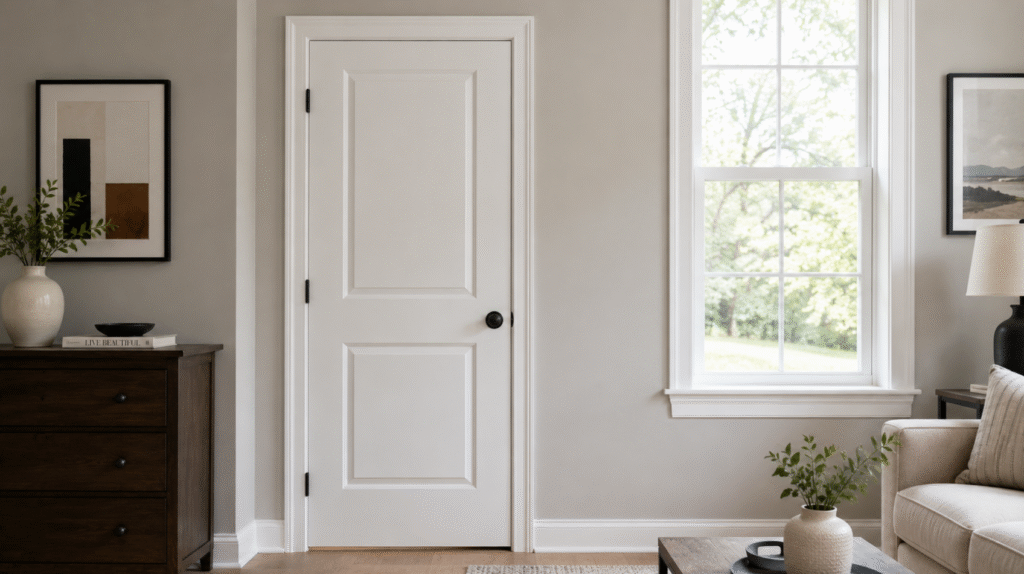
Establish a Project-Wide Hardware Standard
The first step in coordinating door hardware across a project is establishing a consistent standard. Rather than selecting handles, hinges, and locks individually for each room, it is often more efficient to define a unified hardware specification that can be applied throughout the project.
This typically begins with selecting a primary finish, such as Matte Black, Satin Nickel, Brushed Nickel, or Oil-Rubbed Bronze, and then ensuring that all visible hardware components follow the same design language. A consistent finish helps create a cohesive appearance while simplifying procurement and inventory management.
Standardization also reduces the risk of ordering errors and installation inconsistencies. When multiple hardware finishes, styles, or brands are used without a clear plan, projects can become more difficult to manage and maintain.
For larger residential and multifamily projects, establishing hardware standards early in the design phase can streamline decision-making, improve visual consistency, and make future replacements or maintenance much easier.
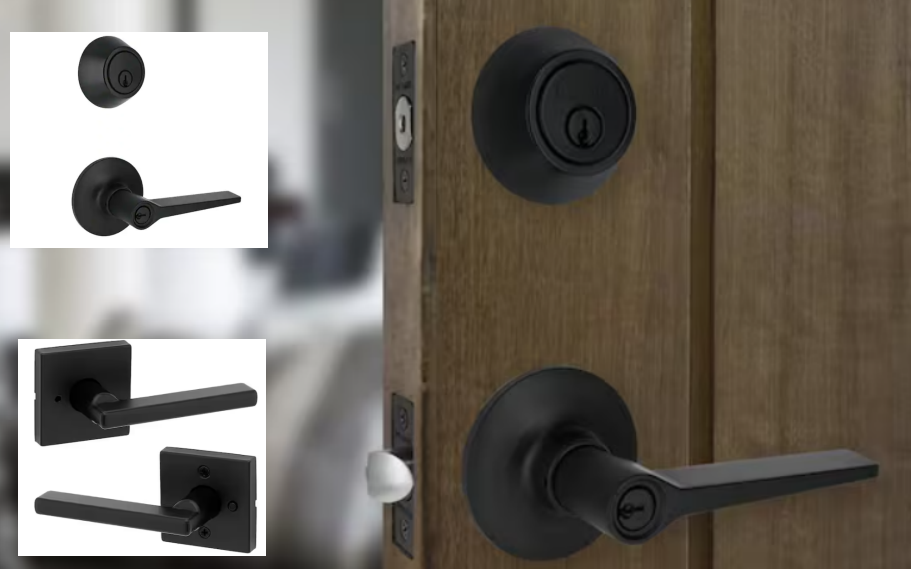
Match Hardware to Door Design and Style
While consistency is important, hardware should also complement the overall door design. The right combination of door handles, hinges, and locks can enhance the visual appeal of a space, while mismatched hardware can make even high-quality doors look out of place.
For example, Shaker doors are often paired with clean, modern lever handles and simple hinge designs that reflect their minimalist aesthetic. Traditional panel doors may work better with more decorative hardware styles, while contemporary flush doors are typically matched with sleek, understated hardware.
When selecting hardware, consider factors such as:
- The architectural style of the project
- Door design and profile details
- Interior design themes and finishes
- Desired balance between appearance and functionality
The goal is not necessarily to use identical hardware everywhere, but to create a coordinated look throughout the project. Choosing hardware that aligns with the door style helps achieve a more professional and cohesive result while maintaining consistency across different spaces.
Select the Right Lock Function for Each Space
While hardware appearance should remain consistent, lock functions should be selected based on the specific requirements of each room or area.
| Space Type | Recommended Lock Function | Description |
|---|---|---|
| Main Entrance | Entry Lock | Controlled access using key, credential, or access control system |
| Office Door | Office/Entrance Lock | Secure access for employees while allowing convenient operation |
| Meeting Room | Privacy Lock | Provides privacy without requiring high-security access |
| Restroom | Privacy Lock | Lockable from inside with emergency release capability |
| Storage Room | Storeroom Lock | Remains locked externally while allowing free exit |
| Mechanical Room | High-Security Lock | Restricted access for authorized personnel |
| Guest Room | Entry Lock or Electronic Lock | Secure access using keycard, PIN, or key |
| Fire Door | Fire-Rated Lockset | Complies with fire and life-safety regulations |
Selecting the correct lock function early helps prevent costly specification changes later and ensures compliance with building codes and operational requirements.
Standardize Specifications to Simplify Procurement
One of the most effective ways to simplify hardware purchasing is to standardize specifications across the project whenever possible. Using too many handle styles, hinge sizes, finishes, or lock models can increase purchasing complexity, create inventory challenges, and raise the likelihood of installation errors.
For larger residential and multifamily projects, it is common practice to limit the number of hardware variations while still meeting the functional needs of different spaces. For example, a project may use the same handle design, hinge finish, and hardware brand throughout the building, while only varying the lock function between bedrooms, bathrooms, and entry doors.
Standardization offers several benefits:
- Simplifies quoting and procurement
- Reduces ordering errors
- Improves consistency during installation
- Makes future maintenance and replacements easier
- Helps control project costs through larger-volume purchases
By establishing clear hardware specifications early in the project, builders can streamline coordination between suppliers, installers, and project teams while maintaining a consistent appearance throughout the development.
Coordinate Doors, Hardware, and Installation Early
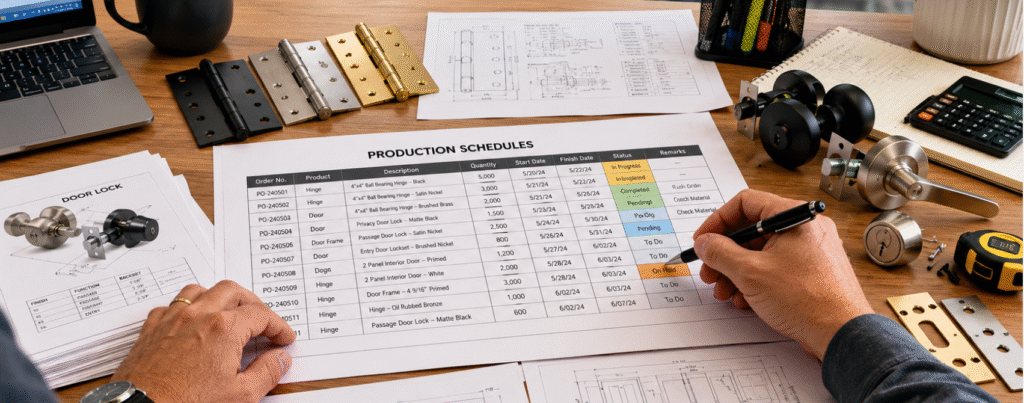
Successful projects often treat doors and hardware as a complete system rather than separate purchases. When doors, handles, hinges, locks, and installation requirements are planned independently, compatibility issues can arise that lead to delays, additional costs, or field modifications.
For example, hardware specifications may affect door preparation requirements such as hinge mortises, lock bores, strike locations, or handing. If these details are not coordinated before production, adjustments may be required during installation, increasing labor time and the risk of errors.
Early coordination also helps align production schedules and delivery timelines. Ordering doors and hardware together can reduce the chance of mismatched finishes, missing components, or products arriving at different times.
Before placing an order, it is helpful to confirm key details such as door types, hardware specifications, handing, installation methods, and project schedules. Taking a coordinated approach from the beginning can help ensure that materials arrive ready for installation and reduce disruptions during later stages of the project.
Summary
Matching door handles, hinges, and locks across an entire project involves more than selecting attractive hardware. A successful hardware plan should balance design consistency, functionality, procurement efficiency, and installation requirements while ensuring that each space receives the appropriate level of security and usability.
We regularly support builders and distributors with door packages that include doors, frames, mouldings, and hardware, helping coordinate specifications across multiple product categories. When door and hardware selections are planned together from the start, projects tend to run more smoothly and achieve a more consistent finished result.
Articles that you may be interested in:
Molded vs Shaker vs Shaker-Style Molded Doors: How Builders Choose in 2026