
Which kitchen flooring trends will have the biggest impact on residential and multi-family projects in 2026?
Kitchen flooring has become one of the most influential finish selections in modern construction projects. As homeowner expectations evolve, builders and wholesalers must balance design preferences with durability, maintenance requirements, and budget considerations when selecting flooring materials.
In 2026, kitchen flooring trends are moving toward natural-looking surfaces, larger-format designs, and low-maintenance materials that combine style with practicality. However, the most successful flooring selections are not determined by trends alone. Builders and wholesalers must evaluate how each flooring solution supports project goals, target markets, procurement strategies, and long-term value.
Why Kitchen Flooring Trends Matter for Builders and Wholesalers
Kitchen flooring trends reflect more than changing design preferences. They often signal shifts in what homeowners, developers, and property managers expect from residential spaces, particularly in areas such as durability, water resistance, maintenance, and overall value.
These evolving expectations influence both specification and purchasing decisions. Builders must balance market demand with project requirements, while wholesalers need to anticipate which products will deliver sustained demand without creating unnecessary inventory risk.
As a result, flooring trends have become an important part of project planning and procurement. However, the most successful flooring selections are not driven by trends alone—they balance market preferences with performance requirements, budget considerations, and long-term value.
The Top Kitchen Flooring Trends for 2026
The kitchen flooring market is evolving in response to changing homeowner expectations and project requirements. While aesthetics remain important, many of the strongest flooring trends in 2026 are being driven by practical considerations such as durability, maintenance, moisture resistance, and long-term value.
Rather than focusing on a single material or style, the market is moving toward flooring solutions that combine visual appeal with everyday performance. Several key trends illustrate this shift.
Natural Looks Continue to Influence Material Selection
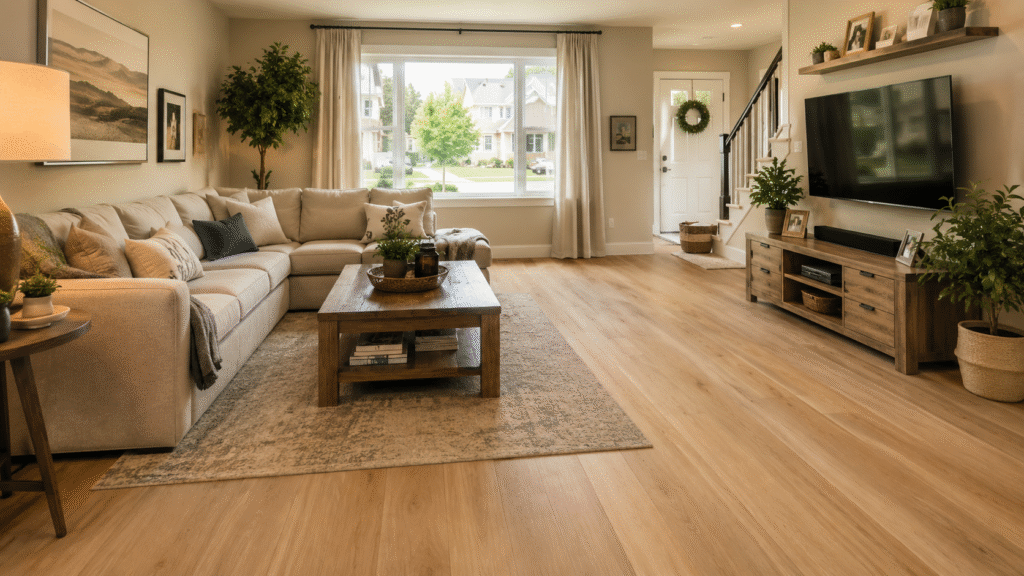
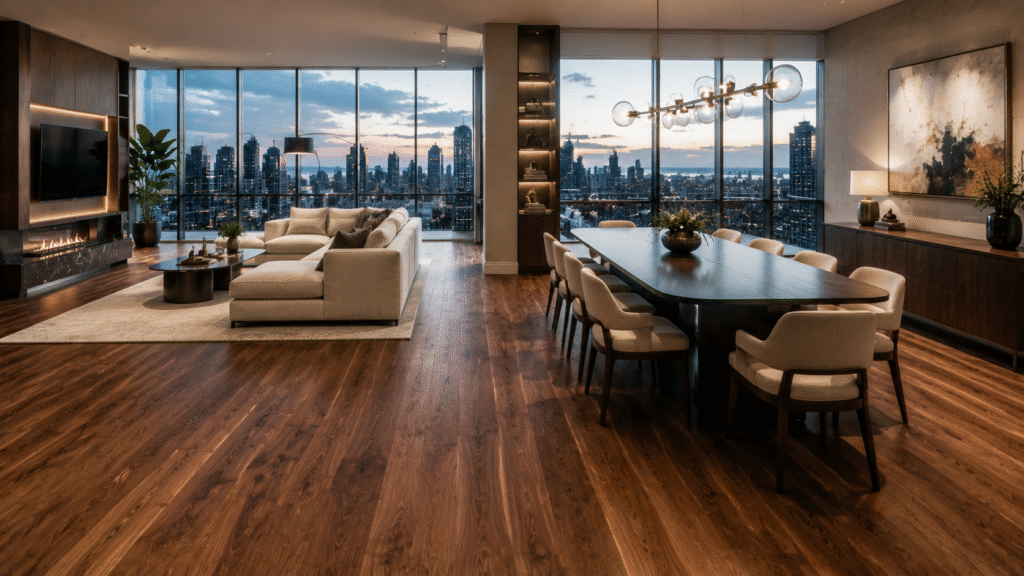
One of the strongest themes in 2026 is the continued demand for natural-looking surfaces. Wood-inspired flooring remains highly popular, particularly in products such as LVP, SPC, and engineered wood, which offer the appearance of natural materials while improving durability and moisture resistance.
Stone-inspired finishes are also gaining attention as builders and homeowners seek materials that provide a premium appearance without the maintenance requirements associated with natural stone. At the same time, warm oak tones, soft browns, and earthy neutrals are replacing the cool gray palettes that dominated many residential projects in previous years.
Together, these trends reflect a broader preference for materials that create a warm, authentic look while remaining practical for everyday use.
Larger Formats Support Modern Design Preferences
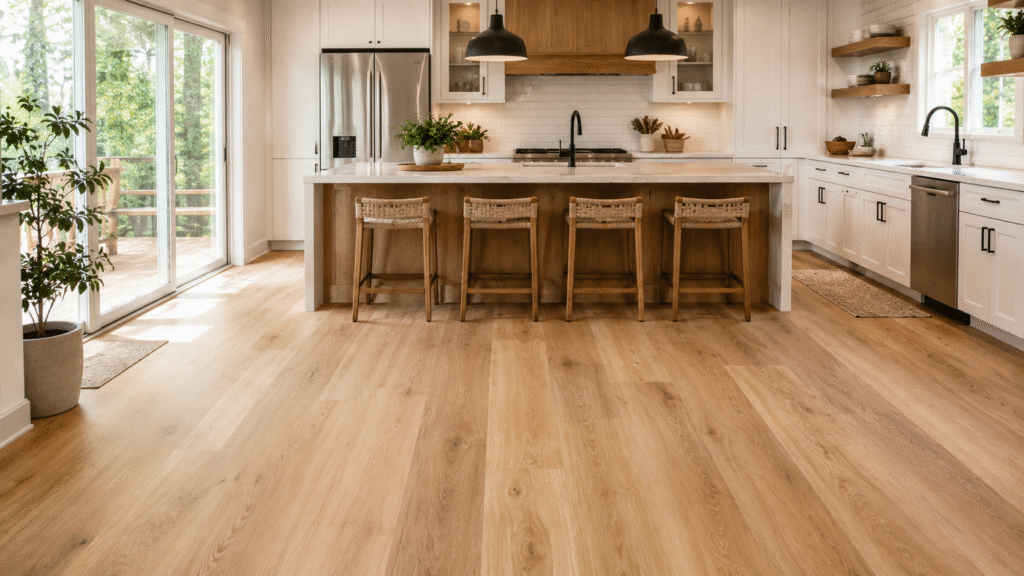
Large-format tiles and wider plank flooring continue to gain popularity across both residential and multi-family projects. Fewer grout lines create a cleaner visual appearance and help spaces feel larger and more connected, particularly in open-concept layouts.
For builders, larger formats can also support a more consistent design language throughout a project by reducing visual interruptions between kitchens, dining areas, and living spaces.
Performance Is Becoming as Important as Appearance
Perhaps the most significant shift in 2026 is the growing emphasis on long-term performance. Homeowners are paying closer attention to maintenance requirements, moisture resistance, scratch resistance, and overall durability when evaluating flooring options.
As a result, products such as SPC, LVP, and porcelain tile continue to gain market share because they address practical concerns without sacrificing design appeal. For builders and wholesalers, this trend highlights an important reality: flooring specifications are increasingly being driven by performance expectations as much as visual preferences.
Beyond Trends: What Should Builders Consider When Choosing Kitchen Flooring?
While flooring trends can highlight what is popular in the market, they do not determine which product is right for every project. Successful flooring selection requires balancing design preferences with practical considerations such as durability, moisture resistance, installation requirements, maintenance expectations, and budget.
Kitchens place unique demands on flooring materials due to frequent foot traffic, cleaning, spills, and moisture exposure. As a result, builders must evaluate not only how a flooring product looks, but also how it performs under everyday conditions.
Project execution is another important consideration. Installation requirements, labor demands, and construction schedules can all influence the suitability of a flooring material, particularly in large residential or multi-family developments. Long-term factors such as maintenance costs, replacement frequency, and lifecycle performance should also be considered when comparing options.
Finally, flooring selections should align with the goals of the project. A luxury development may prioritize premium finishes and visual appeal, while a multi-family project may focus more on durability, standardization, and cost efficiency.
Rather than following trends alone, builders should focus on selecting flooring solutions that balance market demand with project-specific requirements and long-term value.
Matching Flooring Types to Project Needs
Once performance requirements have been defined, the next step is selecting a flooring solution that aligns with the project’s priorities. While design trends may influence preferences, the most effective flooring specifications are usually driven by factors such as durability, maintenance expectations, installation efficiency, budget, and target market.
Different project types often place different demands on flooring materials. Understanding these priorities can help builders and wholesalers identify solutions that support both design goals and long-term project performance.
| Project Priority | Flooring Solution Often Considered | Why It Fits |
|---|---|---|
| Cost Efficiency and Durability | SPC Flooring | Combines water resistance, durability, and competitive pricing |
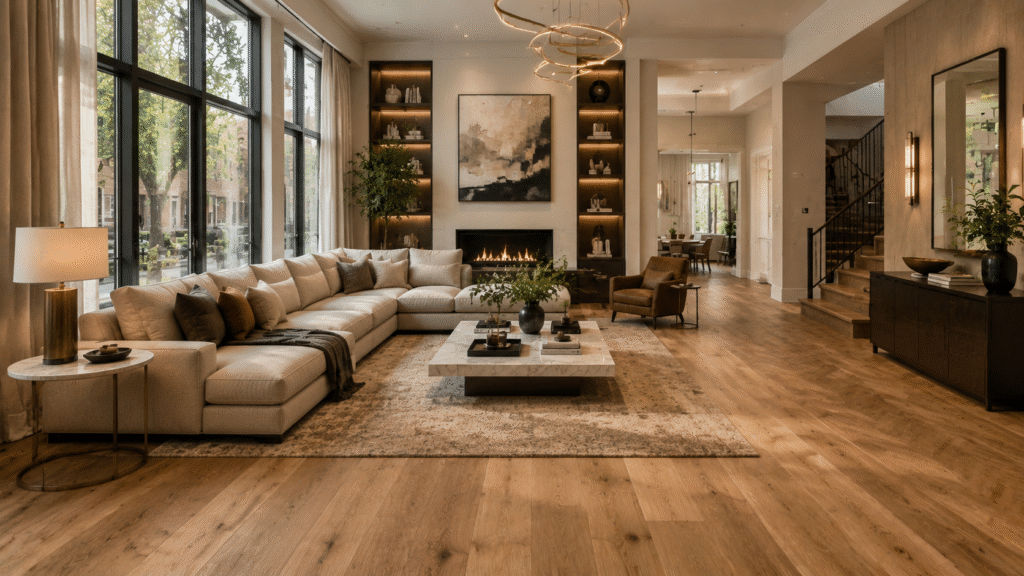
| Premium Market Appeal | Engineered Wood Flooring | Delivers a high-end appearance and strong perceived value |
| Easy Maintenance | SPC or LVP Flooring | Simplifies cleaning and reduces long-term upkeep |
| Fast Project Turnaround | Click-Lock LVP Flooring | Supports faster installation and reduced labor requirements |
| Design Flexibility | Large-Format Porcelain Tile | Offers a wide range of colors, textures, and patterns |
| Long-Term Lifecycle Performance | Wood-Look SPC Flooring | Balances aesthetics with durability and moisture resistance |
The key takeaway is that flooring selection is rarely based on a single requirement. A product that performs exceptionally well in one project may not be the most suitable choice in another. For example, a luxury residential development may place greater emphasis on visual impact and market differentiation, while a large multi-family project may prioritize standardization, maintenance efficiency, and lifecycle costs.
Rather than asking which flooring material is universally “best,” builders should focus on which option best supports the objectives of the project. The most successful flooring specifications are those that balance design expectations, operational performance, budget requirements, and long-term value.
How Flooring Trends Influence Procurement and Inventory Planning
For builders, wholesalers, and distributors, flooring trends influence more than product selection. They also affect purchasing decisions, inventory planning, supplier relationships, and long-term business strategies. As market preferences evolve, project teams must determine which products are likely to generate sustained demand rather than short-term popularity.
One of the biggest challenges is distinguishing between temporary design trends and long-term market shifts. While some products experience brief spikes in demand, others—such as wood-look flooring, resilient flooring products, and neutral color palettes—continue to perform well across multiple project types and market segments.
For wholesalers, carrying too many trend-driven products can increase inventory complexity and create slow-moving stock. For builders, flooring selections can affect lead times, supplier availability, installation schedules, and budget control. As a result, many companies are focusing less on short-term trends and more on flooring categories that offer stable demand, reliable supply, and long-term value.
Common Mistakes When Following Flooring Trends
One of the most common mistakes is treating flooring trends as the primary decision-making factor. While popular styles can provide valuable market insight, they do not guarantee the right fit for every project. Flooring selections should be evaluated based on performance, maintenance requirements, budget, and long-term project goals.
Another challenge is assuming that a successful flooring solution in one project will work equally well in another. Different project types often have different priorities, making it important to balance design preferences with practical requirements rather than relying on trend popularity alone.
Conclusion
Kitchen flooring trends in 2026 reflect a growing demand for materials that combine style, durability, and long-term value. While design trends can help identify changing market preferences, successful flooring decisions require a broader evaluation of performance, maintenance, installation, and project goals.
For builders and wholesalers, the best flooring choice is not necessarily the most popular one—it is the solution that aligns with market demand while delivering reliable performance and long-term value for the project.
Articles that you may be interested in:
SPC vs Laminate Flooring: Which Option Makes More Sense for Builders?
Best Flooring for Multi-Family Projects: Is SPC a Good Choice?