
The distinction matters when a project orders door slabs, jamb components, knock-down frames, or complete prehung units. A quotation may use familiar terminology while including a different component package, so the bill of materials and section drawing are more reliable than the product name alone.
This guide explains how jambs relate to the complete frame, which surrounding components are separate, and what buyers should verify before approving an interior door order.
Door Jamb: The Individual Frame Members
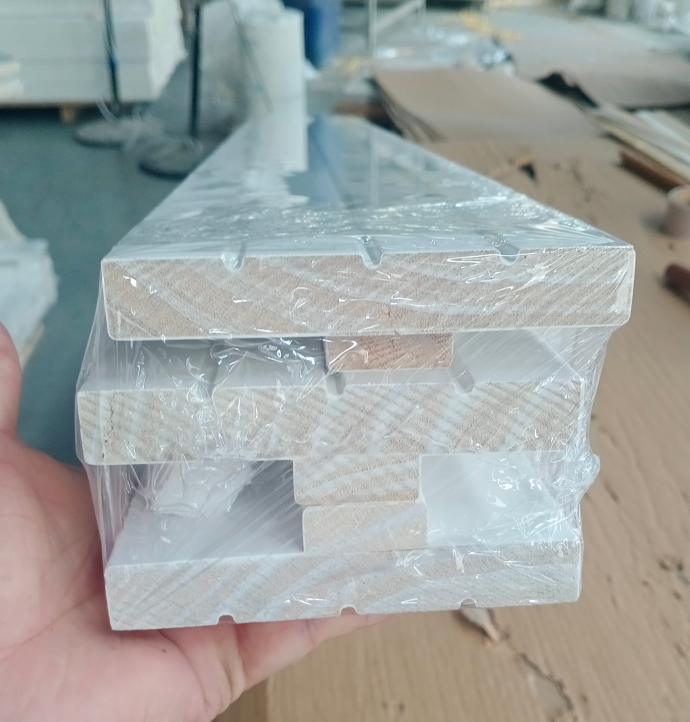
A door jamb is an individual member of the frame immediately surrounding the door slab. In a typical swing-door assembly, the term may refer to the hinge jamb, strike jamb, or head jamb.
The jambs provide the surfaces used to mount hinges, receive latch hardware, and establish the operating opening. When a supplier uses the term “jamb set,” however, buyers should confirm whether it means the three main frame members only or a larger package that also includes stops, casing, machining, or hardware.
For a detailed explanation of jamb components, profiles, widths, thicknesses, and ordering specifications, see our Interior Door Jamb Guide.
Door Frame: The Complete Assembly
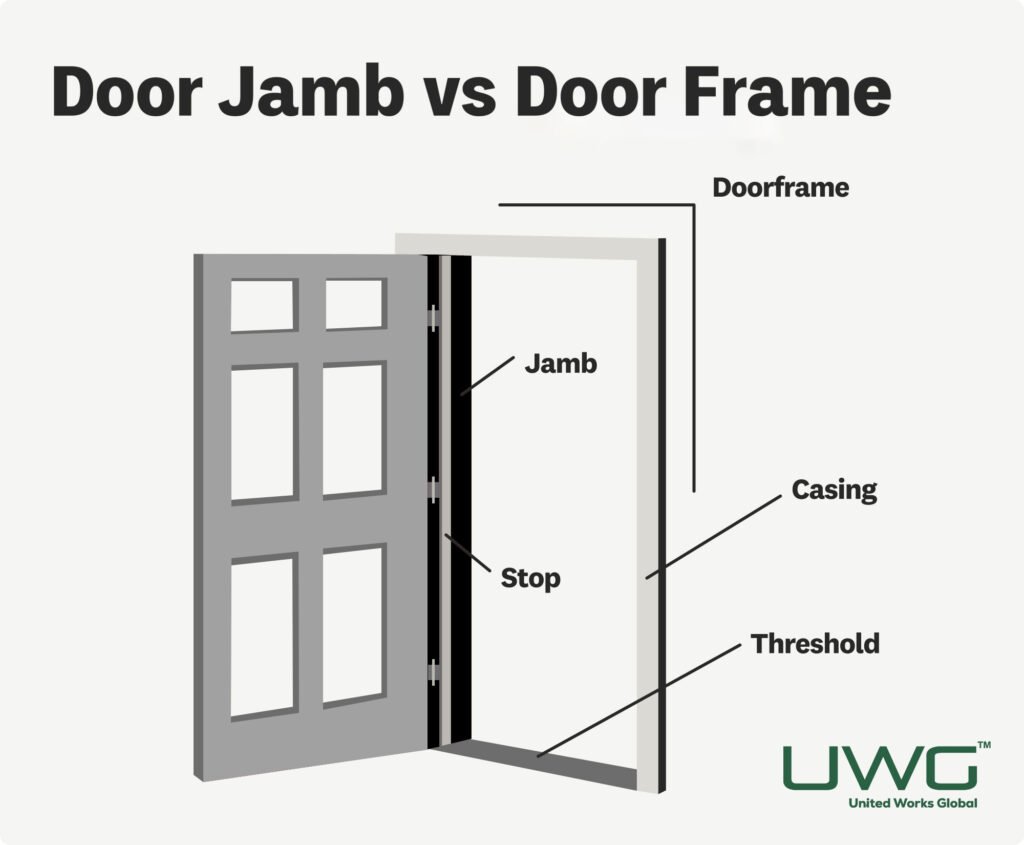
A door frame is the complete assembly fitted inside the wall’s rough opening to surround and position the door slab. For a typical interior swing door, it normally consists of two side jambs and one head jamb, together with an applied or integral stop depending on the frame profile.
The frame is different from the structural wall framing that creates the rough opening. Casing may be supplied with the same package, but it is finish trim rather than a frame member. Hinges and lock hardware may also be included without technically forming part of the frame itself.
For a detailed explanation of frame components, profiles, sizes, wall-thickness coordination, and ordering specifications, see our Interior Door Frame Guide.
Door Jamb vs Door Frame: What Are the Key Differences?
The simplest distinction is that a jamb is a component, while the frame is the complete assembly around the door slab.
| Point | Door Jamb | Door Frame |
|---|---|---|
| Meaning | An individual member of the frame | The complete assembly surrounding the door slab |
| Typical components | Hinge jamb, strike jamb or head jamb | Side jambs, head jamb and door stop, depending on the profile |
| Main function | Provides mounting or closing surfaces for the slab and hardware | Positions and aligns the door slab within the rough opening |
| Hardware relationship | Hinges and strike plates are prepared on specific jambs | The complete frame coordinates the slab, hardware locations and opening |
| Supply format | Individual replacement component or jamb set | Knock-down, assembled or included in a prehung unit |
| Main ordering risk | Dimensions, machining or material may not match the other components | The package may not include casing, hardware or every expected component |
This distinction becomes particularly important when door slabs and frames are supplied separately or when a project uses a knock-down door system.
To compare different supply formats, see Slab vs. Knock-Down vs. Prehung Doors.
How Jambs, Frames, Stops, Casing, and Rough Openings Relate
These terms describe different parts of the opening:
- A door jamb is an individual frame member, such as the hinge jamb, strike jamb, or head jamb.
- A door frame is the complete assembly surrounding and supporting the door slab.
- A door stop is the raised or applied section that limits the door’s closed position.
- Door casing is the finish trim that covers the joint between the frame and the wall.
- The rough opening is the unfinished wall opening into which the frame is installed.
Casing may be included in a door package, but it should not be confused with the structural frame members that position and support the slab. For a more detailed comparison, see our guide to door frames vs. door casing.
For a closer comparison, see Door Frame vs. Door Casing. For casing profiles and trim dimensions, see the Interior Door Trim and Casing Guide.
What Materials Are Used for Door Jambs and Door Frames?
Door jambs and frames can be made from several materials. The right option depends on the project, budget, finish, and installation environment.
Solid wood and finger-jointed wood are commonly used where strength, machining, and a painted or stained finish are required.
MDF provides a smooth and consistent surface for painted interior applications. However, standard MDF products generally need more consideration around moisture exposure.
Composite materials may be useful where improved moisture resistance is needed, while metal frames are common in many commercial and other specialized applications.
For builders, the question isn’t simply “Which material is best?” It’s “Which material makes sense for this application?”
How Do Door Jambs and Frames Affect Door Installation?
Even a good door slab can perform poorly if the frame isn’t installed correctly.
The frame needs to sit properly within the rough opening, and the jambs need to be plumb, level, and correctly spaced.
If the jambs are out of alignment, you may end up with uneven gaps, a door that rubs against the frame, a latch that doesn’t line up, or a door that won’t stay in the desired position.
Clearance matters too. There needs to be enough space between the slab and jamb for smooth operation, but the exact dimensions depend on the door system and application.
For large projects, following the approved shop drawings and manufacturer specifications is much safer than assuming one clearance works for every door.
When Do Builders Need Jamb Components or a Complete Frame Assembly?
This really comes down to how the project is being supplied and installed.
When Are Individual Jamb Components Enough?
Individual jamb components can make sense when the project already has other compatible door components, when replacement pieces are needed, or when doors and frames are being assembled according to project-specific requirements.
This approach gives builders more flexibility, but it also means dimensions and compatibility need to be checked carefully.
When Is a Complete Frame Assembly a Better Choice?
For new construction, multifamily developments, and larger residential projects, complete frame assemblies can simplify coordination.
Instead of matching individual components on site, builders can order frames according to the required door sizes, wall conditions, handing, and hardware preparation.
Standardizing frame specifications across repeated openings can also help reduce confusion during installation.
What Should Builders Confirm Before Ordering?
Before placing an order, it’s worth confirming the basics: door slab size, wall thickness, jamb width, handing and swing, interior or exterior use, material, finish, and hardware preparation.
For bulk projects, a little extra checking at the specification stage can prevent a lot of adjustment on site.
Frequently Asked Questions
Is a Door Jamb the Same as a Door Frame?
No. A jamb is an individual member of the frame, while the door frame is the complete assembly surrounding the door slab.
However, suppliers sometimes use “jamb set” and “frame” loosely. Buyers should verify the bill of materials instead of relying only on the product name.
Does a Prehung Door Include the Frame?
Yes. A prehung door normally includes a door slab already mounted to a frame with hinges.
Casing, lock hardware, handles and installation accessories may or may not be included, depending on the supplier and specification.
Is Door Casing Part of the Door Frame?
Casing may be supplied with a frame package, but it is finish trim rather than a frame member that positions the door slab.
Its primary purpose is to cover the joint between the frame and finished wall and provide a finished appearance around the opening.
Can One Damaged Door Jamb Be Replaced Without Replacing the Complete Frame?
Sometimes. An individual jamb may be replaced if the damage is isolated and the remaining frame is square, stable and compatible with the replacement component.
The replacement must match the existing dimensions, profile, material, finish and hardware locations. Fire-rated, acoustic and proprietary assemblies should be repaired according to the manufacturer’s approved requirements.
What Is Included in a Door Jamb Kit?
The contents vary by supplier. A jamb kit may include two side jambs, one head jamb and door-stop material, but it may exclude casing, hardware and machining.
Check the component list before ordering.
What Jamb Width Do I Need?
The jamb width should coordinate with the finished wall thickness and selected frame profile.
Common nominal jamb widths can be useful during preliminary planning, but drywall, tile, plaster and other wall finishes must be included in the final measurement. Confirm the approved frame section before production.
Summary
A door jamb is an individual member of the door frame. The door frame is the complete assembly fitted inside the wall’s rough opening to surround and position the door slab.
The distinction is simple, but it has practical consequences for specifications and purchasing. A “jamb set” may contain only three frame members, while a complete door package may also include stops, casing, hinges, machining or a factory-mounted slab.
Before ordering, confirm the component list, wall thickness, jamb width, frame profile, handing, hardware preparation, finish and supply format. For repeated openings or bulk orders, use an approved door schedule and frame section rather than relying on product terminology alone.
To review available slab, frame and prehung configurations for a project, explore UWG’s interior door options.