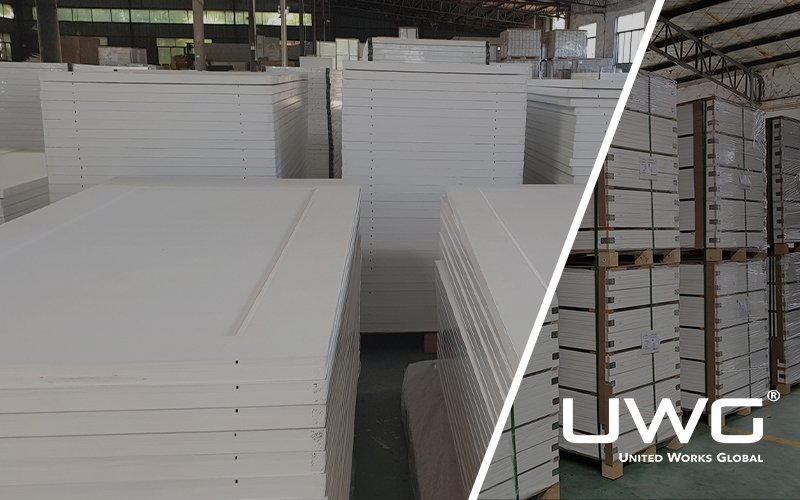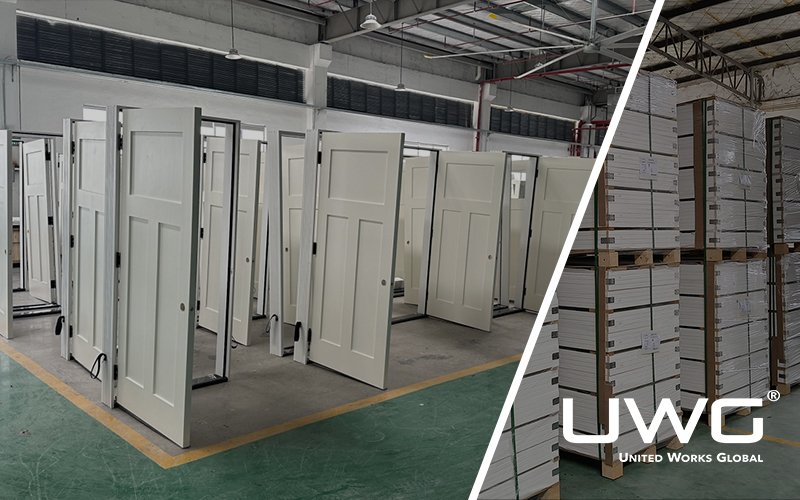

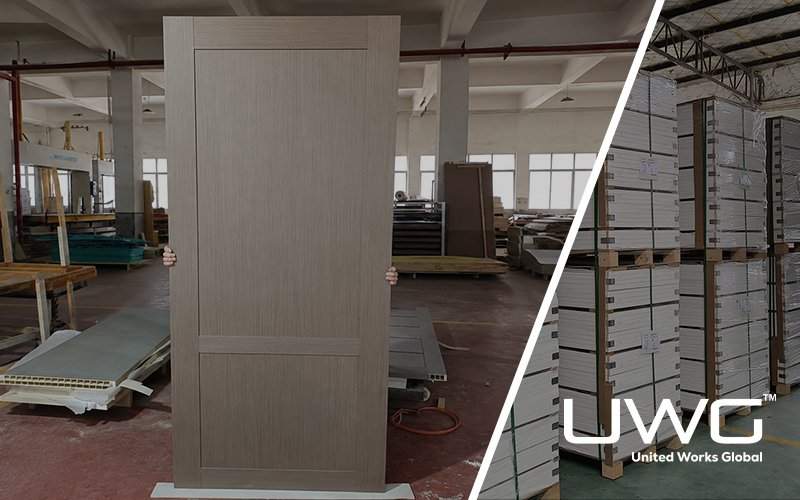
When selecting interior doors for residential or commercial projects, builders need to balance durability, appearance, and budget. Melamine interior doors have become a popular solution because they offer a modern finish, low maintenance requirements, and competitive pricing. However, not all melamine doors perform the same. The core material and surface finish play a significant role in determining strength, sound insulation, and long-term durability.
A melamine interior door is a flush door with a decorative melamine resin surface bonded to an engineered wood core, such as hollow core, particleboard, MDF, or solid core. The melamine finish provides excellent scratch, stain, and moisture resistance, while the core determines the door’s strength, weight, acoustic performance, and overall durability. This combination makes melamine doors a practical choice for residential, hospitality, educational, and commercial buildings.
Understanding how these components work together helps builders specify the right door for each project while controlling costs and meeting performance expectations.
What Is a Melamine Interior Door?
A melamine interior door is manufactured by applying a melamine-impregnated decorative paper onto an engineered wood substrate under heat and pressure. The resulting surface is durable, easy to clean, and available in a wide range of colors and realistic wood grain patterns.
Unlike painted doors that require multiple finishing processes, melamine doors are factory-finished, providing consistent color and texture across large projects. Their durable surface also reduces maintenance, making them suitable for high-traffic environments such as apartments, hotels, offices, schools, and healthcare facilities.
For builders, melamine doors offer an attractive balance between aesthetics, performance, and cost efficiency.
Hollow Core
Hollow core doors feature a lightweight honeycomb or grid structure inside the door. They are economical, easy to transport, and simple to install, making them a common choice for large residential developments.
However, their lightweight construction offers limited sound insulation and lower impact resistance compared to solid-core alternatives. They are best suited for bedrooms, closets, and other low-traffic interior spaces.
Particleboard Core
Particleboard core doors provide improved stability and a more substantial feel than hollow core models. The denser core enhances sound reduction while keeping costs relatively affordable.
Builders often specify particleboard core melamine doors for standard residential projects where moderate durability and value are equally important.
MDF Core
Medium Density Fiberboard (MDF) is manufactured from fine wood fibers bonded under high pressure, resulting in a smooth and uniform material.
Because MDF has a consistent internal structure, it is less likely to warp or develop surface irregularities. It also provides a solid base for decorative melamine finishes, producing clean edges and a premium appearance. For builders seeking higher quality without moving to full solid-core construction, MDF offers an excellent balance of stability and aesthetics.
How Does the Core Material Affect Door Performance?
Many buyers assume the melamine surface determines the overall quality of the door. In reality, the decorative finish mainly protects the exterior, while the core controls the door’s structural performance.
A denser core generally provides:
- Better sound insulation
- Greater impact resistance
- Improved dimensional stability
- Higher-quality closing feel
- Longer service life
For example, in apartment developments where budget is a key consideration, hollow core doors may provide sufficient performance. In contrast, hotels, offices, and executive residences often benefit from solid core doors because of their superior acoustic insulation and premium feel.
What Melamine Finishes Are Available?
In addition to selecting the right core material, builders should also consider the decorative finish. Modern melamine technology offers a wide variety of surface options that combine attractive aesthetics with excellent durability.
Wood Grain Finish
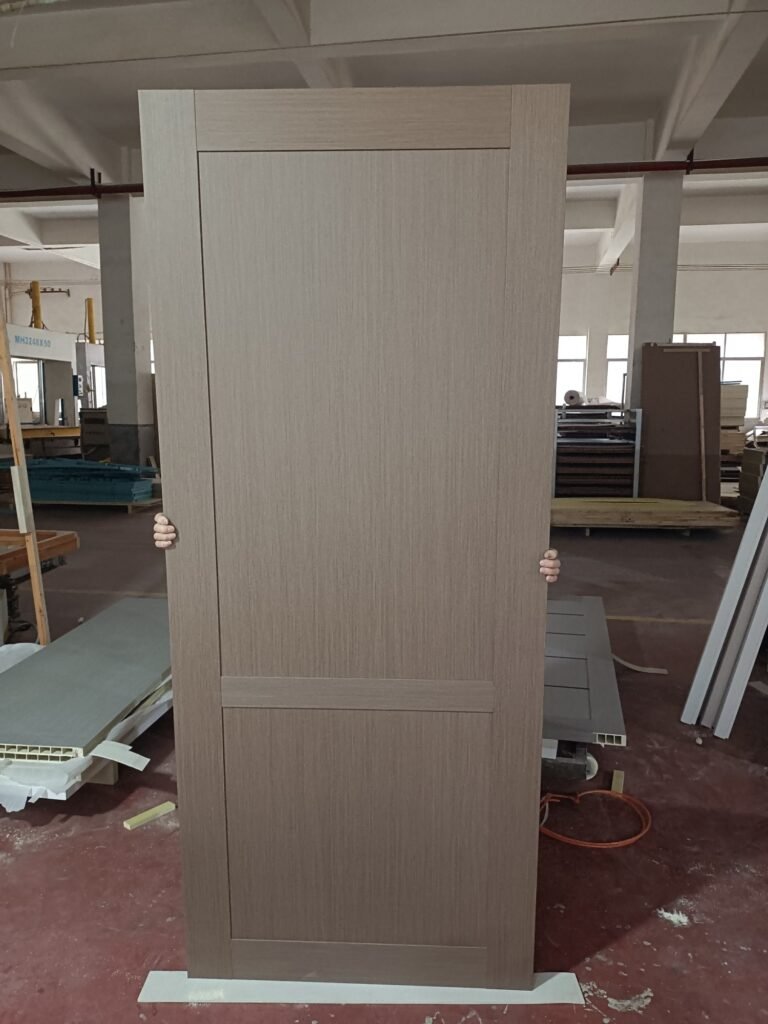
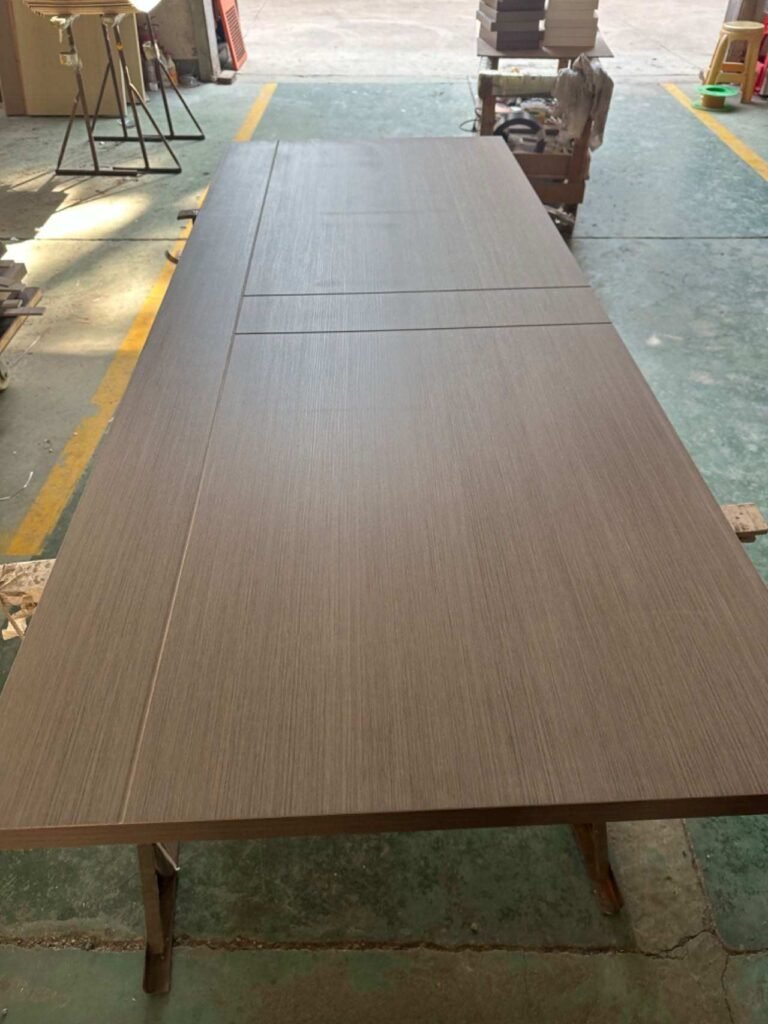
Wood grain melamine replicates the appearance of natural timber while providing greater consistency across multiple doors. It is available in popular finishes such as oak, walnut, ash, maple, and teak, making it suitable for residential, hospitality, and office interiors.
Compared with natural wood veneer, wood grain melamine requires less maintenance because it does not need staining, painting, or refinishing.
Solid Color Finish
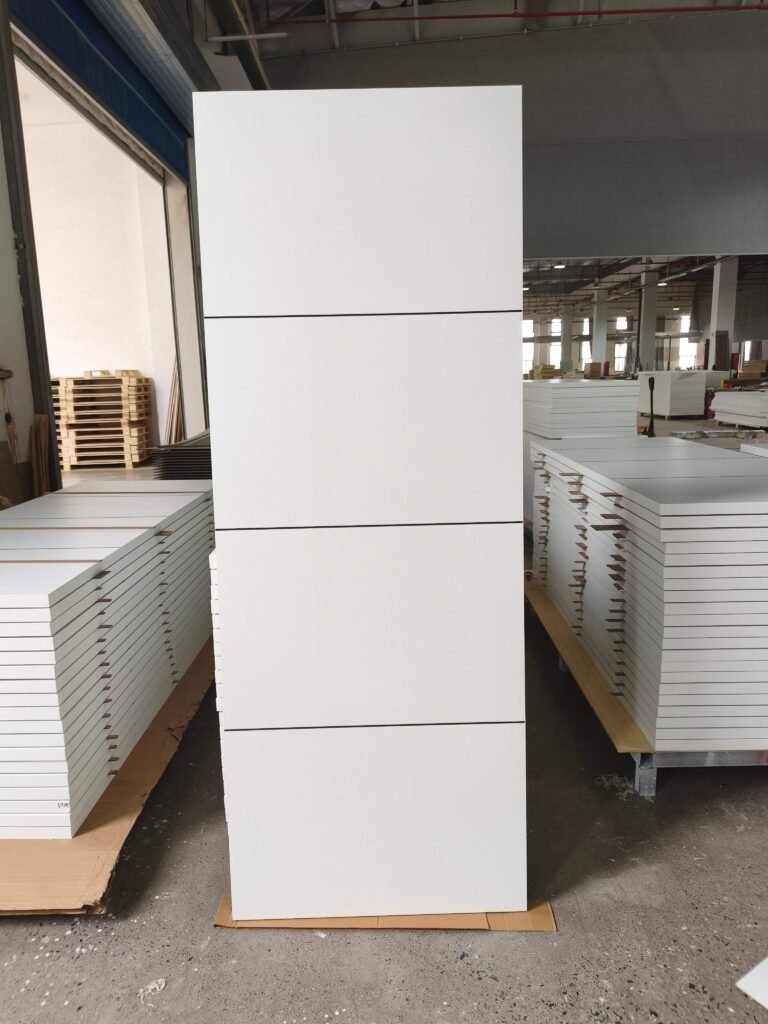
Solid color melamine creates a clean, contemporary appearance that complements minimalist interior designs. White, gray, black, and neutral earth tones are among the most common choices for commercial buildings and modern apartments.
Because the color is factory-produced, builders can expect a consistent finish throughout large projects.
Matte Finish
Matte melamine has become increasingly popular in high-end residential and commercial interiors. The low-gloss surface reduces visible fingerprints and glare while creating a refined appearance.
This finish works particularly well in offices, hotels, and luxury apartments where a modern aesthetic is desired.
Textured Finish
Textured melamine adds subtle surface depth that closely resembles real wood grain. Beyond improving visual appeal, the texture can also help disguise minor scratches and everyday wear, making it suitable for high-traffic environments.
What Are the Advantages and Disadvantages of Melamine Interior Doors?
Like any building product, melamine interior doors have both strengths and limitations. Understanding these characteristics helps builders choose the right solution for each application.
Advantages
- Excellent scratch and abrasion resistance
- Easy to clean with minimal maintenance
- Resistant to common household stains
- Consistent color and finish across large production runs
- Available in a wide range of wood grain and solid color designs
- More affordable than many veneer or solid wood alternatives
- Factory-finished, reducing on-site labor and installation time
Disadvantages
- Damaged edges can be difficult to repair if subjected to heavy impact.
- Unlike veneer doors, melamine surfaces cannot be sanded or refinished once damaged.
- Lower-quality products may experience edge chipping if improper edge banding or poor manufacturing processes are used.
- Surface appearance, while realistic, may not fully replicate the natural variation of genuine wood.
For most residential and commercial projects, however, the advantages outweigh these limitations, particularly where durability, consistency, and cost control are important.
How Can Builders Choose the Right Melamine Interior Door?
The ideal melamine door depends on the building type, expected traffic, and performance requirements.
| Project Type | Recommended Core | Recommended Finish |
|---|---|---|
| Apartments | Hollow Core | Wood Grain or Solid Color |
| Single-Family Homes | Particleboard or MDF | Wood Grain |
| Hotels | Solid Core | Matte Wood Grain |
| Office Buildings | Solid Core | Matte or Solid Color |
| Schools & Healthcare | Solid Core | Textured or Easy-Clean Finish |
When specifying doors, builders should also consider factors such as door thickness, hardware compatibility, fire-rating requirements (where applicable), moisture exposure, and local building codes. Selecting the right combination of core and finish can improve occupant comfort, reduce maintenance costs, and extend the service life of the installation.
Frequently Asked Questions
Q: Are melamine interior doors durable?
A: Yes. High-quality melamine doors are highly resistant to scratches, stains, and daily wear. Their durability depends largely on the quality of the core material and manufacturing process.
Q: Are melamine doors suitable for commercial buildings?
A: Absolutely. Melamine doors are widely used in hotels, offices, schools, healthcare facilities, and apartment developments because they offer a durable surface, consistent appearance, and low maintenance requirements.
Q: Can melamine doors be repaired if damaged?
A: Minor edge damage may be repairable, but unlike wood veneer doors, melamine surfaces cannot be sanded and refinished. Replacing severely damaged doors is often the most practical solution.
Q: Which core material offers the best sound insulation?
A: Solid core doors generally provide the highest level of sound insulation due to their dense construction, making them ideal for spaces where privacy and noise reduction are important.
Conclusion
Melamine interior doors provide builders with an excellent combination of durability, design flexibility, and cost efficiency. While the melamine surface enhances scratch and stain resistance, the core material ultimately determines the door’s strength, acoustic performance, and long-term reliability. By selecting the appropriate core and finish for each application, builders can achieve a balance between performance, appearance, and project budget.
Articles that you may be interested in:
PVC Doors vs Melamine Doors: Key Differences
Building Material Deep Dive: A Complete Guide to Melamine Doors