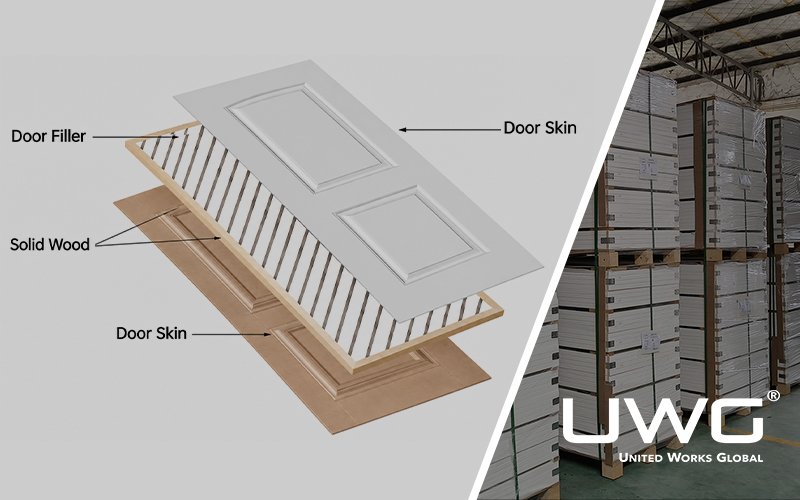
The appearance of a molded interior door depends on more than its panel design. The surface texture of the molded door skin, the shape of its panels, and the final finish all contribute to the door’s overall look.
When comparing molded door surface options, buyers need to understand how smooth and textured surfaces differ, how surface texture relates to panel design, and how these choices work with primed or factory-painted finishes.
This guide explains the key differences between smooth molded doors and textured molded doors, outlines what to check when comparing samples, and provides practical guidance for selecting the right surface for residential and commercial projects.
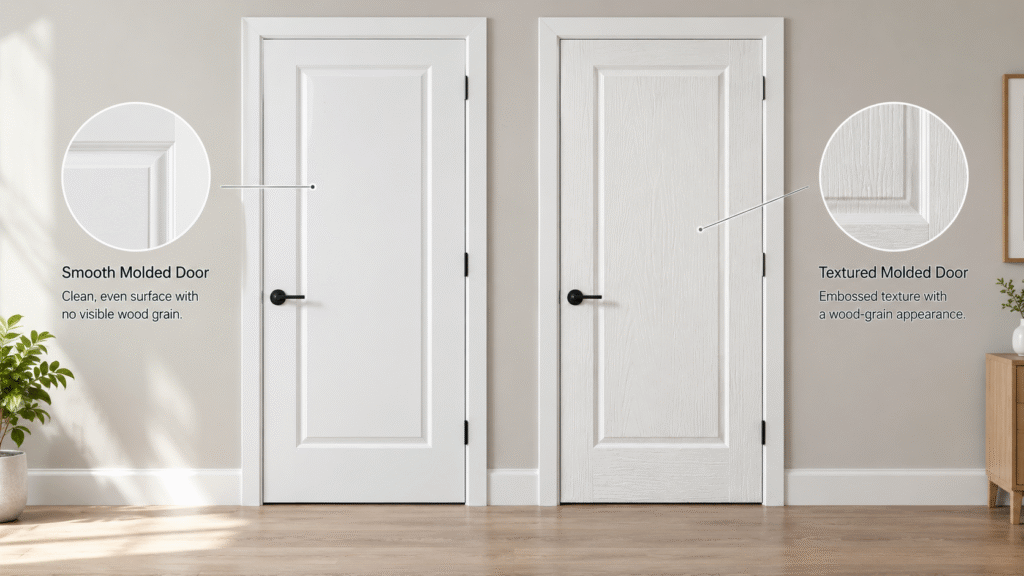
Quick Comparison of Smooth and Textured Molded Doors
Smooth and textured molded doors can share the same panel layout while presenting different surface appearances. The right choice depends on the desired visual effect, product availability, and project specifications.
| Comparison | Smooth Molded Doors | Textured Molded Doors |
|---|---|---|
| Surface appearance | Relatively even, without a pronounced simulated wood-grain pattern | Features an embossed texture that may resemble wood grain |
| Visual direction | Often used in modern, minimalist, or transitional interiors | Adds surface detail and may suit traditional or wood-grain-inspired designs |
| Panel profile | Available with different panel layouts, depending on the product range | Can also feature different panel layouts, subject to availability |
| Paint appearance | Can create a visually uniform painted surface | Texture may remain visible through the paint and create subtle light and shadow |
| Cleaning and touch-up | Depends on the coating and surface treatment | Deeper textures may require additional attention during cleaning and touch-ups |
| Availability | Depends on the door skin and mold | Not every style or size is available with a textured surface |
| What buyers should confirm | Surface flatness, gloss level, and panel profile | Texture pattern, depth, direction, and appearance after painting |
Several distinctions are worth keeping in mind:
- A smooth surface does not mean the door has no panel design.
- A textured surface does not automatically mean the door has a traditional style.
- Both surface types may be available in primed or factory-painted versions, depending on the product range.
- The availability of each combination must be confirmed with the manufacturer.
What Is a Molded Door Skin?
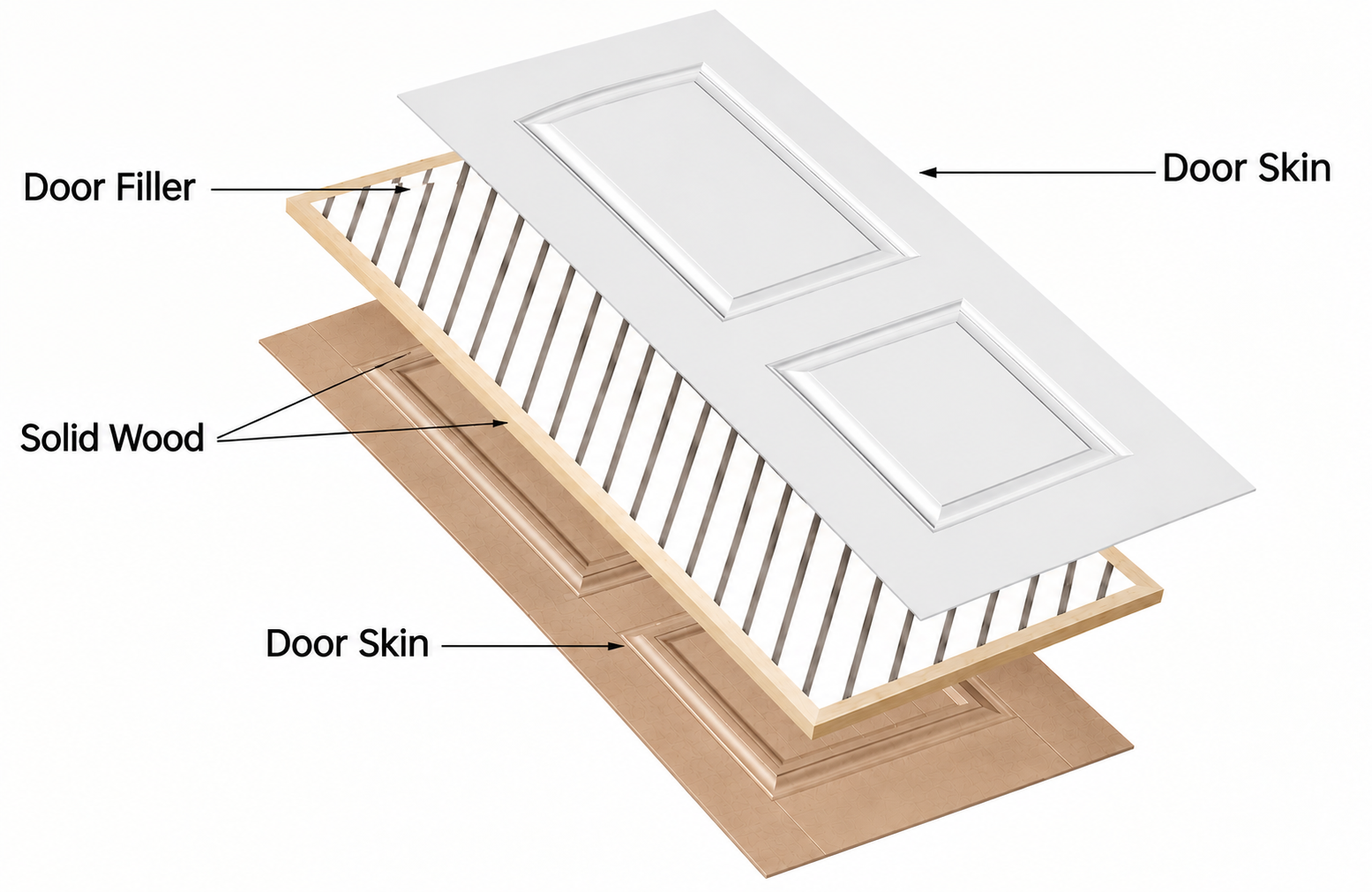
A molded door skin is the outer facing component that forms the visible surface of a molded interior door. Its molded contours help create the door’s panel design, while its surface texture contributes to the finished appearance.
A complete molded door includes more than the skin. Depending on the construction, it may also contain stiles, rails, core material, an adhesive system, lock blocks, and other components required for assembly and hardware preparation.
Understanding this distinction helps buyers specify the right product and avoid confusing a door component with a complete door unit.
How Does a Door Skin Differ from a Complete Molded Door?
The door skin provides the visible face of the door, including its panel contours and surface details. The complete door combines this facing with its internal structure and other required components.
For example, two molded doors may have a similar exterior appearance but different internal constructions. A smooth or textured surface alone does not indicate whether a door has a hollow-core or solid-core construction.
Likewise, the appearance of the door skin cannot independently establish the finished door’s weight, acoustic performance, fire rating, or hardware capacity. These characteristics depend on the complete product specification and applicable test documentation.
For a closer look at the production process, see our guide to how molded interior doors are manufactured.
What Information Does the Door Skin Control?
Depending on the product design, the molded door skin can determine or contribute to several visible features:
- Panel count and layout
- Smooth or textured surface appearance
- Base appearance before final painting
- Certain decorative details
Other characteristics require separate specifications, including:
- Core type and internal construction
- Panel edge profile
- Fire rating
- Hardware preparation and capacity
- Slab or prehung configuration
Buyers should therefore review the complete door specification rather than relying on the skin’s appearance alone.
How Does the Surface Affect the Door’s Appearance?
A smooth surface generally reflects light more evenly, creating a relatively uniform appearance. A textured surface introduces small variations across the door face, producing additional highlights and shadows as lighting and viewing angles change.
The final appearance also depends on the panel profile, paint color, sheen, and surrounding materials. For example, a textured surface may appear more pronounced under directional lighting, while a particular coating or color may make its texture less noticeable.
Comparing actual samples is the most reliable way to evaluate these differences before approving a large order.
Surface Texture vs. Panel Design
Surface texture and panel design are related, but they describe different aspects of a molded door. Understanding the distinction is essential when specifying molded door surface options for a project.
What Does Surface Texture Describe?
Surface texture refers to the fine details on the face of the door skin. Common descriptions include smooth and textured, while textured options may feature a wood-grain effect or other embossed patterns.
The texture may extend across the door face and into parts of the molded panels, depending on the design. Its pattern, direction, and depth can vary between product series.
When comparing a smooth door skin with a wood-grain textured door skin, buyers are primarily comparing the surface detail rather than the number or arrangement of the panels.
What Does Panel Design Describe?
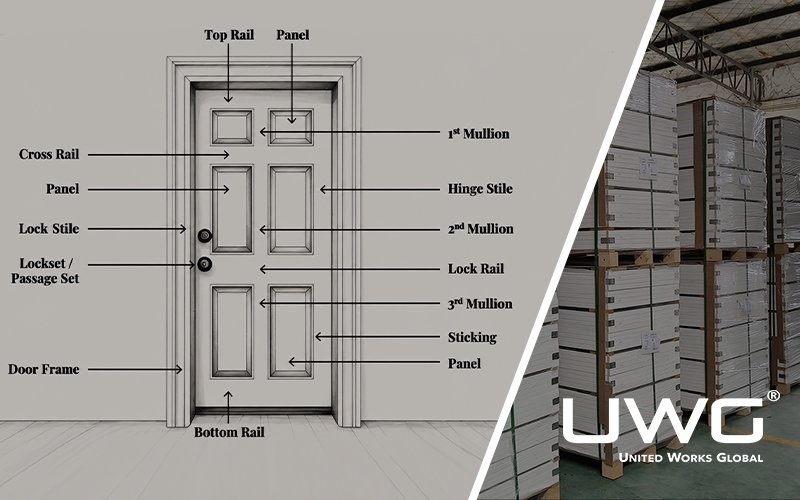
Panel design refers to the larger shapes and contours formed across the door face. Common styles and profiles include:
- 2-panel, 4-panel, and 6-panel designs
- Shaker-style doors
- Raised-panel and recessed-panel designs
- Square-top and arch-top panels
- other decorative edge profiles
The panel design establishes the overall composition of the door. Its contours create larger areas of light and shadow, while the surface texture adds finer details within those areas.
A door can therefore have a traditional 6-panel layout with a smooth surface, or a simpler panel layout with a textured surface, depending on the available product range.
Why Should Buyers Specify Them Separately?
Consider a project that requires a 6-panel molded door. The panel layout identifies the door’s overall design, but it does not specify whether the skin should be smooth or textured.
Similarly, requesting a white molded door does not establish whether the door should have a smooth or wood-grain surface, or whether it should be supplied primed or factory-painted.
A more complete specification should identify:
- Profile or style code
- Panel layout
- Smooth or textured surface
- Primed or factory-painted finish
- Core type
- Door dimensions
- Slab or Knock down or prehung configuration
For example, a 6-panel molded door may be available with either surface type, while a particular Shaker-style profile may only be offered with a smooth surface. Availability depends on the manufacturer’s specific product series and tooling.
Specifying these details separately helps reduce ambiguity during quotation, sample approval, and production.
Smooth vs. Textured Molded Doors
The main difference between smooth molded doors and textured molded doors lies in their surface appearance. Both can feature molded panel contours, but they create different visual effects and may be offered in different combinations of styles, sizes, and finishes.
Smooth Molded Doors: Appearance and Applications
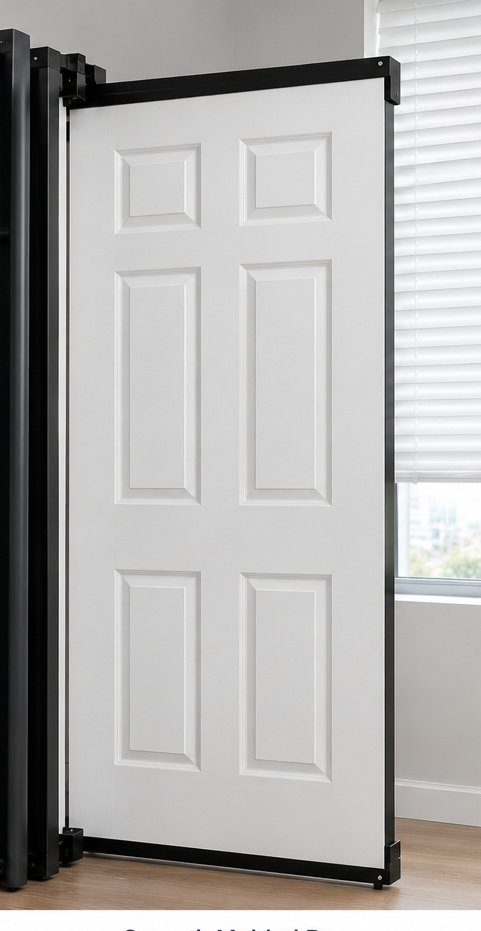
Smooth molded doors have a relatively even surface without a pronounced simulated wood-grain pattern. Their appearance can emphasize the proportions of the panels, the definition of the edges, and the selected paint color.
These doors are often considered for modern, minimalist, transitional, and some farmhouse-style projects. However, a smooth surface does not automatically determine the overall style. A smooth 6-panel door, for instance, can still have a traditional appearance.
For project buyers, smooth molded doors may be a suitable option when the design calls for a clean surface and clearly defined panel contours.
Before ordering, confirm the following:
- Surface flatness and overall quality
- Actual gloss or sheen level
- Coating appearance within panel grooves
- Compatibility between the selected surface and panel profile
- Availability across the required door sizes
Textured Molded Doors: Appearance and Applications
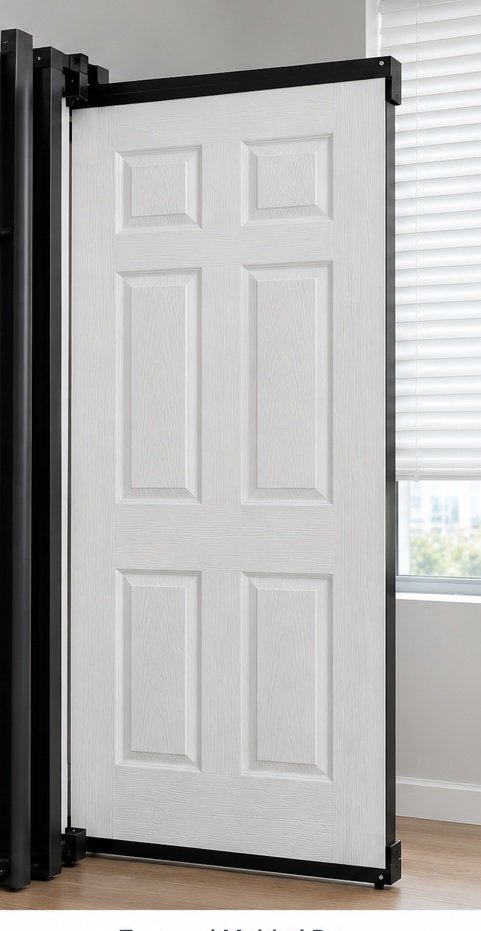
Textured molded doors feature a visible or tactile pattern formed on the door skin. Some products use a wood-grain effect to create the appearance of natural wood texture without necessarily being made from solid wood.
Depending on the pattern, textured surfaces can introduce additional visual depth and variation across the door face. The texture may become more noticeable under directional lighting or at certain viewing angles.
These doors may suit projects that call for a wood-grain appearance, additional surface detail, or a more traditional visual direction. Nevertheless, the texture alone does not establish the door’s material composition or overall design style.
Buyers should check:
- Texture pattern and grain direction
- Texture depth
- Compatibility with the selected panel profile
- Paint coverage and finished appearance
- Sample approval requirements
- Consistency across different door widths and heights
The last point is particularly important for projects involving multiple door sizes. Confirm whether the same skin series and texture are available across the complete door schedule.
Does Surface Texture Determine Interior Style?
No. Surface texture is only one factor in the door’s overall appearance.
Smooth surfaces can be used with traditional panel designs, while textured surfaces can also complement simple or contemporary interiors. The final result depends on the combination of panel profile, surface texture, color, sheen, trim, hardware, and surrounding materials.
For instance, a simple panel layout with a subtle texture may create a restrained appearance, while a smooth door with multiple raised or recessed panels may appear more traditional.
Rather than choosing a surface based on style labels alone, buyers should compare the complete door design with the project’s interior finishes.
Are All Molded Door Styles Available in Both Surfaces?
Not necessarily. Surface availability depends on the specific door skin, mold, style, size, and product series.
Some panel profiles may only be available with a smooth surface, while certain traditional styles may offer both smooth and textured versions. Availability may also vary between standard doors, bifold doors, and different dimensions.
Before finalizing a door schedule, ask the supplier to confirm which surface options are available for each required style and size. A style-by-size availability matrix can help identify limitations before the order is placed.
How Surface Texture and Finish State Work Together
Surface texture and finish state are two separate specification choices. Smooth and textured describe the door’s surface, while primed and factory-painted describe its coating or delivery state.
A molded door may be available in different combinations depending on the manufacturer’s product range.
| Surface and Finish | Appearance | Coating and Surface Characteristics | What Buyers Should Confirm |
|---|---|---|---|
| Smooth + Primed | An even surface without visible embossed wood grain, supplied with a primer coating. | The primer provides a base for subsequent painting and is generally not the final decorative or protective finish. | Primed surface condition, required topcoat system, and preparation before painting. |
| Smooth + Factory-Painted | A smooth surface with a specified factory-applied paint finish. | The door is painted before delivery, which may reduce on-site painting work depending on the scope of supply and installation requirements. | Approved color code and sheen, surface quality, door-edge treatment, whether the quotation includes the jamb and casing, and the recommended touch-up method. |
| Textured + Primed | An embossed surface with a primer coating and visible surface texture. | The texture is formed in the molded door skin. Subsequent painting may change its appearance but does not automatically eliminate the embossed pattern. | Texture consistency, coating compatibility, preparation requirements, and approval of a representative sample before production. |
| Textured + Factory-Painted | An embossed surface with a factory-applied paint finish. | The coating provides the selected color, while the texture generally continues to contribute to the door’s appearance and tactile character. | Approved color and sheen on an actual textured sample, texture visibility, finish quality, and consistency across door styles. |
Color, sheen, and application methods can affect the final appearance of both smooth and textured doors. Buyers should follow the manufacturer’s technical guidance and approve representative samples when appearance consistency is important.
For a broader comparison of coating and decorative finish systems, see our guide to primed, painted, laminate, and veneer finishes for molded doors.
How Builders Should Compare Molded Door Surface Samples
Comparing samples is an important step in choosing molded door surface options. Product descriptions and photographs are useful starting points, but they may not fully represent texture depth, color, sheen, or the appearance of the finished door.
Compare the Same Panel Profile
To evaluate the difference between smooth and textured surfaces accurately, compare samples with the same panel design whenever possible.
Ideally, the samples should share the same:
- Panel design and profile
- Door size or sample dimensions
- Color
- Sheen
- Lighting conditions
- Photography angle, when using images
If the panel designs or colors differ, buyers may mistake those differences for the effects of surface texture.
Check Texture Depth and Direction
For textured molded doors, inspect more than the general appearance of the grain. Pay attention to:
- How clearly the texture is defined
- Whether the grain direction is consistent
- How the texture continues across panel areas and edges
- Whether samples from different door sizes have a similar appearance
- How the surface coordinates with adjacent wood finishes or cabinetry
The appropriate level of texture depends on the intended design and the product specification. There is no single texture depth that suits every project.
Review Color and Sheen on the Actual Surface
The same paint color can appear different on smooth and textured surfaces because the texture changes how light interacts with the door face.
Matte, satin, and other sheen levels can also affect the visibility of the embossed pattern. A flat color card cannot fully reproduce these effects.
For factory-painted doors, approve the color and sheen on a representative sample of the actual surface whenever possible. For primed doors, confirm the intended paint system and review the expected finished appearance.
Confirm What the Sample Represents
Not all samples provide the same information. Before approving a sample, identify whether it represents:
- A raw molded door skin
- A primed door skin
- A painted door skin
- A door-corner sample
- A complete door slab
- A complete prehung unit
A skin sample may demonstrate texture and panel detail, but it cannot establish the internal construction or hardware preparation of a complete door. A painted sample may demonstrate color and sheen, but it may not represent the entire production or installation configuration.
How to Choose the Right Molded Door Surface
The right surface depends on the project’s visual requirements, finishing process, and product availability. A practical selection process should consider the complete door specification rather than focusing on one feature in isolation.
Match the Surface to the Panel Profile and Interior Design
Start by identifying the required panel profile and overall design direction. Then compare how smooth and textured surfaces affect the appearance of that profile.
Smooth surfaces generally emphasize panel contours and color uniformity, while textured surfaces introduce additional surface detail or a wood-grain effect.
Also consider the surrounding materials, including door casing, baseboards, cabinetry, wall finishes, and hardware. Reviewing these elements together can help buyers make a more consistent design decision.
Consider Painting Location and Project Workflow
The finish state should fit the project’s installation and painting arrangements.
Questions to consider include:
- Will painting take place at the factory or on-site?
- Does the project require the doors, jambs, and casing to have a coordinated finish?
- Is there adequate space and time for on-site painting?
- Does the factory offer the required color and sheen?
- Will touch-ups be needed after installation?
- Could sample approval or color selection affect the production schedule?
Primed doors may suit projects with an established on-site painting process. Factory-painted doors may be preferable when the required finish is available and reducing on-site painting work is a priority. The best option depends on the complete scope, not just the initial door price.
Check Availability Across the Door Schedule
For projects involving many openings, confirm surface availability across the entire door schedule.
The required specification may include:
- Standard door widths and heights
- Single and double doors
- Closet doors
- Bifold doors
- Hollow-core and solid-core constructions
- Slab and prehung configurations
- Smooth or textured options for each style
- Special sizes and any related tooling limitations
A surface available for one standard door size may not necessarily be available for every size or configuration. Confirm these details before finalizing quantities or approving production.
For additional planning guidance, see our resources on standard interior door sizes and bifold door sizes and configurations.
Approve Surface and Finish Before Production
A clear approval process helps reduce specification misunderstandings and unexpected differences between the approved sample and the delivered product.
Before production, buyers should:
- Confirm the profile or style code.
- Specify a smooth or textured surface.
- Confirm whether the door will be supplied primed or factory-painted.
- Approve the required color and sheen, where applicable.
- Review the actual surface sample.
- Verify availability across all required sizes and configurations.
- Approve the final sample or product drawing.
- Document any permitted alternatives in the order or approval records.
These steps are particularly useful for bulk orders, where multiple styles, sizes, or finish requirements may need to be coordinated.
Frequently Asked Questions
What Is the Difference Between a Smooth and Textured Molded Door?
A smooth molded door has a relatively even surface without a pronounced simulated wood-grain pattern. A textured molded door has an embossed surface that may create a wood-grain effect or other visible texture.
The difference primarily concerns surface appearance and feel. It does not independently determine the panel layout, core construction, or performance of the complete door.
Can Both Smooth and Textured Molded Doors Be Painted?
Some smooth and textured molded doors can be supplied in primed or painted finishes, but compatibility depends on the specific product and coating system.
Before painting, confirm the manufacturer’s surface preparation requirements, approved paint system, and finishing instructions. Do not assume every molded skin can accept the same coatings or application methods.
Does Paint Cover the Wood-Grain Texture?
Paint changes the surface color and finish, but it generally does not automatically remove the embossed texture formed in the door skin.
How visible the texture remains depends on its depth, the coating system, the selected color and sheen, and the viewing angle. Reviewing an actual painted textured sample is the best way to assess the finished appearance.
Do Primed Molded Doors Need a Topcoat?
Primer is generally a base layer intended to support subsequent finishing, rather than the final decorative finish. Primed molded doors typically require a compatible topcoat according to the manufacturer’s finishing instructions.
Always follow the specific product documentation, including any surface preparation and coating requirements.
For more information, see our complete molded door finish guide.
Is Every Panel Design Available in Smooth and Textured Versions?
No. Availability depends on the door skin, mold, style, dimensions, and product series.
Some profiles may be offered only with a smooth surface, while others may have both smooth and textured versions. Confirm the available options for each required style and size before placing an order.
Does Factory-Painted Include the Door Frame and Casing?
Not necessarily. The scope of supply varies by product and quotation.
Confirm whether the order includes:
- Door slab only
- Door slab and jamb
- Complete prehung unit
- Jamb and casing
- Touch-up materials, if applicable
Clear scope confirmation helps prevent misunderstandings about which components will arrive finished.
How Should Buyers Compare Smooth and Textured Samples?
Compare samples with the same panel profile, color, sheen, and lighting conditions whenever possible. This helps isolate the effect of surface texture.
Also confirm whether each sample represents a raw, primed, or painted skin, a door-corner sample, a complete slab, or a prehung unit. Each sample type demonstrates different product characteristics.
Find the Right Molded Door Surface for Your Project
Smooth molded doors offer a relatively even surface that emphasizes panel contours and color, while textured molded doors introduce additional surface detail or a wood-grain effect.
Neither option is universally better. The right choice depends on the selected panel profile, finish system, surrounding materials, project requirements, and product availability across the complete door schedule.
Before finalizing an order, confirm the surface texture, panel design, finish state, dimensions, core type, and delivery configuration. Reviewing representative samples and documenting the approved specifications can help ensure that the selected product meets the project’s expectations.
Explore UWG’s molded interior door collection and submit your required profile, surface, finish, sizes, and quantities for project review.