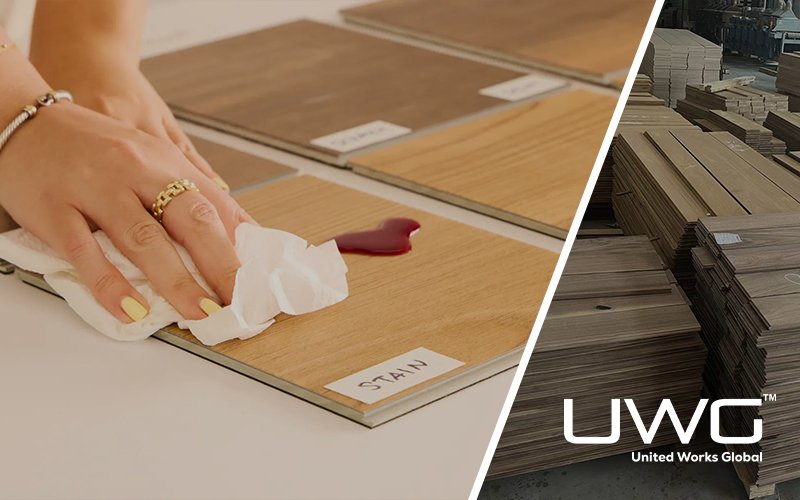
In today’s construction and renovation projects, flooring plays a critical role in both performance and cost control. Contractors are often faced with choosing materials that not only meet durability and installation requirements but also align with client expectations and project budgets.
Among the most popular options, SPC (Stone Plastic Composite) flooring and Vinyl Plank flooring (LVP) are widely used across residential and commercial applications. While they may look similar at first glance, their differences in structure and performance can significantly impact where and how they should be used. Understanding these distinctions is key to making the right choice for each project.
What Is SPC Flooring?
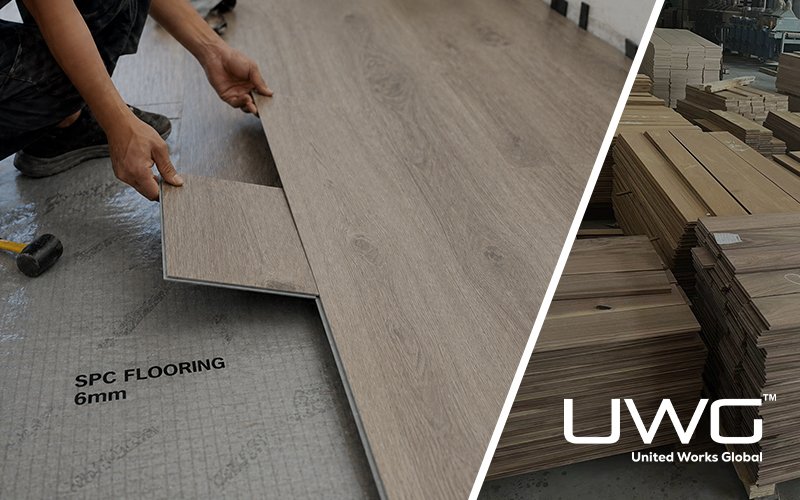
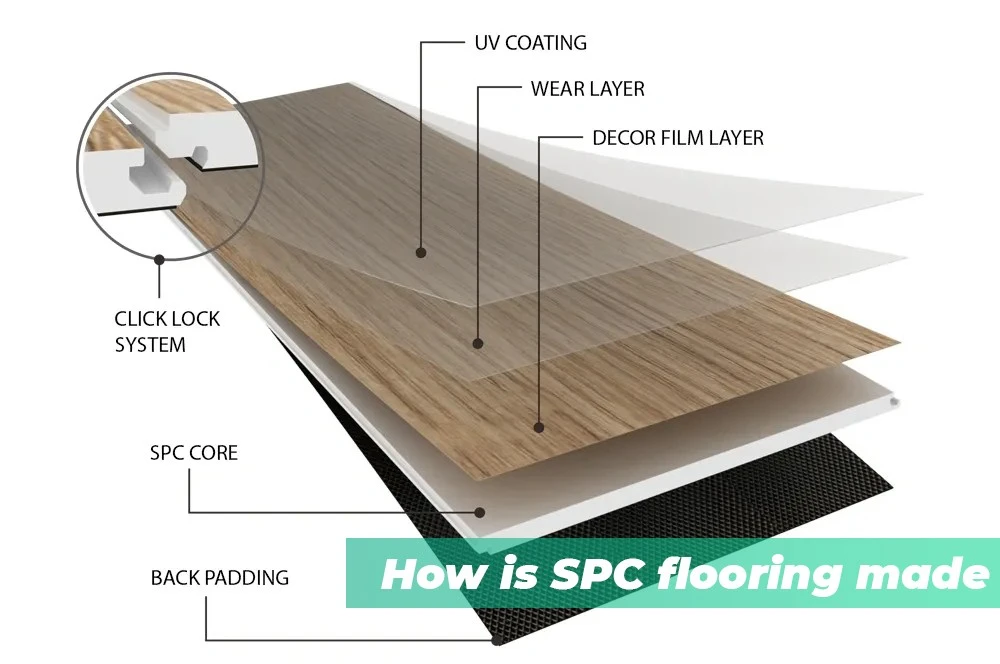
SPC (Stone Plastic Composite) flooring is a type of rigid core vinyl flooring made from a combination of limestone powder, PVC, and stabilizers.
Key Features:
- Rigid core structure
- Excellent dimensional stability
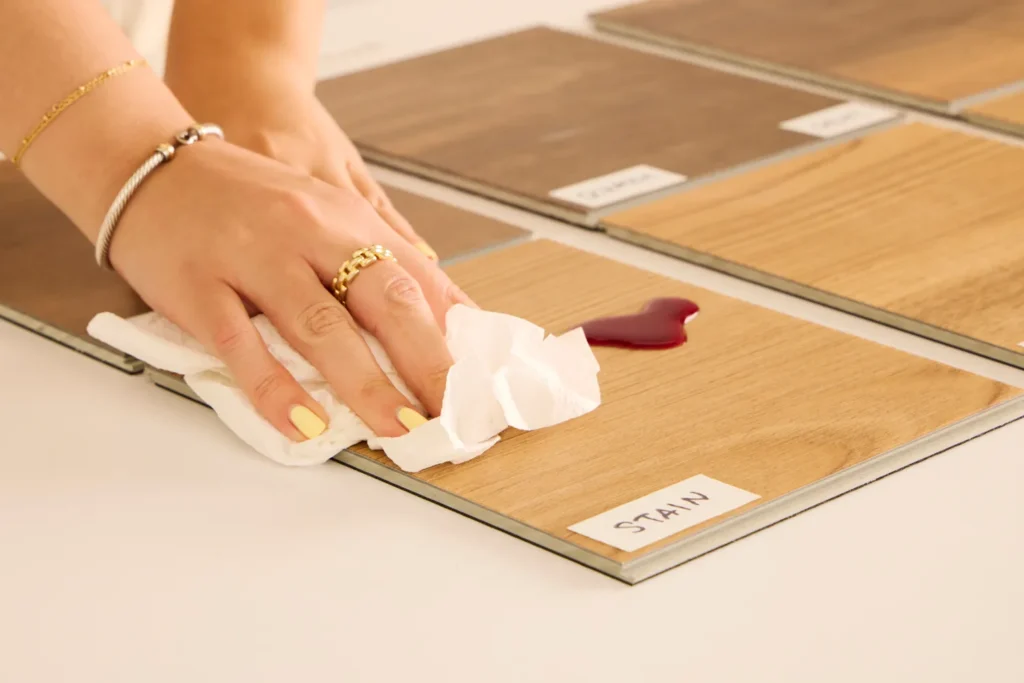
- 100% waterproof
- Strong resistance to temperature fluctuations
Due to its stability and durability, SPC flooring is widely used in commercial spaces and high-traffic environments.
What Is Vinyl Plank Flooring (LVP)?
Luxury Vinyl Plank (LVP) is a flexible vinyl flooring product composed mainly of multiple PVC layers.
Key Features:
- Flexible core
- Softer underfoot feel
- Good water resistance (varies by product quality)
- Easier cutting and installation
LVP is commonly used in residential projects where comfort and cost efficiency are priorities.
SPC vs Vinyl Plank: Key Differences
| Feature | SPC Flooring | Vinyl Plank (LVP) |
| Core Structure | Rigid (Stone + PVC) | Flexible (PVC layers) |
| Durability | High | Moderate |
| Waterproof Performance | 100% waterproof | Water-resistant |
| Dimensional Stability | Excellent | Moderate |
| Comfort | Harder underfoot | Softer and more comfortable |
| Installation | Click-lock, requires flat subfloor | Easier to handle and cut |
| Cost | Slightly higher | More budget-friendly |
| Best Application | Commercial / large projects | Residential / renovation |
Pros and Cons
SPC Flooring
Advantages:
- Superior stability, ideal for large areas
- Excellent waterproof performance
- High resistance to wear and impact
Disadvantages:
- Harder surface, less comfortable
- Requires well-prepared subfloor
Vinyl Plank Flooring (LVP)
Advantages:
- More comfortable underfoot
- Easier and faster installation
- Lower upfront cost
Disadvantages:
- Less stable in high-temperature environments
- More prone to expansion and contraction
How to Choose Based on Project Needs
Selecting between SPC and LVP should be based on the specific application rather than just pricing.
- Commercial Projects (Offices, Retail, Hotels):SPC is the better choice due to its durability and stability.
- High Moisture Areas (Kitchens, Basements):SPC provides better waterproof performance and structural integrity.
- Residential Renovation Projects:LVP offers better comfort and is easier for installers to work with.
- Budget-Sensitive Projects:LVP is more cost-effective for large residential developments.
- Large Open Areas:SPC performs better due to minimal expansion and contraction.
How UWG Balanced SPC and LVP in a Multi-Unit Renovation
In one of our recent projects, a U.S.-based contractor working on a multi-unit apartment renovation initially considered using LVP across all units to control costs. However, after reviewing the project conditions—including large open living areas and significant temperature variation near windows—we recommended switching to SPC flooring for the main spaces.
The final solution combined SPC flooring in high-traffic areas such as living rooms and kitchens, while LVP was used in bedrooms to improve comfort and reduce overall budget. This hybrid approach allowed the client to balance performance and cost effectively.
As a result, the project achieved better long-term stability with fewer installation issues, while still maintaining a competitive budget. The contractor later confirmed that this combination reduced callbacks and improved overall client satisfaction.
This case highlights an important point: choosing the right flooring is not just about product type, but about matching the material to the actual application. With proper planning and supplier support, contractors can optimize both performance and cost in real-world projects.
Choosing SPC or LVP Based on Real-World Application
In real-world applications, the choice between SPC and LVP often comes down to long-term performance rather than initial cost.
Contractors frequently report that SPC flooring performs better in environments with temperature fluctuations, such as areas with large windows or inconsistent HVAC control. On the other hand, LVP is often preferred in residential settings where homeowners prioritize comfort and quieter foot traffic.
A common mistake is using LVP in commercial or high-traffic areas to reduce cost, which can lead to higher maintenance or replacement expenses over time. In contrast, investing in SPC for such environments often results in better long-term value.
Frequently Asked Questions About SPC vs. Vinyl Plank Flooring
Q: Why does SPC flooring require significantly less subfloor preparation time compared to flexible vinyl plank?
A: SPC (Stone Plastic Composite) features a highly rigid core composed of natural limestone powder blended with PVC. This rigid core allows SPC planks to easily bridge minor subfloor imperfections, pits, or grout lines without transferring them to the surface. Flexible vinyl planks, however, possess a pliable PVC core that contours tightly to the substrate over time, meaning any subfloor unevenness will eventually “telegraph” through, requiring meticulous and costly leveling work prior to installation.
Q: How do temperature fluctuations impact the choice between SPC and flexible vinyl flooring?
A: Traditional flexible vinyl planks are highly sensitive to thermal expansion and contraction. In rooms exposed to direct sunlight through panoramic windows or near radiant heating systems, flexible LVP can expand, buckle, or separate at the seams. Because of its high stone composite content, SPC flooring exhibits excellent dimensional stability, maintaining its structural shape within tight tolerances under dramatic temperature shifts.
Q: Which flooring system offers better dent resistance against heavy static furniture?
A: SPC flooring provides superior defense against heavy loads and impact indentations. With an engineered core density exceeding 2000 kg/m³, SPC distributes heavy localized weight—such as large bookcases or commercial equipment—across the plank profile without compressing. Flexible vinyl flooring lacks this rigid backing, meaning prolonged concentrated pressure from heavy furniture can leave permanent divots that fail to bounce back.
Q: How does specifying a high-quality flooring package through UWG lower overall contractor callback risks?
A: Sourcing project-ready packages through UWG ensures contractors balance budget constraints with field performance specs. For high-traffic environments, multi-family common areas, or moisture-heavy spaces, specifying UWG’s rigid-core SPC flooring with a commercial-grade wear layer provides a completely waterproof, click-lock installation that eliminates glue failures, prevents seam buckling, and drastically reduces post-installation warranty risks.
Conclusion
Both SPC and Vinyl Plank flooring have their advantages, but they serve different purposes.
- SPC Flooring: Best for durability, stability, and commercial applications
- Vinyl Plank Flooring: Best for comfort, residential use, and cost control
For contractors, the key is to match the material to the project environment rather than choosing based on price alone. A well-informed decision will not only improve performance but also reduce long-term costs and client complaints.
Articles that you may be interested in:
12 mil vs 20 mil vs 30 mil Wear Layer: Which SPC Flooring Is Best for Your Project?