
For builders and contractors, interior design style is more than just an aesthetic decision—it directly impacts material selection, construction efficiency, and overall project cost. The right design style can streamline sourcing, simplify installation, and improve client satisfaction, while the wrong choice can lead to delays, inconsistencies, and budget overruns.
In today’s market, homeowners are increasingly design-conscious, but they also expect practicality and durability. This makes it essential for builders to not only understand different interior design styles, but also know how to translate them into scalable, cost-effective solutions using the right materials.
What Is an Interior Design Style?
An interior design style refers to a cohesive combination of visual elements, materials, colors, and spatial layouts that define the overall look and feel of a space.
For builders, a design style is not just about appearance—it represents a standardized system of materials and finishes. This includes doors, flooring, moldings, and hardware, all working together to achieve a consistent and repeatable result across a project.
Understanding design styles in this way allows builders to make smarter decisions that balance design intent with construction feasibility.
Most Popular Interior Design Styles in Today’s Market
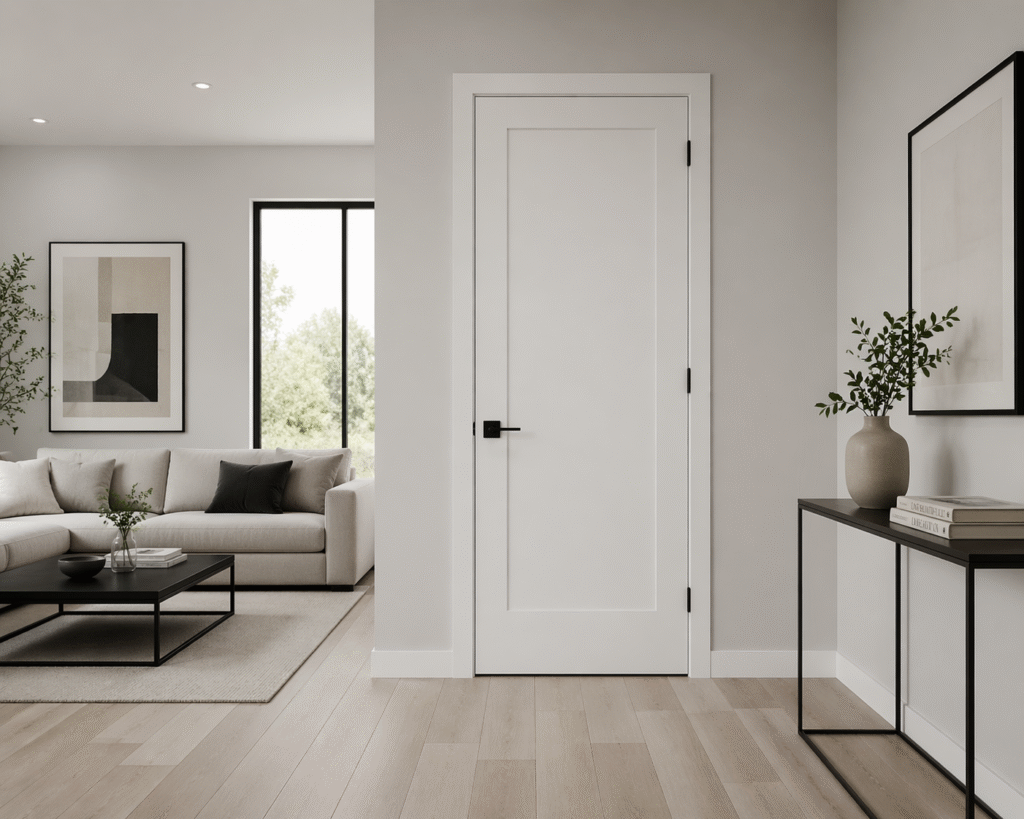
Modern Style
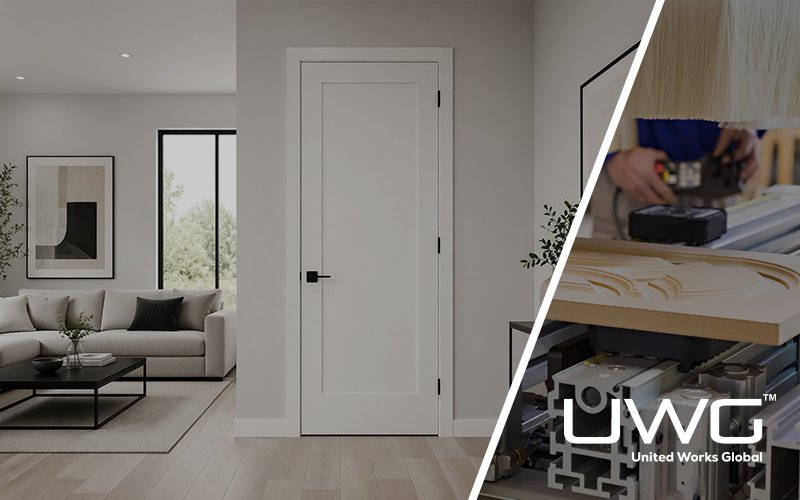
Modern design emphasizes simplicity, clean lines, and minimal ornamentation. It often features neutral colors and smooth surfaces.
Typical materials:
- White primed shaker doors
- SPC or light-toned flooring
- Minimalist trims
Traditional Style
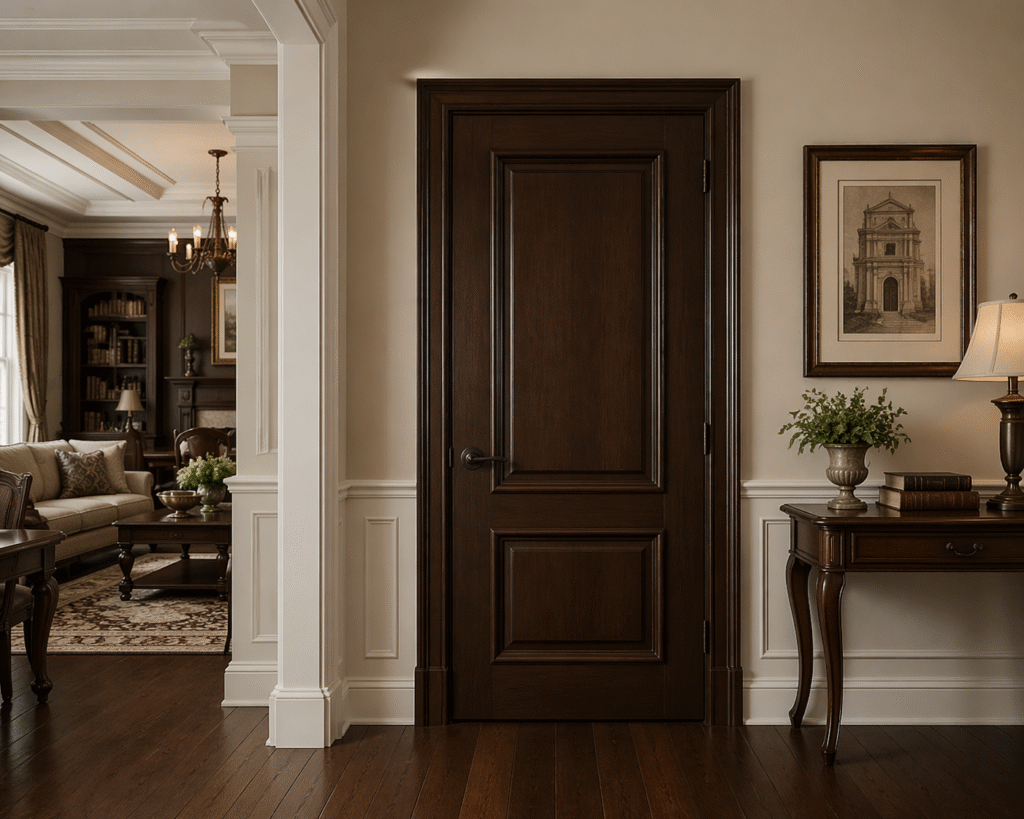
Traditional interiors focus on symmetry, detail, and rich materials. This style often creates a more formal and classic look.
Typical materials:
- Solid wood doors
- Decorative moldings
- Dark wood finishes
Farmhouse Style
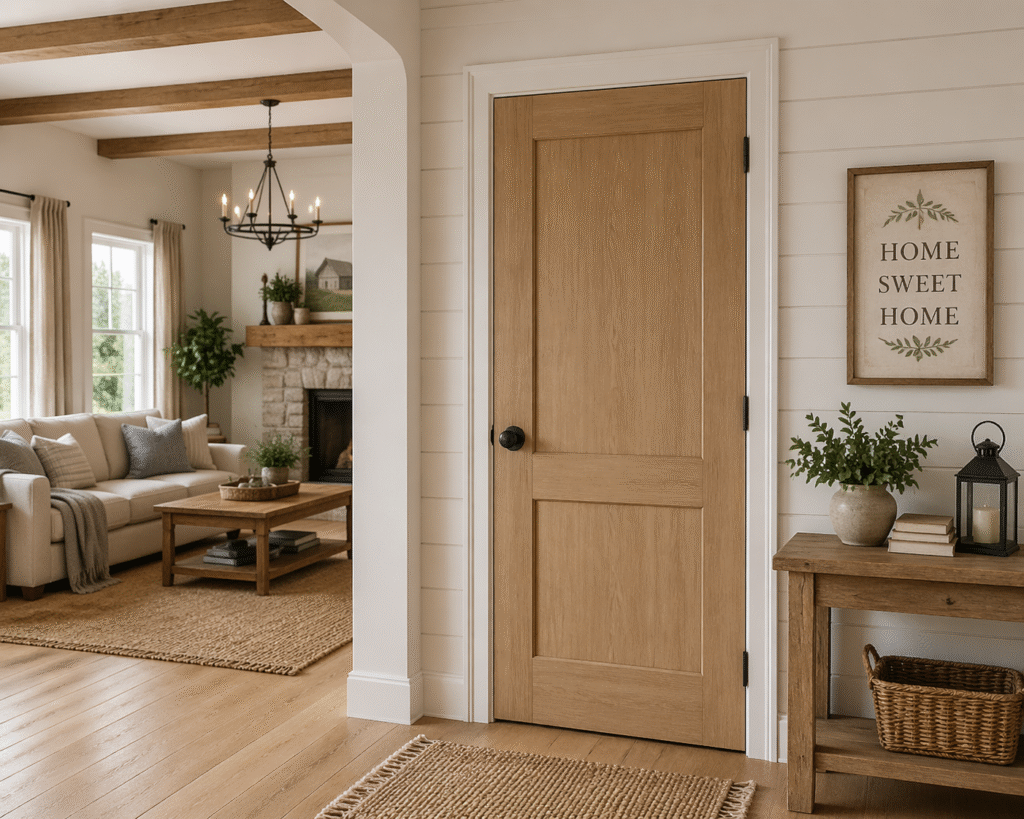
Farmhouse design combines rustic charm with modern comfort. It is especially popular in North America due to its warm and approachable aesthetic.
Typical materials:
- Shaker doors (white or oak finish)
- Natural wood textures
- Simple but visible grain patterns
Contemporary Style
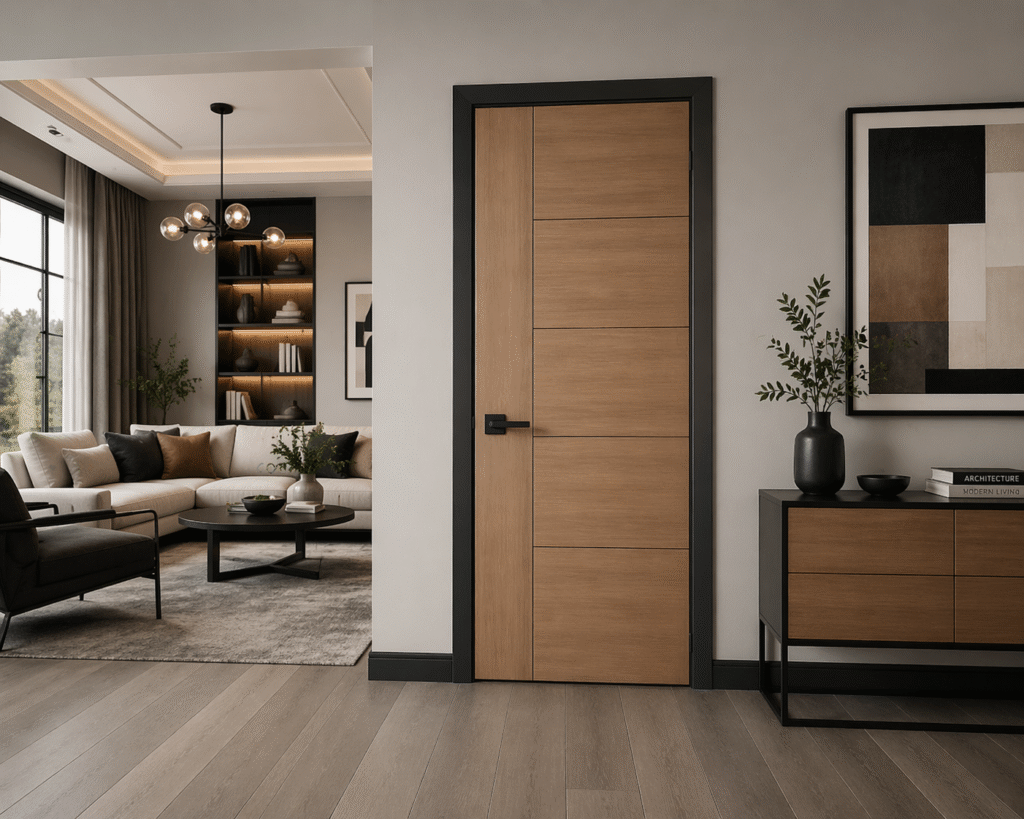
Contemporary design is more flexible and trend-driven, often combining elements from multiple styles.
Typical materials:
- Mixed finishes (wood + metal)
- Neutral palettes with contrast accents
- Custom door and trim combinations
Style Comparison
| Style | Key Features | Typical Materials | Cost Level | Best Application |
|---|---|---|---|---|
| Modern | Clean, minimal | Shaker doors, SPC flooring | Medium | Apartments, new builds |
| Traditional | Classic, detailed | Solid wood, decorative trims | High | Villas, high-end homes |
| Farmhouse | Warm, rustic | Shaker, oak finish | Medium | Residential, renovation |
| Contemporary | Flexible, mixed | Hybrid materials | Varies | Custom projects |
Pros and Cons of Different Design Styles
Modern Style
Advantages:
- Easy to standardize across multiple units
- Cost-effective material options
- Faster installation
Disadvantages:
- Less distinctive for premium projects
- Limited design variation
Traditional Style
Advantages:
- Strong visual appeal and perceived value
- Suitable for high-end markets
Disadvantages:
- Higher material and labor costs
- More complex installation
Farmhouse Style
Advantages:
- Highly popular and market-friendly
- Balanced cost and appearance
Disadvantages:
- Risk of overuse and lack of differentiation
- Requires careful finish matching
Contemporary Style
Advantages:
- Flexible design approach
- Allows customization
Disadvantages:
- Harder to standardize
- Risk of inconsistent execution
How Builders Can Choose the Right Style
Selecting the right interior design style should always be based on project conditions rather than personal preference.
Key factors to consider include:
- Project type: Large-scale developments benefit from standardized styles like modern or farmhouse
- Target market: High-end buyers may prefer traditional or customized contemporary styles
- Budget constraints: Simpler styles allow better cost control
- Material availability: Reliable supply of doors, flooring, and trims is critical
- Installation efficiency: Complex styles can increase labor time and cost
Ultimately, the best choice is one that balances aesthetics with practicality and scalability.
How Design Simplification Drove Better Results
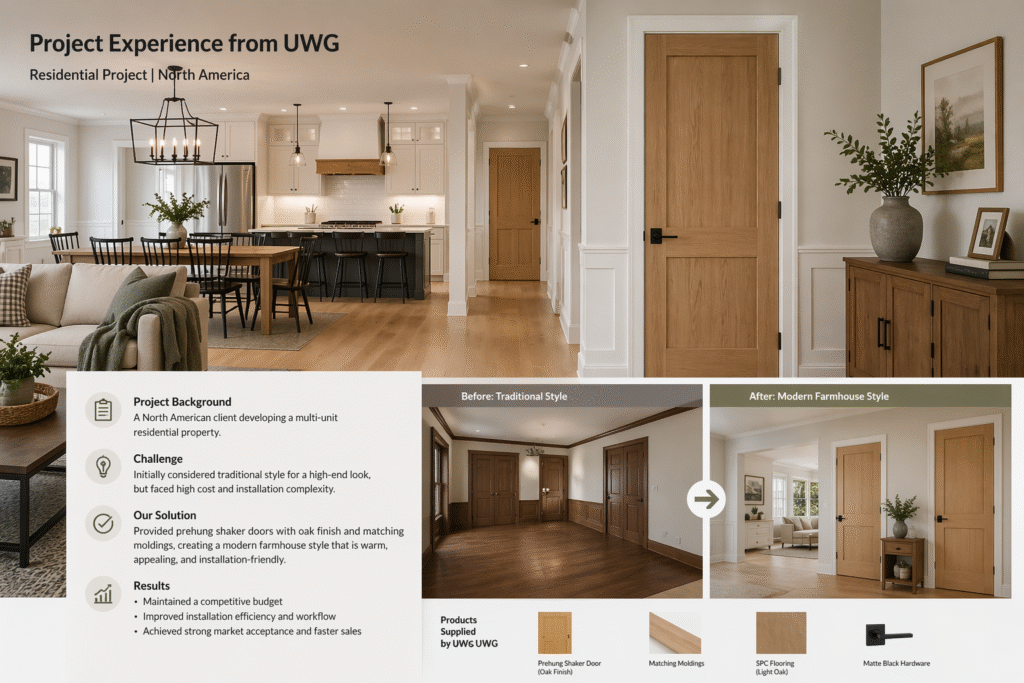
In one of our recent projects, a North American client developing a multi-unit residential property initially considered a traditional style to create a high-end look. However, after evaluating cost and installation complexity, the project shifted toward a modern farmhouse approach.
We supplied prehung shaker doors with oak finish along with matching moldings, allowing the builder to achieve a warm and appealing design while maintaining installation efficiency. The standardized door sizes and finishes reduced on-site adjustments and improved overall workflow.
As a result, the project maintained a competitive budget while achieving strong market acceptance. The client also reported faster sales due to the widely preferred farmhouse aesthetic.
This example highlights how selecting the right design style—combined with the right material system—can significantly impact both project execution and final results.
Frequently Asked Questions About Interior Design Styles
Q: Why is choosing an interior design style important for builders and contractors?
A: For professionals, an interior design style is more than an aesthetic; it serves as a standardized system for material selection and procurement. Choosing the right style early in the project streamlines the sourcing for doors, flooring, and mouldings, simplifies on-site installation, and ensures a cohesive look that aligns with budget constraints and market expectations.
Q: Which design style is most cost-effective for large-scale multi-unit projects?
A: Modern and Modern Farmhouse styles are generally the most cost-effective for large-scale developments. These styles utilize standardized, factory-primed materials like Shaker doors and SPC flooring, which are easier to source in bulk, faster to install, and offer a clean look that appeals to a wide demographic of modern homebuyers and renters.
Q: What are the main material differences between Traditional and Modern design styles?
A: Traditional design focuses on symmetry and intricate detailing, often requiring more expensive solid wood doors, complex decorative moldings, and dark wood finishes. Modern design emphasizes minimalism and clean lines, typically favoring more affordable but durable engineered materials like MDF Shaker doors and neutral-toned SPC or LVP flooring.
Q: How can M4B help builders align their design style with their project budget?
A: M4B specializes in providing integrated material solutions that balance aesthetics with construction feasibility. By offering factory-direct packages of matching doors, flooring, and trim kits tailored to specific styles, M4B helps contractors reduce decision friction, minimize material waste on-site, and maintain strict control over the total project cost.
Conclusion
Choosing the right interior design style is not just a design decision—it is a strategic one. Each style comes with its own implications for cost, materials, and construction efficiency.
For builders, the key is to align style selection with project goals, target market, and operational practicality. By doing so, it becomes possible to deliver spaces that are not only visually appealing but also efficient to build and profitable to execute.
Articles that you may be interested in:
What Is Wood Panel Moulding for Walls? Types, Benefits, and How to Use It in Interior Design
Top Interior Design Trends in US Residential Construction (2026)