
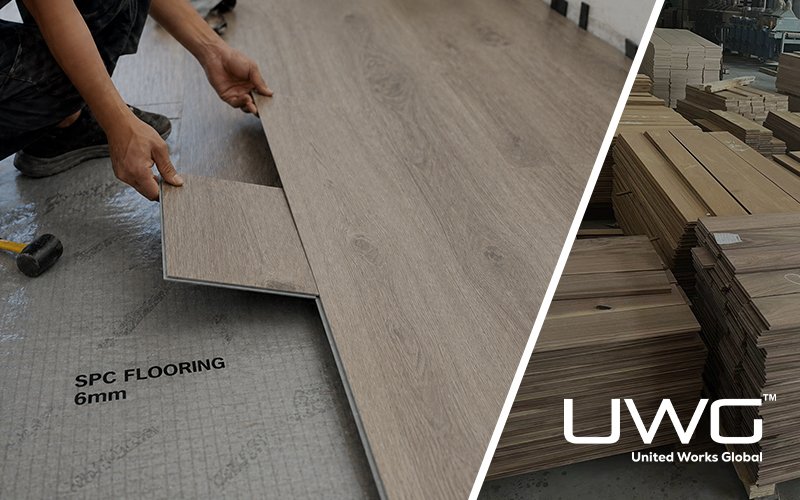
Flooring performance is often evaluated based on appearance, durability, and cost—but one critical factor that directly influences long-term performance is flooring thickness. Whether in residential or commercial settings, the thickness of a flooring material plays a decisive role in how well it resists movement, maintains structural integrity, and withstands daily wear such as heavy furniture or foot traffic.
From engineered wood and laminate to SPC and WPC flooring, thickness affects not only stability but also indentation resistance, two essential factors for ensuring long-lasting performance. Understanding this relationship helps builders, contractors, and homeowners make smarter decisions that balance cost and durability.
Flooring thickness directly affects both stability and indentation resistance by influencing the structural strength and load-bearing capacity of the material. Thicker flooring provides better support, reduces flexing, and improves resistance to dents from heavy furniture or foot traffic. It also enhances dimensional stability, minimizing expansion or contraction due to temperature and humidity changes. Thinner flooring, while more cost-effective, is more prone to movement and indentation over time. Therefore, selecting the right thickness is essential to ensure durability, long-term performance, and suitability for different applications such as residential or commercial spaces.
What Is Flooring Thickness and Why It Matters
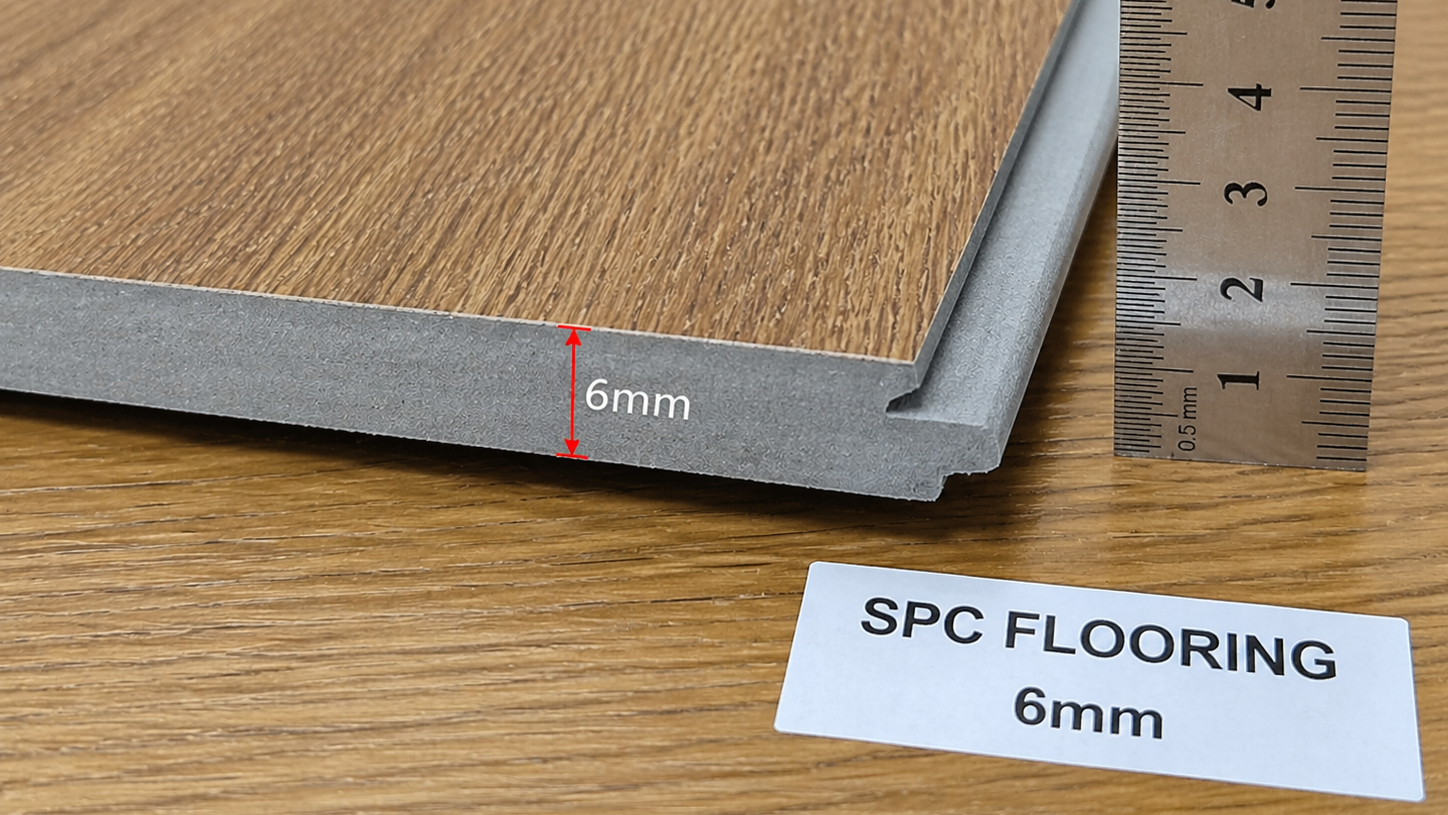
Flooring thickness refers to the total depth of the flooring material, typically measured in millimeters (mm). It includes the core layer, wear layer, and any backing or support layers.
The importance of thickness lies in its ability to:
- Provide structural rigidity
- Distribute loads evenly
- Resist deformation under pressure
- Enhance installation performance
In essence, thickness determines how well a floor can maintain its shape and performance over time.
How Thickness Affects Stability
2.1 Reduced Flex and Movement
Thicker flooring materials are inherently more rigid. This rigidity reduces:
- Bending under pressure
- Movement between planks
- Gaps forming over time
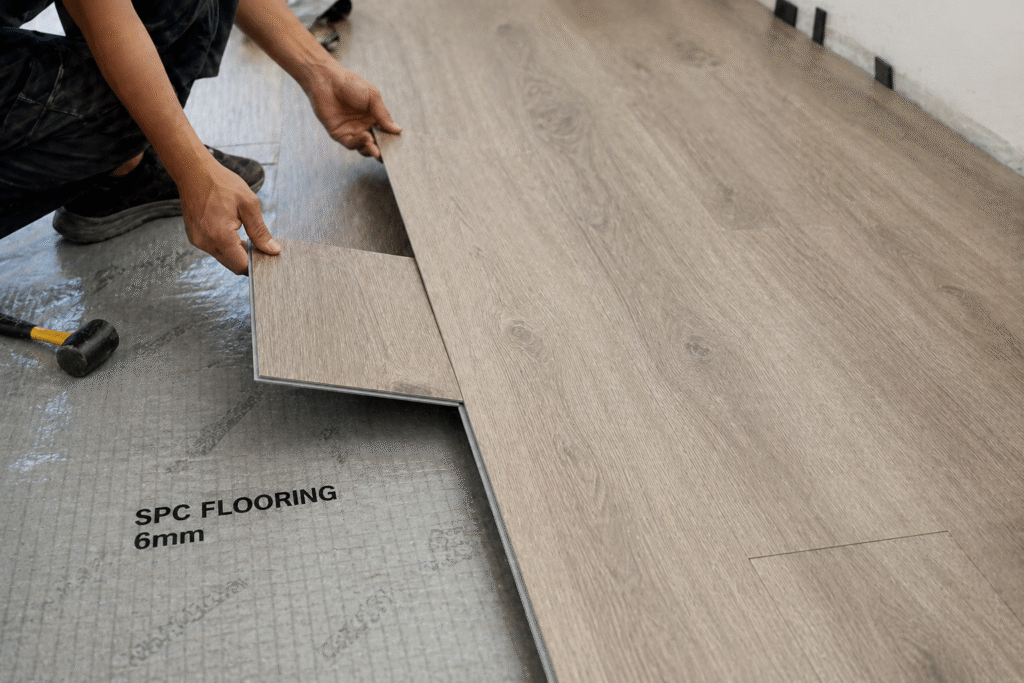
For example, a 6mm SPC floor will flex more than an 8mm or 10mm option, especially on uneven subfloors.
2.2 Improved Locking System Performance
Most modern flooring systems rely on click-lock mechanisms. Thicker boards:
- Provide stronger locking edges
- Reduce the risk of joint failure
- Maintain alignment over time
This is particularly important in large spaces where expansion and contraction can affect performance.
2.3 Better Subfloor Adaptability
Thicker flooring can better absorb minor imperfections in the subfloor, reducing the need for extensive leveling.
How Thickness Affects Indentation Resistance
3.1 Load Distribution
Thicker flooring distributes weight more effectively across its surface. This reduces:
- Point pressure from furniture legs
- Permanent dents
- Surface deformation
3.2 Core Density and Strength
While thickness alone is important, it often correlates with stronger core construction:
- SPC (Stone Plastic Composite): Denser core = higher resistance
- WPC (Wood Plastic Composite): Softer, but thicker boards improve cushioning
3.3 Wear Layer Support
A thicker base supports the wear layer better, preventing it from collapsing under pressure. This ensures:
- Longer lifespan
- Better scratch and dent resistance
Comparison of Flooring Thickness Performance
| Thickness Range | Stability Level | Indentation Resistance | Typical Application | Cost Level |
|---|---|---|---|---|
| 4–5 mm | Low | Low | Light residential use | Low |
| 6–7 mm | Medium | Medium | Standard residential | Medium |
| 8–10 mm | High | High | Heavy residential / light commercial | Medium-High |
| 10 mm+ | Very High | Very High | Commercial / high traffic | High |
Real-World Application Scenarios
Residential Use
- Bedrooms and low-traffic areas: 5–6 mm is often sufficient
- Living rooms and kitchens: 6–8 mm recommended for better durability
Commercial Use
- Offices and retail: 8–10 mm for stability and wear resistance
- High-traffic areas: 10 mm+ for maximum performance
Balancing Thickness and Cost
While thicker flooring offers better performance, it also increases material and transportation costs. Therefore, the key is to:
- Match thickness with usage requirements
- Avoid over-specification for low-traffic areas
- Prioritize durability in high-impact zones
Practical specification insight
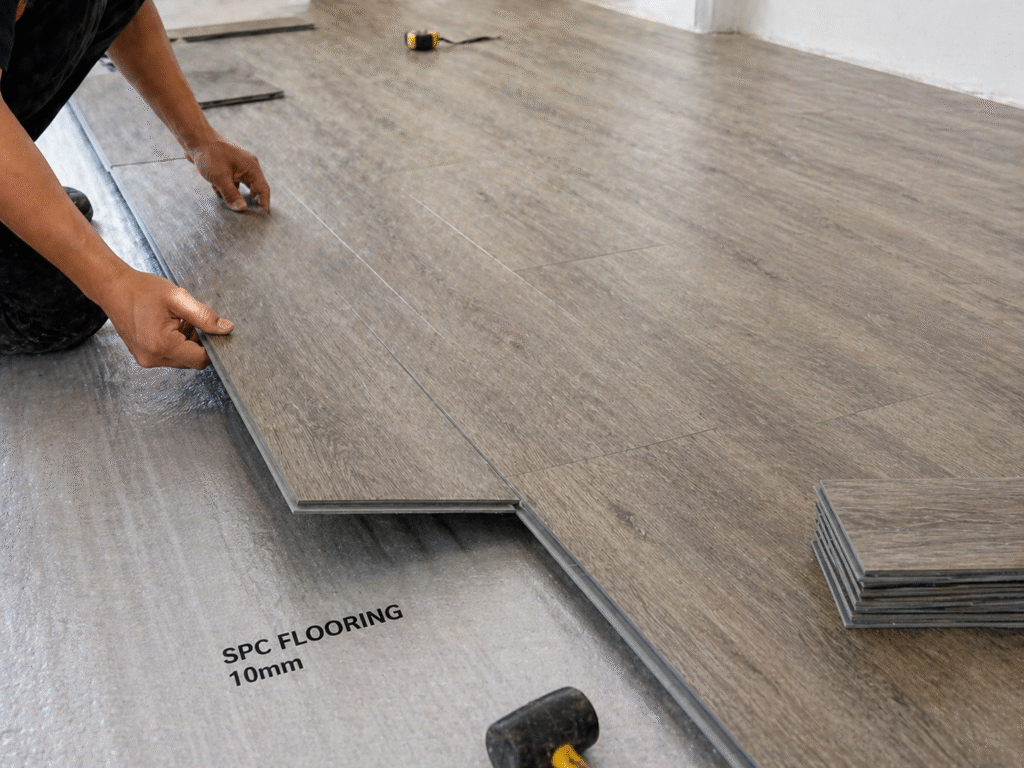
From industry experience in supplying flooring for large-scale residential and commercial projects, consistency and correct specification are more important than simply choosing the thickest option.
Contractors often find that:
- Floors with insufficient thickness lead to higher maintenance costs
- Overly thick flooring in low-use areas increases unnecessary expenses
- The best results come from selecting thickness based on actual load conditions and usage patterns
This practical, project-based approach ensures both cost efficiency and long-term performance.
Frequently Asked Questions About Flooring Thickness & Stability
Q: How does flooring thickness affect the overall stability of a project?
A: Flooring thickness is a primary driver of long-term structural stability. Thicker planks provide significantly greater rigidity, which reduces vertical flexing underfoot and minimizes the risk of gaps or buckling forming between boards over time. Furthermore, thicker boards offer more surface area for modern click-lock systems, ensuring a much more secure and stable installation, especially in large open-plan residential or commercial spaces.
Q: Is thicker flooring better at resisting permanent dents from heavy furniture?
A: Yes, thickness directly impacts a material’s indentation resistance. A thicker core—especially in rigid stone-plastic composite (SPC) materials—distributes concentrated “point pressure,” such as the weight from heavy furniture legs or equipment, more effectively across a wider surface area. This prevented the core from collapsing or deforming, drastically reducing the likelihood of permanent surface dents and maintaining the floor’s premium aesthetic.
Q: Can thicker flooring help conceal minor imperfections in the subfloor?
A: Thicker flooring, particularly the high-density options supplied by M4B, features a higher “subfloor tolerance.” While thin vinyl floors tend to “telegraph” or mirror every minor bump, dip, or crack in the subfloor beneath them, thicker and more rigid planks can bridge these small imperfections. This results in a flatter final surface and can often reduce the amount of extensive floor leveling preparation required by contractors on-site.
Q: What flooring thickness is recommended for commercial versus residential use?
A: For typical residential bedrooms and low-traffic areas, a thickness of 5mm to 6mm is generally sufficient. However, for high-traffic living rooms or light commercial spaces like offices and boutiques, a thickness of 8mm to 10mm is highly recommended for added durability. For heavy-use commercial environments such as retail stores or hotel lobbies, selecting a 10mm+ thickness ensures the necessary load-bearing capacity and long-term performance.
Conclusion
Flooring thickness plays a critical role in determining both stability and indentation resistance. Thicker flooring provides greater rigidity, better load distribution, and enhanced durability, making it suitable for high-traffic and demanding environments. However, selecting the right thickness is not about choosing the thickest option, but about aligning product specifications with real-world usage. By balancing performance requirements with budget considerations, builders and homeowners can achieve flooring solutions that are both durable and cost-effective.
Articles that you may be interested in:
SPC Flooring Thickness and Wear Layer Standards Builders Should Understand