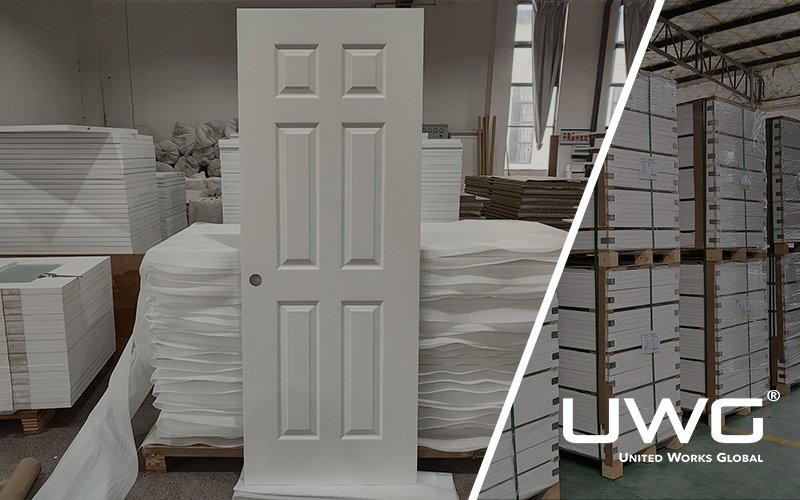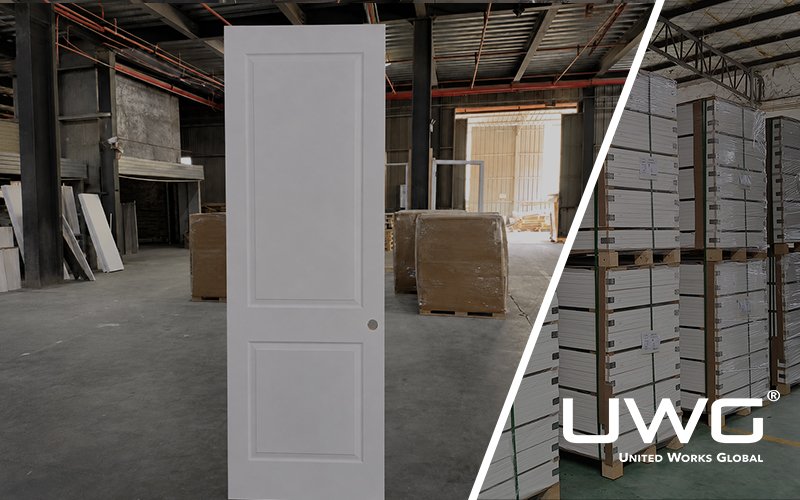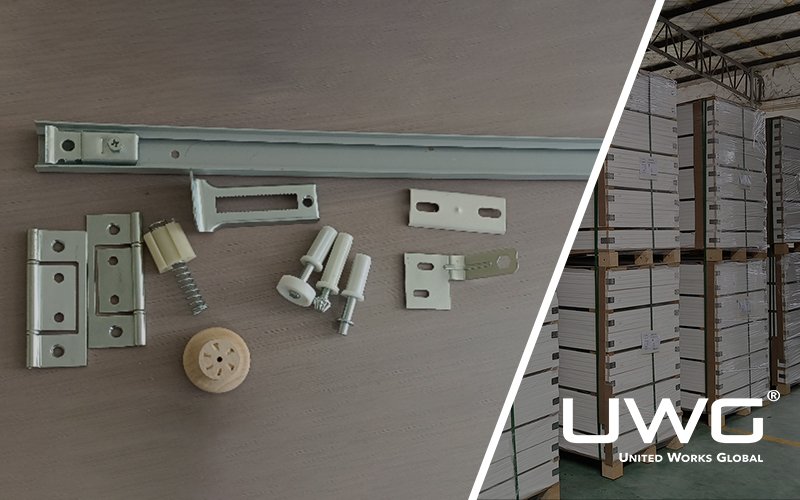

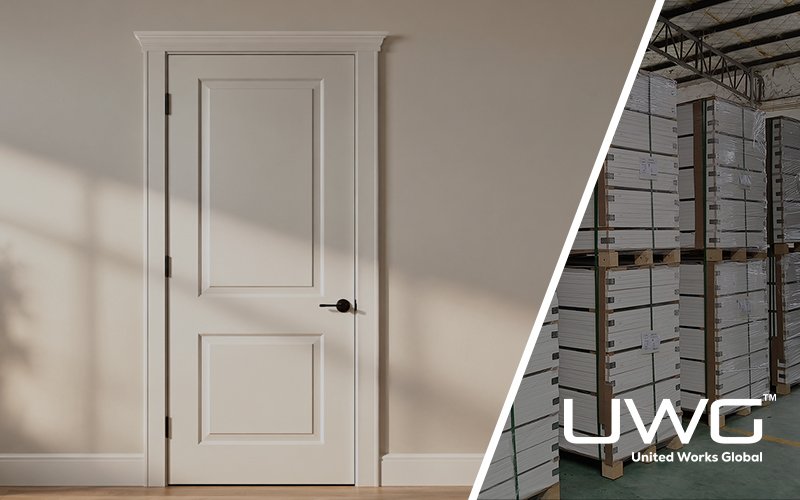
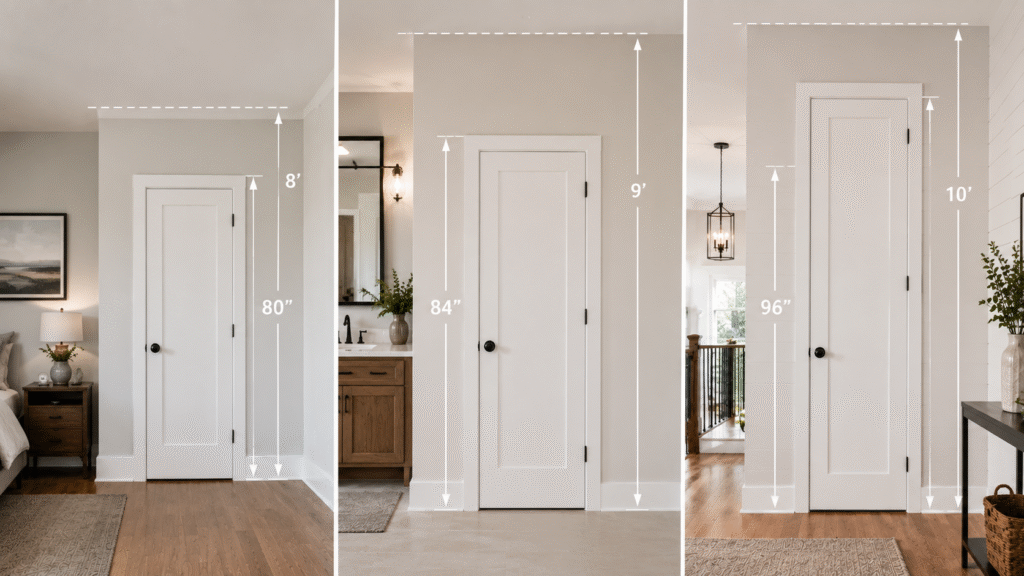
In North America, the standard interior door height for residential homes is 80 inches (6 feet 8 inches). Taller doors of 84 inches and 96 inches are also widely used for homes with higher ceilings. Generally, 80-inch doors work well with 8-foot ceilings, 84-inch doors are commonly paired with 9-foot ceilings, and 96-inch doors are often selected for 10-foot ceilings or higher. Choosing a standard door height helps improve proportions, simplify planning, and provide greater product availability for residential projects.
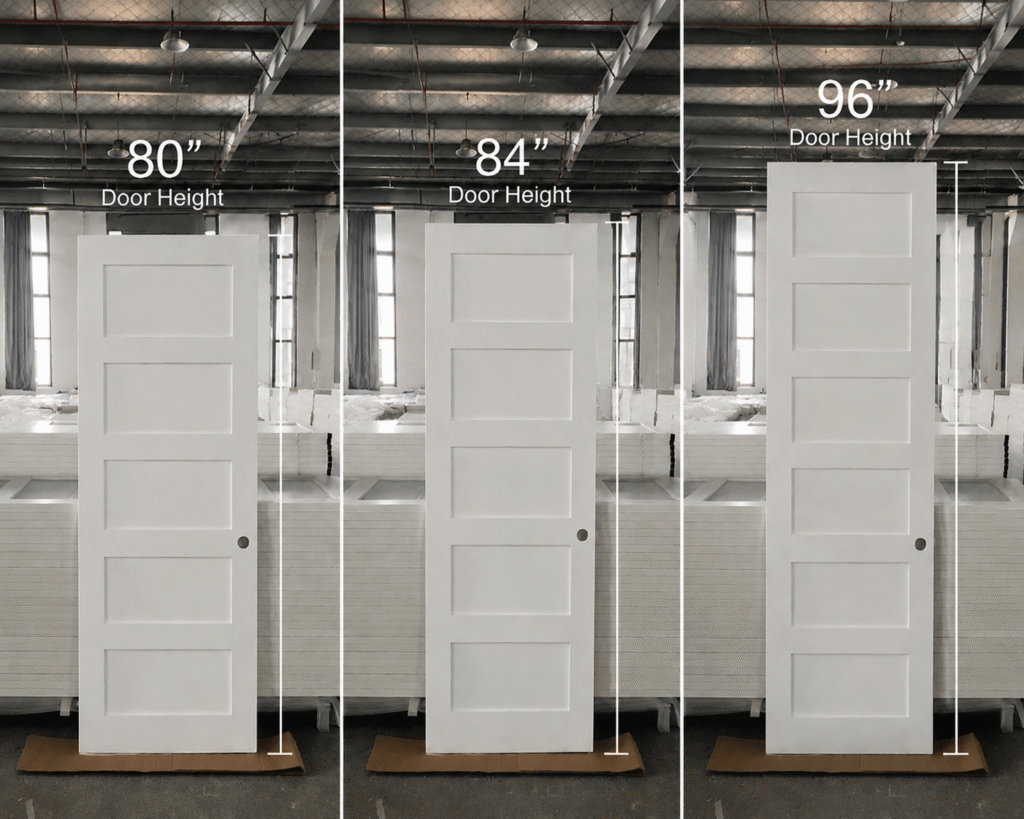
Choosing the right interior door height affects both appearance and functionality. In residential construction, 80-inch doors remain the most commonly used, but taller doors help improve room proportions in homes with higher ceilings.
What Is the Standard Interior Door Height?
The standard interior door height for most residential projects is 80 inches (6’8″). This size provides sufficient clearance and works efficiently with standard wall framing. Taller doors are often selected to enhance visual proportions and create a more open feel in larger spaces.
Common Standard Interior Door Sizes
| Door Height | Typical Widths | Common Applications |
|---|---|---|
| 80″ (6’8″) | 28″, 30″, 32″, 36″ | Most bedrooms, bathrooms, closets, and utility rooms |
| 84″ (7’0″) | 30″, 32″, 36″ | Homes with 9-foot ceilings and upscale remodels |
| 96″ (8’0″) | 32″, 36″ | Custom homes, modern interiors, and high ceilings |
Common Standard Door Heights: 80″ vs. 84″ vs. 96″
An 80-inch door remains the most common choice for residential construction and is typically paired with 8-foot ceilings. For homes with taller ceilings, builders often select 84-inch doors for 9-foot ceilings and 96-inch doors for ceilings of 10 feet or higher.
Understanding Door Size Notation
Builders in North America commonly use door size codes such as 2668, 2868, 3068, 3070, and 3080. In this system, the first two digits represent the nominal door width, while the last two digits represent the nominal door height, expressed in feet-and-inch notation.
| Door Code | Width | Height |
|---|---|---|
| 2668 | 30″ | 80″ |
| 2868 | 32″ | 80″ |
| 3068 | 36″ | 80″ |
| 3070 | 36″ | 84″ |
| 3080 | 36″ | 96″ |
For example, 3068 represents a 3’0″ × 6’8″ door (36″ × 80″), while 3070 represents a 3’0″ × 7’0″ door (36″ × 84″).
Standard Sizes by Door Type
While interior door heights are often standardized at 80 inches, widths can vary depending on the room type and application. The table below shows common width and height ranges used in residential construction.
| Door Type | Typical Width | Typical Height | Common Applications |
|---|---|---|---|
| Bedroom Door | 28″–36″ | 80″ | Bedrooms and guest rooms |
| Bathroom Door | 24″–32″ | 80″ | Bathrooms and powder rooms |
| Closet Door | 24″–36″ | 80″ | Reach-in closets, bifold doors, and sliding closets |
| Laundry Room Door | 30″–36″ | 80″ | Laundry rooms and utility spaces |
| French or Double Doors | 60″–72″+ overall width | 80″–96″ | Living rooms, offices, dining rooms, and primary suites |
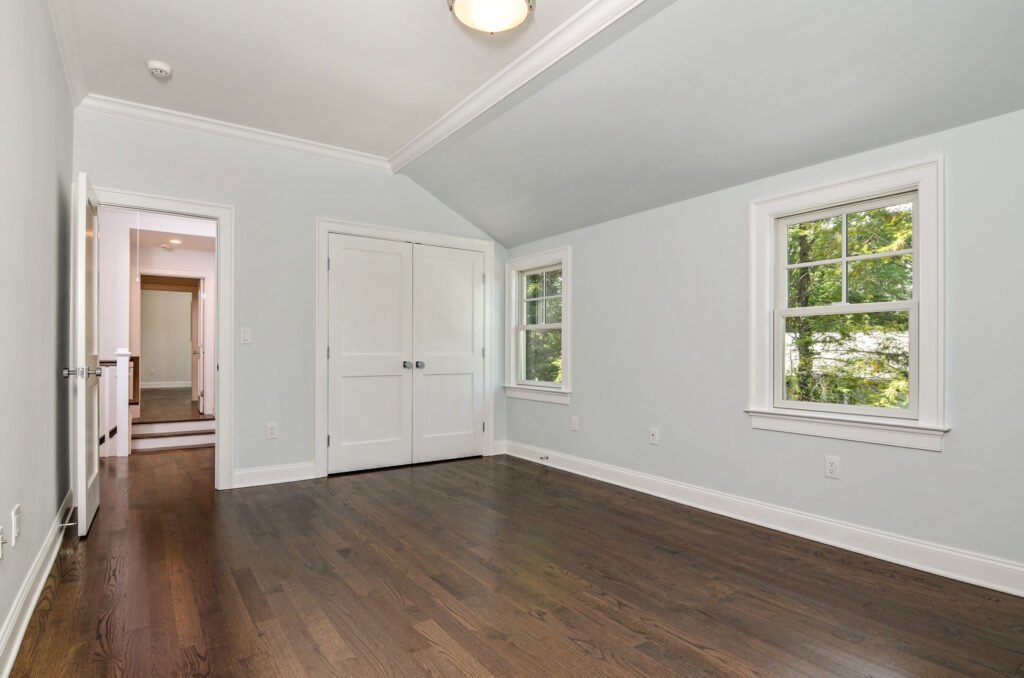
Examples of common interior door types used in residential construction.
Rough Opening vs. Door Size
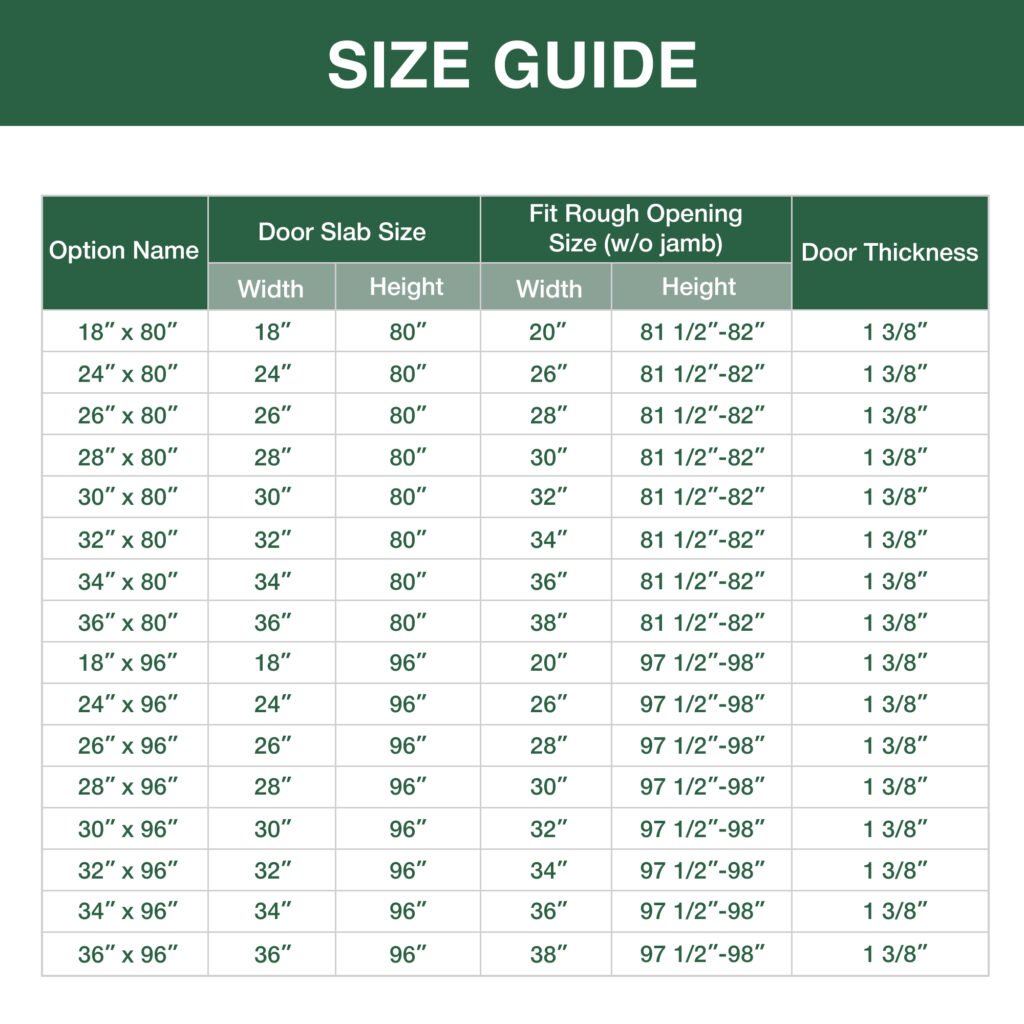
A rough opening must be larger than the actual door slab to allow space for the frame, shims, and installation adjustments. As a general rule of thumb, many builders use a rough opening that is approximately 2 inches wider and 2 inches taller than the door size. However, exact requirements can vary by manufacturer, frame type, and installation method.
When to Use Custom Door Sizes
Custom doors may be required for:
- Remodels or existing openings
- Vaulted or high ceilings
- Unique architectural designs
- Historic renovations
- Accessibility or ADA requirements
Benefits of Using Standard Sizes
Standard sizes provide several advantages:
- Greater product availability
- Lower material costs
- Faster lead times
- Easier replacement in the future
- Simplified installation
Frequently Asked Questions About Standard Interior Door Heights
Q: What is the most common interior door height in North America?
A: For residential homes, 80 inches (6 feet 8 inches) is the most commonly used height and is widely paired with standard 8-foot ceilings.
Q: When should I choose 84-inch or 96-inch doors?
A: Taller doors are often selected for homes with higher ceilings. 84-inch doors are commonly paired with 9-foot ceilings, while 96-inch doors work well with 10-foot ceilings or higher to improve proportions and create a more open appearance.
Q: Are there standard widths for interior doors?
A: Yes. Common widths include 28″, 30″, 32″, and 36″, depending on the room type, layout, and accessibility requirements.
Q: What do door size codes like 3068 or 3070 mean?
A: Door codes indicate nominal width and height. For example, 3068 represents a 3’0″ × 6’8″ door (36″ × 80″), and 3070 represents a 3’0″ × 7’0″ door (36″ × 84″).
Q: Do I need custom door sizes?
A: Not usually. Most projects can use standard door heights of 80″, 84″, or 96″. Custom sizes are typically reserved for remodels, vaulted ceilings, historic renovations, accessibility needs, oversized openings, or unique architectural requirements.
Conclusion
For most residential projects in North America, the standard interior door height remains 80 inches. However, 84-inch and 96-inch doors are often used with taller ceilings to improve proportions and create a more spacious appearance. Using standard sizes helps simplify ordering, installation, and overall project planning.
Articles that you may be interested in:
How to Match Door Handles, Hinges, and Locks Across a Whole Project
How Many Doors and Trims Are Needed for a Typical Apartment Project? A Project Breakdown